
Written by Caroline Heffernan
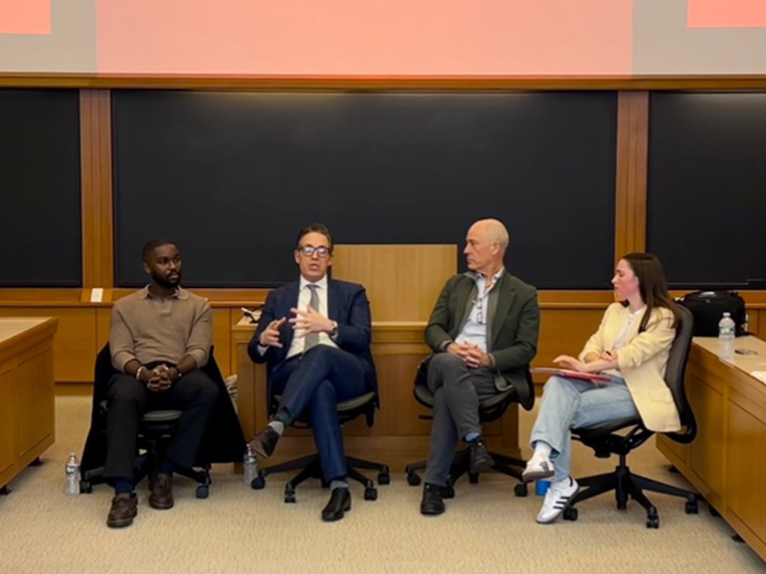
The 2026 JSEL Entertainment Law Symposium continued on Tuesday, March 31, with a panel featuring three leading transactional attorneys: Gary Greenstein, Leif Cervantes de Reinstein, and Oluwatamilore Fashina.
With careers spanning dealmaking, finance, talent representation, litigation, and studio-side work, the panelists offered a comprehensive view of transactional entertainment law and the trends shaping the industry today.
The discussion opened with an overview of each panelist’s practice. Greenstein described his work across intellectual property, licensing, and digital media, with a particular focus on music and technology transactions. Cervantes de Reinstein highlighted his extensive experience in content licensing, as well as in finance and in mergers and acquisitions. Fashina discussed his role on the studio side, focusing on development and production matters.
The attorneys also addressed how client dynamics influence their work. They contrasted representing talent, where a more sensitive, personality-driven approach is often required, with advising studios and corporate clients, where the work tends to be more detail-oriented and driven by broader business objectives.
The conversation then turned to trends shaping the entertainment industry today. Cervantes de Reinstein pointed to ongoing consolidation, evolving investment structures, and a retraction in content spending. He also highlighted the continued growth of the experiential economy across both film and music.
On artificial intelligence, Greenstein emphasized unresolved copyright questions and the expanding role of technology within law firms. Cervantes de Reinstein and Fashina also reflected on how AI may reshape the junior associate experience, particularly in training and skill development.
Noting that early training may increasingly rely on an apprenticeship model, the panelists encouraged students to remain intellectually curious and to take advantage of opportunities to learn how to prompt effectively. In closing, Greenstein underscored the importance of building strong oral communications skills in law school, noting “the ability to communicate orally will never go away.”
