Author name: jweinell

Amicus

A New Role for the Forgotten Amendment?

The future of cybersecurity is in flux, but its shape will be affected by our constitutional protections. To that end, and because much of cybersecurity planning involves creative thinking about potential challenges in a dynamic environment, it is important to think creatively about the protections that we have. At the risk of being a little too “out there,” this post suggests a role for a forgotten constitutional amendment in limiting cybersecurity proposals to protect basic civil liberties.

Amicus, Human Rights

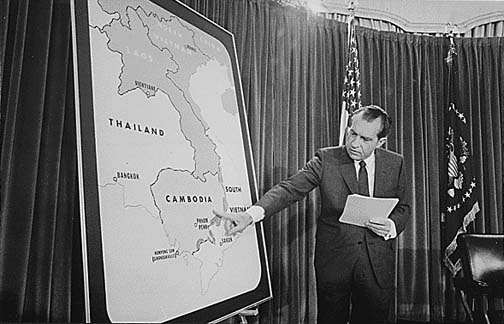
Nixon’s Ghost

We know that Obama has largely continued the drone policies of the Bush administration. Even so, the approving nod to Nixon’s expansion of the Vietnam War across Southeast Asia is an unexpected development.

Amicus, LGBTQ Rights, Reproductive Rights

Sex and Tech: Notes on a Scandal

It is entirely appropriate that we focus on data privacy in the context of sex scandals, and this points to something crucially important for privacy activists. The combination of concern about sexual autonomy and about technologically-enabled surveillance has been a crucial driver in privacy law.

Amicus, Courts & Judicial Interpretation, Education & Youth

Fisher: Revisiting CRCL’s Responses to Hopwood v. Texas

With this year’s big affirmative action case, Fisher v. University of Texas, being one of the highlights of the Supreme Court’s current term, it is worth circling back to CRCL’s previous treatment of the issue and reflecting on the moment in the 1990s when Hopwood killed UT’s earlier attempt to use affirmative action to remedy a history of segregation. What can these articles tell us about the issues at stake in Fisher? There seem to be two general lessons.

Amicus, Poverty and Economic Justice

Google’s Privacy Policy, Revisited

A perspective on data collection that emphasizes dignity would bring the nature of these transactions into the open . . . when this is all done secretly and without sufficient concern for the transactions that occur between parties who are all deserving of basic respect and dignity, everyone loses.

Amicus, Courts & Judicial Interpretation, Voting and Elections Rights

Judicial Elections in Mining Country: Money, Speech, and Influence

This summer, the Supreme Court quickly dispensed with a campaign finance law from Montana in ​American Tradition Partnership, even though the state argued that there was, indeed, a history of corruption that gave the state a compelling interest in limiting independent campaign expenditures. This decision did not speak explicitly about judicial elections, but a more recent decision of the 9th Circuit has invoked Citizens United to weigh in on a different speech issue concerning judicial elections, making the relationship between money, speech, law, and politics deliciously convoluted.

Amicus, Courts & Judicial Interpretation, Criminal Justice, Human Rights, LGBTQ Rights

Kosilek: Access to Medical Treatment and the Limits of Civil Rights Protections

Rather than condemning the profligacy of the State in providing basic human rights for its most marginalized, we must continue to demand positive rights for all. Demanding humane treatment of inmates is substantively necessary, but can also be strategically valuable because it is one of the few spaces in our jurisprudence that recognizes the language of positive human rights.

Scroll to Top