

On Abdullah al-Kidd’s Victory
Many on the political and legal left—including, perhaps most prominently, Glenn Greenwald—have routinely expressed their staunch disapproval of the Obama […]
Many on the political and legal left—including, perhaps most prominently, Glenn Greenwald—have routinely expressed their staunch disapproval of the Obama […]

Today’s national Civil Rights dialogue focuses largely on immigration, reproductive issues, and LGBTQ rights. Certainly, each of these issues critically

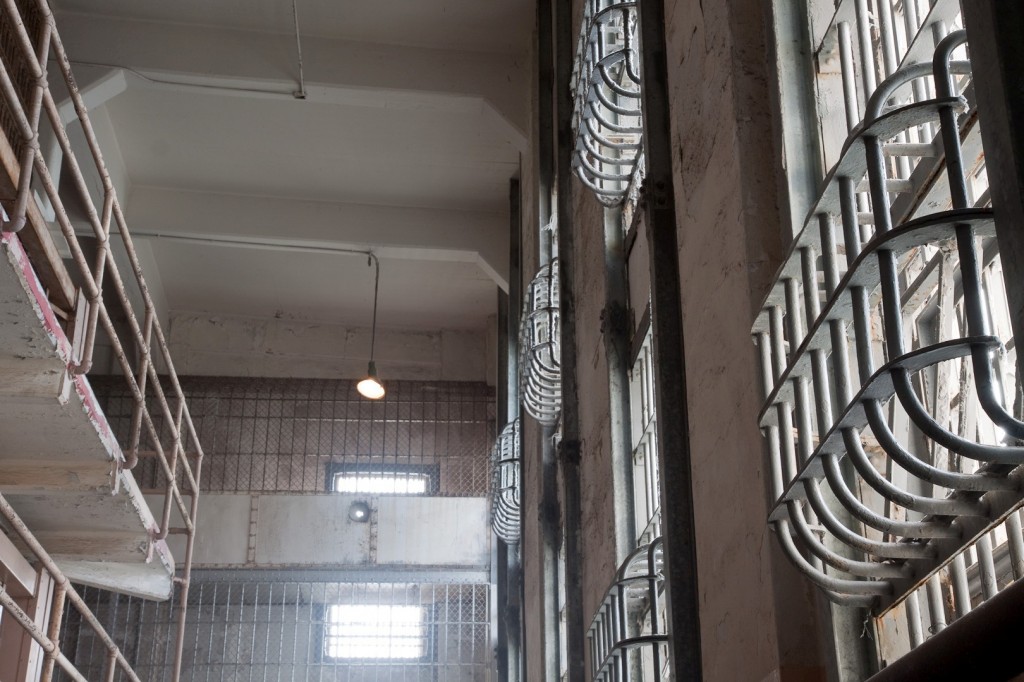
Rather than condemning the profligacy of the State in providing basic human rights for its most marginalized, we must continue to demand positive rights for all. Demanding humane treatment of inmates is substantively necessary, but can also be strategically valuable because it is one of the few spaces in our jurisprudence that recognizes the language of positive human rights.
Can we square the invocation of evolving standards of decency with the recognized fact that the criminal justice system in the United States is, in general, far more punitive than it once was? I think that we can, if we allow for a fuller recognition of both the compromises that go into legislation and the expression of social values in extra-legal settings.
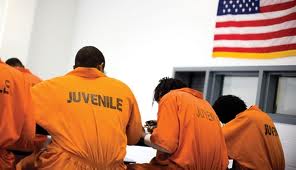
In Miller v. Alabama, the Supreme Court voted 5-4 that the Eighth Amendment prohibits a sentencing scheme that mandates life in prison without parole for juvenile homicide offenders. Despite Justice Kagan’s protestations, the Court was not eliminating an outlying vestige of once common, brutal punishment, but instead a practice that was common. The holding suggests the Court may be willing to take a more activist role in monitoring state criminal justice systems.

United States v. Pleau raises legal questions that deserve more attention than the case is likely to receive. The case can actually be seen as being about the location of the primary police power in the American system of constitutional federalism, and it exposes the increasing strain that the modern conception of federal power is placing on the founding era experiment in dual sovereignty. Pleau should challenge progressives to think critically about the desirable scope of the federal government’s power under the Commerce Clause.

Noah and Matt are joined in the studio this week by HarvardCRCL.org Technology and Privacy blogger Andrew Mamo. Matt fills us in on the recent Supreme Court decision in Florence v. Board of Freeholders and the potential impact of a blanket rule allowing strip searches for jail intake even for minor offenses. Andrew discusses the recent concern over Google’s unified privacy policy, the Consumer Online Privacy Bill of Rights, and efforts in Europe to establish a right to be forgotten.
There is something different about privacy rights in a world where we are constantly leaking our own personal information and storing the information of others. While privacy rights are not coterminous with property rights, there remains an important connection between the two.
Article drafts and video of CR-CL’s recent colloquium. On Monday, March 26, 2012, the Harvard Civil Rights-Civil Liberties Law Review, in conjunction with the Juvenile Law Center and the Milbank Foundation, presented a colloquium: Roper, Graham, and J.D.B.: Redefining Juveniles’ Constitutional Rights. Guests at the event included Martin Guggenheim of NYU Law School, Marsha Levick and Robert Schwartz of the Juvenile Law Center, Michael Dale, of the Nova Southeastern Law Center, and the Hon. Jay Blitzman, chief judge of the Middlesex County Juvenile Court.
Last Tuesday, the Supreme Court held that police officers do not need to read prison inmates their Miranda rights when questioning them about events unrelated to their current incarceration. The prisoner in this case was questioned without being read his Miranda rights, and during questioning confessed to actions that formed the basis of a criminal sexual conduct conviction. Justice Alito’s opinion concludes that the prison inmate in this case was not “in custody for Miranda purposes” at the time of his questioning, and therefore that Fields was not constitutionally entitled to receive the warnings set out under Miranda.
Congress has required the Federal Aviation Administration to integrate military drones into U.S. airspace. Past efforts to militarize police forces should make us wary about the influence drones could have in domestic policing.