

On Abdullah al-Kidd’s Victory
Many on the political and legal left—including, perhaps most prominently, Glenn Greenwald—have routinely expressed their staunch disapproval of the Obama […]
Many on the political and legal left—including, perhaps most prominently, Glenn Greenwald—have routinely expressed their staunch disapproval of the Obama […]

This summer, the Supreme Court quickly dispensed with a campaign finance law from Montana in American Tradition Partnership, even though the state argued that there was, indeed, a history of corruption that gave the state a compelling interest in limiting independent campaign expenditures. This decision did not speak explicitly about judicial elections, but a more recent decision of the 9th Circuit has invoked Citizens United to weigh in on a different speech issue concerning judicial elections, making the relationship between money, speech, law, and politics deliciously convoluted.

Rather than condemning the profligacy of the State in providing basic human rights for its most marginalized, we must continue to demand positive rights for all. Demanding humane treatment of inmates is substantively necessary, but can also be strategically valuable because it is one of the few spaces in our jurisprudence that recognizes the language of positive human rights.

Hercules Industries, a Denver company that provides heating and air conditioning equipment recently won a preliminary injunction against the imposition of the preventive care requirement adopted pursuant to the Affordable Care Act. Predictably, conservatives lauded the decision as a victory for religious freedom, because, at least for the moment, this family-owned business that employs around 300 people has the religious freedom to tell their employees they’re on their own to pay for reproductive health services. Don’t expect it to last.

Can we square the invocation of evolving standards of decency with the recognized fact that the criminal justice system in the United States is, in general, far more punitive than it once was? I think that we can, if we allow for a fuller recognition of both the compromises that go into legislation and the expression of social values in extra-legal settings.
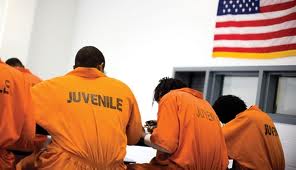
In Miller v. Alabama, the Supreme Court voted 5-4 that the Eighth Amendment prohibits a sentencing scheme that mandates life in prison without parole for juvenile homicide offenders. Despite Justice Kagan’s protestations, the Court was not eliminating an outlying vestige of once common, brutal punishment, but instead a practice that was common. The holding suggests the Court may be willing to take a more activist role in monitoring state criminal justice systems.

United States v. Pleau raises legal questions that deserve more attention than the case is likely to receive. The case can actually be seen as being about the location of the primary police power in the American system of constitutional federalism, and it exposes the increasing strain that the modern conception of federal power is placing on the founding era experiment in dual sovereignty. Pleau should challenge progressives to think critically about the desirable scope of the federal government’s power under the Commerce Clause.

Noah and Matt are joined in the studio this week by HarvardCRCL.org Technology and Privacy blogger Andrew Mamo. Matt fills us in on the recent Supreme Court decision in Florence v. Board of Freeholders and the potential impact of a blanket rule allowing strip searches for jail intake even for minor offenses. Andrew discusses the recent concern over Google’s unified privacy policy, the Consumer Online Privacy Bill of Rights, and efforts in Europe to establish a right to be forgotten.
Last Tuesday, the Supreme Court held that police officers do not need to read prison inmates their Miranda rights when questioning them about events unrelated to their current incarceration. The prisoner in this case was questioned without being read his Miranda rights, and during questioning confessed to actions that formed the basis of a criminal sexual conduct conviction. Justice Alito’s opinion concludes that the prison inmate in this case was not “in custody for Miranda purposes” at the time of his questioning, and therefore that Fields was not constitutionally entitled to receive the warnings set out under Miranda.
[Update3 – 10PM February 8] Edwin Hart Turner was executed at 7:21PM EST after receiving a lethal injection at the Mississippi State Penitentiary. Turner, represented by attorneys from the Louisiana Capital Assistance Center, had filed a petition for a writ of certiorari to the Supreme Court arguing that the execution would violate the Eighth Amendment’s prohibition on cruel and unusual punishments because at the time of his offense Mr. Turner suffered from a serious mental illness.
In the upcoming weeks, the legislators of my home state of North Carolina will be faced with a dilemma: how