
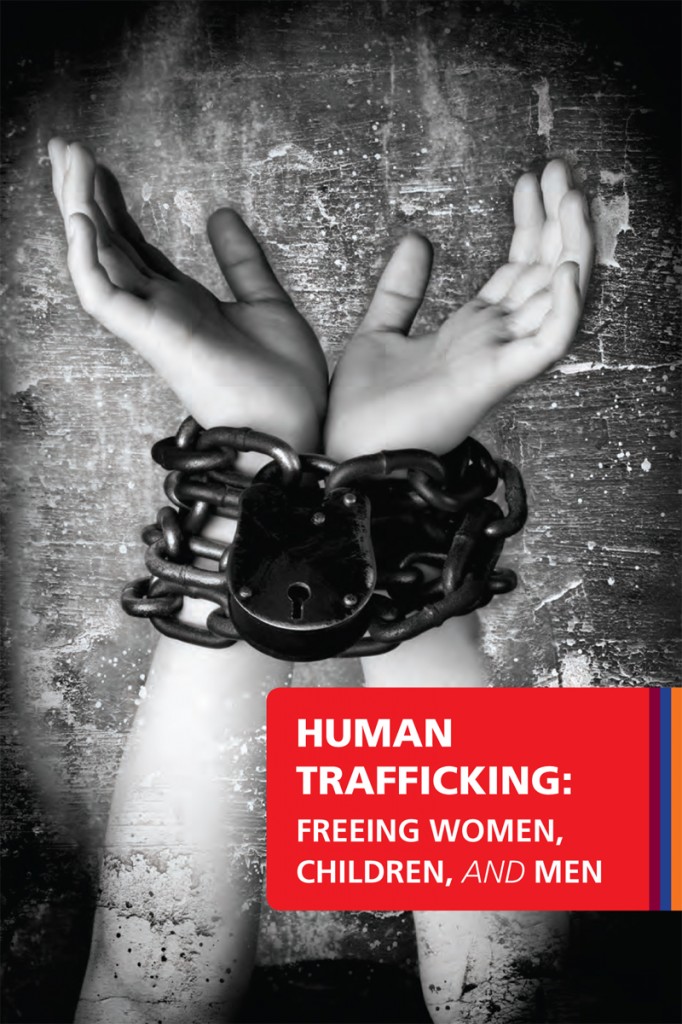
Combating Sex Trafficking in the Internet Age
Combating sex trafficking requires new and innovative thinking in today’s internet age. Because of websites like Craigslist and Backpage, it […]
Combating sex trafficking requires new and innovative thinking in today’s internet age. Because of websites like Craigslist and Backpage, it […]

Today’s national Civil Rights dialogue focuses largely on immigration, reproductive issues, and LGBTQ rights. Certainly, each of these issues critically

The less rigorous test proposed by the concurring justices produced a desirable result in this case, but it seems to portend an approach that gives less than full scrutiny to asserted government interest in content-discrimination….If the Court relies on the Alvarez concurrence’s approach in future cases, it could well give short shrift to what should be its starting presumption: that content-based restrictions on “lies,” like any other form of speech, are justifiable only in extraordinary circumstances.

Hercules Industries, a Denver company that provides heating and air conditioning equipment recently won a preliminary injunction against the imposition of the preventive care requirement adopted pursuant to the Affordable Care Act. Predictably, conservatives lauded the decision as a victory for religious freedom, because, at least for the moment, this family-owned business that employs around 300 people has the religious freedom to tell their employees they’re on their own to pay for reproductive health services. Don’t expect it to last.
In light of the great deference traditionally shown by the Court – and evinced by several Justices in this case – towards the government in military matters, it may well be that the Court overlooks the troubling free-speech consequences of the Act’s overbreadth. In an area of its jurisprudence where it has shown willingness in recent years to give the First Amendment significant teeth, however, the Court would do well to subject the Stolen Valor Act to the full scrutiny it deserves under established doctrine despite the Act’s largely uncontroversial motives.
Finally, after this decade long back-and-forth between Judge Preska and the Second Circuit, the Second Circuit has blinked. Despite Judge Preska’s flagrant disregard of the Second Circuit’s limitation of the injunction to The Bronx House of Worship, on February 29, 2012, the Second Circuit seemed to side with Judge Preska in refusing to grant the schools’ request to stay Judge Preska’s blanket injunction. The Second Circuit, however, did ask Judge Preska to resolve the case by mid-June, once and for all, so that the dispute is over by start of the new school year in the Fall of 2010. The New York school worship controversy will thus soon be over for not only Judge Preska and the Second Circuit, but also the multitude of religious groups seeking to use New York’s public school buildings for weekend worship.
Each year, over 50,000 skiers and snowboarders visit the ski slopes at Big Mountain in northwest Montana, just 66 miles
The right to be forgotten creates a clear tension between two values that many of us concerned with civil liberties share: the protection of free speech and the protection of privacy rights on the Internet.
Contrary to its hopes, then, the Hutterville Colony found no secular enlightenment in the South Dakota Supreme Court in the wake of Hosanna-Tabor. Instead, the religious community must rely on its own internal dispute resolution mechanisms to resolve its decade-long controversy as to who shall reign supreme at Hutterville.
While it remains unclear whether additional litigation will ensue as a result of the florists’ discrimination against Ahlquist, one thing remains certain: student-plaintiffs often face backlash from a myriad of sources within their local communities in response to their Establishment Clause challenges. Thankfully, though, students such as Jessica Ahlquist are courageous enough to stand up for their First Amendment rights in the face of such community hostility.
In a unanimous decision, the Supreme Court held on Wednesday that a “ministerial exception” barred a parochial school teacher from pursuing an employment discrimination claim against the church that runs the school. This opinion dramatically limits the scope of protection provided to religious employees under the “primary duties” test, the standard previously used by several federal circuits. Although lower courts can continue to carve out areas in which exceptional circumstances may compel the conclusion that the ministerial exception need not apply, “ministers” now receive no protection under civil rights or other discrimination statutes.