
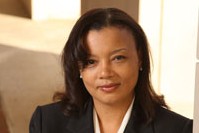
Civil Rights Lawyering in the 21st Century, An Interview with Tomiko Brown-Nagin
The courts have changed in such a way that it’s hard to bring affirmative [racial] claims, which is why I […]
The courts have changed in such a way that it’s hard to bring affirmative [racial] claims, which is why I […]

For those of us who want robust access to education, the internet can certainly help us in realizing that goal. But it would be deeply unfortunate if the drive for increased access led to an evisceration of the educational experience itself.

The watchers on the walls defending rights and liberties are often lawyers, yet those lawyers must ascend to their posts themselves, their legal training preparing them little for the climb. Law schools must do more.

With this year’s big affirmative action case, Fisher v. University of Texas, being one of the highlights of the Supreme Court’s current term, it is worth circling back to CRCL’s previous treatment of the issue and reflecting on the moment in the 1990s when Hopwood killed UT’s earlier attempt to use affirmative action to remedy a history of segregation. What can these articles tell us about the issues at stake in Fisher? There seem to be two general lessons.

On Tuesday, Alabama will vote on Amendment 4, which would delete segregationist language from the Alabama Constitution. Officially named Senate

Today’s national Civil Rights dialogue focuses largely on immigration, reproductive issues, and LGBTQ rights. Certainly, each of these issues critically
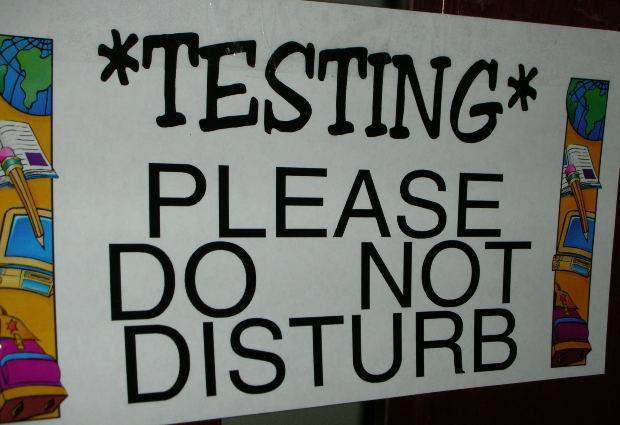
SAT Scores are down nationwide, the Wall Street Journal reported Monday. According to recent data from The College Board, the
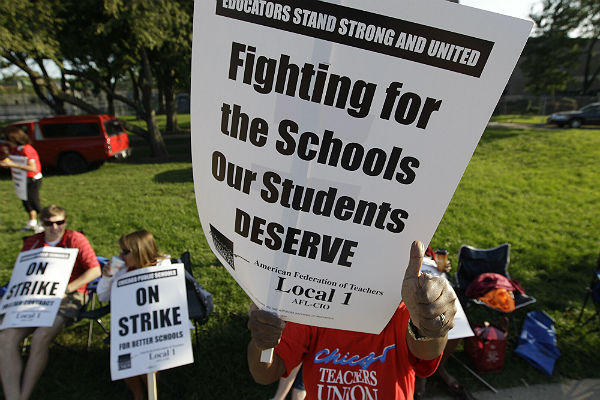
If teachers are paid well, which in Chicago they are, then they should expect to perform their work the same way other professionals, e.g., lawyer, doctors, engineers, financial professionals, perform theirs. Teachers should expect to be hired to perform to a certain expectation of success, to be compared to the success of their peers at achieving those expectations, and to be fired if they consistently fail to meet them. The ultimate result would be the achievement of the one thing that all sides in this fight seem to agree that they are working, the best possible education for Chicago’s public school students.
Rolling Stone recently published a long story about Andrew Lohse, a Dartmouth senior who blew the whistle—assuming there was a whistle to blow—about hazing practices at his school’s social fraternities. There is nothing surprising about Lohse’s claims; social fraternities have long been known to bring out the lowest instincts in American college students.
Article drafts and video of CR-CL’s recent colloquium. On Monday, March 26, 2012, the Harvard Civil Rights-Civil Liberties Law Review, in conjunction with the Juvenile Law Center and the Milbank Foundation, presented a colloquium: Roper, Graham, and J.D.B.: Redefining Juveniles’ Constitutional Rights. Guests at the event included Martin Guggenheim of NYU Law School, Marsha Levick and Robert Schwartz of the Juvenile Law Center, Michael Dale, of the Nova Southeastern Law Center, and the Hon. Jay Blitzman, chief judge of the Middlesex County Juvenile Court.
It is reasonably foreseeable that parents will try to use this information to pressure their children’s schools into firing certain teachers or to assign their children to particular classrooms – actions which will not serve the broader purpose of improving instruction….The level of detail with which the data has been released can only serve to publicly humiliate teachers and is only reasonably necessary for school administrators’ use, not the general public.