

Opting Out: School District Secession and Local Control
Opting out shouldn’t be an option. Over the past few weeks, several articles have placed school district secession laws, also
Opting out shouldn’t be an option. Over the past few weeks, several articles have placed school district secession laws, also
This week, the Supreme Court kicks off its fall term with a question of discrimination against transgender people, the Trump administration continues to target immigrants, and police officer Amber Guyger is found guilty of murdering her neighbor.
In this upcoming term, the Supreme Court will decide, in Babb v. Wilkie, whether the federal-sector provision of the Age Discrimination in Employment Act (ADEA), 20 U.S.C. § 633a(a), requires plaintiffs to prove that their age was not just the motivator, but the cause cause of the challenged action—e.g., but-for their age, they would not have been fired. This provision holds that personnel actions affecting agency employees aged 40 years or older “shall be made free from any discrimination based on age.” This language unambiguously demonstrates that a plaintiff need only prove that her age was a motivating factor for the action.

The DOJ guidelines are a step in the right direction, providing important restrictions on law enforcement’s use of commercial DNA databases. However, the guidelines have room for improvement, and still leave the door open for troubling privacy violations.

Impeachment is not a perfect democratic tool, but it’s the best we have. The damage to the electoral process of holding a parallel impeachment proceeding must be viewed in light of the threat to our democracy by refusing to impeach a president who violated his oath to the people.

The desire to protect women from sexual abuse will always be valid, and if anything is a desire that should be more widespread in the United States. What is disingenuous is opposing legalized sex work for reasons that purport to be women’s safety, but that are actually coming from a place of discomfort over women openly engaging in sexual interactions for financial gain
Welcome to This Week in Civil Rights and Civil Liberties. This week, while all eyes were on the White House
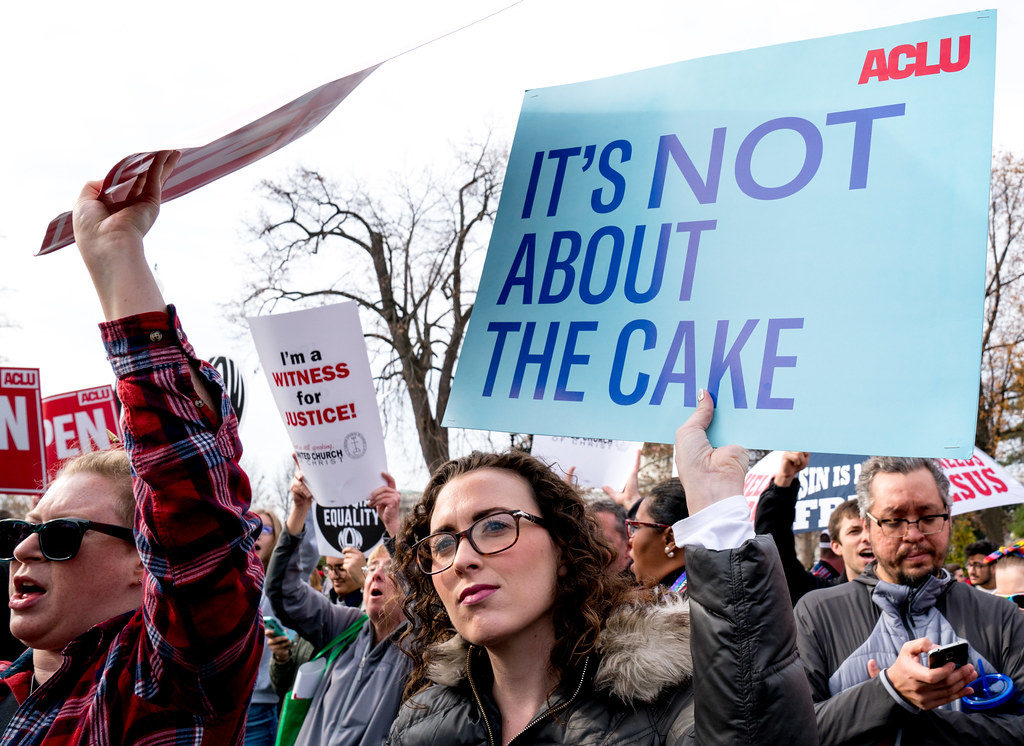
Justice Neil Gorsuch argues that it is impossible to make a principled legal distinction between (a) a baker’s refusal to make a cake that the customer will use to celebrate a same-sex marriage and (b) a baker’s refusal to make a cake designed with religious text or symbols expressing disapproval of same-sex marriage, when both sexual-orientation and religion are protected characteristics. On his view, neither refusal is discriminatory, because both cases are “about the kind of cakes, not the kind of customers.” Gorsuch’s claims that in both cases these refusals are objections to supporting specific messages and not refusals made because of the potential customers’ protected characteristics. Here I argue that a principled distinction can be made between the two cases. In the former, the baker is trying to control the use for which an item he ordinarily sells is used based on the users’ sexual-orientation. In the latter, the baker is refusing to make an item that she would refuse to make for anybody, regardless of the characteristics of the potential customer. I further argue that for this reason, among others, the former case ought to be ruled discriminatory while the latter case ought not.
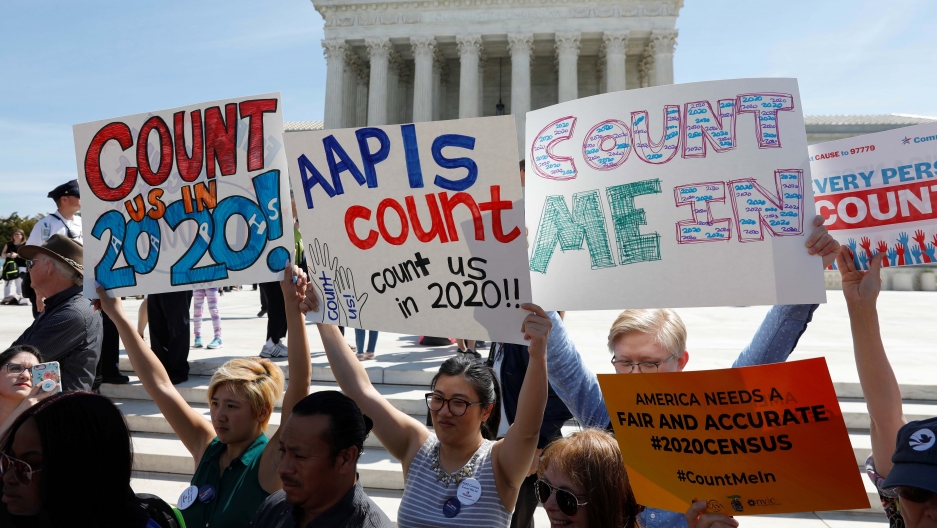
In late April 2019, the Supreme Court heard oral argument for the Department of Commerce v. New York, 139 S.Ct. 1316 (2019), a case which asks whether the Secretary of Commerce’s decision to add a question to the Decennial Census about responders’ citizenship status violated the Enumeration Clause of the U.S. Constitution, art.I, §2, cl.3? [1] The last time the census inquired about citizenship was in 1950. The question asks “Is this person a citizen of the United States?” If you answer “yes,” the question then asks for more details about where you were born and whether your parents were born in the United States.
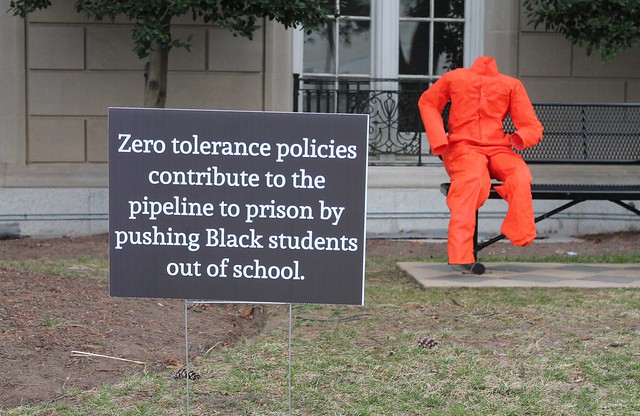
Conversations among the political left have increasingly centered on student loan debt as the amount of loan debt, and the
Welcome to This Week in Civil Rights and Civil Liberties. At the federal level, the Trump administration announced this week