Student Features

Student Features

HILJ – Opinio Juris Online Symposium: Volumes 54(2) & 55(1)

The HILJ Online Symposium is a week-long discussion by scholars and practitioners on selected print articles from the Harvard International Law Journal. The Symposium takes place on the Opinio Juris website once or twice a year and features responses by scholars and practitioners selected by the Journal and sur-responses by the original authors.

The schedule for HILJ Online Symposium: Volumes 54(2) & 55(1) was as follows

Student Features

From “Dealing in Virtue” to “Profiting from Injustice”: The Case Against “Re-Statification” of Investment Dispute Settlement

In 1998, the book Dealing in Virtue discussed the growth of international arbitration and a cadre of elite arbitrators who, through intense competition, established themselves as trustworthy to resolve high-stakes global disputes. Over the next decade and a half, opposition to arbitration developed, predominantly from leftist academics, anti-globalization groups, and States that found themselves as respondents in investment treaty arbitrations. Several States have withdrawn from the investment arbitration regime to differing degrees. Venezuela, Bolivia, and Ecuador have withdrawn from ICSID or have reduced the scope of their consent to ICSID arbitration; South Africa is terminating its “first generation” bilateral investment treaties (BITs); Ecuador plans to audit its BITs; and Australia adopted a policy, recently abandoned after only two years of no longer entering into treaties providing for investor-State arbitration. A report published in 2012, entitled Profiting from Injustice, captures the spirit of arbitration opposition. It opens with the epigraph, “There is little use going to law with the devil while the court is held in hell.” Such opponents of investor—State arbitration argue that investment arbitration is biased in favor of multinationals, either harms or fails to benefit poor States, and interferes with the ability of democratic governments to pursue policies in the public interest.

Based on those premises, critics advocate a pivot away from the current neutral juridical process for resolving disputes between States and foreign investors by permitting States to exert greater influence over the arbitral process. For example, some have advocated replacing party-appointed arbitrators with panels selected through essentially political channels controlled by States. Others support recognizing post hoc interpretive statements issued by States as binding on arbitral tribunals. Still others have urged relaxing the rules of treaty interpretation to make it easier for States to derogate from their treaty obligations by citing other fundamental values such as human rights or interpreting necessity or essential security clauses in treaties as self-judging.

All proposals to “re-statify” investment dispute resolution should be rejected because they would undermine the effectiveness of the system of foreign investment protection. States created the International Centre for the Settlement of Investment Disputes (“ICSID”) and committed to other neutral arbitration fora for resolving foreign investment disputes precisely to remove such disputes from earlier politicized means of settlement, such as international diplomacy and potentially volatile domestic processes, because politicization inhibited capital flows essential to economic development. Thus, the Report of the Executive Directors of the World Bank on the ICSID Convention, published in 1965, observes that while disputes between foreign investors and host States were typically settled through domestic processes, they were increasingly resolved through international means which indicated a demand for other methods of dispute settlement. The report explains that the Convention was motivated:

[B]y the desire to strengthen the partnership between countries in the cause of economic development. The creation of an institution designed to facilitate the settlement of disputes between States and foreign investors can be a major step toward promoting an atmosphere of mutual confidence and thus stimulating a larger flow of private international capital into those countries which wish to attract it . . . . [A]dherence to the Convention by a country would provide additional inducement and stimulate a larger flow of private international investment into its territories, which is the primary purpose of the Convention.

To that end,

The present Convention would . . . provide facilities for conciliation and arbitration by specially qualified persons of independent judgment carried out according to rules known and accepted in advance by the parties concerned. In particular, it would ensure that once a government or investor had given consent to conciliation or arbitration under the auspices of the Centre, such consent could not be unilaterally withdrawn.

Thus, States sought to create an independent, neutral forum with clear rules to enhance trust and encourage foreign investment. To further induce international capital flows for economic development, States proceeded to conclude thousands of bilateral and multilateral investment protection and promotion treaties, which guarantee certain standards of treatment to alien investors. Many such treaties grant foreign investors the right to initiate arbitration against a host State before ICSID or another forum for breaches of treaty standards. One of the most sophisticated empirical studies that has been conducted found that investment treaties reflecting a strong commitment to neutral dispute settlement, particularly those with arbitration clauses that omit any requirement for prior domestic dispute resolution, most effectively increase foreign direct investment. Thus, there is evidence that, as envisaged by the ICSID Convention, the availability of a neutral dispute resolution forum enables a State to make a credible commitment to uphold its obligations to foreign investors, which in turn accomplishes the objective of stimulating capital flows.

Recent proposals to reform investment arbitration by increasing States’ political control over the arbitral process would undermine the credibility of investment arbitration as a neutral method of resolving a dispute between an alien investor and a host State. Allowing States to interfere with arbitral decision making after a dispute arises would thus weaken the effectiveness of the system of foreign investor protection for stimulating international capital flows and promoting economic development. Moreover, the criticisms of investment treaties and arbitration that are invoked to justify politicization are based on emotion rather than on facts. Time permits me to share only a few of the many examples of how the claims of opponents of investment arbitration are either directly contradicted by data or are not supported by any evidence.

Read full article (PDF)

Op-Ed

The United States, Syria, and the International Criminal Court: Implications of the Rome Statue’s Aggression Amendment

In August 2013, President Obama advocated military intervention by the United States in response to President Bashar al-Assad’s alleged use of chemical weapons in Syria. President Obama further announced that he would seek congressional authorization for the attack and that he was comfortable pursuing this course of action without United Nations Security Council approval. While subsequent diplomatic developments have rendered U.S. military action against Syria less likely, the crisis in Syria remains a powerful example of situations that raise difficult questions about efforts arising under international law to curb states’ use of force abroad. Such unilateral action may have fallen under the International Criminal Court’s (“ICC”) working definition of the crime of aggression. To date, the United States has declined to join the ICC. The main tension in international law I note in this essay concerns the ramifications of the U.S. government ratifying the Rome Statute of the ICC (“Rome Statute”), the court’s underlying treaty. If subjected to ICC jurisdiction, then American political and military leaders, including the President, could become vulnerable to indictment, prosecution, and punishment by the court for interventions such as the one President Obama proposed. If it were a party to the Rome Statute, the U.S. government would expose its political and military commanders to such prosecutions. Those who support the United States joining the ICC, many of whom also support U.S. intervention in Syria, must acknowledge and resolve that tension.

Read full article (PDF)


Op-Ed

The Countermajoritarian Opportunity?: Courts, Rights, and the Accommodation of Difference

Over the past two decades, and in several regions of the world, there has been an expansion of judicial power. In this same time period, there has also been a growing interest in, and rather heated debate concerning, the relationship between democracy and nationalism. Scholars in all regions of the world, not least of all Europe, are searching for institutional arrangements that might effectively, and democratically, help polities best accommodate difference.

This article brings together separate bodies of literature on these two global developments: the expansion of judicial power, and the challenges of accommodating difference in democracies. The article proceeds in four steps. The first section presents claims from an important body of literature concerning the U.S. Supreme Court and American democracy and suggests why this literature is useful for understanding current trends in Europe. The second section shifts focus and discusses several “toleration regimes”—or ways of organizing difference—in the world, and their role in diverse societies. The third section then argues that there is a direct relationship between these specific toleration types, and the strength of judicial activism. Drawing these arguments together, the final section concludes that in Europe, for better or for worse, several activist constitutional courts are shaping democracy with adjudication, by moving countries toward specific toleration regimes and away from others.

Read full article (PDF)

Op-Ed

Recalibrating the Investment Treaty Arbitration System Through Non-Compartmentalized Legal Thinking

A recent book honoring Detlev Vagts takes stock of established fields of “transnational law,” such as the protection of property and investment. The book also explores new areas of law that are in the process of detaching themselves from the nation-state, such as global administrative law and the regulation of cross-border lawyering, including in the arbitration context. Vagts’ seminal coursebook, “Transnational Legal Problems,” originally co-written with Henry Steiner in the 1960s, seeks to develop a conceptual framework for understanding transnational problems, i.e., those problems that involve more than one legal and political system. By reaching beyond traditional legal boundaries, that book has been instrumental in promoting non-compartmentalized legal thinking, and the same can be said about the transnational-law approach in general.

In his foreword to the Vagts Festschrift, Harold Hongju Koh, a former dean of Yale Law School and a prominent transnationalist, defines what he calls “transnational legal process” as “the theory and practice of how public and private actors interact in a variety of public and private, domestic and international fora to make, interpret, internalize, and enforce rules of transnational law.” According to Koh, transnational legal process:

focuses on the transnational, normative, and constitutive character of global legal process: transnational, in the sense of cutting across historical private-public, domestic-international dichotomies: normative, in the sense of illustrating how legal rules generated by interactions among transnational actors shape and guide future transnational interactions; and constitutive, in the sense of dynamically mutating from public to private, domestic to international and back again in a way that reconstitutes national interests.

A particularly instructive example, or manifestation, of transnational legal process, as defined above, is the application and interpretation of norms of international economic law embedded in investment treaties in the course of resolving disputes between foreign investors and states hosting their investments through the instrument of arbitration as an alternative to litigation.

As such, investment treaty arbitration lies squarely at the interface between national and international developments. The disputing parties and their adjudicators, called “arbitrators,” typically represent different legal and political systems. In investment arbitrations, the private sector, represented by individual or corporate investors, confronts the public sector, represented by host country governments. Moreover, public law, not only public international law but also host country regulations and administrative decision-making by state actors, meets private law, especially in cases involving an alleged breach of contract based on an “umbrella clause” in an investment treaty and in cases governed by public international law as well as host state law. Rather than being governed by one set of laws, investment disputes routinely involve multiple sets of legal norms, i.e., various national laws and bilateral and multilateral treaties, all in the context of fact-intensive cases stemming from complicated long-term relationships between foreign investors and host countries.

A transnational-law based approach analyzes the complexities of investor-state arbitration from the perspective of an interactive process involving the various participants and stakeholders in investment arbitrations, i.e., both state and nonstate formal participants as well as nonstate actors as informal interlocutors. In this context, the following stakeholders or actors who may influence the ultimate outcome of investor-state cases can be identified:

  • Individual or corporate investors as claimants
  • Sovereign states or state entities as respondents
  • Arbitrators as gatekeepers (jurisdiction) and decision-makers
  • Party counsel and expert witnesses as decision-shapers
  • Arbitral institutions as administrators
  • NGOs as public interest representatives or amici curiae

These various stakeholders have not been fully examined in the literature, but their roles and contributions need to be understood to appreciate the regime in which they operate and, especially, the challenges that regime faces. This article will argue that the challenge of recalibrating the investment treaty arbitration system to the satisfaction of the system’s various stakeholders is best met through a transnational-law approach, given the advantages offered by the inherent non-compartmentalized nature of such an approach.

A transnational-law approach to analyzing and understanding contemporary issues of investment treaty arbitration with a view to accomplishing a widely acceptable recalibration of the investment treaty arbitration system best reflects the hybrid, sui generis nature of the developing phenomenon of investor-state arbitration and the fact that “[t]he investment system exists at the intersection of multiple fields.” Investment treaty arbitration, which is the preferred method for resolving today’s investment disputes, is best understood as a process blending the rules and customs or traditions pertaining to arbitration between commercial parties—itself a blending of Common Law and Civil Law concepts and developed domestically before being adapted to international settings—with the rules and customs or traditions of public international law, including institutions such as the International Court of Justice (ICJ). Clarifying and appreciating this blending of systems—not only the rules but also the customs and traditions associated with each—will guide arbitrators in defining the content of rules of international law they are charged with applying in individual cases, and will help those affected by their decisions in understanding and accepting the process underlying these decisions and the rulings themselves.

Read full article (PDF)

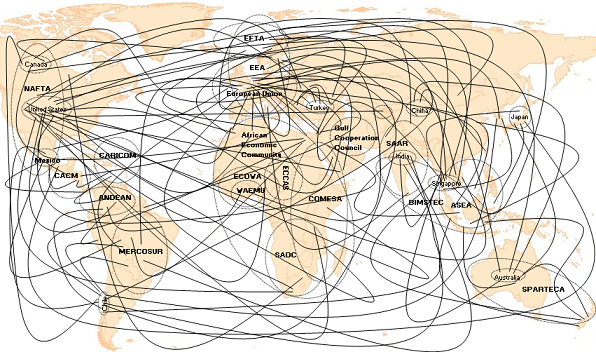
Source: UNCTAD.

Student Commentaries, Student Features

The Financial Stability Board

An essential component of the post-crisis regulatory structure was an organization that could coordinate the work of regulators, both across subject areas and countries, and highlight potential problems and gaps in regulation. The G-20 established the Financial Stability Board (“FSB”) to do just this, placing it near the top of what Herring describes as the “new pecking order” among international financial regulators.

By forming the FSB, the G-20 deepened connections between the technocratic world of international financial regulators such as the Basel Committee and the political world of the finance ministers of countries that are members of the G-20. The FSB should now have the tools to effectively coordinate cross-border issues and rules while taking into account the political will of its members. The actions that the FSB is taking today will shape the future of financial institutions across the world.

Read full article (PDF)

Scroll to Top