Digest

Digest

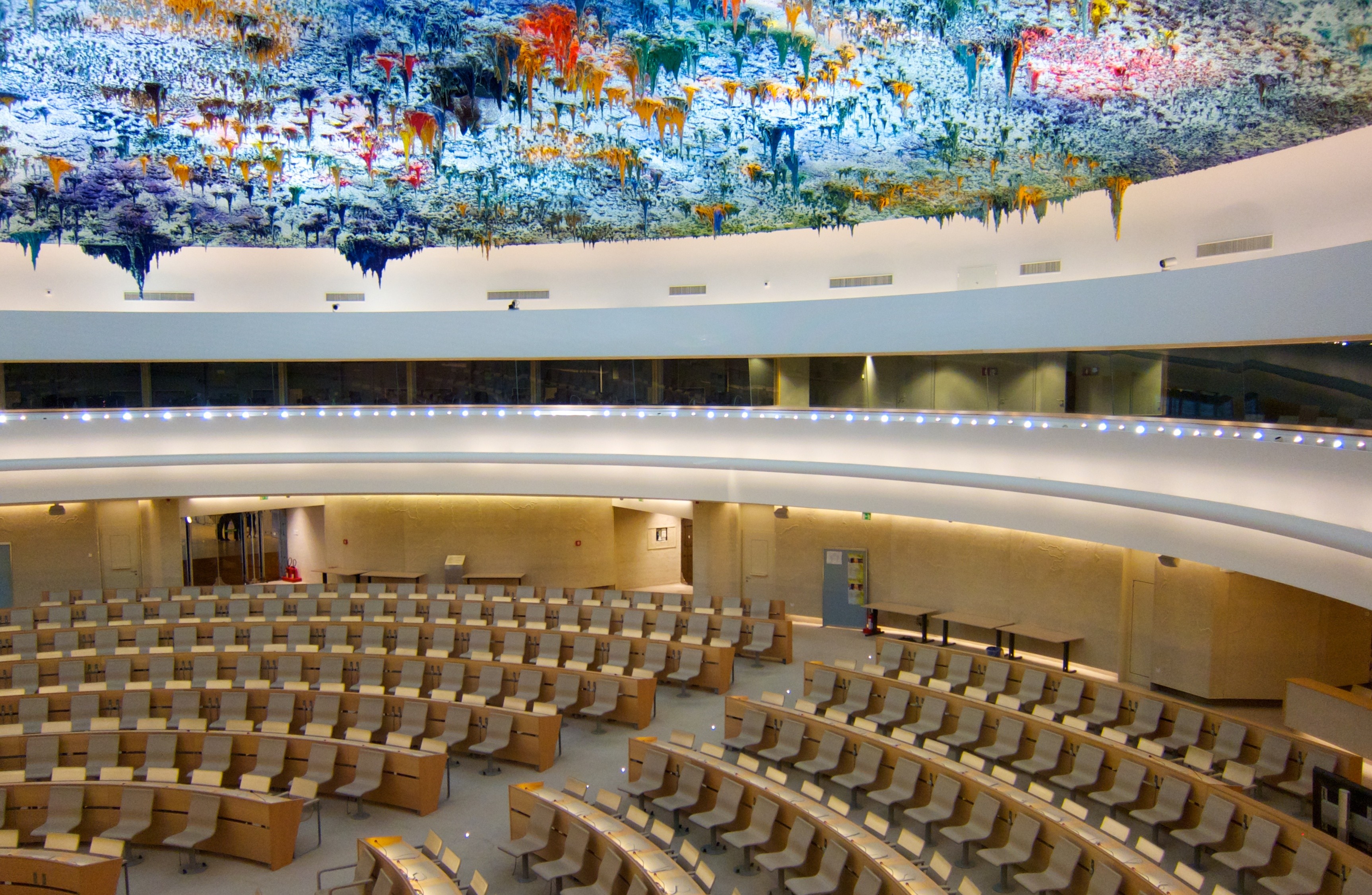
UNHRC Completes Its 17th Session of Universal Periodic Review

Posted by Guo Cai – November 19, 2013 @ 00:09.

On November 1, 2013, the United Nations Human Rights Council (“UNHRC”) completed its 17th Universal Periodic Review (“UPR”) session.  The UPR is a cooperative mechanism to review through interactive dialogue each State’s fulfillment of human rights obligations.  Representatives of fifteen States under Review (“SuR”: Saudi Arabia, Senegal, China, Nigeria, Mexico, Mauritius, Jordan, Malaysia, the Central African Republic, Monaco, Belize, Chad, Israel, the Congo and Malta) presented their national reports on human rights.  Following these national reports and submissions from OHCHR and NGOs, other UN member-states took the floor to comment or give recommendations.  Responses from SuRs followed.  The UPR Working Group, composed of the 47 members of the Human Rights Council, then adopted draft reports for each SuR for the 17th session.  Final reports are expected to be adopted in March 2014.

A highlight of the 17th session was Israel’s return to the UPR on October 29, 2013, for its second round of review.  Israel suspended relations with the Human Rights Council in May 2012 and did not attend the January 2013 review session.  Israel’s participation in its review in October 29, resuming cooperation with the Human Rights Council, resolved the fear that Israel’s absence would undermine the universality of the UPR.

The UNHRC held its first UPR Cycle between April 2008 and June 2012, during which it held twelve UPR sessions, reviewing a total of 192 States.  The second UPR Cycle, beginning in 2012, introduced some new modalities, including a focus on steps each SuR took to implement recommendations from the first UPR Cycle and on general human rights developments in each SuR.  In fact, some recommendations made for Israel explicitly refer to follow-up from the first cycle, under the sub-heading of “Follow-up to the UPR”.  Some observers view this as a positive move to highlight the implementation of recommendations and urge a high level of accountability for SuR.

The 18th UPR session is scheduled for January 27 to February 7, 2014. The list of SuRs and a tentative schedule can be found here.

More information about the history, objectives and process of the UPR can be found here.
Digest

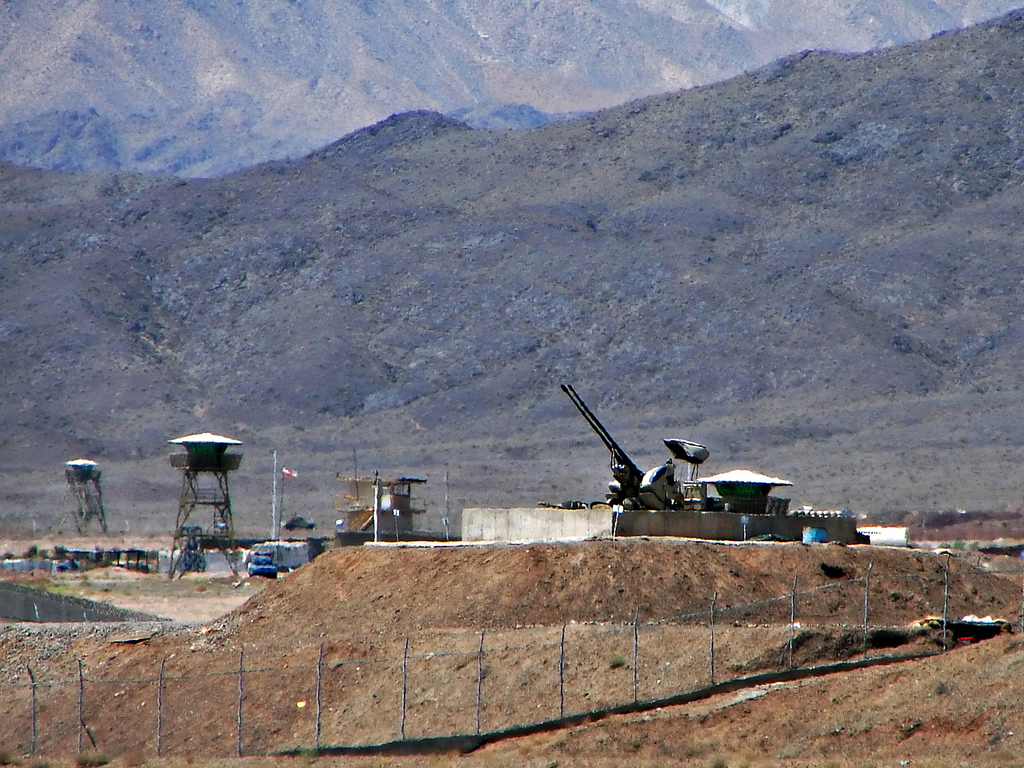
Stalled Iran Nuclear Talks Highlight Divergent Interpretation of the 1968 Nuclear Non-Proliferation Treaty

Posted by Ashley Belyea – November 15, 2013 @ 21:26.

On November 10, 2013, talks on the future of Iran’s nuclear program stalled between Iran and the P5+1—the United States, the United Kingdom, France, Russia, China, and Germany.  Negotiators were unable to conclude an interim agreement governing Iran’s nuclear program.  The process is not dead, however; low-level negotiators are set to resume talks on November 20.   At issue is Iran’s insistence on its right to enrich uranium for nuclear fuel production.  The United States, on the other hand, “does not believe there is an inherent right to enrichment.” Diplomatic and political concerns loom large, but the disagreement has its roots in treaty interpretation.

Iran’s assertion of a right to enrich for energy production invokes and tracks the language of the 1968 Nuclear Non-Proliferation Treaty (“NPT”), to which it is a party.  Article IV of the NPT reads:  “Nothing in this Treaty shall be interpreted as affecting the inalienable right of all the Parties to the Treaty to develop research, production and use of nuclear energy for peaceful purposes without discrimination and in conformity with Articles I and II of this Treaty.”  The right to “develop research, production and use of nuclear energy,” Iran argues, includes the right to enrich uranium for fuel production.

For its part, the United States may be relying on three parts of Article IV to deny Iran’s right to enrich.

  • First, while nothing in the NPT can affect Iran’s right to pursue nuclear development for peaceful purposes, the United States could argue that extra-treaty forces may still affect that right.  For example, article 103 of the United Nations Charter (“UNC”) trumps any treaty inconsistent with the UNC, “including the Nuclear Non-Proliferation Treaty.”  Unanimity among the P5 in negotiating a proposed deal with Iran could be read as action by the UN requiring compliance under UNC Article 103 affecting Iran’s right to enrich.
  • Second, the U.S. has argued that Article IV makes no mention of a specific right to enrich uranium, and that a ban on enrichment does not bar Iran from pursuing its Article IV rights.
  • Third, U.S. negotiators could argue Iran has not complied with Article II of the NPT, which prohibits “non-nuclear” countries from pursuing a nuclear weapons program.  As a matter of treaty interpretation, non-conformity with Article II could be interpreted to nullify a state’s ability to claim a right under Article IV. Perceived non-conformity bridges the language of the treaty and the security concerns motivating the P5+1 to insist on more stringent nuclear control in Iran.


Digest

What the Standoff Over Chemical Weapons in Syria Says About Article 2(4)’s Prohibition of the Threat of Military Force

Posted by Joseph Klingler – November 11, 2013 @ 01:13.

Responding to the August 21, 2013, use of chemical weapons in Syria—what the United Nations Secretary-General stated clearly amounted to a war crime—the United States came to the brink of violating a norm no less sacrosanct than that embodied in the Chemical Weapons Convention itself: the prohibition on the use of force.

As U.S. forces prepared to strike, UN Secretary-General Ban Ki-Moon added his voice to those insisting that the use of force is prohibited absent Security Council approval or a valid exercise of the right to self-defense.  The eventual U.S. about-face on military intervention was undoubtedly grounded more in politics than law. Nonetheless, the administration’s restraint helped insulate the norm of non-use of force from those who might have pointed to a military intervention in Syria as further support for the argument that article 2(4) is dead.

Article 2(4) is not dead, and such claims would have remained premature even had the U.S. moved forward with illegal military strikes.  But the focus on the use of force can obscure a larger point: that article 2(4) prohibits the threat of force no less than its use.  How, it is reasonable to ask, should one reconcile this fact with Secretary of State Kerry’s own open and continued insistence that the “threat of force remains”?  Applying the doctrine of desuetude, one could argue that developing custom has eclipsed the Charter’s prohibition of threats, leaving intact only its prohibition of actual uses of force.  A better conclusion may be that while the prohibition remains intact, in many cases the political costs of violating it are low enough to be outweighed or overlooked by decisionmakers.  In either case, the message to unilateralists may well be that states can often get away with threatening force all they want—so long as they don’t use it.

Digest

What Would a U.S.-China Bilateral Investment Treaty Mean?

Earlier this month, a senior U.S. Department of State official indicated that the United States and China, following years of consideration and five months of expedited negotiations, will soon have the draft text of a Bilateral Investment Treaty (BIT).  The agreement would further liberalize the trade relationship between the United States and China, as well as providing a framework for resolving future commercial disputes.

But some commentators have raised questions about the full legal implications of such an agreement.  In particular, the BIT could turn many American and Chinese regulatory decisions into arbitrable investment disputes.

A BIT typically permits aggrieved foreign investors to seek compensation for unfair or inequitable regulatory treatment in arbitration instead of host country domestic courts.  Such an agreement with China would mark the first time that the United States has signed a BIT with a substantial foreign investor and opened the possibility of litigating American regulatory decisions before international arbitrators.  With large scale regulatory reform on the horizon, particularly in the financial sector which has substantial Chinese investment, this possibility raises complex sovereignty questions.

In addition, arbitration of American regulatory disputes raises the tricky question of compliance with an adverse decision.  The United States has typically treated BIT’s as self-executing treaties, but Congress would have to approve the payment of adverse judgments.  Domestic political considerations would make such authorization unpalatable, and any failure to pay could jeopardize the overall BIT framework.

As of now, the parties have reached no agreement, and the U.S. Senate would have to ratify any BIT before it took effect.  But, as several commentators have noted, the issues surrounding a U.S.-China BIT merit careful scrutiny.

For more information, please click here and here.

Digest

ECtHR Rules Croatian School Segregation Discriminatory

In its decision in Oršuš and Others v. Croatia on Tuesday (3/16), a seventeen-member Grand Chamber of the European Court of Human Rights (ECtHR) held that the policy of Croatian primary schools distinguishing among students based on their grasp of the Croatian language resulted in discriminatory segregation of Roma students in violation of the European Convention on Human Rights. The 9-8 decision reverses a unanimous ECtHR Chamber judgment from 2008 and counters a 2007 Croatian Constitutional Court decision that upheld the policy.

The applicants, fifteen Roma students from two Croatian primary schools, contested the schools’ policy of placing students who lacked an adequate command of the Croatian language in separate classes. In both schools, the separate classes consisted solely of Roma students. They argued that this fact, taken along with the high drop-out rates and low attendance of Roma students, amounted to discriminatory school segregation in violation of Art. 14 of the European Convention on Human Rights (prohibition of discrimination) and Art. 2 of Protocol 1 to the Convention (right to education).

While all students in the separate classes were Roma, not all Roma students at the school were in separate classes. In fact, most Roma students were fully integrated. The Court thus found it could not rely upon its previous jurisprudence on the subject of school segregation, which had found prima facie discrimination only where a large majority of Roma students were subject to different schooling policies.

Nevertheless, the Court determined that the fact that only Roma students lacked sufficient grasp of the Croatian language mandated that the schools apply special safeguards to ensure that their stated end of providing for the special needs of such students was adequately pursued, especially given the position of Roma as “a special type of disadvantaged and vulnerable minority [that] require special protection.” It found such safeguards lacking. The schools did not, for example, adequately test the linguistic skills at issue or provide sufficient language instruction in the separate classes. Furthermore, they did not take measures to combat the low attendance and high drop-out rates of Roma students. From these facts, the Court concluded that “the schooling arrangements for Roma children were not sufficiently attended by safeguards that would ensure that, in the exercise of its margin of appreciation in the education sphere, the State had sufficient regard to their special needs as members of a disadvantaged group.”

The minority opinion argued that, absent evidence showing discrimination on ethnic grounds, the Court should have afforded the state “quite a wide margin of appreciation” when deciding how “to address the special needs of certain pupils.” This was especially true given that Croatia’s Constitutional Court and an ECtHR Chamber had already unanimously approved the measure. According to the minority, the majority’s reasoning is better understood as an attempt to address the general disadvantages faced by the Roma population, rather than as a response to the particular situation that the Croatian educators faced.

For further information, please see the Court’s decision and press release.

Digest

“Interlaken Declaration” Addresses ECtHR Reform

On February 18th and 19th, ministers representing 47 nations from the Council of Europe convened in Interlaken, Switzerland to address the need for urgent reforms to the European Court of Human Rights (ECtHR). The resulting Interlaken Declaration now sets in motion a process for developing future reforms and the continued existence of the ECtHR.

The Declaration comes in response to a heavily overburdened ECtHR. There are approximately 120,000 outstanding cases, with an estimated ninety percent being “clearly inadmissible or having no legal basis,” according to the Council of Europe. Addressing a desperate situation, Secretary General Thorbjørn Jagland announced that, “We will save the Court because we have no other choice. People in Europe deserve no less and will get no less.”

The Interlaken Conference continues a process of ECtHR reform begun in 2001. Protocol 14, which calls for long-term efficiency within the ECtHR, was proposed then but was long went unratified. On Thursday, February 18, immediately before the opening of the Ministerial Conference, the Russian Minister of Justice Alexander Konovalov deposited the ratification instrument. Protocol 14 will therefore enter into force on June 1, 2010, paving the way for court reform.

The Interlaken Declaration called on member states in consultation with civil society to produce specific proposals for reform by June 2012, and for a fuller implementation of the “subsidiarity principle,” which recognizes the primary role of national governments in implementing ECtHR decisions.

The Declaration comes during Switzerland’s sixth-month term as President of the Council of Europe.

For more information, see here.

Scroll to Top