Digest

Digest

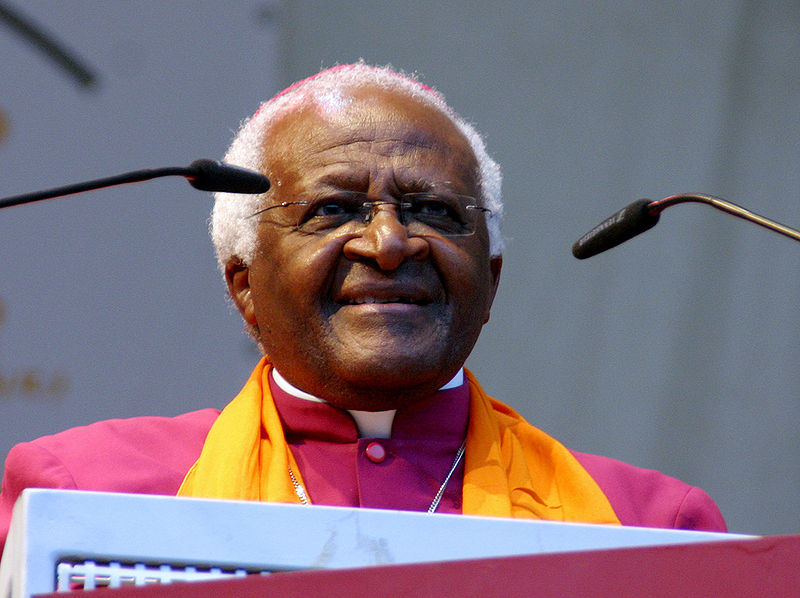
Archbishop Desmond Tutu, Along With Activists and Scholars, Discusses Transitional Justice at HLS

On Tuesday, March 9, Harvard Law School, the Harvard Human Rights Program, and UNICEF will sponsor the panel discussion “Children and Transitional Justice.”

Archbishop Desmond Tutu will participate by video, along with Yasmin Sooka of the Foundation for Human Rights, South Africa, Susan Bissell, Global Chief of Child Protection for UNICEF, Sharanjeet Parmar of Global Rights, and Jens Meierhenrich of the Harvard University Department of Government.

Harvard Law School Dean Martha Minow will moderate.  The event will take place in the Ames Courtroom in Austin Hall from 12:00 – 1:00 pm.

For more information, please click here.

Digest

Conviction of Group for Wearing Religious Clothing Overturned by European Court of Human Rights

In Ahmet Arslan and Others v. Turkey, the European Court of Human Rights overturned, by a vote of 6-1, a 1997 decision by the Turkish courts convicting 127 Turkish nationals of breaking two laws, one against wearing headgear and the other against wearing religious clothing in public other than for religious ceremonies. The applicants, members of a religious group known as Aczimendi tarikatÿ, claimed that their conviction violated Article 9 (freedom of thought, conscience, and religion) of the European Convention on Human Rights. The ECtHR found that the decision of the Turkish courts amounted to violation of the applicants’ freedom of conscience and religion by prohibiting their expression of religion through their clothing. The court noted that it might have accepted that strict maintenance of a secular system was important for Turkey’s democracy and public safety, but that the Turkish judicial decisions at issue had failed to rely on that justification. The Court further noted that, unlike several other religious dress cases it had decided, the applicants here were punished for their religious dress in public areas that were open to all, rather than in public establishments where the state’s interest in religious neutrality might outweigh the individual’s right to manifest his or her religion.

The clothing mandated by Aczimendi tarikatÿ religious order includes a turban, baggy pants, a tunic, and a stick. Applicants had been arrested in 1996 while walking to the Kocatepe Mosque in Ankara, and filed their petition with the ECtHR in 1997.

For more information, see here and here.

Digest

Violence Mars Darfur Peace Treaty

On February 20th of this year, a major ceasefire treaty was signed between the Darfuri Justice and Equality Movement (Jem) and the government of Sudan. Jem is only one of the many militant groups in the Darfur region. However, it has presented a significant threat to the Sudanese government. President Omar al-Bashir had made the group a priority after it launched an attack against the strategically important city of Omdurman. The treaty included a possible power-sharing agreement and provisions for the return of refugees. It was welcomed by both the international community and groups with Sudan as providing a real chance for peace within the region.

However, less than two weeks after the signing of the treaty, there are reports that the Sudanese government has begun an offense against other rebel groups in Darfur. These clashes have given weight to demands by NGOs and other international observers that the central government include other militant groups in the peace treaty process. It is unclear whether such a proposal would be feasible, as Jem has threatened to leave the peace talks if other rebel groups are included. As a result, despite the new treaty, the prospects for peace in Darfur remain uncertain.

For further information, please see here, here, and here.

Digest

ECtHR Rules Against Russia On Chechnya Abductions

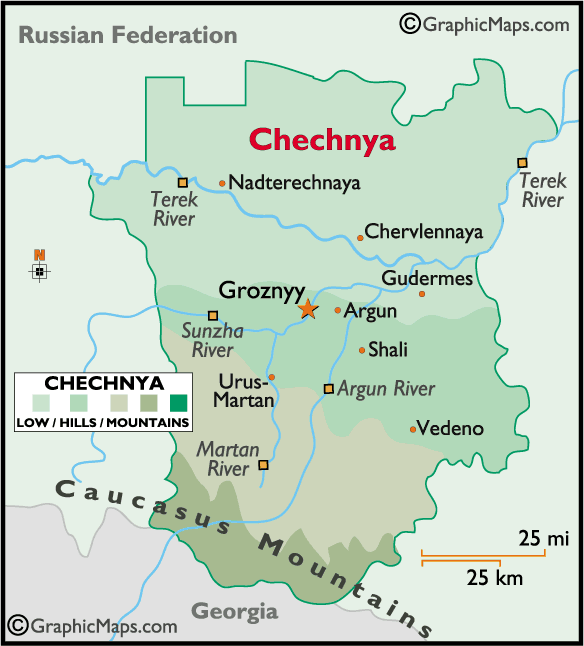
The European Court of Human Rights, on February 11th, issued two non-final Chamber judgments concerning disappearances in Chechnya. In the two cases, Guluyeva and Others v. Russia and Dubayev and Bersnukayeva v. Russia, the applicants alleged that Russian servicemen had abducted their relatives and that domestic authorities failed to conduct an effective investigation into their allegations. The Court found Russia in violation of Articles 2, 3, 5, and 13 of the European Convention on Human Rights, which concern the rights to life, the prohibition against inhuman or degrading treatment, the right to liberty and security, and the right to an effective remedy, respectively. The cases come in the wake of a January 2010 reversal of Russia’s longstanding opposition to reforms meant to expedite the adjudication of cases before the Court.

In Guluyeva, Russia’s investigation into the abduction of Ramzan Guluyev, taken from his home in Chechnya on the night of Jule 12-13 2002, was suspended numerous times for Russia’s failure to identify the perpetrators. The Court awarded Mr. Guluyev’s mother 10,800 euros, and 65,000 euros to Mr. Guluyev’s mother and two sisters jointly, plus expenses. Mr. Guluyev remains missing.

Dubayev was brought by the father of Islam Dubayev and the mother of Roman Bersnukayev. Their respective sons disappeared after submitting to a Russian Amnesty Act exculpating them from criminal liability based on their involvement in an illegal anti-Russian group. The Russian government maintains that the two men have been released. The families filed missing person reports, but the government has denied them access to case-files, despite numerous suspensions of the investigations, because it claims that revealing case-files while the investigation is in progress would violate Russian rules of criminal procedure. The Court awarded 60,000 euros to each of the applicants, plus expenses.

The applicants in Guluyeva were represented by the International Protection Centre, and in Dubayev by the NGO EHRAC/Memorial Human Rights Centre.

The judgments will become final pending the procedural protocol of the Court.

For further information, see here. For the Court’s opinion in Guluyeva and Others v. Russia, see here. For the opinion in Dubayev and Bersnukayeva v. Russia, see here.


Digest

ICC Pre-Trial Chamber Declines to Confirm Charges Against Sudanese Rebel Leader

On February 7,  a pre-trial chamber of the International Criminal Court (ICC) unanimously declined to confirm charges against Sudanese rebel leader Bahar Idriss Abu Garda. Mr. Abu Garda is the first person to appear voluntarily before the court. He had been charged with being a direct or indirect co-perpetrator of several war crimes, including murder, attacks against a peacekeeping mission, and pillaging. All of the charges arose from his alleged involvement in an attack on Sept. 29, 2007, against the UN’s African Mission in Sudan (AMIS) in North Darfur. The Chamber found that while the allegations were sufficiently serious and while the personnel and installations associated with the AMIS peacekeeping mission were entitled to protection as civilians and civilian objects, the prosecution had produced insufficient evidence to establish substantial grounds that Mr. Abu Garda had participated in the attack.

The prosecution, led by Luis Moreno-Ocampo, had produced statements of anonymous witnesses. However, the Chamber found the statements to be of diminished probative value as they could not be directly challenged by the defense. The Chamber further found them to be “weak and unreliable due to the many inconsistencies,” and held that they failed to establish substantial grounds to believe that Mr. Abu Garda participated in any common plan to attack the AMIS mission. Further allegations that Mr. Abu Garda was himself involved in the attacks were found insufficient as the witness statements did not establish that he was present at the time of the attacks.

The Chamber’s decision not to confirm the charges presents yet another setback to the ICC’s efforts regarding the Darfur situation. The issue of Darfur was first referred to the Court by Security Council Resolution 1593 on March 31, 2005, following an International Commission of Inquiry on Darfur. Of five defendants indicted in four separate cases relating to the region, four remain outside of the Court’s custody, including Sudanese President Omar Hassan Ahmad al-Bashir. The charge of genocide against Mr. al-Bashir’s also failed to gain confirmation by the pre-trial Chamber, although the appeals Chamber recently ordered lower court to reconsider its decision in light of additional and previously disregarded evidence.

It is expected that, as in the al-Bashir case, the ICC prosecutor will again seek to appeal the pre-trial Chamber’s decision on Mr. Abu Garda.

For more information, please see the Court’s press release (here) and the Chamber’s decision (here).

Digest

Cyprus: Further Movement Toward a Political Solution

After numerous false starts, negotiations between the two parties to the decades-old stalemate in Cyprus seem to be moving forward again, this time with the assistance of UN Secretary General Ban Ki-moon. Mr. Ban Ki-moon recently made his first official visit to Cyprus. The island nation has been divided into a Greek-speaking south and a Turkish-speaking north since 1974, when a Greek-led coup sought to annex the island to Greece, prompting a Turkish invasion that claimed the top 37% of the island. The north, which calls itself the Turkish Republic of Northern Cyprus (TRNC), has only been recognized by Turkey, and has lagged behind the impressive economic development of the south, which enjoys broad international recognition and now represents the island in the European Union. UN peacekeepers patrol the unofficial border between the two sides, and the island is heavily militarized. During his visit, Mr. Ban Ki-Moon visited with leaders from both the Turkish and Greek factions.

Previous talks have been derailed by a number of contentious issues; the most serious recent attempt at unification, in 2004, produced an agreement which was subsequently ratified in a referendum by the north but rejected, under the hard-line presidency of Tassos Papadopoulos, by the south. Papadopoulos has since been replaced by the more moderate Demetris Christofias, but the Turkish Cypriot leader, Mehmet Ali Talat, now faces a challenge in upcoming elections from a more hard-line candidate. This has ramped up the pressure for a solution, as has the fact that the ongoing stalemate has dimmed Turkey’s prospects in its own bid for EU accession.

Legal issues relating to the conflict stem originally from the question of whether the 1974 Turkish invasion was justified as a matter of international law. Greek Cypriots argue that the invasion was a clear violation of the UN Charter, which prohibits aggressive war; their argument is supported by the fact that no multilateral body authorized the action. Turkish Cypriots counter that Turkey’s response was justified, as a form of self-defense, by the prospect of the island’s annexation to Greece, and, as a form of humanitarian intervention, by longstanding intercommunal violence directed toward the Turkish-speaking minority. Going forward, both political and legal solutions will be needed to address issues including the division of contested territory, the presence of Turkish forces, reparations for lost property, and power sharing under a proposed federation.

For more information, please click here.

Scroll to Top