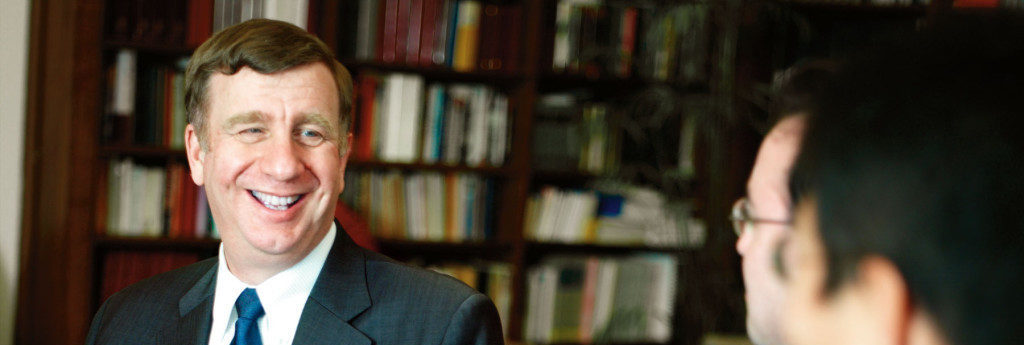
Alford Tribute

Alford Tribute, Content

Leia Anastacio’s Tribute to Professor William P. Alford

Leia Castañeda Anastacio

LL.M. ’96 and S.J.D. ’09, Harvard Law School

I was six years out from my LL.M. graduation, and my family had just relocated from New England to the Deep South. I had a toddler and a newborn. I had also just written my first original work of legal history, but lived 200 miles away from the nearest law school. If anyone had told me then that I would return to Harvard Law School, graduate with my S.J.D. degree, win legal history prizes, and publish my dissertation with Cambridge University Press, I would have been hard-pressed to believe them. Having just settled in the suburbs of Muscle Shoals, Alabama, I found the prospect of pursuing legal historical scholarship in earnest a daft dream. But with Professor Alford’s help, I got my dream shot. 

Commending my first foray into legal history, Professor Alford inevitably followed up with the practical concern, “so what would you like to do?” When I disclosed that I wanted to do legal history and had always regretted not pursuing the S.J.D., he encouraged me to apply while cautioning me that competition would be especially keen for the coming academic year. It was the winter of 2002, and with 09/11 throwing the job market for LL.M. graduates into greater uncertainty, the HLS Graduate Program expected S.J.D. applications to double, even triple, in number. Nonetheless, with Professor Alford’s guidance, the fall of 2002 saw me making my way, half-dazed, past Langdell and Griswold and towards Pound to register for my mandatory year in residence. I could scarcely believe I was back. And was I ever.

Juggling the demands of a doctoral program with marriage and motherhood was always going to be challenging, but in Professor Alford, I could not have found a more supportive and understanding supervisor and mentor, nor in the HLS Graduate Program that he ran, more flexible and accommodating logistics. Guiding with a firm hand but a light touch, his incisive critiques zeroed in on the weakest spots in my work, but were sufficiently constructive to point me towards the right direction, yet open-ended enough to enable me to grapple with theories, methodologies, sources, and data after my own fashion and figure a way towards my own answers, in the process allowing me to find my voice as a scholar. For its part, the Graduate Program worked with me to set a congenial timetable to fulfill requirements. 

My return to HLS occasioned another homecoming – that with the East Asian Legal Studies Program with which I had previously been a visiting scholar. As EALS director, Professor Alford provided this primarily off-campus student a home base that anchored me to the HLS community and shaped my experience and thus my memories of Harvard. As with its director, so does EALS represent the best in Harvard – its unrelenting quest for knowledge and excellence, its openness to difference and willingness to engage with both rigor and respect, its commitment to global transformation. As Vice Dean, Professor Alford imbued the Graduate Program with this same spirit, and under his stewardship, it has grown into a similarly warm, collaborative, and tight-knit family of dedicated scholars.

But perhaps what I am most grateful for is Professor Alford’s great faith in his students. In us, he often sees a potential greater than what even we might allow ourselves to imagine. But it is precisely this faith that drove me to accomplish the kind of scholarship that he believed I was capable of. And his is not an amorphous, ephemeral faith by any means, for it comes backed up by deeds through his enthusiastic support, both moral and material, of our pursuit of professional opportunities and ventures. Quite simply, he helps you get your dream shot and make the dream real. I doubt I would have become a legal historian but for his help. 

For everything that he has done for and been to me, I will never be able to thank Professor Alford enough. I wish him always and only the best as he embarks on this new phase in his professional and personal life. 

Alford Tribute, Content

Hu Xiaoqian’s Tribute to Professor William P. Alford

Hu Xiaoqian
LL.M.’12 and S.J.D.’19 Harvard Law School
Associate Professor of Law, University of Arizona James E. Rogers College of Law

When Harvard Law Today announced in August that Professor William Alford had completed his 18-year tenure as Vice Dean for the Graduate Program and International Legal Studies at Harvard Law School (HLS), there was an outpouring of thanks and congratulations in the global community of China law studies. This exuberant sentiment testifies how much the community appreciates his leadership and how excited we all are to have the legal scholar William Alford fully back again.

As Vice Dean, Professor Alford helped transform the lives of many people. I was one of them. He convinced me to come to Harvard to pursue further studies of law, particularly of Chinese law. During the subsequent years I cannot count the times in which he tirelessly read my drafty writing―drafts of the LL.M. thesis, of conference papers, of colloquium speeches, of fellowship proposals, of research agendas, of fieldwork reports, of the job talk paper, and lastly, of the S.J.D. dissertation. Thousands of pages of reading and commenting, just for one student! His comments were always thoughtful and perceptive, and his edits (Yes, he edited my writing too!) were strategically allocated to maximize impact and minimize embarrassment. I also cannot count the times in which he discussed my research plans, wrote letters of recommendation for my applications, introduced me to leading and emerging scholars in the field, and in numerous other ways supported me as I pursued my academic dream.

At and beyond HLS, Professor Alford is known for his grace, geniality, and unrestrictive style of mentorship. As his mentee, however, I can testify that while he gives junior scholars maximum space to form our own thoughts, when he sees a serious flaw in our analysis, he can be a formidable critic. Unexpected (and intimidating) as these moments might feel to a mentee, these are also moments that help us grow tremendously. His critique can be as mighty as a mountain; yet, only when you climb with him up to the top can you see the view that he hoped you would see. And that climbing will make a world of difference. Among all the things he did for me at HLS, critiquing my work was the one for which I am the most grateful. 

Like students anywhere, graduate students at HLS would hang together and sometimes gossip about life and professors at HLS. (Yes, we do!) We wondered how Professor Alford managed to teach, mentor, read, write, and lead three demanding programs―all at the same time. We concluded, jokingly but with sincere admiration and awe, that he must either not sleep at all, or have more than 24 hours a day or 7 days a week. How else could he possibly do it all?

As disorienting, disturbing, and disheartening as our times are, I am grateful that the academic community is receiving the full return of a powerful voice, a thinker with deep knowledge about China, the United States, and the international legal order. I cannot wait to see Professor Alford continue to illuminate us as we try to understand and improve our times.

Alford Tribute, Content

Seth Packrone’s Tribute to Professor William P. Alford

Seth Packrone
JD ’15

I first contacted Professor Alford in 2011, the year before I enrolled at HLS. At that time, I was teaching English at a university in Malatya, Turkey, and learning about the Turkish special education system. I was familiar with Professor Alford’s work with the Harvard Project on Disability (HPOD), advancing disability rights in countries around the world. Having written my undergraduate and graduate theses on disability rights and inclusive education, I hoped I could advance HPOD’s mission while in Turkey. I e-mailed Professor Alford to introduce myself and describe my background and interests. Minutes later, Professor Alford responded, enthusiastically welcomed my contributions to HPOD, and connected me with the co-founder of HPOD, Professor Michael Stein. I remained in close contact with Professor Alford and Professor Stein throughout my time at HLS. 

Even though I did not take a class taught by Professor Alford, he went out of his way to give me academic and career guidance. He helped prepare me for my career as a disability rights lawyer. Professor Alford’s enormous contributions to the fields of international law and disability rights are matched by his genuine kindness and dedication to HLS students. I am grateful Professor Alford answered my e-mail in 2011 and to have had the opportunity to learn from such an exemplary scholar and person.

Alford Tribute, Content

Mary Davis’ Tribute to Professor William P. Alford

Mary Davis
CEO of Special Olympics International

As Bill Alford steps down from his position as Vice Dean for the Graduate Program and International Legal Studies at Harvard Law School after 18 years, I wanted to take the time to acknowledge the incredible work he has been doing in the area of disability and justice and rights for all citizens.

He is renowned for his work at Harvard Law School, helping to transform its international programs, expanding the curriculum, establishing international exchange programs and opening the doors of Harvard to the best, the brightest and the most diverse range of law students. He had a great talent for knowing and doing what was right, and this was very evident in his drive and ambition to admit students irrespective of financial need and career goals, while also awarding financial aid by developing an innovative matching gift program with the help of friends and donors.

Bill may be less well known for his role as an advocate, a social activist and the lead director of Special Olympics, but his influence has been as mighty as his work with the Law School. Bill always sees ability not disability and believes in justice. As lead director, he has guided the organization together with our Chairman, Tim Shriver, and the Board and has strongly advocated for the rights of people with intellectual disabilities.

His work with us is always grounded in the belief that through sport, the athletes of Special Olympics can realize their skills and talents and excel to become the leaders and teachers of inclusion.

His deep international experience has helped us particularly with the development and expansion of our Programs in East Asia. His commitment to China and his great generosity were borne out when in 2019 he was awarded the annual Li Buyun Prize by the Shanghai Institute of Finance and Law and he donated his prize to the Special Olympics Program in China.

I also recall Bill leaping into the freezing cold waters of Austria in March 2017 to raise funds for our World Winter Games!

The athletes of Special Olympics and I are incredibly grateful to Bill for his commitment, contribution, warmth and tenacity and for his leadership of so many aspects of our programs, including more recently, our diversity and inclusion taskforce, which he leads with our Chief Legal Officer, Angela Ciccolo.

On a personal note, I consider it a gift, a blessing and an honor to have Bill by my side with his wisdom, sound advice, great judgement and gentle but highly effective nature, and I look forward to many more years of working closely and collaborating with him on the many strategies that will drive forward our Revolution that is INCLUSION.

Thank you Bill and very best wishes as you step away from your role as Vice Dean for the Graduate Program and International Legal Studies at Harvard Law School.

Alford Tribute, Content

Abdullahi An-Naim’s Tribute to Professor William P. Alford

Abdullahi Ahmed An-Naim
Professor of Law, Emory University School of Law

To honor William Alford, my “friend for life!”

By this title I mean to say that Professor William (Bill) Alford is not only my life-long friend, but one who helped me shape my life into one worth living. For context, let me begin with a brief narrative of my personal experiences, starting with when I first met William/Bill Alford in Cambridge, England, in August 1971 during my studies for the LLB (graduate degree at the time) in public law.  I am from Sudan, where I graduated in law from the University of Khartoum in 1970. I was then sent to the University of Cambridge on a scholarship from the University of Khartoum for graduate studies. That program was part of the policy of the University of Khartoum to replace British instructors with native Sudanese lawyers. During my academic stay in the UK, I earned an LLB and Diploma in Criminology in 1973 from the University of Cambridge, England; and PhD in comparative criminal law and procedure from the University of Edinburgh, Scotland, in 1976. As I now understand, I was a typical post-colonial subject and English Common Law lawyer. My “mission,” as I recall, was to make the Sudanese legal system as close to resembling the English Common Law system as possible, including the “dissident” Scottish European impulse, though Sudan was never a member of the British Commonwealth because we were colonized jointly by Britain and Egypt.

When I returned to Sudan with my family in October 1976, I assumed it was our final return from extended residence abroad. I was appointed lecturer in the Faculty of Law of the University of Khartoum. I also started teaching human rights and criminology at the Sudan Police Academy for several years, and a couple of times at the Sudan College of Prison Officers. I intended those extra-curricular teaching activities to promote the cultural transformation of the institutions of police and prison officers to instill values protecting human rights, out of personal and professional conviction. I am still pursuing this goal in all of my teaching and public advocacy activities out of respect for human rights at large. The mantra of integrating academic and sociological purpose and method for human rights to be protected within the family at home, in order to internalize these values with early socialization of children and become my “second nature” of embedded conviction.

We stand by the universality of human rights

This cultural approach to the promotion of the everyday practice of human rights evolved for me during conversations I used to have with Bill Alford since my earliest days in Cambridge. That vision was integrated with my personal values and professional discipline through what I initially called “internal discourse and cross-cultural dialogue.” As I continued to focus on the academic field of human rights throughout my teaching and researching career, I kept researching and publishing on concepts and strategies I associated with Bill from our student days. It is instructive that despite our apparent differences in racial/ethnic terms and religious affiliations, we shared our commitment to human rights and their universal practice in everyday life.

I am also grateful for conversations I had with Bill in 1972. Those conversations generated the theoretical framework for the origins of other theories that we debated as possible sources of the weakness or strength of human rights doctrine and process. Our concern for the universality of human rights became focal conversations and activities, personally and professionally. We managed to meet several times in subsequent years, such as when I was a fellow in human rights at Center for the Study of Human Rights at Columbia University in NYC, in 1981-82. I also visited Bill in Los Angeles in 1982 when he was teaching at UCLA. Bill’s contributions to my professional development include his presentation of a paper that yielded a chapter in a book I edited with the title: Human Rights in Cross-cultural Perspectives: Quest for Consensus, first published in 1992. The most recent visit by Bill was during his participation in a professional event at the Carter Center in 2017. Our grandchildren, who lived with their parents in Atlanta, fondly remember Bill’s visit for the fabulous children’s book he brought for them.

In an earlier significant visit, Bill came all the way from Los Angeles to Atlanta, when I was still in political detention in Sudan, to ask former President Carter to intercede on my behalf with President Numeri to secure my release as an academic. As Bill told me the story several years later, he thought of asking President Carter because he got to know him personally during the work that Bill did for President Carter’s relief and peace-making efforts in China. Bill respectfully explained that he came to request President Carter to write a letter to President Numeri asking for my release. As Bill told the president about my story, President Carter immediately pulled a sheet of letter-head paper and started writing in his own longhand, to paraphrase: Dear President Numeri, I am sure you are not aware of what your subordinate are doing without your knowledge. The young man I am writing about is a lecturer at the University of Khartoum, and does not mean to undermine your regime, etc…  Knowing how things worked in Sudan at the time, I am sure that President Carter’s letter was delivered to and read by Numeri but he would have been angry with me for using international contacts to embarrass him (Numeri). I am guessing that this was the scenario because in another situation when an American friend of mine asked a friend of his to ask Numeri to release me, Numeri got extremely angry and screamed at the man who asked him, telling him “how dare you intercede on behalf of traitors who are my enemies.” He also said that my American friends were my means for committing treason to undermine his (Numeri’s) regime.

The first time I met Bill Alford was at a reception presented by the Law School of Cambridge University. There were little prospects of hospitality in a party without a host, where all of the other guests were left “fending for themselves” in the company of their friends who were also doing the same. As I was waiting for an opportunity to sneak out and escape to my room, I was generously rescued by a human being with superior humanity who empathized with my besieged humanity. I often wondered about the connection between the snow of Boston, Bill’s hometown, and the snow I saw the evening of my first meeting with him. It was also the first night I ever saw and felt snow. Bill was my only refuge, with his touch of humanity and warmth during the duration of my first year and his second and, sadly, last year at Cambridge University.

From teaching rights to suffering loss of rights:

When I returned to Sudan in 1976 to teach at the University of Khartoum, I also continued my active membership of the Islamic reform movement of Ustadh (revered spiritual Teacher) Mahmoud Mohamed Taha, by participating in the movement’s public lectures and seminars, distributing hand-written pamphlets and publishing opinion pieces in the major newspapers of Khartoum. The most urgent focus of the movement was, as it had continued from beginning to end, to reform Sharia from within the Islamic tradition in order to base the current interpretation of Sharia within the present contextual position of Muslims around the world, to respond to their material and political as well as spiritual and sociological needs. Ustadh Mahmoud was advocating his view since the early 1950s and was highly respected in Sudan for his intellectual integrity and masterful command of Islamic discourse. The nature of the movement and its activities, however, tended to keep its membership small and informal, so generations of political leaders dismissed Ustadh Mahmoud’s movement as insignificant. Yet, he kept documenting and developing his advocacy of such principles as equality for women and non-Muslims and promoted democratic governance, all in a contextual reinterpretation of the Scriptural sources of Islam.

As President Numeri was planning to impose traditional Sharia rule by presidential decree in 1983, he moved to arrest Ustadh Mahmoud and his active followers by detaining them without charge or trial while he was trying to transform the legal and political system of Sudan to perpetuate his absolute control over the country. The rationale of Numeri’s juridical coup d’état was apparently based on the assumption that Muslims will not dare oppose Sharia rule, except Ustadh Mahmoud and his followers with their “heretical” discourse. Numeri’s preemptive strike was to detain Ustadh Mahmoud and his active followers to silence their voice before imposing Sharia rule. Most of the arrests were made in May of 1983. In my case, I was arrested 17 May 1983, at the Law School inside the University of Khartoum campus, as if to publicize repression of dissent. The point was painfully stressed to me as the detention of our group dragged on to eighteen months, while more targeted political dissidents were kept in detention without trial for many years. That and other experiences of lawlessness over the next weeks and months were instructive for me about how fragile the rule of law is and how alien the talk about inalienable rights is.

Yet, immediately upon the release of our group on 19 December 1984, after 18 months of detention, Ustadh Mahmoud issued a statement on a single sheet of paper, condemning the enactment of Sharia by Decree and resumption of the civil war in South Sudan. On the basis of that single sheet of paper, Ustadh Mahmoud was convicted by a “Special Court” consisting of a single judge on charges of treason and conspiracy to overthrow the Constitution and sentenced to death. In his final confirmation of the death penalty, Numeri added the charge of apostasy which did not exist as a crime in the Sudan Penal Code at the time. Every member of the movement was required to sign a statement denouncing Ustadh Mahmoud as a heretic and undertake to refraining from advocating his ideas. As an academic, I was able to leave Sudan to go to the Human Rights Center of Columbia University in New York for the summer of 1985. While at Columbia, Bill arranged for me to be invited as a visiting professor at UCLA Law School, initially for one year extended to a second year.
Alford Tribute, Content

John Goldberg’s Tribute to Professor William P. Alford

John Goldberg
Deputy Dean, Carter Professor of General Jurisprudence, Harvard Law School

Occasions such as these often invite the question: “Where do I begin?” My difficulty is the opposite. When it comes to Bill Alford, where does one stop?   

In law, in history, and in world affairs, Bill is supremely learned. And unlike those of us who tend to study things in plain sight, he has investigated and shed light on topics that powerful people prefer to keep hidden. Yet, for Bill, worldliness has never meant weariness. True to the man, his work features a disarming and uplifting combination of humility, humanity, and utter decency.

Others are better positioned to capture Bill’s personal, institutional and scholarly accomplishments and legacy. I will therefore limit myself to a brief acknowledgment and observation. 

It is easy to assume that established institutions such as Harvard Law School and the Special Olympics are destined to keep on keeping on, as if by automatic pilot. In fact, they survive and thrive only because of the abilities and efforts—often uncredited—of individuals. From personal experience, I know that Bill is one of these people. At a thousand different moments, Bill’s dedication, wisdom, honesty, discretion, and sense of fair play have mattered to the maintenance and growth of Harvard Law School and Harvard University. Credit should be given where credit is due. Thank you, Bill.  

Now the observation. In philosophical circles, there is a longstanding debate over the moral relevance of proximity. Do we owe more to those nearest to us—family, friends, colleagues, neighbors? Or should we focus on the good we can do for people, whoever and wherever they are? Quietly, unassumingly, simply by doing what he does and being who he is, Bill has demonstrated the falsity of this supposed choice. He is devoted to his family, to his students, to his colleagues, to the graduate program, to international legal studies, and to the law. He is no less devoted to humanity, and particularly to the world of persons who for too long have been undervalued and mistreated because of their disabilities. His scholarship is likewise local and universal—about particular nations and their problems and about transcendent human rights. I am beyond grateful that I can count Bill as a colleague and friend. He will always serve for me as a constant reminder of how to do right by others, near and far.

Scroll to Top