Online Scholarship

Content, Student Features

Striking the Balance: Combating Terrorism and Preserving the Freedom of Expression in Ethiopia

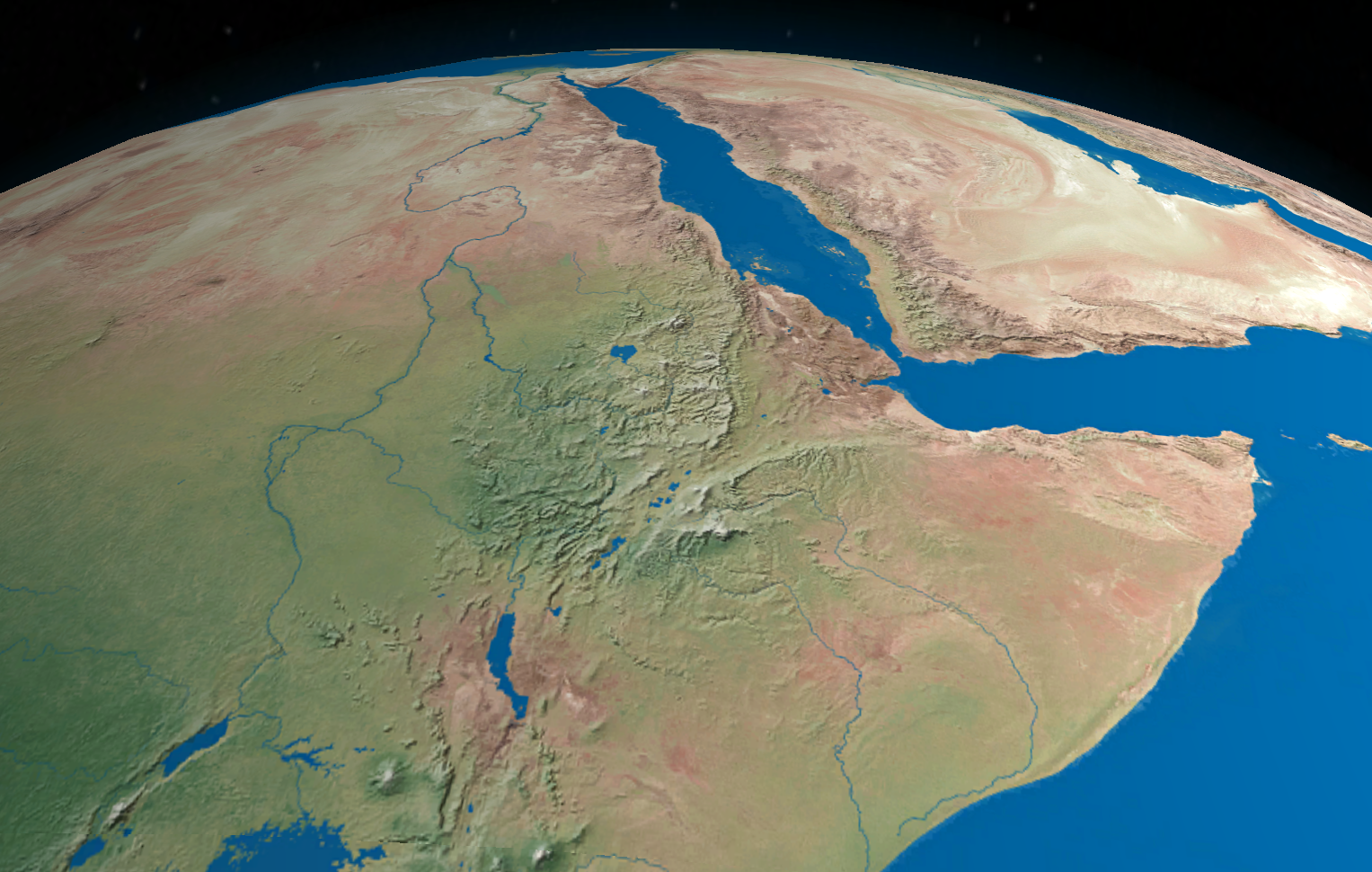
Image from https://globalquiz.org/en/quiz-image/ethiopia-from-space/.

By Lindsay Church

The freedom of expression is the cornerstone of a functioning democracy. Journalists monitor the government and share information so that citizens can be informed and participate in the democratic process. This essential right of free speech, however, must be balanced with national security interests—an especially complex task in the face of grievous terrorism threats. Though Ethiopia has signaled its desire to comply with international guarantees, over current President Teshome’s administration the country’s leaders have nonetheless exploited counterterrorism policies to silence political dissidents. This disconnect between promise and practice demonstrates the omnipresent problem of international law: it is difficult to ensure actual implementation and enforcement of international obligations.

International Governance of the Freedom of Expression

International and regional regimes have established mechanisms to complement national protections of the freedom of expression. The Universal Declaration on Human Rights (UDHR) was the first international instrument to shift focus from state sovereignty to the individual as the beneficiary of rights. While the UDHR does not have the binding legal force of a treaty, it sets forth prominent standards through which the international community can review compliance. The International Covenant on Civil and Political Rights (ICCPR) later brought binding force to the idealistic principles articulated in the UDHR. The right to freedom of expression is addressed in article 19:

  1. Everyone shall have the right to hold opinions without interference.
  2. Everyone shall have the right to freedom of expression; this right shall include freedom to seek, receive, and impart information and ideas of all kinds, regardless of frontiers, either orally, in writing or in print, in the form of art, or through any other media of his choice.
  3. The exercise of the rights provided for in paragraph 2 of this article carries with it special duties and responsibilities. It may therefore be subject to certain restrictions, but these shall only be such as are provided by law and are necessary: (a) For the respect of the rights or reputations of others; (b) For the protection of national security or of public order (ordre public), or of public health or morals.

The text of the ICCPR leaves much room for disagreement among parties as to the proper interpretation of the right to freedom of expression. To alleviate the problem of conflicting meanings, the Human Rights Committee issued the highly authoritative, though not legally binding, General Comment No. 34. In this comment, the Committee highlighted the importance of the freedom of expression and emphasized the legal obligations of states parties. It also made policy recommendations related to the balance of freedom of expression and terrorism that states parties should adopt to more effectively implement their ICCPR obligations:

States parties should ensure that counter-terrorism measures are compatible with paragraph 3. Such offences as “encouragement of terrorism” and “extremist activity” as well as offences of “praising,” “glorifying,” or “justifying” terrorism should be clearly defined to ensure that they do not lead to unnecessary or disproportionate interference with freedom of expression. Excessive restrictions on access to information must also be avoided. The media plays a crucial role in informing the public about acts of terrorism and its capacity to operate should not be unduly restricted. In this regard, journalists should not be penalized for carrying out their legitimate activities.

In theory, Ethiopia should comply with these obligations; in reality, however, their enforcement of domestic law directly opposes these commitments.

Freedom of Expression: The Semblance of Free Speech and the Harsh Reality

Ethiopia has a legal framework that prima facie appears to cultivate the freedom of expression—it has ratified major international and regional treaties that guarantee free speech, adopted a constitution that prioritizes civil rights, including the right to freedom of expression, and passed national legislation designed to protect the media. Notwithstanding these measures, journalists critical of the government have been dealt severe civil and criminal sanctions. These punishments are usually imposed within the bounds of domestic law.

Ethiopia’s Anti-Terrorism Proclamation proves especially worrisome. Ethiopian People’s Revolutionary Democratic Front (EPRDF) leaders have credited other nations like the United States and England as inspiration for the law. The Proclamation’s provisions, however, are vague and expansive. Article 5 prohibits rendering support to terrorism, and sub-article (b) specifically bands “provid[ing] a skill, expertise or moral support or giv[ing] advice.” Moreover, article 6 criminalizes “encouragement of terrorism”:

Whosoever publishes or causes the publication of a statement that is likely to be understood by some or all of the members of the public to who it is published as a direct or indirect encouragement or other inducement to them to the commission or preparation or instigation of an act of terrorism stipulated under Article 3 of this Proclamation is punishable with rigorous imprisonment from 10 to 20 years.

Since the law’s adoption in 2009, several journalists have been targeted with trumped-up charges of terrorism. One of the most prominent cases involves Eskinder Nega, who days before his arrest published an online article that condemned the EPRDF for exploiting counterterrorism laws to punish critical voices. Nega was accused of conspiring with a terrorist group, Ginbot 7, to overthrow the government and also receiving weapons and explosives from Eritrea to commit terrorist acts in Ethiopia. Despite the State’s egregiously lackluster case against him, Nega was found guilty and sentenced to eighteen years in prison. In another case, three journalists and six bloggers—collectively known as the Zone 9 bloggers—were accused of working with Ginbot 7 shortly after a Facebook post announcing their return to journalism. Their trials were afflicted with delays and corruption. Five were released earlier this year, and the four others remain behind bars. And in 2011, during the course of investigating human rights violations occurring in the Ogaden oilfields by Ethiopian troops, two freelance journalists from Sweden—Martin Schibbye and Johan Persson—crossed the border from Somalia to Ethiopia without the requisite visas. They were arrested and sentenced to eleven years in prison for entering the country illegally and supporting the Ogaden National Liberation Front (ONLF), a rebel unit that has been designated as a terrorist group. After serving 438 days, the pair was pardoned by Prime Minister Meles Zenawi before his death.

These national laws are being utilized to undercut the right to freedom of expression, violating international standards. The consequences of this are many: the government retains undue influence over the information disseminated within its borders; high-ranking officials can abuse their powers without fear of exposure; the controlling political party faces no real political competition; and journalists and political dissidents are arbitrarily detained and deprived of other fundamental rights.

Moving Forward 

Ethiopia’s legal framework—both in text and in practice—violates internationally recognized standards regarding the freedom of expression. Ethiopia’s Anti-Terrorism Proclamation in particular has garnered international concern for its vague provisions and targeted use toward journalists and political dissidents. EPRDF leaders have refuted criticisms, attributing the Proclamation’s provisions to anti-terrorism laws from many states that denounce the law. It is imperative that States comply with their commitments to increase respect for the freedom of expression in the international community. Ethiopia’s lack of compliance raises questions about the effectiveness of international laws and treaties more broadly: why do we allow signatories to flagrantly disregard their commitments? How could these standards be better enforced while still allowing states the autonomy to effectively implement counter-terrorism policies?


Lindsay Church is a third-year student at Harvard Law School. She was a Human Rights Fellow at the Media Legal Defence Initiative in London, and conducted research on the effect of antiterrorism policies on free speech while a visiting student at the University of Oxford’s Programme in Comparative Media Law & Policy.

Online Scholarship

Diplomatic Protection and Individual Rights: A Complementary Approach

Classical diplomatic protection has historically ignored the individual as a subject of public international law. This legal fiction, allowing the state to make a claim in the person of its nationals, replaces the individual’s right to claim remedies or indemnities for damage sustained as a result of human rights violations. Diplomatic protection could and should be redefined so as to incorporate the protection of individual rights. This complementary approach, recognizing the interdependence of individual and state rights, is already underway in the case law of the International Court of Justice and the work of the International Law Commission.

Read full article (PDF).

Online Scholarship

Extraterritoriality: Issues of Overbreadth and the Chilling Effect in the Cases of Cuba and Iran

The scope of economic sanctions and the aggressiveness of their enforcement have increased dramatically since the early 1990s. This is particularly true of sanctions imposed by the United States, and is most evident in the U.S. sanctions regimes that are extraterritorial.

One might think of extraterritoriality in U.S. sanctions regimes as having two generations. The first generation was the era of the Iran-Libya Sanctions Act (“ILSA”), the Torricelli Act, and the Helms-Burton Act, of the early and mid-1990s; the second consists of the sanctions regimes of the last decade or so. The differences between the two generations indicate a marked shift, not only in the explicit scope of extraterritorial sanctions laws, but also in the degree and nature of their overbreadth. This article will examine these issues, looking specifically at the cases of Cuba and Iran.

Read full article (PDF).

Online Scholarship

The AMEDD Five Years On: Trends in Enforcement Actions and Challenges Facing the Enforcement Landscape

It has been five years since the multilateral development banks (MDBs) adopted a new initiative, the Agreement for Mutual Enforcement of Debarment Decisions (AMEDD). The AMEDD enables the MDBs to recognize and enforce the sanctions decisions of other institutions participating in the AMEDD, thereby multiplying the effect of one institution’s sanctions on a debarred party. The AMEDD has been subject to legal tests that have called into question the sanctions processes of the MDBs. This article assesses challenges faced by the MDBs when implementing the AMEDD, the range of sanctions actions taken, enforcement trends, and the impact of sanctions—particularly cross-debarment—on corporate entities and individuals. In the past five years, the MDBs have faced significant challenges to their sanctions regimes while attempting to combat fraud and corruption and to increase good governance practices and investments in their MDB programs and economies. Given the lofty goals of the AMEDD, it is timely to consider whether it has met these goals and what its achievements have been.

Read full article (PDF).

Content, Student Features

Caught in the Middle: Trade Agreements and the Global Power Struggle

By Jisan Kim

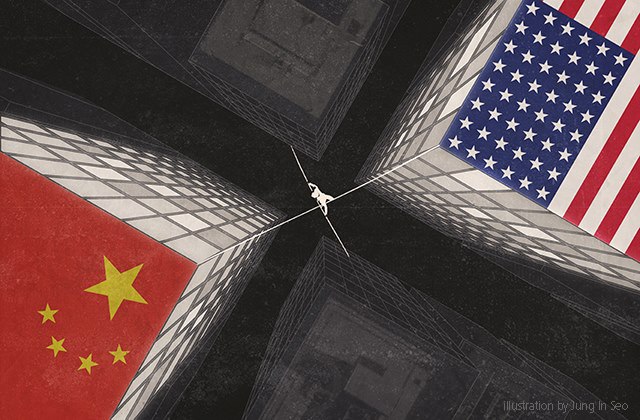
International trade creates opportunities for nations to cooperate for a higher standard of living. Trade agreements facilitate cross-border trade by lowering tariffs and setting rules on a broad range of issues. But trade agreements also serve as instruments for superpower nations to expand their economic and geopolitical influence. And as inevitable participants of this power struggle, middle powers need to consider not only economic concerns but also diplomatic consequences of joining these trade agreements. This article discusses early trade liberalization, various trade agreements, the U.S.-China conflict, and South Korea as an example of a nation caught in the middle of that conflict.

I.  From Multilateral to Bilateral/Plurilateral Agreements

In the early years of trade liberalization, the United States and Europe led the formation of the rules of international trade. Multilateral trade agreements under the General Agreement on Tariffs and Trade (GATT) and the World Trade Organization (WTO) maintained global trade order. However, WTO negotiations are in an impasse since the Doha Development Round that began in 2001.

As multilateral agreements under the GATT/WTO regime became increasingly difficult to reach, nations started to turn towards bilateral and plurilateral trade agreements. With fewer negotiating parties, bilateral and plurilateral trade agreements with far-reaching clauses could be more readily concluded. These agreements include detailed provisions that not only affect market access but also could potentially shape global rules on a number of non-trade issues, such as environment, labor practices, and state-owned enterprises (SOEs). Given the enhanced geopolitical significance of these trade agreements, foreign and security policies are playing greater roles in states’ decision to pursue trade relations. As a result, trade relationships are becoming more complicated and difficult to balance.

While bilateral and plurilateral trade agreements promote trade liberalization, they could also divide the world into “competing, discriminatory regional trading blocs.” The Regional Comprehensive Economic Partnership (RCEP) and Trans-Pacific Partnership (TPP) exemplify the competition among the major powers to gain more influence in the global economy.

II.  The Power Struggle

On October 5, 12 countries, including the United States, Japan, and Australia, reached an agreement on the TPP, which will account for about 40 percent of the global GDP. The TPP will reduce over 18,000 tariffs and set common standards on issues such as intellectual property, environment, and dispute resolution. Its “open architecture” allows non-party nations to join in the future and gives the TPP a potential of becoming a “de facto template for a new system of rules.”

The United States emphasizes the geopolitical importance of securing a significant bloc of the global trade. President Obama noted, “The TPP means that America will write the rules of the road . . . [and]  if America doesn’t write those rules – then countries like China will.” The U.S. Secretary of Defense also stated that the TPP has a geopolitical significance similar to that of an “aircraft carrier” and will “promote a global order that reflects both our interests and our values.”

The United States hopes that China will be forced into accepting the trade rules set by the TPP. The TPP’s strict regulations on SOEs, environment, labor, and intellectual property would require China to significantly reform its economic and legal structure. Instead of accepting the rules formed by the TPP, China is aggressively pushing for its own economic order through the Asian Infrastructure Investment Bank (AIIB) and the RCEP. The AIIB is considered by the Obama administration as China’s effort to counter the U.S.-oriented World Bank, while the RCEP is a China-led regional agreement that embodies “China’s version of global trade.” If concluded successfully, RCEP would be the world’s largest trading bloc, with 16 member nations including Japan, India, South Korea, and the ASEAN nations.

With the TPP, the Unites States plans to contain China and secure a strong U.S. presence in the Asian Pacific. However, the TPP failed to include a few of the most important players in Asia: India, South Korea, and, of course, China. Without the participation of these major Asia Pacific nations, it will be difficult for the United States to gain a “lasting position of supremacy in China’s backyard.”

III.  Caught in the Middle: South Korea

Among the nations that did not participate in the founding membership of the TPP, South Korea presents an interesting case. In 2014, South Korea was the sixth largest exporter in the world, and recent statistics show that South Korean products account for considerable global market shares: 37 percent in LCD televisions, 33 percent in cellphones, and 9 percent in automobiles.

As an active middle power, South Korea wishes to maintain its longstanding U.S.-Korea alliance and build a China-Korea relationship at the same time. But this balance is difficult to achieve due to the intensifying rivalry between the United States and China. Both the United States and China want South Korea on their sides.

South Korea signed on to the RCEP but is hesitating over joining the TPP. In addition to affecting foreign relations for South Korea, the TPP may benefit some domestic industries but hurt others. This tricky situation puts South Korea in a dilemma.

A.  U.S. Alliance

The Korean peninsula has long been central to the conflict between the United States and China. During the Korean War, the United States defended South Korea while China supported North Korea. South Korea still has a strong military alliance with the United States and is considered as “one of America’s closest allies and greatest friends.”

The United States seeks to maintain influence in the Asia Pacific region through considerable military deployments to Asia Pacific countries including Japan and South Korea. Neighboring North Korea and China, South Korea has a great geopolitical importance in U.S. foreign and security policy. As a signal of such significance, almost 30,000 U.S. troops are stationed in South Korea. But the United States’ involvement does not end with the deployment of its troops. Ever since the Korean War, the United States has had wartime operational control of the South Korean military. If a war breaks out, the United States, not South Korea, will have control of the South Korean troops. Although the wartime operation control was to be returned to South Korea in 2012, it is still yet to be transferred.

With such extensive and somewhat paternalistic U.S. involvement, it will be difficult for South Korea to keep ignoring the pressure from the United States to join the TPP. As Nobel Prize winning economist Thomas Schelling mentioned, “Trade is what most of international relations are about. For that reason trade policy is national security policy.”

Future military involvement by the United States is a subject of a heated debate in South Korea, the outcome of which may affect Korea’s trade and foreign policy. Liberals argue for less reliance on the United States, while conservatives oppose such change. If South Korea decides to remain dependent on U.S. military’s support, joining the TPP will help strengthen the U.S.-Korea alliance. If South Korea chooses to rely less on the U.S. military, RCEP could be more valuable than the TPP in terms of regional security. Absent U.S. troops, South Korea may not be able to maintain stability within the peninsula without the help of China, which has the power to keep North Korea in check. A close economic relationship with China through the RCEP and China-Korea Free Trade Agreement (FTA) may help secure that support from China.

B.  China Relations

Because China is South Korea’s largest trading partner as well as Asia’s most powerful nation, Seoul has much to lose if it distances itself from Beijing. Especially with China leading the RCEP and AIIB, South Korea may face economic and geopolitical disadvantages if it does not actively participate. Accordingly, South Korea was recently busy pursuing a closer relationship with China through the China-Korea FTA, AIIB, and the RCEP. Commentators noted that South Korea might have refrained from joining the TPP in furtherance of this pursuit. In the past, China-Korea relations used to be described as “cold in politics, hot in economics,” but it is now being labeled as “hot in politics, hot in economics.”

But despite positive developments with China, it is unclear whether South Korea will be able to strike the right balance between the United States and China. The United States remains a close ally of South Korea, and China is disdainful of that relationship. China has viewed the U.S.-Korea alliance as “a remnant of the Cold War system” and “a regional security threat.” Hoping to relieve this tension, South Korea recently proposed the Northeast Asia Peace and Cooperative Initiative (NAPCI).

C.  Additional Considerations

Because South Korea already has FTAs with 10 of the 12 members of the TPP, Korean policymakers had thought that the TPP would be redundant and provide no significant geopolitical benefits. In light of the recently revealed full text of the TPP, some commentators argue that South Korea should join while others are hesitant.

The TPP will result in lower trade barriers in several major industries compared to the current FTAs between South Korea and the TPP members. Especially with Japan as a TPP member, South Korea’s electronics and automobile industry may lose competitiveness if South Korea does not join. But a lower trade barrier in the agriculture industry could be detrimental for South Korea. By not participating in the drafting of the TPP, South Korea lost the opportunity to negotiate favorable terms into the agreement.

Private interests will likely influence South Korea’s decision to join the TPP. The TPP is predicted to have disparate consequences for different industries in South Korea. On the one hand, the agriculture and fishery industry as well as state-owned companies will face disadvantages if South Korea joins. On the other hand, the electronics sector will benefit from the TPP because the agreement significantly lowers tariffs on electronics.

South Korea must carefully assess the economic and geopolitical consequences of joining trade partnerships. In attempting to accommodate the wishes of both the United States and China, South Korea may end up weakening relations with both countries. It is a difficult situation. And in the midst of the U.S.-China conflict, South Korea is only one example of the many nations that will have to balance various interests in navigating the complicated global trade relations.


Jisan Kim is a 2017 J.D. candidate at Harvard Law School and a Feature Editor of the Harvard International Law Journal.


Content, Recent Developments, Student Commentaries, Student Features

A Shifting Tide in the South China Sea: The Permanent Court of Arbitration Declares Jurisdiction

By Christopher Mirasola

October was not a good month for China in the South China Sea. The United States Navy sent a guided missile destroyer on a freedom of navigation exercise to assert that artificial islands are not entitled to a 12 nautical mile territorial sea. Despite strong protests from Beijing, the exercise was unsurprising. Washington had been hinting for weeks at a stronger response to China’s maritime claims. Far more surprising was a decision only three days later from the Permanent Court of Arbitration (PCA) in which the Court unanimously decided to hear all fifteen claims against China’s policy in the South China Sea.

Background

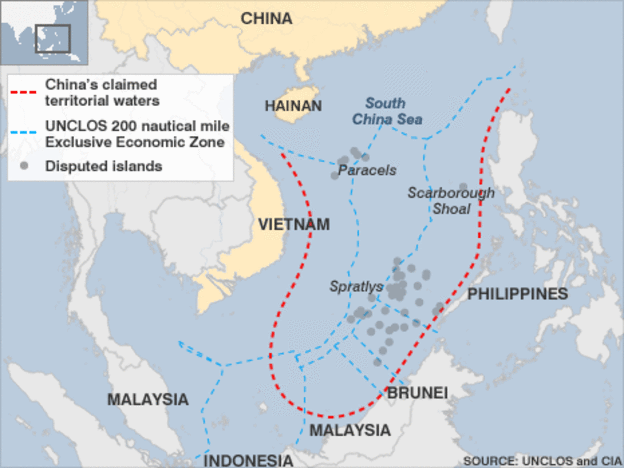
In January 2013 the Philippines invoked Article 287 of the U.N. Convention on the Law of the Sea (UNCLOS) to challenge China’s claims to a majority of the South China Sea.


Source: What’s China’s basis of the 9-dash line? Quora https://www.quora.com/Whats-Chinas-basis-of-the-9-dash-line

As stipulated by Article 287, an ad-hoc tribunal at the Permanent Court of Arbitration was convened and invited both parties to submit briefs based on the Philippines’ statement of claim. China, however, refused to recognize the PCA’s authority and opted out of the Court’s formal proceedings. After hearings that closed this past July, the PCA had to decide whether UNCLOS gave it the authority to adjudicate the Philippines’ claims against China.

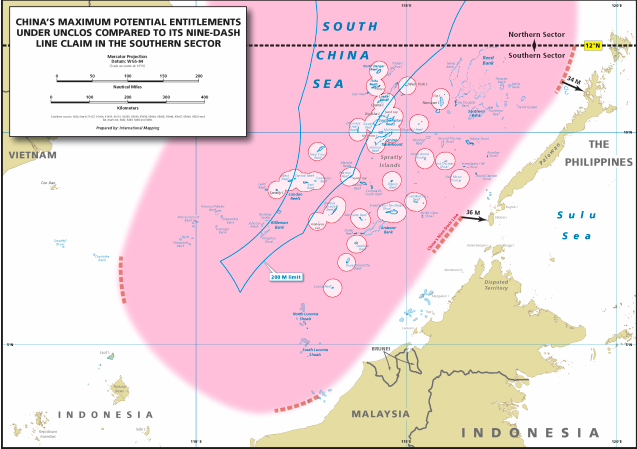
Broadly speaking, the Philippines has three claims. First, it argues that the nine-dash-line is contrary to UNCLOS provisions, which should be the only basis for maritime sovereignty and jurisdiction. Second, it asserts that a number of contested maritime formations (i.e., reefs) are not entitled to a 200 nautical mile exclusive economic zone or the adjoining continental shelf. Third, it contends that China’s law enforcement and fisheries behavior in the South China Sea is contrary to UNCLOS obligations and interferes with Philippine sovereignty. Of course even if the Philippines won on all these claims, the PCA cannot settle which country is sovereign over islands in the South China Sea. But even if we assume that China has uncontested sovereignty to all properly defined islands, a decision favorable to the Philippines would leave China with far less jurisdiction than it currently claims under the nine-dash line.

Source: Award on Jurisdiction and Admissibility (Phil. v. China), 51 (Per. Ct. Arb. 2015) http://www.pcacases.com/web/sendAttach/1506

The Court’s Decision

We can decompose the PCA’s analysis into three parts.

The arbitration was convened correctly

The Philippines was justified in calling an ad-hoc tribunal since neither country opted for a specific type of dispute resolution when they adopted UNCLOS. The Court also found that China’s non-participation did not impact the PCA’s jurisdiction because Annex VII Art. 9 states that, “Absence of a party or failure of a party to defend its case shall not constitute a bar to the proceedings.” They also cited ways in which the PCA protected China’s rights, including repeated invitations to comment on procedural steps, advance notice for hearings, transcripts, and an invitation to join formally at any stage. The Court similarly argued that Vietnam’s non-participation didn’t impact the PCA’s jurisdiction despite the fact that it has rival claims to the same region.

The Court’s most stinging rebuke of China’s non-participation, however, was to adopt a weaker standard for whether the Philippines abused process in requesting this arbitration. The PCA defined ‘abuse of process’ as “blatant cases of abuse or harassment” because China did not request a more rigorous test under Article 294. By adopting such a weak standard it was much more likely that the Philippines would win on this particular jurisdictional argument. While we cannot be sure that a more stringent standard would have changed the Court’s decision, China certainly lost an opportunity to more substantially protect its interests.

Past agreements between China and the Philippines do not affect whether the PCA can adjudicate this dispute

The PCA focuses on three agreements signed by both countries: (1) the 2002 Declaration on the Conduct of Parties in the South China Sea (an agreement between all ASEAN countries and China to lessen regional tensions by working towards a joint code of conduct), (2) Joint China/Philippines statements to find a peaceable solution, and (3) the 1976 Treaty of Amity and Cooperation in Southeast Asia (an agreement to settle differences by peaceful and cooperative means). China argued that these documents precluded the Philippines from starting arbitration under Art. 281 and 282. The PCA, however, found that each of these documents (1) didn’t represent a settlement between both parties, (2) didn’t exclude other dispute resolution mechanisms, and (3) don’t require that the parties indefinitely pursue unsuccessful negotiations.

The PCA does not necessarily have definite jurisdiction over all fifteen Philippine claims

And this is where the story gets interesting. The PCA found that it has definite jurisdiction on seven claims, reserved judgment on another seven claims, and asked for clarification on a final claim. In short, it found that seven of the claims presented issues where the jurisdictional and substantive questions were too closely connected to make a preliminary decision.

Implications 

The PCA dealt China a substantial blow in its bid to solidify control within the nine-dash-line, but it is far too early for the Philippines to pop the bubbly. The Court will now hold additional hearings, decide if it has jurisdiction for the seven reserved claims and render a decision. This puts China in a bind if it continues to boycott the proceedings since it will again run the risk of loosing input on pivotal legal questions. More problematic is that China has never articulated a robust legal defense for its historic claims in the South China Sea. There will be less material the judges can use to independently construct a likely Chinese response to Philippine arguments. Without a robust defense, it seems more likely that China’s historic claims may fail to convince the Tribunal.

We must, however, recognize the limits of even this most pro-Philippines scenario. The Court will not resolve territorial disputes to contested islands like Itu Aba (currently garrisoned by Taiwanese forces). It will not resolve boundary conflicts between overlapping Exclusive Economic Zones and territorial seas. Given China’s official pronouncements, it also will not change the ongoing increase in Chinese construction and presence in the short-term.

But we can begin to ask how this decision may start to change the playing field for Southeast Asian countries that dispute China’s claims. Whether it might catalyze more coordination between countries that have been deeply divided about how to balance regional strategic concerns with the reality of economic dependence on Beijing. Though only halfway through this arbitration, we may already be witnessing the start of a much different chapter in the South China Sea.


Christopher Mirasola is a 2018 J.D./M.P.P. candidate at Harvard Law School and Harvard Kennedy School. He is an Executive Symposium Editor of the Harvard International Law Journal.


Scroll to Top