2023

Online Scholarship, Perspectives

The Republic of Haiti and the Dominican Republic: A Relationship in Troubled Waters

Introduction

The diplomatic relationship between the Republic of Haiti and the Dominican Republic is further complicated by the Massacre River affair. Tensions between the two countries, which share the island of Hispaniola, have never been so high in recent decades. The subject of dispute is the construction of an irrigation canal fed by the Massacre River, which the two countries share. Plunged into a deepening humanitarian crisis and plagued by insecurity and armed gang violence, Haitians see the construction of the irrigation canal as a matter of survival, food sovereignty, or a kind of last gasp. However, the Dominican authorities argue that the canal would divert water from the Massacre River, violating the Treaty of Peace, Friendship and Arbitration of February 20, 1929, concluded by the two countries. This situation creates tensions between the two nations and highlights the issues and challenges relating to the management and use of water from the Massacre River. At a time when this dispute is causing major friction between the two peoples, it is more crucial than ever for the two states to strengthen their diplomatic relations if they are to avoid stirring up dark memories of the past.

I. The Facts

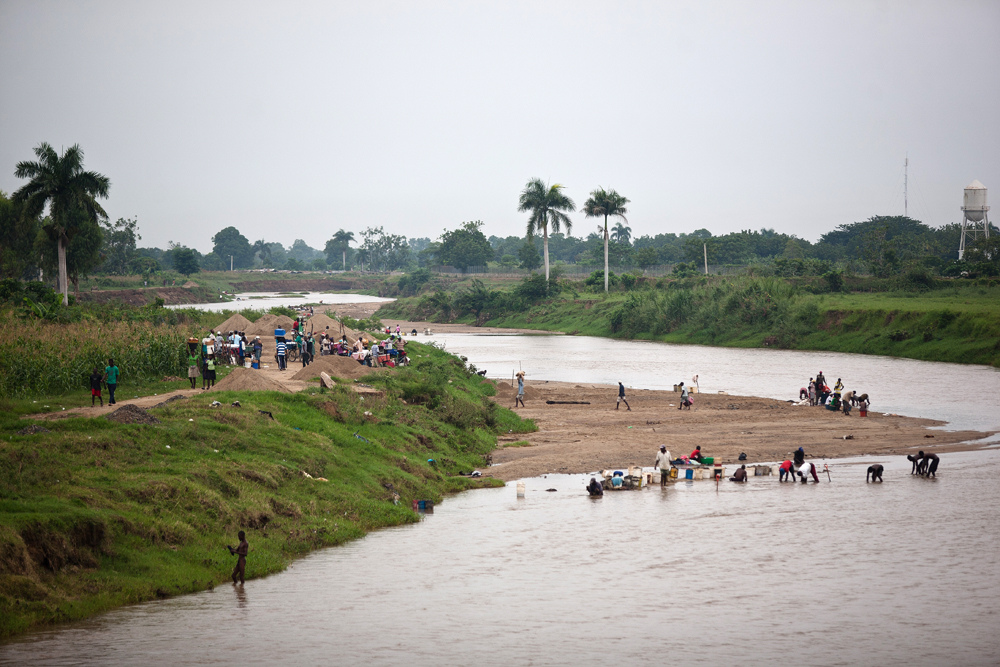
The Massacre River is a small coastal river that flows into the Atlantic Ocean and is a border waterway between the Republic of Haiti and the Dominican Republic. In August 2018, Haitian President Jovenel Moïse launched the construction of an irrigation canal on the Massacre River. Water from the Massacre River was to irrigate 3,000 hectares of highly fertile land in the Maribahoux plain in northeastern Haiti, to alleviate the misery of the inhabitants. The project drew protests from the Dominican Government. On April 26, 2021, several Dominican soldiers from the Cuerpo Especializado en Seguridad Fronteriza Terrestre (CESFRONT) intimidated the Haitian workers. On May 27, 2021, with a view to finding a diplomatic solution, the two States convened a meeting of the bilateral Joint Commission at the Ministry of External Relations of the Dominican Republic. The Commission’s technical secretaries signed a joint declaration recognizing that the proposed irrigation canal would not alter the natural course of the waters. Since the assassination of Haitian President Jovenel Moïse in July 2021, the project has slowed down, but Haitian farmers, supported by several civil society organizations, started digging again in August 2023, hoping that water would one day reach their cultivation fields. Today, this irrigation canal is the subject of heated controversy between the two countries. While the Haitian Government is open to dialogue to find a favorable outcome, on Friday, September 15, 2023, Dominican President Luis Abinader decided to close all borders. In a press release issued on the same day, the Haitian government declared that the Maribahoux plain irrigation project would continue. At a time when the Haitian people are facing an acute social, humanitarian, and political crisis, the management of this conflict is of crucial importance. To better understand the current dispute over the Massacre River between the Republic of Haiti and the Dominican Republic, it is essential to bear in mind the long-standing and still-latent conflict over this international waterway.

II. The History

The history of the border between Haiti and the Dominican Republic is essentially one of tensions and exactions. This border was to change with conquest, reunification, independence, and tyranny. The Massacre River was the scene of fierce rivalry between the French, who felt the river belonged to the western part of the island of Saint-Domingue, and the Spanish, who wanted the river to separate their lands from those of the French on the mountainous side. The river’s name reflected the tensions between the two parts of the island. It was called the Massacre River because the two peoples had often come to blows on its banks. The Treaty of Ryswick in 1697 already mentioned the Massacre River. Some historians claim that the river’s name evokes the incessant skirmishes between French buccaneers and Spanish soldiers on its banks, while others maintain that it is a reference to the memory of one of the many wars of extermination that wiped out the indigenous Arawak population. Whichever hypothesis is adopted, it should be noted that the island seemed destined for a tragic confrontation, an anticipatory sign of the violence that was to accompany the birth of Haiti and its relations with the neighboring Republic. It was the Treaty of Aranjuez (1777) that established this river as the boundary of sovereignty between France and Spain.

III. Corpus Juris

In the context of bilateral relations between the Republic of Haiti and the Dominican Republic, the law applicable to international waters is corpus juris dating from the mid-twentieth century. The law governing international watercourses has been codified in legal instruments such as the Treaty on the Delimitation of the Frontier between the Dominican Republic and the Republic of Haiti of January 21, 1929, the Treaty of Peace, Friendship and Arbitration of February 20, 1929, the Boundary Agreement between the Dominican Republic and the Republic of Haiti of February 27, 1935, and the Additional Protocol to the Treaty of January 21, 1929, Regarding the Delimitation of the Frontier Between the Dominican Republic and the Republic of Haiti of March 9, 1936 (“Additional Protocol”).

The most important legal instrument remains the Treaty of Peace, Friendship and Arbitration of February 20, 1929, which views international waters as shared natural resources and contains some of the principles and rules that would later be elaborated in broader forums such as the United Nations. The Convention on the Law of the Non-Navigational Uses of International Watercourses of May 21, 1997 (“United Nations Convention”) essentially regulates international watercourses, which are defined as “watercourse[s], parts of which are situated in different States.”

The Treaty of Peace, Friendship and Arbitration of February 20, 1929 codifies the use of the waters of the rivers Libón and Artibonite, as recalled in Article 6 of the Additional Protocol: “The waters of the rivers Libón and Artibonite belong equally to the two riparian States, and use thereof shall be subject to the provisions of Article 10 of the Treaty of Peace, Friendship and Arbitration signed in the city of Santo Domingo . . . on February 20th, 1929.”

Article 10 of the Treaty of Peace, Friendship and Arbitration of February 20, 1929 enshrines the right of either state “to make just and equitable use, within the limits of their respective territories, of the said rivers and streams for the irrigation of the land or for other agricultural and industrial purposes.”

In other words, this Treaty prefigures the principle of equitable and reasonable sharing found in Article 5 of the United Nations Convention, which emphasizes that “Watercourse States shall in their respective territories utilize an international watercourse in an equitable and reasonable manner . . . [and] participate in the use, development and protection of an international watercourse in an equitable and reasonable manner.”

Moreover, Article 10 of the Treaty also lays down the obligation not to cause significant damage: “[T]he two High Contracting Parties undertake not to carry out or be a party to any constructional work calculated to change their natural course or to affect the water derived from their sources.” A similar formulation of this principle can be found in Article 7 of the United Nations Convention, which establishes the obligation not to cause significant damage to other watercourse States.

The question of equitable and reasonable use can be assessed in light of the criteria set out in Article 6 of the United Nations Convention. Although the Republic of Haiti and the Dominican Republic are not parties to this Convention, it would be logically and legally possible to interpret the provisions of the Treaty in accordance with the principles of international law, considering, for example: “Geographic, hydrographic, hydrological, climatic, ecological and other factors of a natural character; The social and economic needs of the watercourse States concerned; The population dependent on the watercourse in each watercourse State; The effects of the use or uses of the watercourses in one watercourse State on other watercourse States . . . .”

In the case relating to the territorial jurisdiction of the International Commission of the River Oder (1929), the Permanent Court of International Justice interpreted the principles of equitable, reasonable, and non-damaging use of the watercourse through the notion of community of interests uniting riparian States around an international watercourse:

“But when consideration is given to the manner in which States have regarded the concrete situations arising out of the fact that a single waterway traverses or separates the territory of more than one State, and the possibility of fulfilling the requirements of justice and the considerations of utility which this fact places in relief, it is at once seen that a solution of the problem has been sought not in the idea of a right of passage in favour of upstream States, but in that of a community of interest of riparian States. This community of interest in a navigable river becomes the basis of a common legal right, the essential features of which are the perfect equality of all riparian States in the user of the whole course of the river and the exclusion of any preferential privilege of any one riparian State in relation to the others”.

Equitable and reasonable use also presupposes consultation in a spirit of cooperation. For example, a state cannot decide unilaterally on the allocation of a watercourse if other riparian states want to see their own interests considered. The obligation to notify and consult helps to resolve tensions and controversies, as recalled by the International Court of Justice in the Pulp Mills case (2010). Thus, the obligation to notify is essential in the process, and it should lead the parties to work together to assess the risks of the project and negotiate any modifications likely to eliminate them or minimize their effects. The principle of fair and reasonable use can therefore also be applied by prior notification of the project.

IV. Discussion

In the Massacre River affair, the Haitian Government undertook the construction of an irrigation canal in 2018 to water the Maribahoux plain. This is the first project launched by the Haitian Government on the Massacre River, while the Dominican Government has already built several aqueducts and irrigation canals. Opposing the canal construction project, the Dominican government argued that the project constituted a detour of the river and a threat to the environment. The two States consulted each other to assess the project’s risks. In May 2021, they adopted a Joint Declaration stating that, on the basis of the information provided by the representatives of the Republic of Haiti and in the spirit of understanding and exchange of information in accordance with what is stipulated in the Treaty, the project being carried out on the Massacre River for the abstraction of water does not constitute a detour of the watercourse. It was therefore clear from the facts that the project undertaken by the Haitian government was not likely to divert the watercourse and reduce the flow of water and did not undermine the protection of the environment and the promotion of sustainable development.

The Joint Declaration was based on a study conducted by the Dominican National Institute of Hydraulic Resources (INDRHI) in 2021. This study recognized that the project would require a flow between 1.5 and 3 cubic meters per second, which represents 20.33% of the average annual flow of the Massacre River. Thus, the flow would still be below the extractions made on the Dominican side. Finally, the researchers added that two-thirds of the Dominican agricultural land irrigated with the Massacre River’s water is located upstream of the canal under construction.

Nevertheless, we must acknowledge that Haitian farmers continued in August 2023 in the absence of Haitian government control. If the spontaneous initiative of the farmers to pursue the irrigation project is to be understood from the point of view of their urgent economic and social needs, the Treaty of Peace, Friendship and Arbitration of February 20, 1929, confers only on states, and not on the citizens themselves, the right to undertake construction work on watercourses. It is therefore incumbent upon the current government to regain control of the project in accordance with the standards established by bilateral treaties and international legal instruments. In a press release dated September 15, 2023, the Haitian Government declared its intention to take all measures to ensure that irrigation of the Maribahoux plain is carried out in accordance with scientific standards, under the supervision of the Ministry of Agriculture, Natural Resources and Rural Development and of the Environment. For the time being, however, the irrigation project is being carried out according to the sovereignty of a people completely neglected by their government.

Dominican President Luis Abinader’s decision to close his borders with the Republic of Haiti would contravene the Joint Declaration of May 27, 2021, which paved the way for coordinated institutional management, and the Treaty of Peace, Friendship and Arbitration. In the context of this dispute, it would perhaps be more interesting to envisage a peaceful and amicable outcome, by considering “all relevant information on the water table, hydrological studies, environmental impacts and other information outlined in the May 2021 Joint Statement.” Furthermore, in the spirit of joint management of shared water resources, the two parties could draw up a technical protocol for the coordinated management of transboundary watersheds. Finally, the Organization of American States could play an important role in facilitating an amicable settlement through mediation. Failing agreement, recourse to international arbitration remains the most appropriate method for resolving this dispute.

The Dominican Republic’s decision also appears to disregard the first paragraph of Article 3 of the Treaty of Peace, Friendship and Arbitration of February 20, 1929, which underlines the obligation to resort to investigation and conciliation procedures:

“The High Contracting Parties undertake to submit to arbitration all disputes of an international character which may arise between them as a result of one of the Parties claiming a right as against the other, under the terms of a treaty or otherwise, when it has not been possible to settle this claim by diplomacy and when the claim is of a legal nature inasmuch as it is capable of decision according to the principles of law.”

This clause of consent to international arbitration obliges each party to initiate prior amicable and diplomatic attempts to settle a dispute. If the attempt at diplomatic resolution fails, the disputing party may bring the dispute before an arbitrator or an arbitration tribunal, depending on the agreement of the parties. By failing to attempt a diplomatic or arbitral resolution, President Luis Abinader has thus strayed from the path of peaceful resolution mapped out by the Treaty.

Article 5 of the same Treaty sets out the way the arbitral tribunal is to be constituted:

“The arbitrator or tribunal to decide the controversy shall be appointed by agreement between the Parties. Failing agreement, the following procedure shall be observed: each Party shall appoint two arbitrators, only one of whom may be a national of the said Party or chosen from among the persons nominated by the said Party as members of the Permanent Court of Arbitration at The Hague; the other member may be of any other American nationality. These arbitrators will, in their turn, choose a fifth arbitrator, who shall be the President of the tribunal.”

While the Dominican Government is choosing the worst option, preferring a justice of force based on reprisals instead of relying on the strength of justice, it could simply have chosen the amicable option, and in the event of its failure, the arbitration procedure. It is high time we remembered that gunboat diplomacy is no longer fashionable.

The Dominican Government has already acknowledged that the Haitian project is an irrigation project that in no way endangers downstream ecosystems. The onus is now on the Dominican Government to demonstrate that the current intake on the Massacre River constitutes a damaging and inequitable use of water resources and is detrimental to the environment.

No state can guarantee itself exclusive use of shared water resources. The Republic of Haiti is therefore entitled to pursue the Maribahoux plain irrigation project. However, it must be stressed that this must be done in accordance with technical and scientific requirements, and in compliance with environmental standards.

In the midst of this major controversy, and especially in the midst of the climate crisis, the Haitian government should take the opportunity to take a step to the side by demanding that the Dominican Republic provide precise information on the various works it has undertaken on the Massacre River, with a view to determining whether the Dominican authorities are not significantly reducing the flow of water that Haitians could use downstream.

V. Perspectives

To re-establish a healthy and lasting diplomatic relationship between Haiti and the Dominican Republic, the poetics of dialogue are more than necessary. For the future of these two neighboring brothers, the methods of peaceful settlement of disputes must remain essential tools. Diplomacy is the key to peaceful coexistence on the island. It is important to emphasize this in the context of intense tension between the two nations, where Haitians living in the Dominican Republic are sometimes subjected to inhumane, undignified, and degrading treatment.

The Massacre River case teaches both neighboring countries that it is time to take the initiative for a specific river treaty project, particularly in a context where access to and management of water resources pose crucial environmental and social challenges. This would be even more interesting given that the Treaty of Peace, Friendship and Arbitration still in force today is over a hundred years old. But things have changed since then. In addition to the issues of irrigation production for agricultural purposes and use for industrial purposes set out in Article 10 of the Treaty of Peace, Friendship and Arbitration, other issues such as energy production, access to fresh water for human consumption, environmental protection, and preservation of cultural heritage are gaining in importance. Beyond the Treaty’s principles of equitable and reasonable use, the obligation not to cause significant harm, and the principle of equality of use, new approaches are emerging in international law to meet essential human needs and new environmental challenges. This calls for a watercourse treaty adapted to recent social, environmental, and climatic developments, which will be an important step forward in the management of watercourses, based on a global vision. This issue is even more relevant given that the Libón River – an international waterway originating in Haiti – could also in the future be the subject of intense tensions between the two countries in the context of mining operations in the border zone by two Canadian companies, Unigold and Barrick Gold.

As soon as it affects their diplomatic and trade relations, the Massacre River dispute benefits neither Haiti nor the Dominican Republic. To reach a peaceful settlement of this dispute, it is more than necessary to return to the negotiating table in accordance with their treaty obligations. Both parties can count on the Organization of American States (OAS), which has a proven track record in mediation in the Central American region. To facilitate the peaceful resolution of the dispute, the two governments must communicate all relevant information and research data available concerning the water table, the hydrological regime and potential environmental impacts. If the attempt at diplomatic resolution fails, the parties may then submit their dispute to international arbitration. Moreover, to prevent or manage their potential conflicts in the future, the two states need to rethink the Treaty of Peace, Friendship and Arbitration, which is already almost a century old. The Republic of Haiti and the Dominican Republic may consider negotiating a forward-looking treaty accounting for new social, humanitarian, climatic, and environmental challenges. This initiative may prove important for a better coexistence of the two neighboring brothers.

[hr gap=”1″]

*Milcar Jeff Dorce holds a PhD in Public Law from the University of Bordeaux, Center for European and International Research and Documentation. He specializes in international investment law and arbitration.

[hr gap=”1″]

Cover image credit 

Online Scholarship, Perspectives

Jus Cogens v. State Sovereignty: The Battle of Discriminatory Citizenship Laws

Manasa Venkatachalam*

Introduction

With the swelling of nationalism globally, the definition of national identities is becoming increasingly restrictive. This phenomenon is extremely evident in India, where the Citizenship (Amendment) Act, 2019 (CAA) expressly relies on national origin and religion as factors to determine eligibility for citizenship. In this climate of individualistic, national identities, it is important to evaluate how this sense of belonging ties into legal frameworks governing identity, and in particular, definitions of citizenship. Given the involvement of ethnic, national, and religious factors that have become increasingly evident in the granting of citizenship in several parts of the world, the International Convention on the Elimination of All Forms of Racial Discrimination (“ICERD”) becomes a relevant tool to assess such issues from an international legal perspective. This article utilizes the ICERD to examine this leading question: how far can states go in creating criteria to exclude those from citizenship based on ethnic or religious grounds?

Scholars belonging to the Third World Approaches to International Law school often point out how citizenship was created to sustain a colonial and imperial order, and thus, citizenship laws are aimed at excluding “backward” peoples who were viewed as incapable of possessing property and exercising rationality (see, e.g., Bhandar, p. 35; Shahid & Turner, p. 7). The historical exclusion of indigenous communities, women, and people of color from the privilege of citizenship illustrates how citizenship status is used as a tool of “othering” (Edwards). This practice continues in the post-colonial era despite global developments like the ICERD.

The proposal to codify an international prohibition on racial discrimination emerged from the recently independent Pan-Africanist segment of the United Nations. Concerned by the othering and racist discrimination inherent in colonial imperialism, Global South states engaged in forceful multilateral human rights diplomacy to build support for an international prohibition on racial discrimination (see Schabas, p. 248-52). Their efforts resulted in the U.N. General Assembly’s approval of the ICERD in 1965 (Preamble, para. 4; Keane & Waughray, p. 4; Boyle & Baldaccini, who point out how the ICERD painted racism as being “solely about the consequences of Western imperialism”). Even the International Court of Justice (para. 86) has observed that the Convention was drafted “against the backdrop of the 1960s decolonization movement.”

In many ways, the ICERD represents law-making by and for the “Third World.” The Convention’s history makes it an interesting tool to use to examine issues of racial discrimination in the Global South. Still, the ICERD is not without its issues. One significant problem is that Article 1(3) of the ICERD excludes review of domestic nationality laws from the scope of its protection. The International Court of Justice (“ICJ”) has subsequently touched upon the ambit of the exceptions to the prohibition of racial discrimination regarding nationality in its interpretation of the term “national origin.” However, the ICJ confined its analysis to the ICERD and did not consider whether the prohibition on racial discrimination has independent customary character. The International Law Commission’s (“ILC”) recent work (p. 16) on documenting jus cogens norms has introduced a new factor to consider: whether the prohibition of racial discrimination is a peremptory norm. Since peremptory norms are non-derogable,[2] if the prohibition on racial discrimination has peremptory status, all exceptions to this prohibition become irrelevant. This makes the applicable law a lot simpler and the exceptions to the prohibition on racial discrimination in Articles 1(2) and 1(3) of the ICERD inoperative. Using India’s 2019 Citizenship (Amendment) Act (“CAA”) as an example, this article attempts to resolve the conflict between the ICERD’s prohibition of racial discrimination and the carve-out provided under ICERD Article 1(3), which exempts legal provisions concerning nationality from the scope of ICERD’s protection. In doing so, this article purposely distances itself from the explanations offered by the ICJ in Qatar v. UAE, choosing to instead focus on a different approach than the judgment: the possible peremptory nature of the prohibition of racial discrimination.

I. The ICERD and Nationality

The ICERD is one of the most widely ratified human rights treaties in the world. It has 182 states parties. This makes it a powerful tool to regulate discrimination in citizenship laws and practices (see Hoornick, p. 224). Article 1 of the ICERD prohibits racial discrimination, and Article 5(d)(iii) extends this prohibition to guarantee the enjoyment of the right to nationality regardless of race, color, or national or ethnic origin. However, there are certain exceptions to this prohibition that weaken the ICERD as a tool to combat discriminatory citizenship practices. Mainly, Article 1(3) cabins the ICERD’s scope to exclude review of legal provisions of states parties concerning nationality, citizenship, or naturalization as long as such laws do not discriminate against any specific nationality. Thus, the ICERD presents contradictory positions on the issue of discrimination in the grant and denial of citizenship.

Article 1(3), ICERD: Gaps and Relevance

Paragraphs (2) and (3) of Article 1 detail exceptions revolving around citizenship to the prohibition on racial discrimination in Article 1. Article 1(3) of the ICERD reads: “Nothing in this Convention may be interpreted as affecting in any way the legal provisions of States Parties concerning nationality, citizenship or naturalization, provided that such provisions do not discriminate against any particular nationality.” Article 1(2) excludes the application of the ICERD from “distinctions, exclusions, restrictions or preferences made by a State Party to this Convention between citizens and non-citizens.” While the exception provided under Article 1(2) featured more prominently in Qatar v. UAE (see para. 83), Article 1(3) has not received such jurisprudential attention. This could be an indication of states’ and courts’ attitudes towards the sovereign sacredness attached to laws governing citizenship, as emphasized in the ICJ’s Nottebohm judgement.[2] The question that has gone unanswered owing to this lack of discussion is whether grounds other than discrimination against a particular nationality can be used to maneuver around ICERD Article 1(3).

Before delving into an analysis of the ICERD, it is important to highlight the practical importance of this inquiry. The current government in India is led by the Hindu nationalist Bharatiya Janata Party. The party’s representatives, specifically the Union Home Minister, have made several statements indicating their anti-Muslim sentiment and how the CAA and the impending National Register of Citizens (“NRC”) are coordinated policies to remove Muslims from the country.[3] Consequently, the next section will highlight the disparate grant of citizenship in India and the international legal consequences of these policies.

II. India, the CAA, and the NRC

The CAA amends the Indian Citizenship Act of 1955 to make specific classes of illegal migrants eligible for citizenship. Prior to this amendment, any person who satisfied the definition of an illegal migrant would not be eligible for Indian citizenship, and neither would their children (see s. 2(b) of the 1955 Act). However, the CAA establishes that if a person (1) belongs to the Hindu, Sikh, Buddhist, Jain, Parsi, or Christian community, (2) is from Afghanistan, Bangladesh, or Pakistan, or (3) entered India on or before 31st December 2014, such a person is now eligible for Indian citizenship.

The Union Government also plans on introducing a NRC for the entirety of the nation. The NRC would contain the names of all “genuine” Indian citizens, requiring persons to submit evidence to prove citizenship per the criteria in the 1955 Act (see Arts. 3 to 6). A similar system has been implemented in the Indian state of Assam. While this policy has not yet been enacted on the national level, the intention of the CAA and the NRC, as the Home Minister noted, is to “weed out” immigrants that the government deems illegal.

Data from the State of Assam illustrates the effect a nationwide NRC and CAA could have. In 2017, the first draft of the NRC was published for Assam. It excluded 19 million people out of 32.9 million applicants for citizenship. The final NRC for Assam was published in 2019 and excludes 1.9 million people from the list, deeming them all not citizens of India. While citizenship in Assam has always been regulated slightly differently ever since the influx of migrants and refugees from Bangladesh in the 1970s, this data offers insight into the impact that the CAA and NRC could have on the rest of the nation.

The Indian CAA and Discrimination Under ICERD Article 1(1)

In short, the CAA does distinguish and exclude individuals based on identities protected by the ICERD, nullifying basic human rights guaranteed to such persons.[4] It excludes any persons other than those from Afghanistan, Pakistan, and Bangladesh from the benefits of citizenship, which can be argued to amount to discrimination based on national origin.[5] As of April 2023, India hosts over 213,000 refugees and asylum seekers, most hailing from Sri Lanka, Afghanistan, China or Myanmar (UNHRC 2022, p. 9). Around 92,000 of these people originated in Sri Lanka, 72,291 from Tibet, and 30,308 from Myanmar (UNHRC 2023), and these are only those registered with the government (UNHRC 2022, p. 9). On the other hand, 14,466 refugees and asylum-seekers are from Afghanistan (UNHRC 2023), and even fewer are from Bangladesh and Pakistan. The law also clearly distinguishes between persons based on religion, as it only covers persons from Hindu, Sikh, Buddhist, Jain, Parsi, or Christian communities.

Additionally, the CAA violates several human rights, including the right to nationality and the right against statelessness. The right to a nationality, though disputed, seems to have entered today’s body of customary international law. Making its earliest appearance in Article 15 of the Universal Declaration of Human Rights, it has been transposed in varying forms into six of the nine core human rights treaties,[6] all of which have widespread ratification, strongly indicating state practice and opinio juris.[7]

The deprivation of the right to nationality has far-reaching consequences. Nationality is the “right to have rights.” Though human rights are inherent, citizenship is often the right that enables the enforcement of all rights; it is the connection between the State and its citizens that ensures the former’s protection of the latter (see Kesby). The deprivation of the right to nationality, consequently, is a deprivation of the vehicle for access to fundamental rights and protection under domestic law.

And, of course, nationality and statelessness are intimately linked. Dubbed a corollary of the right to a nationality (ILC, p. 27), the obligation to prevent and reduce statelessness is now widely considered customary (Case of the Girls Yean and Bosico, paras. 139-141; Blackman, p. 1183; Adjami & Harrington, pp. 102-3 for an in-depth explanation).[8] Statelessness, simply put, is the absence of nationality (1954 Convention, Art.1; Rütte, p. 242). For this reason, the duty to prevent statelessness has been described as a negative right arising from the right to a nationality (Blackman, p. 1176). When combined with the norm of equal and effective protection of the law (Juridical Condition and Rights of Undocumented Migrant, para. 101; UDHR, Art. 1; ICCPR, Art. 26; ICESCR, Arts. 3, 7; CRC, Art. 2; CEDAW, Art. 1), states must abstain from creating discriminatory mechanisms to grant citizenship (Case of the Girls Yean and Bosico, para. 141).

The CAA was enacted with the purpose of providing citizenship to a select few based on national origin and religion and, consequently, depriving the rest of the same. Additionally, irrespective of its purpose, the CAA certainly impeded the right to nationality of persons of national origin in countries other than the three mentioned. These distinctions imply that the CAA impairs the enjoyment of human rights on an equal footing, engaging the CERD’s definition of racial discrimination.

III. Article 1(3) ICERD: A Free Pass for India?

On a purely textual analysis, Article 1(3) of the ICERD would exclude the CAA from the ICERD’s protections. India’s law clearly covers issues of nationality and citizenship, and it does not distinguish against any nationality per se. (It does distinguish on national origin, but national origin has generally been regarded as different than nationality (ICJ, Qatar v. UAE, para. 105)).

A different way to look at the issue is to assess whether the prohibition on racial discrimination has peremptory status. The ICJ declined to take this approach in Qatar v. UAE. But the obligation to not undertake racial discrimination has been deemed erga omnes by the ICJ (see dicta in Barcelona Traction (para. 34)), and the ILC deemed it a jus cogens norm in 2022 (see Annex (e)). Treaty provisions that conflict with peremptory norms are non-derogable and void per customary treaty interpretation rules.[9] Thus, any exception to the prohibition of racial discrimination would be nullified, including Articles 1(2) and (3) of the ICERD. Unfortunately, the ICJ did not touch upon this in its judgment in UAE v. Qatar. Had it, would the outcome have been different?

An obvious reason as to why the ICJ did not venture into this territory is the severity of the approach. Recognizing ICERD’s prohibition on racial discrimination as reflective of customary international law would deal a considerable blow to the sovereign discretion of States in matters of nationality. Courts are legitimate when they are perceived as having the authority to make decisions, and the ICJ is not exempt from this idea. Legitimacy capital is thus linked to authority: when international courts act in a manner that could be perceived as exceeding the scope of authority granted to them, they lose authority (see Grossman et al., p. 5). Consequently, a decision from the ICJ that would use jus cogens as a means to override significant treaty provisions representing the sovereign will of States is highly unlikely, given the shockwaves it would generate with respect to its legitimacy. That being said, such a decision would still be a legally acceptable and effective means to expand the prohibition on racial discrimination.

Conclusion

Public international law has long recognized the State’s sovereign discretion in dictating terms for membership (Donner, p. 17). A permanent population is necessary for statehood; thus, the ability to control the membership of this population is a vital aspect of sovereignty (Mantu, p. 25). However, the focus on individual human rights is eroding this sovereignty-backed discretion. One tool contributing to this erosion has been the prohibition of racial discrimination.

Still, the untapped potential of the ICERD to evaluate selective nationality laws is striking. Selective citizenship laws deprive persons of vital fundamental rights, but remain under the international legal radar. The ICERD must be used to the fullest as a counter to such laws. With the ICERD’s growing usage in international litigation, the time for a challenge to discriminatory laws like India’s CAA may be ripe.

[hr gap=”1″]

*Manasa Venkatachalam completed her B.A. LL.B. (Hons.) from Gujarat National Law University, India, and an Advanced LL.M. in Public International Law from Leiden University, Netherlands. She has worked with NGOs, law firms and international organizations over the years, engaging with several facets of human rights and international law. She started working with Blue Ocean Law in July 2023 and is assisting the firm in representing Vanuatu at the International Court of Justice for the Advisory Opinion on the Obligations of States in respect of Climate Change. She is currently based out of Amsterdam. You can find her on LinkedIn and X.

[1] The ILC, for instance, defines it as follows: “A peremptory norm of general international law (jus cogens) is a norm accepted and recognized by the international community of States as a whole as a norm from which no derogation is permitted and which can be modified only by a subsequent norm of general international law (jus cogens) having the same character” (see Conclusion 3).

[2] See p. 20, where the ICJ determines: “It is for Liechtenstein, as it is for every sovereign State, to settle by its own legislation the rules relating to the acquisition of its nationality, and to confer that nationality by naturalization granted by its own organs in accordance with that legislation. It is not necessary to determine whether international law imposes any limitations on its freedom of decision in this domain.”

[3] For example, Amit Shah has commented that “[f]irst we will pass the Citizenship Amendment bill and ensure that all the refugees from the neighbouring nations get the Indian citizenship. After that NRC will be made and we will detect and deport every infiltrator from our motherland” and that “[w]e will remove every single infiltrator from the country, except Buddha, Hindus and Sikhs.”

[4] This follows the definition of racial discrimination per Article 1(1) of the ICERD, which defines racial discrimination as [a]ny distinction, exclusion, restriction or preference based on race, colour, descent, or national or ethnic origin which has the purpose or effect of nullifying or impairing the recognition, enjoyment or exercise, on an equal footing, of human rights and fundamental freedoms in the political, economic, social, cultural or any other field of public life.”

[5] See Judge Robinson’s definition of “national origin” in his Qatar v. UAE dissent (paras. 7-8): “According to the ordinary meaning of the words “national” and “origin”, the term “national origin” refers to a person’s historical relationship with a country where the people to which that person belongs are living… National origin refers not only to the place from which one’s forebears came; it may also refer to the place where one was born.”

[6] ICERD, Art. 7; International Covenant on Civil and Political Rights, Art. 24(3); Convention on the Elimination of All Forms of Discrimination Against Women, Art. 9; Convention on the Rights of Persons with Disabilities, Art. 18; International Convention on the Protection of the Rights of All Migrant Workers and Members of Their Families, Art. 29.

[7] On this, see the ICJ’s judgement in Questions Relating to the Obligation to Prosecute or Extradite (Belgium v. Senegal) (paras. 99-100), explaining how jus cogens norms are determined.

[8] This is reinforced via the Convention on the Reduction of Statelessness, Art. 1(1); the International Convention on the Protection of the Rights of all Migrant Workers and Members of their Families, Art. 29, the Convention on the Rights of the Child, Art. 7(1), and the International Covenant on Civil and Political Rights, Art. 24(3).

[9] Vienna Convention on the Law of Treaties, Art. 53; Application of Genocide Case (Further Requests for the Indication of Provisional Measures) (Separate Opinion of Judge ad hoc Lauterpacht), para. 100; ILC, Report of the Study Group on Fragmentation of International Law: Difficulties Arising from the Diversification and Expansion of International Law, para. 365; B. Simma, ‘From Bilateralism to Community Interest in International Law’ (1994) 250(2) RdC 217–384, 289.

[hr gap=”1″]

Cover image credit 

Content, Online Scholarship, Perspectives

Bridging the Gap: African Countries Outpace the West in Descriptive Representation for Persons with Disabilities

Yohannes Takele Zewale*

Editors’ Note: Although HILJ Online: Perspectives typically publishes short-form scholarship, we occasionally publish exceptional longer pieces—such as this one. 

Abstract

Descriptive representation for persons with disabilities in parliaments is not as prevalent as representation based on other identities, such as gender, race, ethnicity, and youth. However, a beacon of progress has emerged from the Global South, with only five countries—Kenya, Uganda, Rwanda, Zimbabwe, and Egypt—constitutionally recognizing the right to descriptive representation for persons with disabilities. Although the reasons behind this recognition in underdeveloped democracies are not yet studied, this Article explores these factors by analyzing their laws and conducting interviews with politicians, advocates, and leaders of organizations for persons with disabilities in these African countries. By doing so, this Article aims to shed light on the noteworthy strides these countries have made in integrating persons with disabilities into their parliamentary bodies ahead of Western countries. The findings suggest that factors such as the lack of real power shared by their governments, cultural and systematic differences between these African countries and the West, strategic preferences of the Disability Rights Movement, recent constitutional review processes, and other similar factors contribute to the recognition of the right to descriptive representation of persons with disabilities ahead of Western democratic countries.

1. Introduction

Descriptive representation refers to a representation in which representatives have similar backgrounds to the voters they represent, with the trust that voters are more effectively represented by legislators similar to them in key demographic characteristics such as gender, ethnicity, or religion.[1] With descriptive representation, the composition of the representative body necessarily shows the demographics and experiences of the citizenry.[2] In other words, representatives are “in their own persons and lives, in some sense typical of the larger class of persons whom they represent.”[3] This type of representation occurs, for example, when legislators with disabilities represent persons with disabilities or when female legislators represent their female constituents.

In her seminal work, Hanna Pitkin argues that the model of Descriptive Representation posits that a representative of a minority group should, to some extent, reflect that group’s common experiences and outward manifestations.[4] However, as articulated by scholars like Anne Phillips, the descriptive representation model goes beyond mere external characteristics, encompassing the ideals and interests of minority groups.[5] Nonetheless, its efficacy in ensuring representation for persons with disabilities remains underrealized. Hendrik Hertzberg highlights the pitfalls of majoritarian plurality electoral systems, where voters often prioritize regional representation, potentially neglecting the specific concerns of marginalized groups.[6] This oversight becomes more pronounced in the case of persons with disabilities, whose dispersed nature is not adequately addressed by such electoral frameworks. Barbara Arneil and Nancy Hirschmann’s research underscores the slower progress in political science regarding disability, revealing a lack of attention to the needs of this substantial segment of society.[7] Stefanie Reher’s observation about the glaring oversight in the descriptive representation of persons with disabilities, constituting one-fifth of the population, emphasizes the urgent need for rectification.[8] In a society that values inclusivity and equal representation, addressing this gap in descriptive representation for persons with disabilities is not just a matter of political theory but a fundamental step toward ensuring the political well-being of a marginalized and underrepresented community.

However, descriptive representation of persons with disabilities in parliaments is less common than descriptive representation based on other identities, such as gender, race, ethnicity, and youth.[9] Yet, in recent years, some countries have begun to constitutionalize the representation of persons with disabilities.[10] These countries may surprise anyone who expects the West to take the lead in recognizing human rights, including the right to representation for persons with disabilities. When measured in indices such as electoral process and pluralism, civil liberties, government functionality, political participation, and political culture, countries like Uganda, Egypt, Kenya, Rwanda, and Zimbabwe are categorized as having lower levels of democracy.[11] Nevertheless, they are ahead of the West in terms of having an inclusive legislature and constitutionally recognized descriptive representation of persons with disabilities. Unfortunately, no research has been conducted to determine the factors behind the constitutional recognition of descriptive representation of persons with disabilities in these five African countries.[12] Thus, this Article explores the factors behind the early recognition of the right to descriptive representation for persons with disabilities by these five African countries, surpassing more developed democracies.

In the rest of this Article, Part II will provide a comprehensive summary of the laws implemented in various African countries that allocate parliamentary seats for persons with disabilities. Part III will delve into the findings derived from the collected interview data to synthesize the rationales behind these countries’ decision to grant the right to representation for persons with disabilities, especially in light of their relatively lower levels of democracy. Part IV will comprise a detailed discussion expanding upon the previous sections’ insights, exploring the legislative measures’ implications and consequences, and highlighting any challenges, successes, and potential recommendations for further improvement. And Part V will provide concluding remarks.

2. Background on Descriptive Disability Representation Laws in Africa

Based on the most comprehensive available evidence, it appears that only five countries in Africa have officially recognized and implemented descriptive representation of persons with disabilities within their parliaments. What makes these five countries—Kenya, Uganda, Rwanda, Zimbabwe, and Egypt—truly fascinating is not just that they recognize the right of persons with disabilities to have descriptive representation in parliament. Equally noteworthy, they consciously decided to enshrine this right directly in their constitutions rather than relying on subsidiary laws. By granting this right a constitutional status, these countries have demonstrated their firm and legally binding commitment to ensuring parliamentary inclusion for persons with disabilities.

For instance, the Ugandan Constitution established a unicameral legislature,[13] which is required to enact laws favoring historically marginalized groups.[14] As a response to this constitutional call, the parliament adopted a law reserving five of the 458 seats in parliament for persons with disabilities; accordingly, there shall be five representatives with disabilities, at least one of whom being a woman.[15] A national electoral college of persons with disabilities, with five representatives from each electoral district, selects those who will occupy the five reserved seats in parliament.[16] Furthermore, every village, parish, sub-county, and district council must include at least one man and one woman with a disability.[17]

Both the Rwandan Constitution and Zimbabwean Constitution established bicameral legislatures, with Rwanda’s Chamber of Deputies and Senate[18] and Zimbabwe’s National Assembly and Senate.[19] While Rwanda and Zimbabwe both have one and two legislative seats reserved for persons with disabilities, the former has seats in the Chamber of Deputies,[20] while the latter has seats in the Senate.[21] The method they choose for selecting these representatives is similar to that of Uganda’s national electoral college of persons with disabilities.[22]

Further, the Kenyan Constitution established a bicameral legislature consisting of the National Assembly and the Senate.[23] These two houses must reflect a fair representation of marginalized groups, including persons with disabilities,[24] requiring the state to ensure the “progressive implementation of the principle that at least five percent of the members of the public in elective and appointive bodies are persons with disabilities.”[25] Additionally, the Constitution sets aside a minimum number of legislative seats for marginalized groups, including persons with disabilities.[26] Accordingly, parliamentary political parties nominate 12 members, based on proportional representation, to represent special interest groups, including persons with disabilities.[27] Two senatorial seats are reserved for two members, one man and one woman, representing persons with disabilities.[28] Also, a County Assembly must consist of members of marginalized groups, at least two of whom are persons with disabilities.[29] The members representing persons with disabilities are nominated or appointed by the winning political parties.[30]

Lastly, the Egyptian Constitution established a bicameral legislature consisting of an upper house (i.e., the Senate) and a lower house (i.e., the House of Representatives).[31] The Constitution requires the state to grant appropriate representation for minorities, including persons with disabilities, in the House of Representatives and local councils.[32] The House of Representatives consists of 596 seats.[33] Of these, 448 seats are filled through majoritarian elections, 120 are filled through party lists, and the president selects 28 representatives.[34] The country is divided into four constituencies for the list component: two 15-member and two 45-member constituencies.[35] At least one person with a disability must be listed on each list in the former, while at least three must be nominated in the latter.[36] Parties that receive more than 50 percent of the vote are given all of the seats in the constituency, ensuring that at least eight candidates with disabilities are elected to parliament.[37] Apart from the eight candidates, the president may use his power of nomination to designate additional disabled representatives.[38]

The fact that these five countries allocate parliamentary seats for persons with disabilities raises a fundamental question: How did these countries realize the right to representation of persons with disabilities in parliament ahead of Western countries with more developed democracies? This question could be answered by research interviews that advance various potential justifications.[39]

3. Rationales for Early Disability Representation Recognition

Certainly, the principle of parliamentary representation is traditionally viewed as a cornerstone for ensuring the political participation rights of any group. However, this principle undergoes nuanced scrutiny in reserving parliamentary seats for persons with disabilities, particularly in countries with varying levels of democracy. Interviewees from Kenya, Uganda, Rwanda, Zimbabwe, and Egypt have shed light on a multifaceted exploration of the rationales behind this decision. Their insights delve into the intricate fabric of political cultures within their nations, the broader African continent, and Western democracies. Unveiling four key rationales, namely, the absence of genuine power-sharing, cultural and systematic disparities in political ideologies, a strategic choice by the Disability Rights Movement, and the transformative impact of recent constitutional reviews, this section synthesizes the intricate dynamics that influence the decision to grant representation rights to persons with disabilities.

3.1 No Real Power Shared

First, interviewees shed light on power-sharing dynamics in these five African countries, particularly focusing on parliamentary representation for persons with disabilities. A key theme emerged during the interviews, emphasizing that allocating parliamentary seats for persons with disabilities in these countries does not signify genuine power sharing. Instead, it is closely tied to the prevailing authoritarian rule, challenging the perception of these nations as fully democratic. The interviewees argue that, in contrast to Western democracies, the legislatures in these African countries are perceived as symbolic entities, with real power concentrated in the executive branch. They assert that these legislative bodies are, in their words, “sham institutions” where the executive branch reigns supreme. Surprisingly, persons with disabilities find representation in these symbolic legislatures rather than in the executive branch, where actual power resides. This peculiar pattern raises questions about the sincerity of political inclusion for persons with disabilities.

For example, Kenyan interviewees lament the absence of ministers or deputy ministers with disabilities in any of the 22 ministerial offices under President William Ruto. They emphasize that the representation of persons with disabilities in the Kenyan Parliament is hindered by fundamental legal gaps, preventing it from serving as a model for broader inclusion within the executive. Addressing this issue, they argue, requires substantial effort both within parliament and in executive circles. Rwandan interviewees support the “no real power shared” argument by suggesting that even if persons with disabilities secure representation in parliament, they are unlikely to challenge the power dynamics of the incumbent government. The prevailing sentiment is that obtaining a few seats in these symbolic legislatures does not threaten the government’s autocratic rule. Rwanda and Zimbabwe serve as examples where, despite political representation for persons with disabilities in parliament, real power remains concentrated in the executive branch.

Similarly, Egyptian interviewees highlight the absence of ministers or deputy ministers with disabilities in current ministerial offices, reinforcing the idea that genuine power-sharing remains elusive. Their collective perspective is that these countries cannot be considered champions of democracy simply because they allocate some parliamentary seats to persons with disabilities, placing them ahead of developed countries in terms of this specific metric. Additionally, the interviewees reference a Kenyan judge and human rights activist who cautioned against celebrating governments merely for reserving parliamentary seats for minority groups. The judge emphasized the inconsequential nature of parliamentary representation if real power remains entrenched in the executive branch. Interviewees from Uganda align with this sentiment, advocating for the simultaneous fight to involve persons with disabilities in the executive, not merely in parliament.

Contrary to the prevailing skepticism, one interviewee acknowledges the tireless efforts of the Disability Rights Movement and its legislative representatives to leverage parliamentary representation to enhance the social, economic, and political involvement of persons with disabilities. This perspective suggests a nuanced understanding of the potential impact of parliamentary inclusion despite government assumptions of no genuine power-sharing. Further, there is a glimmer of optimism regarding Uganda’s progress in political representation for persons with disabilities. Some interviewees argue that Uganda surpasses other countries in this regard, citing examples of persons with disabilities engaging at the ministerial level. They laud figures like Hellen Asamo, a renowned disability rights advocate and Member of Parliament, who also serves as the Minister of State for Gender, Labour, and Social Development (Disability Affairs).[40] This comprehensive representation in Uganda is seen as exemplary and worthy of emulation by other countries.

Generally, the interviews underscore a common thread—the perception that parliaments in these African countries hold limited authority compared to established democracies, with real power concentrated in the executive branch. However, despite this belief, the Disability Rights Movement recognizes parliamentary inclusion as an empowering tool to advocate for the rights of persons with disabilities. The challenge remains to bridge the gap between symbolic representation in parliament and substantive inclusion in the executive, ensuring that political power is genuinely shared among all citizens.

3.2 Cultural and Systematic Differences in Politics

Second, interviewees revealed intriguing insights into how different cultures and political systems approach the fundamental issue of ensuring representation for minority groups, particularly the disability community, to safeguard their interests. For instance, Egyptian interviewees provided a unique perspective, suggesting that in countries with established mechanisms safeguarding minority interests, such as many Western nations, the focus on parliamentary representation may not be as critical. Similarly, Ugandan interviewees assert that Western democracies already have robust systems, beyond parliamentary representation, dedicated to protecting minority rights, including those of the disability community. They pointed to the United States Civil Rights Act of 1964 as a prime example, emphasizing its role within the judicial system. These interviewees speculated that Western societies might not prioritize parliamentary representation for persons with disabilities, assuming their rights are already adequately protected by existing laws. This viewpoint reflects a divergence in strategies between Western and African nations regarding protecting minority rights.

However, Zimbabwean interviewees offered a different perspective, contending that while anti-discrimination laws in the West, like the Civil Rights Act, have improved the socio-economic participation of persons with disabilities, they may not necessarily enhance their parliamentary representation. They argued that parliamentary representation, if appropriately utilized, could provide comprehensive protection for persons with disabilities because the parliament, as a key decision-making body, shapes laws that directly influence socio-economic and political legislation. Dismissing the argument that Western societies neglect parliamentary representation due to the existence of civil rights laws, they stressed the unique role that parliamentary representation plays in crafting inclusive legislation.

A significant dimension highlighted by several interviewees was the cultural disparity in political philosophies between the West and Africa, specifically regarding the priority given to individual versus group rights. Western democracies typically prioritize individual rights, such as food, housing, and health, over group demands like representation. In contrast, emerging African democracies, guided by the African Charter on Human and Peoples’ Rights (ACHPR), prioritize group rights. The ACHPR, particularly in articles 19-24, underscores the importance of group rights in Africa. Yet, considering that persons with disabilities may not fit the criteria defining a specific group under the ACHPR, interviewees speculated that the collective nature of African societies and the African human rights system might have prompted the demand for representation as a group right. This distinction in approach, influenced by factors like organization, history, culture, language, psychology, territory, and political form, could explain why the representation of persons with disabilities is prioritized differently and more rapidly in African countries compared to Western democracies. The interviews suggest that acknowledging these cultural and political nuances is crucial to understanding the distinct emphasis on parliamentary representation for persons with disabilities in African democracies.

3.3 Chosen Strategy by the Disability Rights Movement

Third, interviewees considered how, in comparison to its Western counterpart, the Disability Rights Movement in Africa is a relatively recent phenomenon,[41] gaining momentum after the enforcement of numerous international human rights conventions.[42] According to insights from Zimbabwean interviewees, this movement is deeply influenced by the philosophy embedded in these conventions, particularly grasping the right to comprehensive political participation.

Further, interviewees perceive the movement to have strategically prioritized realizing the right to representation for persons with disabilities. This strategic emphasis is seen as a means to accelerate their broader advocacy efforts for various claims by persons with disabilities. A disability rights advocate from Rwanda, who is visually impaired, underscores the challenging living conditions in these countries, where persons with disabilities face multidimensional problems, surpassing challenges encountered in developed nations. The interviewees suggest that in these African countries, where persons with disabilities are marginalized across socio-economic, cultural, and political spheres, representation in decision-making bodies, especially in parliament, emerged as a crucial strategy. The rationale behind this strategic focus is articulated by one interviewee, emphasizing that parliamentary representation serves as a powerful tool to confront the manifold discrimination and marginalization faced by persons with disabilities.

By having members of the disabled community participate as representatives in parliament, the movement envisions a relatively straightforward path to demanding the respect of rights and proposing solutions to the systemic challenges encountered by persons with disabilities. The sentiment is clear—having persons with disabilities within the decision-making institution of parliament transforms them into active contributors and solution providers to the issues confronting their community. The interviewees highlight the strategic importance of parliamentary representation, who believe that being part of the decision-making process enables advocates to actively address and resolve the concerns raised by the disability community. This proactive engagement within parliament is viewed as a vital step in the broader struggle for the rights and well-being of persons with disabilities in the face of complex challenges in their respective countries.

3.4 Impact of Recent Constitutional Review Processes

Fourth, interviewees considered how, except for Uganda[43] and Rwanda,[44] several African countries, like Kenya,[45] Zimbabwe,[46] and Egypt,[47] have recently undergone constitutional reviews to foster democratic systems. These constitutional changes are viewed by interviewees as pivotal, ushering in more inclusive representation, especially for persons with disabilities. Notably, the interviewees emphasize that these constitutional shifts were influenced by the momentum gained in the Disability Rights Movement’s global campaigns. The adoption of significant human rights instruments, including the Standard Rules on the Equalization of Opportunities for Persons with Disabilities[48] and the Convention on the Rights of Persons with Disabilities (CRPD),[49] played a crucial role in shaping these inclusive constitutional provisions. Interviewees assert that these constitutional revisions, influenced by international conventions, have been instrumental in achieving disability-inclusive parliamentary representation.

For instance, Kenya introduced the reserved seat system in 2010 following the enactment of its new Constitution. Kenyan interviewees credit this constitutional change for a notable improvement in the lives of persons with disabilities. Representatives in the legislature, empowered by the Constitution, have successfully advocated for laws protecting disability rights and addressing economic challenges. Additionally, they have championed the implementation of constitutional provisions, reserving at least 5 percent of government jobs for persons with disabilities. Current efforts are focused on further legislation to increase the representation of persons with disabilities in both houses of parliament. However, Kenyan interviewees also expressed concerns about the gaps and limitations in the current parliamentary representation system, emphasizing the need for continued improvement. Despite these challenges, they acknowledge promising strides compared to countries denying persons with disabilities the right to parliamentary representation.

Further, newly enacted in 2014, the Egyptian Constitution allocates eight parliamentary seats for persons with disabilities, a notable achievement in fostering diversity and inclusivity. Interviewees highlight that this inclusive representation has catalyzed progress in promoting and protecting disability rights since its inception. Before this constitutional change, disability policies and services in Egypt were limited, but the 2014 Constitution triggered a shift towards greater recognition and inclusivity. Similarly, Uganda’s experience reveals that the representation of special interest groups, including persons with disabilities, began during the drafting of its 1995 Constitution. The government’s openness to the voices of minority groups, influenced by changes in international human rights and the impactful role of the women’s movement, played a significant role in this accomplishment. The effective leadership of disabled representatives in Uganda’s parliament has led to remarkable progress in the political, economic, and social spheres for persons with disabilities. Laws and policies on inclusive education and the recent amendment of the Persons with Disabilities Act in 2020 reflect the tangible impact of these representatives in shaping legislative agendas.

Generally, the recent constitutional reviews in these countries have provided unprecedented opportunities for persons with disabilities to hold legislative seats as recognized minority groups. The constitutional drafting and adoption processes have not only empowered disability rights advocates but have also compelled countries to reserve seats for persons with disabilities, marking a significant step toward greater inclusivity and representation.

4. Challenges, Successes, and Recommendations

Understanding descriptive representation of persons with disabilities involves looking at challenges, achievements, and how inclusivity is changing. Exploring how descriptive representation works, the diversity within the disability community, the laws around voting rights, and the group rights emphasized in African contexts reveal the evolving nature of descriptive representation and what it means for human rights.

4.1 Participation of Persons with Disabilities in the Representation Process

The recognition by these countries of the right of persons with disabilities to be represented in parliament is a commendable achievement, considering the potential challenges involved. These nations deserve applause for reaching this milestone ahead of others. Building on this success requires a collaborative effort between the disability community and the government. Given that these countries may not have as long a history of practicing democracy as the West, they are still establishing or developing their democratic institutions. In this context, acknowledging the rights of persons with disabilities to parliamentary representation offers a unique opportunity for their democracy to flourish inclusively.

Nevertheless, as highlighted by interviewees, including persons with disabilities in parliament should not be viewed in isolation. While entering parliament is a significant avenue for political participation, it is not the sole or ultimate objective. The executive must extend and implement inclusive practices observed in parliament, as these institutions are interdependent. Parliamentary representation loses its meaning if the executive cannot effectively implement the policies formulated by legislators. It is essential to work towards a system based on the rule of law rather than the rule of individuals, even if this is not the current reality. Progress in developing inclusive practices in parliament can serve as a model for other institutions in these developing democracies.

Additionally, actively involving persons with disabilities in electing and sending representatives to parliament is crucial, as the CRPD outlines. However, in some African countries, among the five under consideration, this may not be the case. For example, unlike in Uganda and Rwanda, where representatives with disabilities are elected through an electoral college involving direct participation, Kenya relies on winning political parties to nominate representatives for persons with disabilities without necessarily consulting the individuals themselves.[50] Many persons with disabilities in Kenya oppose this form of nomination, advocating for increased opportunities to be elected or nominated by their community. Two main reasons drive this preference.

Firstly, relying solely on political parties for nomination undermines the law meant to ensure the representation of persons with disabilities in parliaments. If a political party disregards persons with disabilities as a marginalized group deserving of priority, their concerns and interests are left unrepresented. Moreover, the principle of “progressive realization” stipulated in the Kenyan Constitution,[51] meant to guide the gradual implementation of inclusive representation, has been misused as an excuse for neglecting the adequate representation of persons with disabilities.

Secondly, nominated members of parliament and the Senate with disabilities are often expected to prioritize party interests over the disability agenda. Studies show that big parties are accused of being insensitive to minority concerns, focusing primarily on the majority or the wealthy.[52] Party-controlled nomination and election can negatively impact minority interests, as representatives prioritize the party’s objectives.[53] In Kenya, where persons with disabilities do not actively involve themselves in the nomination and voting process, party leaders may influence and manipulate them against their best interests. For instance, as interviewees suggest, Senator Mwaura, nominated as the representative for persons with disabilities, lost his position in 2022 due to his failure to advance the party’s agenda beyond disability-related issues.

To prevent such situations, empowering persons with disabilities to have control over the representation process is crucial, rather than relying solely on political parties for nominations. This empowerment ensures that the interests and concerns of persons with disabilities are prioritized and protected. Moreover, the active involvement of persons with disabilities in developing and implementing laws related to descriptive representation is essential for compliance with the CRPD.[54] The CRPD emphasizes close consultation and engagement with persons with disabilities and their representative organizations in developing and implementing legislation, policies, and decisions about disability issues.[55] This principle aligns with the slogan “nothing about us without us” from the Disability Rights Movement, emphasizing the importance of empowering persons with disabilities to choose their representatives.[56] This slogan not only reflects the fundamental principle of participation in the CRPD[57] but also serves as a binding obligation for state parties,[58] which is evident throughout the treaty.[59]

4.2 Diversity Among Persons with Disabilities

Representation must embrace the diversity inherent among persons with disabilities, recognizing that disability encompasses a range of sub-groups.[60] The term “disability” serves as an umbrella, covering various types, such as visual, hearing, physical, and intellectual disabilities.[61] As disability studies scholar Elizabeth Barnes notes, the diversity within this label is remarkably heterogeneous.[62] Mental disabilities differ significantly from deafness, and blindness presents distinct challenges from achondroplasia.[63]

The diversity among persons with disabilities extends beyond their specific disabilities. While they encounter oppression or discrimination in generalizable ways, the diverse nature of disabilities results in varied needs and interests. Difficulties in seeing, hearing, or walking elicit different and specific responses tailored to the type of disability.[64] Despite these differences, disability types are often unintentionally or purposely merged into a single category.[65] Persons with disabilities are aware of their differences, but a person with one disability may not fully understand the needs of someone with a different disability. For instance, a visually impaired individual may struggle to grasp the specific needs of a person who is deaf. This lack of familiarity extends to the wider community, creating challenges in mutual understanding. Active involvement in the nomination and voting process by persons with disabilities is crucial to ensuring their diverse needs are adequately represented and prioritized.

The CRPD underscores the importance of recognizing diversity among persons with disabilities in policy formulation, emphasizing that persons with disabilities constitute a diverse population[66] and acknowledging the diversity of disabilities as a crucial aspect of respecting differences.[67] Descriptive representatives should mirror this diversity, especially in legislatures where certain seats are allocated to persons with disabilities. Yet, in some African countries, the current application of descriptive representation falls short of CRPD standards. For example, in Egypt, though eight seats are reserved for disabled representatives, they are exclusively occupied by individuals with physical disabilities. Similarly, in Kenya and Uganda, the majority of representatives with disabilities have physical disabilities, with limited representation from other disability types. This homogenous approach contradicts the CRPD’s emphasis on recognizing and respecting the diversity of disabilities.[68]

Moreover, the number of seats allocated for persons with disabilities must reflect the breadth of disability diversity.[69] In countries like Rwanda[70] and Zimbabwe,[71] where only one or two seats are reserved, a single representative is expected to represent all types of disabilities, overlooking the diverse needs of persons with disabilities. Insufficient seat allocation not only results in underrepresentation of the interests of persons with disabilities but also risks perpetuating the election of representatives from the same disability group in every election cycle. This limitation undermines the fundamental principle of diversity within the disability community and leaves certain groups consistently underrepresented.

Countries that reserve seats for persons with disabilities in only one legislative house, as in the cases of Rwanda or Egypt, face additional challenges. In less democratic countries, the upper houses often lack effective law-making power, rendering representation in only one house less impactful. A balanced approach, as seen in Kenya, where persons with disabilities are represented in the National Assembly and the Senate, ensures more comprehensive and effective representation.[72] Thus, embracing the diversity among persons with disabilities is not just a moral imperative; it aligns with the principles outlined in the CRPD. Descriptive representation that reflects the varied needs and interests of persons with different disabilities is crucial for building an inclusive and equitable society.

4.3 Legal Capacity and Voting Rights

Ensuring the right to vote and run for office is paramount for all categories of persons with disabilities. The CRPD firmly establishes the right of every person with a disability to be recognized as a person before the law.[73] Unlike the International Covenant on Civil and Political Rights, its predecessor, the CRPD, refrains from outlining circumstances that could strip individuals of this right or limit their voting rights.[74] Instead, it emphasizes that persons with disabilities have the right to enjoy legal capacity on an equal basis with others in all aspects of life, including the fundamental right to vote.[75] Furthermore, the CRPD reaffirms the unwavering commitment of international human rights law to uphold the right of persons with disabilities to participate in political life.[76]

The CRPD unequivocally states that a person’s status as a person with a disability, including a mental one, cannot serve as a ground to deny the right to vote.[77] The case of Zsolt Bujdosó et al. v. Hungary (2011) further emphasized that the CRPD compels state parties to ensure the full and effective participation of persons with disabilities in political and public life on an equal basis with others, including safeguarding their right to vote.[78] The Committee on the Rights of Persons with Disabilities firmly rejected any reasonable restrictions or exceptions for specific groups of persons with disabilities, ruling that excluding the right to vote based on perceived or actual mental disabilities constitutes disability discrimination in the CRPD.[79]

Despite these clear directives, approximately 80 percent of countries globally persist in restricting or depriving persons with mental disabilities of their right to vote.[80] This is often based on the diagnosis of a disability (status approach), the perceived negative consequences of a decision (outcome approach), or the assessment of deficient decision-making skills (functional approach).[81] For example, in Uganda, an electoral college exclusively composed of persons with disabilities elects approved representatives, each of whom is required to have the right to vote.[82] However, the Parliamentary Elections Act of Uganda deems a person ineligible for election as a member of parliament if they are considered of unsound mind.[83] Consequently, Ugandans with mental disabilities are barred from participating in the electoral college, thereby denying them both the right to vote and the opportunity to stand for election.[84] This exclusion means that persons with mental disabilities remain without descriptive representation despite having unique interests and policy preferences.

Without the lifting of voting restrictions based on disabilities, persons with mental disabilities will continue to face limited opportunities for genuine descriptive representation. Furthermore, by denying specific subgroups of persons with disabilities the right to vote, we risk diminishing the overall representation of persons with disabilities in legislative bodies. The consequences extend beyond those individuals whose voting rights are curtailed, impacting the broader goal of inclusive and equitable representation.

4.4 Group Rights, Quotas, and Future Implications

In Africa, group rights for persons with disabilities take precedence, reflecting the communal nature of African societies and the African Human Rights System. Descriptive representation for persons with disabilities has been prioritized by these countries even before Western nations, as evident in both the ACHPR and the Protocol to the African Charter on Human and Peoples’ Rights on the Rights of Persons with Disabilities, which recognizes descriptive representation as a group right.[85]

During the drafting of the Protocol, discussions initially considered quotas of five percent and reserved seats for persons with disabilities,[86] mirroring similar considerations during the drafting of the CRPD.[87] Although the proposal for a 5 percent quota was ultimately excluded from the final version of the Protocol, the provision ensuring descriptive representation in legislatures was retained.[88] This fact underscores the emphasis on group rights in African politics, contributing to realizing the right to representation for persons with disabilities in the studied countries. Interviewees highlighted that legislative or electoral quota laws in their respective countries supported the right to representation even before such measures were implemented in the West. The implementation of the right may require temporary measures like quotas, acknowledging that societal mindset and institutional inclusion might not be fully prepared for direct elections to ensure the representation of persons with disabilities.

Even in Western democracies, ensuring parliamentary representation for minority groups is challenging. While developed countries adopt additional measures for other minority groups, such as majority-minority districting for black minorities in the United States,[89] these approaches may not suit the unique circumstances of persons with disabilities. Disability’s inherent nature, not confined to specific categories, makes majority-minority districting impractical.[90] Countries like Uganda and Kenya grant descriptive representation for persons with disabilities constitutional status, declaring it a human right, similar to other fundamental rights. In contrast, in the Western context, descriptive representation remains a political decision or privilege rather than an explicitly asserted human right. Recognizing descriptive representation as a group right may have significant implications for shaping future human rights philosophy, expanding our understanding of political rights, and promoting inclusivity within the political process.

While international human rights mechanisms predominantly focus on safeguarding individual rights, certain treaties explicitly recognize distinct rights attributed to groups.[91] The exercise of the right to representation as a group right requires individuals representing the group to hold positions in a legislature. Persons with disabilities can assert their right to representation in legislatures by appointing representatives to occupy the seats to which they are entitled. Apart from the African Disability Protocol, no international human rights treaty currently recognizes the right to descriptive representation as a group right. However, if African countries domestically recognize this right, it may set a precedent for its establishment as a group right under international human rights law. This potential development would contribute to a more comprehensive and inclusive political process, expanding the scope of political rights.

5. Conclusion

The landscape of descriptive representation for persons with disabilities in parliaments reveals disparities compared to representation based on gender, race, ethnicity, and youth. Recently, five African countries—Kenya, Uganda, Rwanda, Zimbabwe, and Egypt—have constitutionally acknowledged the right to descriptive representation for persons with disabilities. This early recognition can be attributed to several factors. Interviewees highlight that including persons with disabilities in parliaments, without extending this representation to the executive branch, may indicate a perception of limited parliamentary power, providing a space for shared representation. Despite potential government beliefs, the Disability Rights Movement sees parliamentary inclusion as an empowering tool for advocating the rights of persons with disabilities.

The divergence in political and legal culture between these African countries and the West, marked by differences in the development of democracies and the prioritization of individual versus group rights, may have played a role in the early recognition of descriptive representation for persons with disabilities in African parliaments. Additionally, the preference for securing legislative seats for persons with disabilities may stem from the myriad forms of discrimination and challenges they face in Africa. Recent constitutional review processes have also influenced the recognition of descriptive representation, with these constitutions achieving higher inclusive representation than other countries. Key human rights instruments, such as the Standard Rules on the Equalization of Opportunities for Persons with Disabilities and the CRPD, have been crucial in driving positive changes.

However, challenges persist in certain African countries, where persons with disabilities are excluded from participating in the nomination and election of their representatives, and the execution of representation falls short of accommodating the diverse needs of persons with disabilities in compliance with the CRPD. In contrast, while strategies like majority-minority districting contribute to descriptive representation in the Western context, it remains a subject of political discourse. Recognizing the significance of countries that explicitly acknowledge the right to representation for persons with disabilities in their laws is crucial, as it not only marks an achievement but also holds the potential to shape the future philosophy surrounding human rights.

[hr gap=”1″]

* Yohannes Takele Zewale is an S.J.D. Candidate at Syracuse University College of Law.

[1] Jane Mansbridge, Should Blacks Represent Blacks and Women Represent Women? A Contingent “Yes,” 61 J. Pol. 628, 629-30 (1999).

[2] Id.

[3] Id.

[4] Hanna Fenichel Pitkin, The Concept of Representation 90–94 (1967).

[5] Id. ; Anne Phillips, The Politics of Presence (1998).

[6] Hendrik Hertzberg, Politics: Observations and Arguments (2004).

[7] Barbara Arneil & Nancy J. Hirschmann, An Introduction, in Disability and Political Theory 1, 1–10 (Barbara Arneil & Nancy J. Hirschmann eds., 2016).

[8] Stefanie Reher, Do Disabled Candidates Represent Disabled Citizens?, 52 Brit. J. Pol. Sci. 1, 1–6 (2021).

[9] Mona Lena Krook, Electoral Quotas and Group Representation, in Research Handbook On Political Representation 198, 199 (Maurizio Cotta & Federico Russo eds., 2020).

[10] Id.

[11] Ranking of Countries by Quality of Democracy, Democracy Matrix (2020), https://www.democracymatrix.com/ranking.

[12] Krook, supra note 9 (However, while Krook underscores that certain countries, including Egypt, have begun to acknowledge descriptive representation of individuals with disabilities, she did not elaborate on the reasons why these African countries achieved recognition of such representation in their parliaments ahead of western countries).

[13] Helene Combrinck & Tobias Pieter van Reenen, The UN Convention on the Rights of Persons with Disabilities in Africa: Progress After 5 Years, 14 Sur Int’l J. Hum. Rts. 133 (2011); see also Ugandan Const. art. 77.

[14] Ugandan Const. art. 32.

[15] Id. art. 78; Ugandan Parliamentary Election Act, art. 8.

[16] Ugandan Parliamentary Election Act, art. 8(2)(d); Krook, supra note 9, at 269.

[17] Ugandan Local Government Act, arts. 10, 23.

[18] Rwandan Const. art. 64.

[19] Zimbabwean Const. art. 118.

[20] Rwandan Const. art. 75(4).

[21] Zimbabwean Const. art. 120(1)(d).

[22] Rwandan Const. art. 75(4); Zimbabwean Election Act, § 45(A)(2).

[23] Kenyan Const. art. 93.

[24] Lucianna Thuo, Realising the Inclusion of Young Persons with Disabilities in Political and Public Life in Kenya, 4 Afr. Disability Rts. Y.B. 25 (2016).

[25] Kenyan Const. art. 54(2).

[26] Id. arts. 97-98, 177.

[27] Id. arts. 90, 97(1)(C).

[28] Id. art. 98(1)(D).

[29] Kenyan Election Act art. 36(1)(F) (2011); see also Kenyan Const. art. 177(1)(C).

[30] Kenyan Const. arts. 90, 97.

[31] Egyptian Const. arts. 101, 248.

[32] Id. arts. 180, 244.

[33] Jan Claudius Völkel, Sidelined by Design: Egypt’s Parliament in Transition, 22 J. N. Afr. Studies 595, 607 (2017).

[34] Id.

[35] Egyptian Law No. 46 on the House of Representatives arts. 1-5 (2014).

[36] Id.

[37] Id.

[38] Egyptian Const. art. 102.

[39] In this Article, I present findings from a research project conducted between 2022 and 2023. Since the issue lacks prior research, qualitative methods such as interviews and observation were proposed. Accordingly, I gathered a diverse group of 15 individuals, nine men and six women, with disabilities to participate in this research. The interviewees included disability rights advocates, leaders of organizations representing persons with disabilities, and politicians with disabilities. They were from Kenya, Uganda, Rwanda, Zimbabwe, and Egypt. IRB approval was secured; informed consent was obtained from interviewees.

[40] Minister of State for Disability, Ministry of Gender, Labour and Social Development, https://mglsd.go.ug/asamo-hellen-grace/ (last visited Oct. 23, 2023).

[41] Julie Livingston, Insights from an African History of Disability, 2006 Radical Hist. Rev. 111, 111–125 (2006).

[42] Id.

[43] Uganda 1995, Constitute Project, https://www.constituteproject.org/constitution/Uganda_2005 (last visited Oct. 22, 2023).

[44] Rwanda 2003, Constitute Project, https://www.constituteproject.org/constitution/Rwanda_2015 (last visited Oct. 22, 2023).

[45] Kenya 2010, Constitute Project, https://www.constituteproject.org/constitution/Kenya_2010 (last visited Oct. 22, 2023).

[46] Zimbabwe 2013, Constitute Project, https://www.constituteproject.org/constitution/Zimbabwe_2013 (last visited Oct. 22, 2023).

[47] Egypt 2014, Constitute Project, https://www.constituteproject.org/constitution/Egypt_2014 (last visited Oct. 22, 2023).

[48] U.N. Standard Rules on the Equalization of Opportunities for Persons with Disabilities, Res. 48/96 (Dec. 20, 1993).

[49] U.N. Convention on the Rights of Persons with Disabilities, 2515 U.N.T.S. 3 (Dec. 13, 2006) [hereinafter “CRPD”].

[50] Kenyan Const. arts. 90, 97(1)(c).

[51] Id. at art. 54.

[52] Nancy L. Rosenblum, On the Side of The Angels: An Appreciation of Parities and Partisanship 401 (2008).

[53] Julian Bernauer, Ethnic Politics, Regime Support and Conflict in Central and Eastern Europe 65 (2015).

[54] CRPD, supra note 49, at preamble.

[55] Id. at art. 4(3).

[56] Michael Ashley Stein, Disability Human Rights, William & Mary Law School Scholarship Repository 75 (2007), https://scholarship.law.wm.edu/cgi/viewcontent.cgi?article=1285&context=facpubs.

[57] CRPD, supra note 49, at art. 3.

[58] Id. at art. 4(3).

[59] Id. at arts. 29, 33(3).

[60] Kenjiro Sakakibara, Work Exclusion and Disability Types: The Heterogeneity of Disability as Social Exclusion in the 2011 Irish Census Microdata, 28 Irish J. Sociology 65, 66 (2020).

[61] Id.

[62] Elizabeth Barnes, The Minority Body: A Theory of Disability 9 (2016).

[63] Id.

[64] Sakakibara, supra note 66.

[65] Id.

[66] CRPD, supra note 49, at preamble.

[67] Id. at art. 3.

[68] Id. at preamble.

[69] Id. at arts. 1(2), 6.

[70] Rwandan Const. art. 75(4).

[71] Zimbabwean Const. art. 120(1)(D).

[72] Kenyan Const. arts. 97-98, 177.

[73] CRPD, supra note 49, at art. 12(1).

[74] Committee on the Rights of Persons with Disabilities, General Comment No. 1: Article 12: Equal Recognition Before the Law, ¶ 29, U.N. Doc. CRPD/C/GC/1 (May 19, 2014) [hereinafter “CRPD General Comment No. 1”).

[75] CRPD, supra note 49, at art. 12(2).

[76] Id. at art. 29.

[77] CRPD General Comment No. 1, supra note 73.

[78] Committee on the Rights of Persons with Disabilities, Communication No. 4/2011 [Zsolt Bujdosó v Hungary], U.N. Doc. CRPD/C/10/D/4/2011 (Oct. 16, 2013).

[79] Id. ¶ 9.4.

[80] Dinesh Bhugra et al., Mental Illness and the Right to Vote: A Review of Legislation Across the World, 28 Int’l Rev. Psychiatry 395, 394–99 (2016).

[81] CRPD General Comment No. 1, supra note 73.

[82] Guidelines for Election of Representatives of Persons with Disability in Parliament 2017, The Ugandan Electoral Commission, https://www.ec.or.ug/info/guidelines-election-mps-representing-persons-disabilities-pwds (last visited June 2, 2023).

[83] Id.

[84] See Ugandan Const. art. 80.

[85] A.U. Protocol to the African Charter on Human and Peoples’ Rights on the Rights of Persons with Disabilities in Africa, https://au.int/sites/default/files/treaties/36440-treaty-protocol_to_the_achpr_on_the_rights_of_persons_with_disabilities_in_africa_e.pdf (last visited Mar. 23, 2023) [hereinafter “ADP”].

[86] A.U. Draft Protocol to the African Charter on Human and Peoples’ Rights on the Rights of Persons with Disabilities in Africa, art. 16(d), https://www.achpr.org/news/viewdetail?id=129 (last visited Oct.  9, 2023).

[87] U.N. Working Group, Compilation of Proposals for Elements of a Convention (5-16 January 2004), https://www.un.org/esa/socdev/enable/rights/comp-element6.htm (last visited Mar. 21, 2023).

[88] ADP, supra note 84, at art. 21(2)(D).

[89] Majority-Minority Districts, Ballotpedia, https://ballotpedia.org/Majority-minority_districts (last visited on June 4, 2022).

[90] Willi Horner-Johnson, Disability, Intersectionality, and Inequity: Life at the Margins, in Pub. Health Persp. on Disability 91, 95–103 (Donald J. Lollar et al. eds., 2d ed. 2021).

[91] E.g., International Covenant on Civil and Political Rights of 1966, art. 27; Indigenous and Tribal Peoples Convention of 1989; and U.N. Declaration of Rights of Persons Belonging to National or Ethnic, Religious or Linguistic Minorities of 1993.

[hr gap=”1″]

Cover image credit 

Content, Online Scholarship, Perspectives

Missing Questions in the ASEAN Human Rights Court Narrative

Rafsi Albar*

Introduction

Southeast Asia has a grim track record on human rights. Suharto’s Indonesia killed alleged communists en masse during his 32-year reign. Pol Pot’s Khmer Rouge in Cambodia subjugated millions, and Ferdinand Marcos’s martial law in the Philippines was marked by torture, forced disappearances, and extrajudicial killings. Today, Myanmar faces a two-fold problem: first, with its oppressive military rule, which has deprived its people of fundamental rights; and second, with the Rohingya refugee crisis, which has persisted since the Rohingya genocide started in 2016. Many see the region as continuing to follow a dark path.

The Association of Southeast Asian Nations (“ASEAN”) connects these countries and six others. Born in 1967 with the mission to accelerate economic and social cooperation for collective growth and regional stability, the organization has expanded its scope to address evolving global challenges such as environmental issues and counter-terrorism. Human rights, while already included as a guiding principle in the 2007 Charter, became formally institutionalized in the ASEAN infrastructure through the establishment of the ASEAN Intergovernmental Commission on Human Rights (“AICHR”) in 2009 and the ASEAN Human Rights Declaration (“AHRD”) in 2012.

Many have voiced discontent over the Commission’s inability to provide real solutions to pressing human rights issues in the region. Some have suggested the creation of a regional human rights court. While this idea has garnered support from scholars and the public, the debate over the Court has failed to address fundamental questions about its need and feasibility.

I. The Ongoing Discourse

Many legal scholars have concluded that the present ASEAN human rights regime is insufficient to effectively respond to the increasingly rampant human rights violations occurring in member states, ranging from the silencing of political dissent to grave violations such as systemic genocide and crimes against humanity. With the Commission’s work mostly focusing on non-contentious topics that are easily agreeable by member states—which are still important—there is a growing sentiment that the Commission is unable to address the most urgent and controversial human rights issues.

To solve the problem, some have proposed the idea of a regional human rights court. Drawing inspiration from systems in Africa, the Americas, and Europe, many suggest that the best way to achieve justice for human rights violations when a state is unwilling to act is through a supranational judicial authority. In scholarly legal discussions, several proposals have emerged regarding the structure and operation of the Court. The discourse largely focuses on details such as the Court’s jurisdiction, composition of judges, and strategies for cooperation. Yet the goal is lofty: a supranational court empowered to enforce treaties and human rights, comparable even to those in the European continent.

II. The Missing Questions

Discourse about the establishment of a human rights court within the ASEAN system has not been very nuanced, especially considering the political volatility of countries in the region. “Debates”—which are in truth minor quibbles over operational details rather than substantive disagreements on underlying factors—have mostly revolved around how the court should be formed, premised on the common presumption that its formation is inevitable. The question thus arises: are the basic foundations of this presumption—that an ASEAN human rights court is needed and possible—correct?

1. Is a Court Needed?

To be clear, questioning the appropriateness of an ASEAN human rights court does not negate the claim that the region needs a human rights framework. While a Court is likely the most sophisticated option, it is far from being the only effective one. Taking examples from the United Nations’ human rights system, alternatives like employing rapporteurs, instituting special monitoring bodies, or even allocating reparation funds for victims are arguably more feasible alternatives.

The establishment of an ASEAN human rights court must be grounded in the fundamental principles of ASEAN and its member states, and attention to differences between ASEAN and other regional organizations is critical. The European Court of Human Rights, as implied in the preambulatory clauses of the Convention on Human Rights, was built on top of a shared European identity forged through centuries of war and political interactions. Its post-war creation reflected a common European aspiration for human rights and democratic governance. This codified sense of shared destiny and common values has gained the Court widespread legitimacy and respect.

However, ASEAN’s strictly intergovernmental character differentiates it from the supranational form of the European Union. As set up by the 1967 Bangkok Declaration, ASEAN is meant to help members realize their individual potential through socio-economic cooperation and the exchange of best practices while fully maintaining members’ autonomy. ASEAN and its bodies have very limited collective decision-making authority. This structural limitation necessitates innovative approaches to work around the governance gap vis-à-vis the power to compel measures on states and raises real questions about whether the organization should concern itself with human rights.

The foundations for a more comprehensive Southeast Asian human rights regime already exist, albeit not very robustly. The ASEAN Intergovernmental Commission on Human Rights (AICHR) and its landmark instrument, the ASEAN Human Rights Declaration (AHRD), could form the basis of improvements to the regional system. Global precedents have demonstrated that the viability of a judiciary in human rights enforcement is frequently aided by the establishment of a strong non-judicial arm. Therefore, before anything else, the AICHR has to undergo some level of transformation such that it serves as a solid bedrock for the development of a court. When a court is introduced, it can build upon the groundwork laid by the Commission, leading to more cohesive and coordinated efforts in upholding human rights. Creating a court requires significant political and financial capital. It should thus be pursued only after a comprehensive review and exhaustion of other options, such as enhancing the AICHR, developing regional mechanisms for monitoring and reporting, and setting up advisory bodies.

2. Is a Court Possible?

Even if a court is desirable, it might not be possible. The “ASEAN Way” is a paradigm (in)famous for how it has shaped the decisions of the organization and its member states. It dictates how international relations are done among member states, namely through less formalistic and confrontational dialogues in the interest of stability. Although well-intended as a means of showing respect to the sovereignty of states as prescribed as part of customary international law, it poses a number of problems for human rights.

The principle of non-interference, as stipulated in Article 2.2(e) of the ASEAN Charter, limits the organization’s jurisdiction to address human rights issues. The situation in Myanmar illustrates the organization’s current limits. Despite human rights abuses in Myanmar being consistently raised in ASEAN meetings, ASEAN members have yet to take concrete steps to address the crisis. Leaders openly acknowledge the organization’s inaction. But thanks to ASEAN’s overly exaggerated sense of “respect” for sovereignty, the prospect of establishing a permanent institution to address situations like Myanmar seems even more unlikely to gain member support. Moreover, the consultation and consensus-based decision-making process of the organization makes a court even more infeasible. The consultation-and-consensus model is designed to ensure strict obedience to ASEAN’s principles, but it is often blamed for ASEAN’s sluggish responses to problems. Given that some members—not just Myanmar—are still struggling to uphold human rights on their own, political unwillingness to create a human rights court will pose a significant obstacle.

Even if member states manage to put aside their individual agendas and come to a consensus on the establishment of the court, it is not clear that the Court would be able to stand the test of time. Southeast Asian nations differ widely in their political character and the region is deeply divided. Disunity can and has derailed the workings of ASEAN on various fronts. Maintaining an ASEAN human rights court in this environment may be difficult.

Concluding Remarks

The case for an ASEAN human rights court needs to return to its foundations. While the idea of having a judicial body akin to the courts in Europe, Africa, or the Americas holds a certain appeal, the region’s unique context demands tailored and contextual approaches. This article brings to light two often-overlooked basic questions: whether a court is necessary or possible in the first place. These questions do not necessarily mean a court is impossible. But they are prerequisites to further debate – and vital points of contemplation to assure the potency of the potential court should it eventually become a reality.

[hr gap=”1″]

*Rafsi Albar is an undergraduate at Universitas Gadjah Mada, Indonesia, concentrating on public international law. He assists teaching in administrative law, conducts various public interest legal research, and serves as an editor at Juris Gentium Law Review, the country’s foremost student-run publication.

[hr gap=”1″]

Cover image credit 

HILJ-HIALSA International Arbitration Collaboration, Online Scholarship, Ukraine

International Investment Law Enables the Use of Frozen Russian Assets to Compensate for War Damage in Ukraine

Csongor István Nagy*

Editor’s Note: This piece is part of a special collaboration with the Harvard International Law Students Association on international arbitration.

I. Introduction

In February 2022, Russia launched a full-scale war against Ukraine. The overwhelming majority of the international community condemned this as a gross violation of international law. Although the U.N. Security Council did not adopt sanctions, several countries introduced unilateral measures freezing Russian assets. It has been argued that countries should go beyond asset freezes and use these assets for the indemnification of Ukrainian war damages. Confiscation would, however, be unprecedented and raise serious international legal concerns. While states have, with good reason, been reluctant to react to one wrongful act with another,[1] this question has given rise to intensive debate. Recently, the EU set up a working group to inquire if and how Russian assets could be used to reconstruct Ukraine.

In this paper, I argue that instead of frontal approaches involving direct seizure, “maneuver lawfare” and international investment law provide a solution. Under international law, sovereign immunity rules out confiscation both as a countermeasure and a compensatory measure responding to acta jure imperii, such as military operations. Nonetheless, sovereign immunity does not extend to commercial matters, where judgments and awards can be enforced against state assets. International investment law, notably the Russia-Ukraine BIT (“RUBIT”), “commercializes” acta jure imperii. It converts public law violations into quasi-commercial claims “immune from sovereign immunity.” Although not the norm, mass claims are not unknown in investment arbitration. This implies that a substantial part of Ukrainian war damages can be submitted to arbitration and that their incorporation into an arbitral award offers a solid legal basis for enforcement against Russian assets. Although the proposed approach promises no one-click solution and has not yet undergone baptism by fire, it is legally capable of producing substantial practical results.

II. Confiscating Foreign State Assets Under International Law

The wholesale freezing and confiscation of foreign state assets is generally prohibited under customary international law (Art 9 of the Declaration on the Human Rights of Individuals Who Are Not Nationals of the Countries in Which They Live). There are, however, exceptions, most notably countermeasures. These are illegal acts whose wrongfulness is precluded by the fact that they react to a pre-existing wrongful act (see e.g. Case Concerning the Gabčíkovo-Nagymaros Project (Hungary v. Slovakia), ¶¶ 82-87; Air Services Agreement Case (France v. United States), ¶ 83), provided they are reversible and aim to compel compliance with international law (Article 22, 49(1) and 49(3) of the 2001 Draft UN Treaty on the Responsibility of States for Internationally Wrongful Acts (“TRSIWA”). Although generally countermeasures can be imposed only by injured countries, this limitation does not apply to the violation of erga omnes obligations. “Any State (. . .) is entitled to invoke the responsibility of another State (…) if (…) the obligation breached is owed to the international community as a whole” (Article 48(1) of TRSIWA). Russian aggression in Ukraine clearly violates the erga omnes prohibition on use-of-force in international relations (Article 2(4) of the U.N. Charter) and, hence, authorizes countermeasures. However, countermeasures are expected to preserve assets so they can be returned once their legal basis ceases (the perpetrator terminates the wrongful act and provides reparations (Article 48(3) of TRSIWA) or the countermeasure is revoked. This requirement implies that countermeasures may not go beyond asset-freezing and that the assets of the foreign state cannot be confiscated via countermeasures (Bederman, p. 824; Elegab, p. 196; Zoller, p. 15).

The confiscation of frozen Russian assets may also be described as a garnishment assisting the enforcement of Ukrainian international law-based claims to compensation. Undoubtedly, Russia is “under an obligation to make full reparation for the injury caused by the internationally wrongful act” (Article 31 of TRSIWA). Simultaneously, notwithstanding this substantive obligation, Russia has sovereign immunity in these matters. “A State enjoys immunity, in respect of itself and its property, from the jurisdiction of the courts of another State” (Article 5 of 2004 UN Convention on Jurisdictional Immunities of States and Their Property (“CJISP”)). Although exceptions apply, the war is an actum jure imperii and all war-related claims may come under the general rule of sovereign immunity (Jurisdictional Immunities of the State (Germany v. Italy), ¶¶ 60, 77, 92-97, 134-35, 140-42).

While the confiscation of frozen Russian assets, both as countermeasure and garnishment, raises serious international law concerns, commercial matters (Article 10 of CJISP), as well as state consent (Article 7(1) of CJISP), are exceptions to sovereign immunity. This applies a fortiori to arbitration, which is, by definition, less intrusive in state sovereignty than proceedings by the courts of another sovereign. Section II demonstrates how investor-state arbitration embedded in BITs enables the use of this exception to claim compensation for war damages.

III. Investment Awards Create a Legal Title for Enforcement Against Frozen Russian Assets

International investment law, and specifically the RUBIT, converts claims emerging from acta jure imperii into private law, providing a basis of arbitral proceedings that rest on the consent of Russia. This makes the resulting arbitral award immune from sovereign immunity.

Investment arbitration is the only mechanism that authorizes compensatory claims by individuals for breaches of public international law.[2] While claims emerging from acta jure imperii are suppressed by sovereign immunity, investment arbitral awards are not. BITs have a dual nature and, by blending public international law with private law, they vest claims emerging from public law violations with a commercial law character. They convert public law disputes into private law controversies with a quasi-commercial character, where states lack immunity.

This commercial character manifests itself in both scholarship and practice (Moses, pp. 243-45; Sweet & Grisel, pp. 72-73). Some even argue that investment arbitration is “international commercial arbitration.” (Gaillard & Savage, pp. 42-43). This thinking is also reflected in a wealth of case law that applies the New York Convention’s rules on recognition and enforcement to investment awards (Van Harten, p. 378). U.S. courts take a similar approach (Argentina v. BG Group, pp. 117-19; Chevron v. Ecuador, pp. 207-08; Gold Reserve v. Venezuela; Crystallex v. Venezuela).

International law limitations apply to “non-commercial” assets, such as military or central bank holdings, which are immune from enforcement even if the award or judgement was rendered in a commercial matter (Article 21 of CJISP). Nonetheless, sovereign direct investments, airplanes, ships and the assets of persons attributable to the state can, however, be used to satisfy enforcement creditors.

IV. Do War Damages Fall Under RUBIT’s Scope?

The case law on BITs’ application to illegally occupied territories is scant. It is limited to a few cases concerning Crimea, where arbitral tribunals held that effective control is sufficient for the RUBIT to apply ratione loci (Ukrnafta; Stabil; Everest; Belbek; Privatbank and Finilon; Naftogaz; Oschadbank; Lugzor). The issue has attracted more attention and produced some scholarship on BITs’ application in times of war (Zrilic; Schatz; Fach Gómez; Ryk-Lakhman; Ackermann & Wuschka; Ackermann; Schreuer) and civil disorder (Greenman), but this has predominantly focused on interpretation of substantive provisions, such as rules on expropriation and treatment. Interpretive questions concerning BITs’ scope and their application to illegally occupied territories have remained largely unsettled.[3]

BITs apply to investments by citizens of one Contracting Party situated on the territory of another. They provide for protection against direct and indirect expropriation without compensation and set out various treatment standards for foreign investors. Translating this to the current question, the RUBIT applies to investments of Ukrainian nationals and legal entities within Russian territory. Article 12 of the RUBIT provides for its application to “investments carried out (…) as of January 1, 1992.” Accordingly, the RUBIT may apply to war damages caused by Russia in Ukraine, if the damages are done to an investment by a Ukrainian national made after January 1, 1992, within territory that could be considered Russian under the RUBIT.

Although the application of a BIT to seek compensation for war damages is uncharted territory, the real question of first impression is clearly the construction of territorial scope under the RUBIT and whether the territories of Ukraine illegally occupied or claimed by Russia can be regarded as Russian for purposes of the RUBIT. The other elements of scope have relatively settled meaning in international arbitral and state practice (Brown) and interpretation of these elements in the context of war damages raises no unprecedented issues.

Article 1(4) of the RUBIT defines the treaty’s territorial scope as “the territory of the Russian Federation or the territory of the Ukraine and also their respective exclusive economic zone and the continental shelf as defined in conformity with the international law.” Areas that legally belong to and are effectively controlled by a state are unquestionably that state’s territory. Nonetheless, what if the area legally belongs to but is not effectively controlled by a state or is effectively controlled by but does not legally belong to the state? Does it matter if a state frivolously claims the area it controls? What if a state makes continuous efforts to occupy an area it frivolously claims but momentarily does not control?

The possible scenarios can be presented in a three-dimensional coordinate system, whose axes are “legal title,” “effective control” (occupation) and “unilateral claim.” An additional question is if an area can, under the RUBIT, simultaneously belong to both Russia and Ukraine. Can Crimea qualify as Ukrainian territory via legal title and as the territory of Russia via effective control?

Based on the above factors, the following matrix emerges:

  1. Ukrainian territory controlled by Ukraine and neither claimed, nor controlled, by Russia;
  2. Ukrainian territory controlled by Ukraine and claimed by Russia (unoccupied parts of the Luhansk, Donetsk, Kherson, and Zaporizhzhia oblasts);
  3. Line of contact on Ukrainian territory claimed by Russia (the line of contact in the above four oblasts);
  4. Line of contact on Ukrainian territory not claimed by Russia (the line of contact during the offensive towards Kyiv);
  5. Ukrainian territory controlled but not claimed by Russia (e.g. the areas captured during the offensive towards Kyiv);
  6. Ukrainian territory controlled and claimed by Russia (e.g. Crimea, occupied parts of the aforementioned oblasts).

The starting point of the interpretation of the term “territory” is that this is strictly a question of treaty interpretation and not one of state territory and international recognition. This is how the arbitral practice approaches the applicability of the RUBIT.[4] Put differently, it is a contractual dispute, not a title dispute. The relevant question is how to interpret the term “territory” in the application of the RUBIT and not whether a given region legally forms part of a country or not (although the two issues certainly overlap, and one may argue that they should coincide). This implies that the RUBIT’s provisions on territorial scope must be construed in accordance with the 1969 Vienna Convention on the Law of Treaties (“VCLT”), customary international law, and arbitral and state practice.

Arbitral and state practice confirms that effective control constitutes territory in the application of BITs. Russia has been the defendant of several arbitral proceedings under the RUBIT. In these cases, listed above, the tribunals consistently concluded that, due to Russia’s effective control, its territory includes Crimea, notwithstanding its occupation’s illegality. These tribunals held that the term “territory” must be interpreted broadly and that de facto territory is the term’s “ordinary” meaning, detaching it from questions of legal title.

The most difficult territorial question is the status of illegally claimed but uncontrolled areas. On September 30, 2022, Russia annexed four Ukrainian provinces (Luhansk, Donetsk, Kherson, and Zaporizhzhia), without controlling substantial parts of each.

Arbitral practice concerning Crimea suggests that the territorial scope of BITs is not a question of control but of international obligations. Effective control is, however, not the only case where a state assumes international obligations over a territory. Although arbitral tribunals have applied the RUBIT based on Russia’s effective control over the area, their reasoning suggests that Russia’s unilateral and unlawful annexation played an important role in this assessment and that its unilateral illegal claim was a crucial consideration in addition to occupation. In Stabil v. Russia, the tribunal noted (¶ 190) that “Russia [had] assumed obligations over Ukrainian investment in Crimea.” It found (¶ 175) that the RUBIT “became opposable to Russia (. . .) upon Russia’s incorporation of Crimea in its territory no later than 21 March 2014 when Russia ratified the Incorporation Treaty and passed the Crimean Integration Law which formally incorporated Crimea as a subject of the Russian Federation.” In Belbek, the tribunal held (¶ 175) that “the term ‘territory’ (…) has a wider meaning capable of encompassing territory for which a State has assumed the responsibility for international relations.” These statements suggest that a state’s unilateral position regarding its own territory may have an important role in assessing this question.

The question of “territory” may also be grasped using the interlinked concepts of good faith, acquiescence and estoppel. The 1969 VCLT does not rule out the use of the principles of interpretation based on customary international law (Linderfalk; Fitzmaurice & Merkouris; Lo; Dörr & Schmalenbach).

By pronouncing the incorporation of the occupied oblasts, irrespective of whether it has gained effective control over their entire territory or not, Russia assumed legal responsibilities related to these territories. This implies that it claimed the right to represent these areas internationally, made their inhabitants Russian citizens, and made Russian law applicable. The question is whether Russia also assumed duties under the RUBIT in relation to these areas and whether Russia can contradict itself and argue that the areas which it declared to be Russian are, in fact, not its territory? Some argue, in the context of Crimea, that, due to the principle of estoppel, the unilateral annexation prevents Russia from raising the objection that the annexed area is not part of its territory.

Good faith is an elusive legal principle. It serves as the root of both estoppel (Crawford, p. 420) and acquiescence (Reinhold, p. 53-56). In international investment law, estoppel can be understood as responding to inconsistent behaviour (Grenada Private Power, ¶ 208; Karkey Karadeniz v. Pakistan, ¶ 628; Border Timbers v. Zimbabwe, ¶ 411) and can have a narrower and a broader meaning (MacGibbon; Tran Thang Long; Kulick). Under the narrow definition, the principle of estoppel becomes relevant if the other party relied on a  representation to its detriment (Amco v. Indonesia, ¶¶ 42-49). According to the broad definition, it suffices if the state acts contrary to its own facts. Although the former is the prevailing position (Besserglik, ¶¶ 423-424; Bolivia v. Chile (Access to the Pacific Ocean), ¶ 158; Bay of Bengal, ¶ 124; Province of East Kalimantan v. Kaltim Prima Coal, ¶¶ 211-12; Duke Energy, ¶ 231; Gruslin v. Malaysia (II), ¶ 20.2; Pope & Talbot v. Canada, ¶ 111), the broader approach also appears in arbitral practice (Rumeli v. Kazakhstan, ¶ 335; Dissenting Opinion of Mr. Bernardo M. Cremades in Fraport v. Philippines (I), ¶ 28), turning into another recognized principle of international law: tacit acceptance. According to the 2006 U.N. Guiding Principles Applicable to Unilateral Declarations of States Capable of Creating Legal Obligations, “[d]eclarations publicly made and manifesting the will to be bound may have the effect of creating legal obligations. When the conditions for this are met, the binding character of such declarations is based on good faith.” It would be reasonable to view the unilateral annexation of Ukrainian territory as implying the assumption of international legal obligations related to sovereignty over these areas, including the protection of BITs. Consequently, whether this implied assumption estops Russia from reneging on international obligations it assumed or if this amounts to acquiescence to these international obligations is a question of semantics.

Arbitral tribunals have also noted that it would violate good faith if Russia could evade the RUBIT notwithstanding its annexation. In Stabil, the tribunal noted, while discussing the principle of good faith, that “Russia cannot at the same time claim that Crimea forms part of its territory and deny the application of a Treaty that it has concluded to protect investments made on its territory, without incurring an inconsistency contrary to good faith and (. . .)  consistency” (¶ 170). “Russia (…) has clearly manifested its will to consider Crimea as part of its territory, whilst taking no action to terminate or suspend the Treaty” (¶ 172). “[A] good faith interpretation of the Treaty mandates that Russia’s declaration that Crimea is part of its territory cannot remain without legal consequence to Russia’s Treaty obligations vis-à-vis Ukrainian investors in Crimea” (¶ 174).

The tribunal reached a similar conclusion in Belbek. It found (¶ 265) that “a conclusion that the Treaty no longer applies to conduct occurring in the Crimean Peninsula would . . . relieve the Contracting Parties of their obligation to perform the Treaty in good faith, contrary to the cardinal principle of pacta sunt servanda. It would be to create a legal void . . . that was never contemplated and should not be countenanced.”

V. Mass Claims and Investment Arbitration

Investment arbitration is thought of as being individualistic. Indeed, most investment disputes emerge from individual investor claims. Nonetheless, mass claims are absolutely not unprecedented. They were first recognized in three Argentine bondholder cases (Abaclat v Argentina; Ambiente Ufficio v. Argentina; Alemanni v. Argentina) and subsequently confirmed in Adamakopoulos v. Cyprus. In Abaclat, 180,000 Italian bondholders sued Argentina before the ICSID (the number was later reduced to 60,000). In Ambiente Ufficio, proceedings were launched by 119 claimants. In Alemanni, the claimants were 183 Italian individuals and legal entities. In Adamakopoulos, 956 Greek and Luxembourgish claimants, holders of certain financial instruments and bank deposits, sued Cyprus for financial restructuring measures adopted after the 2009 financial crisis.

These cases confirmed that the collective nature of mass claims is not a hurdle to arbitral proceedings. Although the ICSID Convention and Arbitration Rules are silent on this issue, there is nothing preventing arbitral tribunals from accommodating the special needs of mass actions with applicable rules of procedure, especially because Article 44 of the ICSID Convention authorizes tribunals to decide unsettled procedural questions (Ambiente, ¶ 146).  Arbitral practice highlights two important propositions. First, if a tribunal has jurisdiction over individual claims, it may also have jurisdiction over their aggregation. There is no requirement of specific consent: states are not required to specifically consent to jurisdiction over mass claims, as long as they consented to jurisdiction over individual claims (Abaclat, ¶ 490; Ambiente, ¶ 146; Alemanni, ¶¶ 284, 286-87; Adamakopoulos, ¶¶ 269-270). Second, there needs to be a substantial link between the aggregated claims (Abaclat, ¶¶ 540-41; Alemanni, ¶¶ 287-88, 292; Adamakopoulos, ¶¶ 210-21). Third, although mass claims may raise issues of manageability, and unmanageable aggregations may be inadmissible, tribunals usually find mass claims manageable (Adamakopoulos, ¶¶ 224, 259).

For the purposes of the present analysis, it is sufficient to conclude that mass claims are admissible and feasible and that investment tribunals have a practice of entertaining them. Ukrainian war victims can meet the requirements of interconnectedness and manageability by creating “pockets” of claims and submitting them in separate collective proceedings. For instance, residents expelled from a specific occupied area can claim compensation for lost property. Similarly, the residents of a town damaged by shelling could jointly claim compensation for the indirect expropriation of their homes. They may establish an entity (a company or association) and assign their claims to this entity or establish a joinder of parties and sue jointly.

The above matters were entertained by ICSID tribunals, while the RUBIT, in investor-state arbitration matters, stipulates the jurisdiction of the Arbitration Institute of the Chamber of Commerce in Stockholm or ad-hoc arbitration under UNCITRAL rules. This is an irrelevant distinction. Neither the ICSID Convention nor ICSID Arbitration Rules, address mass claims and arbitral tribunals have dealt with them under this “regulatory silence.” There is no reason to doubt that the same approach could be adapted to the rules of the Stockholm Arbitration Institute or UNCITRAL.

Conclusion

International investment law is not susceptible to providing a quick, comprehensive vehicle to use frozen Russian assets to compensate Ukrainian victims. Instead, it can be used mainly to claim compensation for damages to tangible and intangible property, excluding personal injury, pain and suffering, and death. Nonetheless, investment arbitration could be a powerful tool that opens a path to remuneration. BITs are not a vehicle of compensating war damages but a mechanism for protecting foreign investments. Simultaneously, the existence of war crimes does not rule out or even limit the application of BITs, which partially overlap with compensation for war damages.  This overlap can be used to achieve compensation.

The magic of international investment law can turn immune sovereign acts into non-immune commercial matters. Once the magic of an arbitral award occurs, the claim becomes enforceable against frozen Russian assets, which are, under international law, otherwise untouchable. To accomplish this, victims need to walk an arduous path to turn their claims into an arbitral award. The proposed enforcement strategy is a jig-saw puzzle made up of myriads of pockets of congenial claims. However, a meticulously constructed jig-saw puzzle still provides a fuller picture.

[hr gap=”1″]

*Csongor István Nagy is a professor of law at the University of Szeged and a research professor at the Center for Social Sciences of the Hungarian Research Network. He is a recurrent visiting professor at the Central European University (Budapest/New York/Vienna) and the Sapientia University of Transylvania (Romania), and an associate member at the Center for Private International Law at the University of Aberdeen, Scotland. Currently, he is a CICL visiting fellow at the University of Michigan.

[1] An exception is Canada, which opened the way to the confiscation (forfeiture) of frozen Russian assets and the use of the proceeds for the reconstruction of Ukraine, the restoration of international peace and security and the compensation of victims. Sections 5.4 and 5.6 of 1992 Special Economic Measures Act. The provision on confiscation was introduced by Section 439 of the 2022 Budget Implementation Act.

[2] An exception is the European Convention on Human Rights, which, however, does not enable large-scale claims. Furthermore, Russia withdrew from the Convention as from 16 September 2022. The European Court of Human Rights remains, however, competent to entertain cases concerning actions (or omissions) that occurred up until this date.

[3] For an exception, see e.g. Mayorga.

[4] See also Happ & Wuschka. Ackermann, p. 80. For a criticism of the approach of the arbitral tribunals, see Dumberry, Krumbiegel.

[hr gap=”1″]

Cover image credit

Online Scholarship, Perspectives, Ukraine

The ICC’s Arrest Warrant Against Putin: A Grenade Against Peace in Ukraine?

Andreas Chorakis*

Introduction

The founding treaty of the International Criminal Court (ICC), the Rome Statute, states in its preamble, “such grave crimes [under the Court’s jurisdiction] threaten the peace, security and well-being of the world.” However, the peacemaking role of the ICC is not as straightforward as its preamble describes. As a judicial and political forum, the ICC engages in storytelling. In most occasions, the story is told only from one side. In other words, it is a well-known practice of the Court to create villains and enemies of mankind. The indictments and issuances of arrest warrants by the Court have been used as forces of political pressure towards specific groups and individuals to such an extent that they impact peace processes and international justice.

Characteristic is the example of Joseph Kony, the leader of the Lord’s Resistance Army (LRA) in Uganda. In 2005, then-Prosecutor of the ICC, Luis Moreno Ocampo, decided to issue arrest warrants only against Kony and his inner circle, leaving aside any crimes committed by the Ugandan government. The arrest warrant against Kony was issued while the Juba Peace Talks were ongoing, damaging any effect of the potential peace treaty and the delivery of substantive international justice. This move was significant because, as the leader of the rebel group in Northern Uganda, the active participation of Kony in the peace process was a vital element for a successful result. However, by targeting the major opponent of the Ugandan government, the ICC kept up with its policy to prosecute the main stakeholders engaging in mass atrocities. It is also important to mention that both sides of the conflict wished to use the ICC as the main judicial institution to prosecute war crimes and crimes against humanity. While the self-referral of the Ugandan government became a catalyst to the peace negotiations, the arrest warrants against the LRA buried an effort for peace and justice by failing to contribute to a substantive delivery of criminal justice and, respectively, to prosecute all perpetrators of heinous crimes that shock the conscience of humanity.

The new target of the ICC is the President of Russia, Vladimir Putin. In March 2023, almost a year after a multi-party referral from 43 State parties to the Rome Statute, the ICC Prosecutor, Karim Ahmad Khan, proudly announced the issuance of an indictment and arrest warrant against President Putin for the crime of unlawful deportation (children) and unlawful transfer of population (children) from occupied areas of Ukraine to Russia. Hence, the construction of a new villain has started. 

Against this backdrop, it is worth examining the potential impact of Putin’s arrest warrant on the peacemaking process and the delivery of international justice in Ukraine. Legal scholarship seems to predominantly embrace the arrest warrant positively. Some scholars remark that Putin’s arrest warrant is one of the most progressive movements made by the Court, while other scholars discuss how the warrant changes the dynamics in the Russia-Ukraine War, which includes the potential involvement of the United Nations (UN) Security Council. A few scholars highlight the risks of the arrest warrant. However, there is a glaring absence of legal scholarship that explains how Putin’s arrest warrant may serve peace and justice.

I. Breaking the Throne: The Al-Bashir Case

In March 2009, then-President of Sudan, Omar Al-Bashir, had the dubious honor of becoming the first sitting Head of State to be indicted by the ICC. Similar to then-President Al-Bashir, President Putin’s status as a sitting Head of State invokes two critical articles of the Rome Statute: Article 27 (Irrelevance of Official Capacity) and Article 98 (Cooperation with Respect to Waiver of Immunity and Consent to Surrender). First, under Article 27(2), there is no immunity protection for crimes under the jurisdiction of the Court; sitting or former Heads of State cannot hide behind the immunity veil to avoid prosecution and conviction. Second, under Article 98, as the Court does not have independent resources, States must cooperate with the Court and surrender the suspect immediately. 

In the Al-Bashir case, despite the strict wording of Articles 27(2) and 98, Al-Bashir’s transfer to The Hague before the ICC judges was a tumultuous journey with no ending result. The first duty to cooperate fell on Sudan, which, due to the UN Security Council Resolution 1593 (2005), was deposed under the jurisdiction of the ICC. As the sitting Head of State, Al-Bashir had control over all enforcement mechanisms of Sudan. So, of course, Sudan could not act independently to surrender Al-Bashir. Consequently, the burden of enforcement fell to the other State parties to the Rome Statute. However, despite this obligation and the desperate cries from the Court, other African and Arab States—most of which were State parties to the Rome Statute—did not show any willingness to arrest and surrender Al-Bashir to The Hague. Even with his outstanding warrant, Al-Bashir traveled to several African and Arab States for conferences of international organizations, such as the African Union (AU) and the Arab League, without risk of surrender. For over 8 years, Al-Bashir wandered about the African continent, and no State—neither State parties nor non-party States of the Rome Statute—was willing to take the initiative to arrest him. 

Due to the other State parties’ non-cooperation, the ICC was urged to interpret itself and made a strict ruling. In May 2019, the Court issued the Judgment in the Jordan Referral re Al-Bashir Appeal, interpreting the grounds of non-cooperation concerning the laws of immunities. The Court decided that as there is no exception to the waiver of immunity for sitting Heads of State in the Rome Statute and customary international law, there is no exception to the rule of cooperation. The States that have a duty to cooperate with the Court must cooperate with the Court no matter the circumstances. The Court set a precedent to stop any other Al-Bashir cases in the future.

II. A History Repeated?: The Putin Case

The first question is the enforceability of the arrest warrant. Russia has not waived the customary law immunity of its Head of State, and as a non-party State of the Rome Statute, it has no obligation to comply with the Court’s decision. Thus, the burden of enforcement mainly rests on Ukraine and other European Union (EU) Member States in the event that President Putin is present in their territories. As noted by Amsterdam Law School Professor Sergey Vasiliev, whether or not President Putin decides to visit an EU Member State falls in the spectrum of speculation. He also notes that even prior to the warrant, President Putin had reduced his travels to destinations outside Russia. 

A further question is the impact of the arrest warrant on peacemaking and substantive international justice in Ukraine. This issue is complex. In the context of transitional justice and attribution of criminal responsibility, the ICC has been used as a forum to prosecute perpetrators of war crimes committed during active hostilities. Characteristic is the example of the Juba Agreement for Peace in Sudan, which names the Court as one of the main forums for delivering international justice as part of the peace process.

However, the Court is not a peacebuilding institution but a criminal prosecution mechanism for the most heinous crimes. The prosecutorial function of the Court is often detrimental to the peace process as it criminalizes certain parties of the conflict. The criminalization of one side of the conflict not only tarnishes the public image of those accused, but it also politically disenfranchises the individual and their constituency. Consequently, warlords, regional leaders, and armed group leaders are unwilling to enter peace negotiations as arrest warrants are pending against them, and they have been identified as international criminals. This phenomenon was seen with the Ituri conflict in the Democratic Republic of Congo and the arrest warrants against the former leader of the Union of Congolese Patriots (UPC), Thomas Lubanga Dyilo, and the former leader of the Patriotic Resistance Force in Ituri (FRPI), Germain Katanga.

Additionally, the prosecutorial role of the Court could easily jeopardize the peacemaking role of international organizations. International organizations such as the EU and the AU can be a neutral forum for peace talks as they offer flexibility and neutrality. Moreover, these organizations have developed strong mediation skills due to their enlargement process.

In the case of Ukraine, the EU can be the main negotiator and peacemaker in the Russia-Ukraine War. The EU has played the same role in the past, on certain occasions with great success, such as the Bosnian War, and on other occasions with great failure, such as the situation in Cyprus. As a mainly political organization, the EU has the capacity, the skills, and the appropriate means to provide a peaceful solution for Ukraine. However, under the pressure of the arrest warrant, the EU could not fulfill its role. Having a fear of being arrested and being transferred to The Hague, the Russian political authority would avoid any visit to EU countries or any negotiations in an EU Member State’s territory. Therefore, the EU would lose its main advantage as a neutral negotiation mediator.

Moreover, the EU would need to spend its resources to enforce the arrest warrant. Such a policy would length the gap in the relationships between the EU and Russia, prolonging the armed conflict. Thus, the arrest warrant can provoke more damage to the EU’s role than any benefit. 

Conclusion

The arrest warrant against President Putin is indeed a challenging step for the ICC. The Court has indicted one of the world’s most powerful and prominent political leaders. On the one hand, such a move could increase the Court’s appeal. On the other hand, enforcing the arrest warrant is a complex matter that demands the cooperation of key factors, such as the EU. The implications of enforcing the arrest warrant could easily create a new Al-Bashir situation, which would not only damage the image of the Court as a forum of justice but also diminish the role of important stakeholders, such as the EU, in resolving the crisis. The ICC is one the main narrators in the Russia-Ukraine War, and its approach will vividly picture the villains and the enemies of mankind. The impact of the ICC’s storytelling will remain open for consideration in any future peacemaking efforts. 

[hr gap=”1″]

* Andreas Chorakis is a MPhil/Ph.D. Candidate at Middlesex University. He is currently a Teaching Fellow at the School of Oriental and African Studies (SOAS) University of London. He has taught modules at Middlesex University London and the University of Law, specializing in English Business Law, Civil Litigation, and Human Rights. He is developing his research in Business and Human Rights Law, International Dispute Resolution, International Criminal Law and General International Law. He is a graduate of the Geneva Graduate Institute (LL.M., 2018) and the University of Athens (LL.B., 2017).

[hr gap=”1″]

Cover image credit

Scroll to Top