Author name: Branden Loizides

Content, Other Symposia

Epilogue: A Nuremberg Prosecutor’s Summation Regarding the Illegal Use of Armed Force

[PDF]

By Benjamin B. Ferencz*

It was the hope of the Nuremberg Tribunals that the rule of law might serve to deter future wars and prevent crimes against humanity. As a member of the US Armed Forces, fresh out of Harvard Law School, I entered several Nazi concentration camps as they were being liberated.   My assignment was to gather evidence of the incredible atrocities committed during the Hitler regime. The horrors I personally witnessed led to an unshakable determination to try to prevent such abominations in the future.

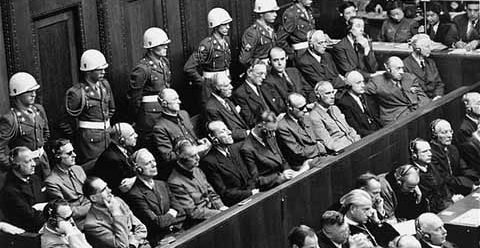
When the war was over, I returned to Germany to assist in subsequent Nuremberg proceedings. I became Chief Prosecutor in what was referred to as “the biggest murder trial in human history,” the prosecution of twenty-two Einsatzgruppen officers. All twenty-two high-ranking defendants—many with doctoral degrees—were convicted of deliberately slaughtering over a million men, women, and children.[1] They were killed because they did not share the race, religion, or ideology of their executioners. I appealed for a new rule of law that would prevent future genocides and protect the human rights of all people everywhere, regardless of race or creed. It was my first case. I was 27 years old.

The most significant outcome of the Nuremberg Trials was the affirmation that aggressive war, which had previously been hailed as a sovereign right, was punishable as the supreme international crime. In 1946, the first General Assembly of the United Nations appointed committees to formulate a code of international crimes, including the crime of aggression, and to lay the foundation for an International Criminal Court to try leading offenders.[2] Yet reaching agreement on the definition of aggression became a major obstacle.

A consensus definition, replete with loopholes and exculpations, was reached in 1974.[3]   Major powers were not prepared to have any outside body restrain their perceived sovereign right to use force. The 1974 definition was brushed aside as non-binding. After countless sessions of hundreds of lawyers and delegates, a new consensus definition was finally reached in Kampala in 2010.[4] In order to reach agreement, it was stipulated that the offense could not be actionable before 2017 at the earliest, and only after a number of ratifications and other hurdles had been overcome.[5] Whether and when the major powers will be willing to accept accountability for the illegal use of force remains in legal limbo. The persistent obstacles over the last seventy years are more political than legal.

Some national leaders seem more concerned with protecting their power than their people. Fanatic followers seek to guard their religion, territory, or economy by every means. The original UN Charter peace plan requiring disarmament, an international military force, and an unbiased Security Council, was never given a chance. Those who were victors in war returned to being adversaries in peace. The rule of law was placed back into the ice bucket of the cold war. Since there was no independent judiciary capable of enforcing its decisions, militants willing to kill and die for their particular cause continued to rely on force by every available means. The voice of Nuremberg was not heard.

Nuremberg posited that crime is committed by individuals and that law must apply equally to everyone—including those who sit in judgment. If law is designed to protect large and varied constituencies, it must be interpreted broadly rather than narrowly. If punishing the crime of aggression remains blocked by overblown legal obstacles, a new legal path must be found to condemn what has been properly described as “the supreme international crime.” If the courtroom door remains locked, another entry must be found to protect the public interest. Massive abominations, such as rape, torture, and murder—which occur in every war—are already recognized as punishable crimes against humanity.[6] Surely, if one murder could qualify as a crime against humanity, the illegal use of armed force, in the knowledge that thousands of innocents will be killed, deserves at least equal condemnation.

The widely-hailed 1948 UN Universal Declaration of Human Rights proclaims that everyone has the right to life. Since it expresses the fundamental hopes of people everywhere, illegal war-making, which inevitably takes countless human lives, should be recognized as an inhumane act punishable universally in both national and international courts. Leading planners and perpetrators of such crimes against humanity should be held to account in a court of law whenever and wherever they may be apprehended. Furthermore, it is axiomatic that those who cause illegal damage should also be held accountable to compensate and mitigate the harm to the victims. These common-sense goals are all necessary steps toward making the Nuremberg legacy complete. Obviously, there is still a long way to go.

War has been glorified for centuries as the road to power and prestige. The rule of law applies not merely to governments and their agents. Under principles of universal jurisdiction, it should also bind groups and persons prepared to kill and die for their particular cause. Changing hearts and minds cannot be done quickly or easily. You cannot kill an ideology with a gun. It requires a more humane ideology that does not threaten any peaceful person. Tolerance and compassion must be taught on all levels. Compromise cannot be seen as cowardice. It is understandable that those with conservative inclinations are hesitant about yielding new powers to untried tribunals. Yet they fail to recognize that in this modern, cyber age, the use of military force is a far greater menace than a safeguard. Only peaceful means, as described in the UN Charter, are legally permissible. The money saved by outlawing war could provide funds to abate social conditions that give rise to the despair that ignites unrestrained hatred and violence.

It takes courage not to be discouraged. Despite difficulties and shortcomings, progress toward a more humane world governed by law and the search for justice has been remarkable. There has been an awakening of the human conscience.   Consider, for example, the end of colonialism and slavery, the emancipation of women, legalization of same sex partnerships, and a host of other advances considered impossible only a few decades ago.

The Nuremberg trials represented the search for a more humane world governed by law. The creation of the International Criminal Court in 2002 was another great step forward. It must be seen as a prototype that will need support as it improves by experience. In 2012, I was invited to make the closing remarks as the ICC completed its first case. I was then 92 years old. The chart of progress in advancing the rule of law does not move in a straight line but gradually spirals upward. Today, humanitarian law is being taught in universities throughout the world.

New means of instant universal communication must gradually lead to the recognition that we are all inhabitants of one small planet and that we must share its resources so that all may live in peace and human dignity. Accountability for the illegal use of force is an indispensable prerequisite. No one should be immune. Nuremberg pointed the way. The genocide in Rwanda sounded a belated alarm. Subsequent criminal proceedings under Security Council mandate and national jurisdictions for similar crimes against humanity were moves in the right direction.   What has been sadly lacking has been the effective enforcement of the declared goals and aspirations. That is the challenge facing all who believe in the rule of law. Perfection should not be expected. Only when accountability for the illegal use of force becomes widely accepted and enforced will the Nuremberg legacy be complete.


* Former Nuremberg War Crimes Prosecutor.

[1] “The Biggest Murder Trial in History”, U.S. Holocaust Memorial Museum, https://www.ushmm.org/wlc/en/article.php?ModuleId=10007155 (last visited Mar. 15, 2017).

[2] Yeun-Li Liang, The Establishment of an International Criminal Jurisdiction: The First Phase, 46 Am. J. Int’l L. 73 (1952).

[3] Definition of Aggression, G.A. Res. 3314 (XXIX), U.N. Doc. A/RES/3314 (Dec. 14, 1974).

[4] International Criminal Court, Assembly of States Parties, Review Conference, The Crime of Aggression, ICC Doc. RC/Res. 6 (June 11, 2010).

[5] Rome Statute of the International Criminal Court arts. 15 bis, 15 ter, July 17, 1998, 2187 U.N.T.S. 90 (entered into force July 1, 2002), rev. 2010.

[6] Benjamin B. Ferencz, The Illegal Use of Armed Force as a Crime Against Humanity, 2 J. on the Use of Force & Int’l L. 198, 195 (2015).

Content, Other Symposia

State Responsibility for Aggression: A Human Rights Approach

[PDF]

By Frédéric Mégret*

The insertion of aggression in the Rome Statute has created hopes that it might one day be prosecuted.[1] Nonetheless, the chances of anyone being prosecuted by the ICC for aggression seem rather dim at present given how unlikely it is that states who might commit aggression will recognize the Court’s jurisdiction over it, and the inevitable difficulties of prosecuting senior leaders.

More importantly, even if aggression is prosecuted, it is hard not to see how the focus on individual criminal responsibility is even more problematic when it comes to aggression than it is with other crimes. Individual responsibility has a place within international law and is often associated with a level of targeted deterrence, as well as satisfying some of victims’ needs to locate responsibility within particular individuals. Indeed, there may be room for strategic prosecution aimed at hyper-responsible individuals, those who have had a larger-than-life role in the launching of wars of aggression.

Nonetheless, the role of individual responsibility ought to remain a marginal one in relation to reckoning with broader issues of collective responsibility. It is not only that individual responsibility for aggression is dependent on a finding that the state engaged in aggression; it is that aggression is behavior that is also attributable to the state and should be seen as such.[2] It may be that some wars are launched primarily by individuals, but many have significant—even massive—popular support and/or are launched by democratically elected leaders. Because of the emphasis on aggression as a “leadership crime,” the degree to which the population and the military may willingly have embraced aggression risks being hidden from sight, possibly allowing both simply to “blame their leaders.”[3]

In addition, there is arguably a deeper problem than aggression itself understood as the first, unprovoked use of violence against another state—namely, the very existence of war as a possibility in international law. Aggression is a key component of war, but it is not its defining structural feature. That structural basis is more likely to be found in the unique military buildups and territorial exclusivism that the nation state makes possible, combined with the particular anarchy of the international system. Aggression, moreover, will often only occur against the background of significant injustices, unresolved territorial disputes, power imbalances and politics, colonial legacies, support of despotic regimes, militarism, the arms trade, etc. We should be mindful, in fact, that oftentimes both states will be happy to go to war with each other, and that the “technically” self-defending state may welcome the opportunity to fight. The criminalization of individuals committing aggression, in short, can blind us to the structural dimensions of aggression.[4] It is hardly a comprehensive answer to the problem of war and peace, even if it may be part of the solution to first uses of force as a particular trigger of war.

How, then, might one think about complementing and improving on individual criminal responsibility for aggression? State responsibility is a fundamental pillar of international law. State responsibility for aggression is an attractive option, especially in cases where there may be something arbitrary about focusing on a small coterie of individuals. For example, state responsibility seems to have a better ability to tackle the problem of reparations. As it stands, the ICC reparations regime focuses on the responsibility of the convicted and some indeterminate source of external funding channeled by the Victims Trust Fund.[5] But although an individual may be entirely responsible for a crime, he cannot, in most cases, be responsible for the totality of the harm caused. That is particularly the case with a collective crime, such as aggression. Even if it is justifiable for individuals to bear full criminal responsibility for aggression, it does not follow that they should shoulder the totality of the blame for the harm—and at any rate, they could not compensate for it in the way that a state might.[6]

Thinking of responsibility for aggression as state responsibility may also help deal with the broader consequences of aggression by allowing us to develop what might be described as a human rights approach to aggression.[7] Under a regime that punishes individuals for aggression, it is not always clear what the actual gravity of having launched an unprovoked war is. In international criminal law, aggression is a fairly “flat” accusation: An act of aggression that leads to a world war, causing many deaths, or an act of aggression that ends in a minor conflict, with few deaths, may be understood politically and morally as being separated by orders of magnitude. Legally, however, these two acts will be treated the same as constituting aggression. This may be because aggression is traditionally, first and foremost, conceived of as a crime against another state, irrespective of its consequences for human beings. [8] As a result, individuals who commit aggression typically are not understood as being conceivably responsible for at least four things that seem crucial to our understanding of the gravity of aggression.

First, because of the distinction between the jus ad bellum and the jus in bello, war crimes committed in war are not per se attributable to the individuals who engaged in aggression. Some individual “aggressors” might, of course, be liable under a separate heading as commanders or instigators of war crimes, but the act of engaging in aggression is a distinct offense and is separate from its consequences. This is so even though, per hypothesis, the war crimes would never have been committed had aggression not occurred, triggering the chain of events that led to the conditions under which the war crimes occurred.

Second, those responsible for aggression are not criminally responsible for the deaths of enemy combatants who are lawfully killed and the other side’s civilians who are killed collaterally in ways that conform to the laws of war.[9] This is because under the jus in bello, which applies to both parties, including the aggressing side, such deaths are considered to be legal. This is true irrespective of the fact that, were it not for the initial act of aggression and the resulting operation of the laws of war, it almost certainly would have been unlawful to kill these individuals from a default human rights perspective.

Third, individuals who commit aggression are emphatically not responsible for any loss of life caused by the acts of the state exercising self-defense. Individuals clearly do not exercise responsibility or control over soldiers on the other side that could, under ordinary principles of criminal law, be imputable to them. This is true even though the defending state would never have had to kill combatants or non-combatants collaterally (those of the aggression state), and perhaps never have committed war crimes, had it not been “forced” to respond to an aggression in the first place.

Fourth, those involved in aggression are typically not guilty for the loss of life of their own troops.[10] As individuals, they do not owe particular human rights obligations to such individuals. Again, this is true even though none of those troops would have died had the aggressing state not engaged in aggression in the first place.

One might argue, therefore, that individual responsibility for aggression is either very indeterminate about what is being punished, or reflects a quite limited view of the actions for which individuals are being punished when found guilty of aggression. Looking at the problem from the point of view of state responsibility and of human rights might allow us, by contrast, to contemplate more readily the overarching gravity of aggression.[11] State responsibility for aggression is a moral responsibility, one could argue, for the totality of the consequences that flow from aggression. These consequences would include, at the very least, war crimes committed by a state’s own troops, regardless of whether the state actually condoned them. The question of whether the aggressing state bears any responsibility for the war crimes committed by the other side is more complex, and there may be strategic reasons to deny that possibility, in addition to the fact that the defending state acts as a sort of novus causus interveniens. Nonetheless, if responsibility for war crimes committed by the other state is not seen as the exclusive responsibility of that state or its agents, then on the basis of a “would never have been committed in the first place” criterion, one might say that the aggressing state bears at least some responsibility for the war crimes committed by others.

As to the killing of enemy combatants and, collaterally, enemy civilians, it is lawful only because of and under the peculiar logic of the laws of war. Even if the laws of war grant individuals a privilege of belligerency in such cases, the aggressing state should arguably be held liable for wrongfully creating the conditions under which that privilege of belligerency becomes effective. Of course, positive international human rights law is typically understood to defer to the lex specialis of the laws of war following the ICJ’s Advisory Opinion when it comes to the conduct of hostilities.[12] One can wonder, however, what might be the deeper rationale for this position from a human rights point of view. Why should the aggressor be rewarded through its own wrongdoing by a quasi-immunity for killing? From a human rights angle, the state has unlawfully, to use Jens Ohlin’s felicitous phrase, “bootstrapped” itself into a position where it can claim the benefit of the laws of war’s “license to kill.”[13]

Finally, a human rights approach to aggression would focus on the extent to which the aggressing state violates the rights of persons within its own jurisdiction whom it endangers by entering a war that no human rights consideration can justify. The persons affected would include the state’s own civilians, even when killed by enemy fire that the aggressing state has “brought upon itself” without any just cause. Moreover, these persons arguably would also include the state’s own combatants, whose lives and integrity the state is expending in ways that cannot be shown, under human rights principles and contrary to the situation of the defending state, to be justified under some democratic imperative.


* Frédéric Mégret is an Associate-Professor and Dawson scholar at the Faculty of Law, McGill University.

[1] Rome Statute of the International Criminal Court art. 5(1), July 17, 1998, 2187 U.N.T.S. 90 (entered into force July 1, 2002), rev. 2010 [hereinafter Rome Statute].

[2] Rome Statute, supra note 1, art. 8 bis.

[3] See Larry Cata Backer, The Fuhrer Principle of International Law: Individual Responsibility and Collective Punishment, 21 Penn State Int’l Law Rev. 509 (2002).

[4] Johan Galtung, A Structural Theory of Aggression, 1 J. Peace Res. 95–119 (1964).

[5] See Frédéric Mégret, Justifying Compensation by the International Criminal Court’s Victims’ Trust Fund: Lessons from Domestic Compensation Schemes, 36 Brook. J. Int’l L. 123, 124–25 (2010).

[6] Id. at 149–50.

[7] Some of the themes discussed here have been explored in more detail in Frédéric Mégret, What is the Specific Evil of Aggression?, in The Crime of Aggression: A Commentary (Claus Kreß & Stefan Barriga eds., 2017).

[8] Mégret, supra note 7.

[9] Jens David Ohlin, The Crime of Bootstrapping, in The Crime of Aggression: a Commentary (Claus Kreβ & Stefan Barriga eds., 2017).

[10] I say typically, because attempts have been made in the UK to at least sue the British state for failures to protect the right to life as a result of having insufficiently sought advice before sending British troops to Iraq. See House of Lords, Judgments – R (on the application of Gentle (FC) and another (FC)) (Appellants) v. the Prime Minister and others (Respondents), [2008] UKHL 20. After the Chilcot inquiry’s findings that the 2003 invasion of Iraq was illegal, there have also been suggestions that this could be changing and that former Prime Minister Tony Blair could be sued essentially for engaging in an act of aggression. Caroline Mortimer, Tony Blair Could Be Sued for “Every Penny” by Families of Soldiers Killed in Iraq, The Independent (July 8, 2016), http://www.independent.co.uk/news/uk/politics/chilcot-tony-blair-iraq-war-soldiers-families-sue-every-penny-prosecution-a7126386.html (last visited Mar 16, 2017).

[11] Mégret, supra note 7.

[12] Legal Consequences of the Construction of a Wall in the Occupied Palestinian Territory, Request for Advisory Opinion, Order, 2003 I.C.J. 428 (Dec. 19).

[13] Ohlin, supra note 9.

Content, Other Symposia

Accountability for Violations of the Prohibition against the Use of Force at a Normative Crossroads

[PDF]

By Federica D’Alessandra*

For a brief period of time, between 1945 and 1947, public international law outlawed, sanctioned, and made judiciable breaches of the prohibition against the use of force in international relations as both a state act and a crime warranting individual penal liability. Ever since the Nuremberg trials, however—and despite the 1946 UN General Assembly affirmation of the principles of Nuremberg, which, it has authoritatively been argued, conferred upon these principles the status of customary law[1]—the articulation of the prohibition against the use of force was abandoned in the international criminal sphere and left to the United Nations system of enforcement and maintenance of international peace and security. The relatively recent history of the normative development of the prohibition itself and the controversies surrounding the justiciability of breaches of this prohibition as crimes under international law are but two indicators of the chronic unpopularity that has accompanied efforts to outlaw and sanction armed conflict throughout modern history. After years of lengthy negotiations, in 2017 the international legal community will have the opportunity to reconsider its commitment to the precedent it established in Nuremberg. This might, in fact, be the year that the law on the use of force and international criminal law converge again after seventy years of separation and idiosyncrasy.[2] With accountability for violations of the prohibition against the use of force at a crossroads, this contribution is dedicated to its normative history, and to the possibility of a normative convergence in the near future.

***

A brief period of overlap. The prohibition against the use of force has been recognized as the bedrock of public international law since the end of World War II. Although some have disagreed with this notion,[3] the prohibition against the use of force is widely recognized a jus cogens norm of peremptory character, whose scope has been defined in multiple international legal instruments, including the founding document of the United Nations (UN), and in the jurisprudence of international tribunals.[4] In 1945, article 2(4) of the United Nations Charter imposed an absolute prohibition against the use of force, requiring that all Member States “refrain in their international relations from the threat or use of force against the territorial integrity or political independence of any State, or in any other manner inconsistent with the Purposes of the United Nations.” The sole exceptions to this rule were made for instances of the use of force in individual or collective self-defense and for the use of force to combat threats to international peace and security under the executive power of the newly established UN Security Council.[5] Rising from the ashes of the most devastating conflict in history, states had finally outlawed war as a legitimate means of conducting themselves in the international arena.[6] That principle underpinned the new system of international law and relations that still governs us today.

After the end of World War II and amidst much controversy,[7] violations of the prohibition against the use of force were also recognized as crimes under international law warranting the adjudication of individual criminal responsibility as “crimes against peace.” Under the law of the International Military Tribunals at Tokyo and Nuremberg, the “planning, preparation, initiation or waging of wars of aggression, or a war in violation of international treaties, agreements or assurances, or participation in a common plan or conspiracy for the accomplishment of any of the foregoing” was recognized as the “supreme international crime” that differed from other international crimes only in that “it contains within itself the accumulated evil of the whole.”[8] The criminalization of the illegal use of force was hailed as a step forward for accountability and as a “safeguard [of] the future peace and security of this war-stricken world.”[9] Nuremberg itself and the subsequent trials[10] have been defined as the most successful “plea of humanity to law”[11] and “one of the most significant tributes that Power has ever paid to Reason.”[12]

***

Between idiosyncrasy and symbiosis: from Nuremberg to Kampala. Despite the enthusiasm at the time, and notwithstanding the consistent best efforts of a committed group of individuals, including the indefatigable Benjamin Ferencz, criminal liability for violations of the prohibition against the use of force was relegated to the status of a memory from the recent past for the next seventy years.[13] In the 1950s, at the request of the General Assembly, the International Law Commission (ILC) drafted two statutes for a permanent international court that would have received jurisdiction over breaches of the prohibition against the use of force, or “aggression,” as it had come to be known, but these were shelved during the Cold War, which made the establishment of such court politically unrealistic.[14] In 1974, the UN General Assembly adopted by consensus a resolution defining the “crime of aggression,” as “the use of armed force by a State against the sovereignty, territorial integrity or political independence of another State, or in any other manner inconsistent with the Charter of the United Nations, as set out in this Definition.” Article 5(2) of the resolution clearly stated that “a war of aggression is a crime against international peace,” and that “aggression gives rise to international responsibility.”[15]

The definition built both on the Nuremberg and Tokyo Charters and on the language and scope of article 2(4) of the UN Charter. Interestingly, however, and contrary to the International Military Tribunal statutes, it avoided specifying whether the responsibility for this “crime” ought to lay with the individual; moreover, unlike the UN Charter, it did not recognize the “threat” of the use of force as aggression pursuant to its own definition. The resolution went into some detail, however, by fleshing out which breaches of the prohibition against the use of force did constitute “acts” of aggression (invasion, including occupation and annexation, bombardment, blockade, violation of status of forces agreements, the “sending” of armed groups, or any other form of armed attack by sea, air, or land, including the use of one’s territory to launch it),[16] and by recognizing that “aggression is the most serious and dangerous form of the illegal use of force.”[17]

These notions were, of course, picked up by the International Court of Justice (ICJ) in much of its reasoning and jurisprudence on the subject of the legality of the use (or threat of the use) of force,[18] even though only a handful of cases have come before the ICJ on this issue throughout the years.[19] Although the Court has “never found that a state has committed aggression,” nor has it “set out a definition of the concept of aggression” or “analyzed the concept in any detail,” nevertheless, “allegations of aggression have occasionally found their way before the ICJ.”[20] Even in cases in which aggression was not alleged as such, the Court’s analysis of the legality of the use of force has helped “develop[] the law both in relation to the prohibition of the use of force, and in relation to the exceptions to that prohibition.”[21]

***

Towards normative convergence in Kampala. The ICJ reasoning on what constitutes and does not constitute an act of aggression was duly taken into consideration during the Kampala negotiations and in the lead up to the negotiations during the travaux préparatoires of the Working Group on Aggression.[22] The drafters were sensitive to the debate surrounding the level of overlap between the substantive and constituent elements of the notion of the illegal use of force as it had developed with respect to state responsibility, as well as to the constituent elements of the penal offense as it was recognized in and subsequent to Nuremberg (including the 1974 definition of aggression). Because of the lack of systematic treatment of the concept of “aggression” by the ICJ, however, several positions existed in Kampala as to what should or should not be included in the definition. Article 8 bis of the Rome Statute eventually came to distinguish between an act of aggression and a crime of aggression. For the purpose of the Rome Statute, a crime of aggression was defined as an “act of aggression, which by its character, gravity and scale, constitutes a manifest violation of the Charter of the United Nations.”[23] An act of aggression, for the purposes of the Statute, is thus a constituent element of a crime of aggression and, coherently with the 1974 definition of aggression, is any of the following acts: invasion (including occupation and annexation), bombardment, blockade, violation of Status of Forces agreements, the “sending” of armed groups, or any other form of “armed attack” by sea, by air, or by land, including the use of one’s territory to launch it. [24]

The “manifest” threshold for the criminal offense concerning the gravity, scale, and character of the violations (as cumulative elements) was intended to exclude “borderline cases” (as it would be the case, for example, with border skirmishes). It was also intended to exclude cases falling within a gray area both factually (when the act of state does not meet the required “gravity” or “scale,” such as in minimal boarder incursions), as well as legally (that is, debatable cases, where the act of state does not constitute a manifest violation of the Charter due to its “character”). This language is, of course, fruit of diplomatic compromise and has been harshly criticized,[25] but it ought to be understood in light of the “different speeds” at which states mature and develop their own understanding of what the prohibition against the use of force in international law prescribes or proscribes, particularly with respect to exceptions to the prohibition. The controversy in Kampala over so-called “unilateral humanitarian interventions” is an emblematic example of this.

Humanitarian interventions (that is, non-UNSC sanctioned use of military force in the territory of a non-consenting state to halt or prevent war crimes, crimes against humanity, genocide, and ethnic cleansing) were discussed as possible exceptions falling under the latter category of non-manifest violations, and a memorandum of understanding to this extent was proposed by the United States to the Assembly in Kampala. Ultimately, however, the memorandum of understanding was not adopted because unilateral humanitarian interventions have not crystallized as exceptions to the prohibition against the use of force under international law.[26] To the contrary, although the 2001 International Commission on Intervention and State Sovereignty’s Final Report theorized that a “responsibility to protect” civilians from atrocity crimes exists, both the 2004 High-Level Panel on Threats, Challenges and Change, and the Secretary-General’s own 2005 Report in Larger Freedoms concluded that under existing law, such responsibility can be exercised only under the authority of the Security Council.[27]

Of course, academic, policy, and ethical disagreement over humanitarian interventions continue to date.[28] Other international law “doctrines” might be equally invoked in future debates over “gray areas” in the definition of acts of aggression concerning, for example, the “protection of nationals abroad” (most often taking shape in the form of “non-combatant evacuation operations,” or NEOs) and self-defense against non-state armed groups. Insofar as the crime of aggression is concerned, however, the manifest threshold introduced in the definition intentionally excludes all such instances of the use of force. It is exactly for this reason that those with a restrictive view on the law on the use of force—including, notably Benjamin Ferencz—have argued that the definition agreed upon in Kampala did not go far enough if we consider deterrence from the illegal use of force the ultimate goal of the criminalizing aggression in the first place. Alternative theories have been advanced, arguing that the illegal use of force may be prosecuted as a war crime in some circumstances (of disproportionate attack, for example)[29] or as a crime against humanity in and of itself.[30] Whether these theories will gain support among scholars and experts is yet to be seen. Early reactions to these ideas, however, do not seem to preclude the coexistence of such theories and the framework agreed upon at Kampala. The specific arguments, moreover, cannot be discounted as being without merit.

***

In conclusion, the substantive aspects of the debate surrounding criminal accountability for the illegal use of force are not marginal. The legislative history of aggression from Nuremberg to the Kampala negotiations is illustrative of the symbiotic but idiosyncratic relationship that has characterized the various strands of public international law that deal with questions concerning the legitimacy and lawfulness of the use of force. From a normative perspective, the observance of how developments in the law on the use of force have influenced and may or may not influence again the definition of the crime of aggression, or may be conducive to an expansive interpretation of other judiciable offenses, is fascinating. And if normative developments demand that standing definitions of crimes or interpretations of these definitions be changed, surely the international community will have future opportunities to revisit the issue. Indeed, perhaps the international community will revisit the most appropriate penal characterization for the illegality of the use of force that results in the death of score of innocent civilians.[31] At the current stage, however, the question is whether or not the international community will honor its original commitment to make the “supreme international crime” again a judiciable offense—or, as this essay ponders, whether 2017 will be the year that the law on the use of force and international criminal law converge again after seventy years of separation. Even if no convictions are obtained under the current definition of the crime of aggression, the symbolic power of completing the Nuremberg legacy—and the prospect of adding a further tool for deterring military adventurism, contributing to the maintenance of international peace and security in a manner compatible with the requirements of the UN Charter—seems a worthwhile endeavor, especially in a nuclear age.


* Federica D’Alessandra is a Visiting Researcher in residence at the Harvard Law School Graduate Program, where she is conducting research on the interaction between the law on the use of force, international criminal law, and international human rights law. The author is grateful to many of the contributors of this symposium for their continued engagement, generous feedback and power of ideas. All errors remain the author’s only.

[1] Attorney Gen. of the Gov’t of Isr. v. Eichmann, 36 I. L. R. 277 (Sup. Ct. 1962) (“[I]f there was any doubt as to this appraisal of the Nuremberg Principles as principles that have formed part of customary international law ‘since time immemorial,’ such doubt has been removed by two international documents”; citing G.A. Res. 95(I) and Res. 96). See also R v. Jones, [2006] UKHL 16 [12]–[18] (citing Ian Brownlie, Principles of Public International Law 566 (5th ed., 1998) (“[W]hatever the state of the law in 1945, Article 6 of the Nuremberg Charter has since come to represent general international law.”)).

[2] In talking about “convergence” of the law on the use of force and international criminal law, the author refers strictly to the normative relationship between the two strands of public international law. The level of substantive overlap between the prohibition against war as articulated in the body of law regulating the use of force, and the prohibition against aggressive war as existing in international criminal law remains, in fact, a topic of lively scholarly debate. See, e.g., Dapo Akande & Antonios Tzanakopoulos, The International Court of Justice and the Concept of Aggression, in The Crime of Aggression: A Commentary 214–29 (Claus Kreβ & Stefan Barriga eds., 2017).

[3] James A. Green, Questioning the Peremptory Status of the Prohibition of the Use of Force, 32 Mich. J. Int’l L. 215, 215–18 (2011).

[4] Sondre Torp Helmersen, The Prohibition of the Use of Force as Jus Cogens: Explaining Apparent Derogations, 61 Neth. Int’l L. Rev. 167 (2014); Kamrul Hossain, The Concept of Jus Cogens and the Obligation Under the U.N. Charter, 3 Santa Clara J. Int’l L. 72 (2005).

[5] U.N. Charter art. 2 para. 4, art. 39, art. 42 & art. 51.

[6] The first international legal instrument to impose a binding legal obligation to “renounce war as an instrument of national policy” was the Kellogg-Briand Pact of 1928. Although important as an early effort by states at self-restraining, the treaty was however a weak instrument that did not envision either sanctions for failing to abide or an enforcement mechanism, and as such, it has been highly criticized. See Kellogg-Briand Pact, Aug, 27, 1928, 6 U.S.T. 3516, 75 U.N.T.S. 287.

[7] On the constitutive elements of “crimes against peace,” and the controversy surrounding the criminalization of breaches of the prohibition against the use of force, see Roger S. Clark, Nuremberg and the Crime Against Peace, 6 Wash. U. Global Stud. L. Rev. 527, 527 (2007).

[8] Charter of the International Military Tribunal art. 6(a), Aug. 8, 1945, 59 Stat. 1544, 82 U.N.T.S. 279; Charter of the International Military Tribunal for the Far East art. 5(a), Jan. 19, 1946, 4 Bevans 20; 22 Trial of the Major War Criminals Before the International Military Tribunal, Nuremberg 427 (1948).

[9] 3 Trial of the Major War Criminals Before the International Military Tribunal, Nuremberg 93 (1947).

[10] See Punishment of Persons Guilty of War Crimes, Crimes Against Peace and Against Humanity, Control Council Law No. 10 (Dec. 20, 1945), 3 Official Gazette Control Council for Germany 50–55 (1946).

[11] Opening Statement of Benjamin B. Ferencz at Nurember, Proceedings, Sept. 29, 1947, 4 Trials of War Criminals before the Nuernberg Military Tribunals under Control Council Law No. 10, Nuernberg 30 (1950).

[12] See Opening Statement of Robert H. Jackson, Proceedings, Nov. 21, 1945, 2 Trial of the Major War Criminals Before the International Military Tribunal, Nuremberg 99 (1947).

[13] It should be noted that the tribunals have not received an overwhelmingly positive response, however. Many have criticized the tribunals as constituting an imposition of “victor’s justice,” and the prosecution of “crimes against peace” specifically has been criticized on grounds that it violated the principle of “legality.” See generally Antonio A. Cassese, Guido G. Acquaviva, Mary D. Fan & Alex A. Whiting, International Criminal Law: Cases and Commentary (2011); Mahmoud Cherif Bassiouni, Introduction to International Criminal Law (2nd ed., 2013).

[14] See D. H. N. Johnson, The Draft Code of Offences against the Peace and Security of Mankind, 4 Int’l & Comp. L. Q. 445 (1955).

[15] Definition of Aggression art. 1, G.A. Res. 3314 (XXIX), 29 U.N. GAOR Supp. No. 31, at 142, U.N. Doc. A/9631 (Dec. 14, 1974).

[16] Id., art. 3 (“Any of the following acts, regardless of a declaration of war, shall, subject to and in accordance with the provisions of article 2, qualify as an act of aggression: (a) The invasion or attack by the armed forces of a State of the territory of another State, or any military occupation, however temporary, resulting from such invasion or attack, or any annexation by the use of force of the territory of another State or part thereof, (b) Bombardment by the armed forces of a State against the territory of another State or the use of any weapons by a State against the territory of another State; (c) The blockade of the ports or coasts of a State by the armed forces of another State; (d) An attack by the armed forces of a State on the land, sea or air forces, or marine and air fleets of another State; (e) The use of armed forces of one State which are within the territory of another State with the agreement of the receiving State, in contravention of the conditions provided for in the agreement or any extension of their presence in such territory beyond the termination of the agreement; (f) The action of a State in allowing its territory, which it has placed at the disposal of another State, to be used by that other State for perpetrating an act of aggression against a third State; (g) The sending by or on behalf of a State of armed bands, groups, irregulars or mercenaries, which carry out acts of armed force against another State of such gravity as to amount to the acts listed above, or its substantial involvement therein.”).

[17] Id., preamble.

[18] Christine Gray, The International Court of Justice and the Use of Force, in The Development of International Law by the International Court of Justice (Christian J. Tams & James Sloan, eds., 2013).

[19] Examples of such cases are Nicaragua v. United States, the Oil Platforms Case, Cameron v. Nigeria, Democratic Republic of Congo v. Uganda, Yugoslavia v. United States, and two ICJ Advisory Opinions on the Construction of a Wall in the Occupied Palestinian Territory and on the Legality of the Threat or Use of Nuclear Weapons. For a discussion, see generally Christine Gray, The Use and Abuse of the International Court of Justice: Cases Concerning the Use of Force after Nicaragua, 14 Eur. J. Int’l L. 867 (2003).

[20] Akande & Tzanakopoulos, supra note 2, at 215.

[21] Id.

[22] See generally The Travaux Préparatoires of the Crime of Aggression (Steffan Barriga & Claus Kreβ, eds., 2012).

[23] Rome Statute of the International Criminal Court art. 8 bis, July 17, 1998, 2187 U.N.T.S. 90, rev. 2010 [hereinafter Rome Statute].

[24] Id. (emphasis added).

[25] See, e.g., Harold H. Koh & Todd F. Buchwald, The Crime of Aggression: The United States Perspective, 109 Am. J. Int’l L. 257, 265 (2015).

[26] The Princeton Process on the Crime of Aggression, 2003-2009, 51 (Steffan Barriga, Wolfgang Danspeckgruber & Christian Wenaweser, eds., 2009).

[27] See International Commission of Intervention and State Responsibility, The Responsibility to Protect (2001), http://responsibilitytoprotect.org/ICISS%20Report.pdf; Follow-up to the Outcome of the Millennium Summit, Note by the Secretary General, U.N. Doc. A/59/565 (Dec. 2, 2004).

[28] Koh, supra, 25.

[29] See Rachel E. VanLandingham, Criminally Disproportionate Warfare: Aggression as a Contextual War Crime, 48 Case W. Res. J. Int’l L. 215 (2016).

[30] Manuel J. Ventura & Matthew Gillet, The Fog of War: Prosecuting Illegal Uses of Force as Crimes Against Humanity, 12 Wash. U. Global Stud. L. Rev. 523 (2013); Benjamin B. Ferencz, The Illegal Use Of Armed Force As A Crime Against Humanity, 2 J. Use of Force & Int’l L. 187 (2015).

[31] The 2022 review conference could be one such moment to reconsider whether developments in the normative prohibition against the use of force have changed the internationally agreed definition of what constitutes a crime of aggression, and every year the Assembly of State Parties has the opportunity to reconsider amendments to the definition of other offenses.


Content, Other Symposia

Continued Debate Over the Crime of Aggression: A Supreme International Irony

[PDF]

By Donald M. Ferencz*

The common sense of mankind demands that law shall not stop with the punishment of petty crimes by little people. It must also reach men who possess themselves of great power and make deliberate and concerted use of it to set in motion evils which leave no home in the world untouched.

Robert Jackson, 21 November 1945[1]

With these words, the Chief of Counsel for the United States opened the case for the Prosecution at the International Military Tribunal at Nuremberg (IMT). The IMT’s ground-breaking judgment of October 1, 1946 held Nazi leaders personally to account for war crimes, crimes against humanity, and crimes against peace—and indelibly branded aggression as “the supreme international crime.”[2]

Within days of the verdict, Robert Jackson reported to the President of the United States that “[n]o one can hereafter deny or fail to know that the principles on which the Nazi leaders are adjudged to forfeit their lives constitute law and law with a sanction.”[3] Yet, despite such ardent pronouncements, the IMT was a court of limited jurisdiction and, without broader global endorsement, its judgment might have fallen short of commanding universal recognition as binding law. For this reason, the United States advanced its consideration by the United Nations, where, on December 11, 1946, the General Assembly unanimously affirmed the principles of the Nuremberg Charter and judgment and directed that work begin on formulating these principles within an international criminal code.[4] Such affirmation has been cited by both courts and commentators as having stamped the judgment with the expected imprimatur of customary international law.[5]

Notwithstanding the fact that it took the U.N. only seventy-one days to affirm aggression as a customary law offense, today, almost seventy-one years later, it remains a crime in legal limbo. Though the International Criminal Court (ICC) is technically vested with jurisdiction over the crime of aggression, it is, as yet, powerless to exercise such jurisdiction.[6] But that may soon change.

In 2010, at an ICC Review Conference held in Kampala, Uganda, amendments to the Rome Statute were adopted by consensus which could allow the Court’s aggression jurisdiction to be activated as early as 2017.[7] Ironically, those most responsible for having elevated the crime to its current status within customary international law are in no rush to see that happen.[8]

At Nuremberg, it was the United States that pressed for including aggressive war-making as an indictable offense.[9] The Charter defined “crimes against peace” as the “planning, preparation, initiation or waging of a war of aggression, or a war in violation of international treaties, agreements or assurances, or participation in a Common Plan or Conspiracy for the accomplishment of any of the foregoing.”[10] It went on to specify that “[l]leaders, organizers, instigators and accomplices participating in the formulation or execution of a Common Plan or Conspiracy to commit any of the foregoing crimes are responsible for all acts performed by any persons in execution of such plan.”[11]

While customary law covers only wars of aggression, the Rome Statute criminalizes a litany of specific state acts of aggression involving uses of armed force which, as to their “character, gravity and scale constitute[] a manifest violation of the Charter of the United Nations.”[12] Although the Statute, therefore, may appear to straddle a customary law divide between wars of aggression and mere acts of aggression, the “manifest violation” threshold may reasonably be expected to limit aggression prosecutions, other than for substantial breaches of the peace.[13]

The acts specified in paragraph 2 of Article 8 bis of the Rome Statute are identical to those set forth in Article 3 of the Definition of Aggression adopted in General Assembly Resolution 3314 in 1974.[14] As to the character of the prohibition of conduct proscribed by Article 3 of the 1974 definition (relating to “the sending”. . . of armed bands, groups, irregulars or mercenaries”),[15] the International Court of Justice opined in 1986 that such prohibition “may be taken to reflect customary international law.[16] This characterization was made outside the scope of a criminal prosecution, but it is, nonetheless, of interest with respect to the question of whether the Rome Statute’s aggression provisions parallel those of customary international law. Yet it is a question which, in the end, may be relatively academic: Any prosecution before the ICC will necessarily rely primarily on the authority of the Rome Statute itself, rather than on principles of universal jurisdiction or of customary law.[17]

In Kampala, the Assembly of States Parties resolved by consensus “to activate the Court’s jurisdiction over the crime of aggression as early as possible.”[18] Now, in 2017, the parties are finally in a position to do so.[19] Whether their stated resolve was based in rhetoric or in reality should soon be fairly obvious.


* Visiting Professor, Middlesex University School of Law in London and Research Associate at the Oxford University Faculty of Law Centre for Criminology ([email protected]).

[1] See Opening Statement of Robert H. Jackson at Nuremberg, Proceedings, Nov. 21, 1945, 2 Trial of the Major War Criminals Before the International Military Tribunal, Nuremberg 99 (1947).

[2] See 22 Trial of the Major War Criminals Before the International Military Tribunal 427 (1948) (“To initiate a war of aggression, therefore, is not only an international crime; it is the supreme international crime differing only from other war crimes in that it contains within itself the accumulated evil of the whole.”).

[3] Letter from Robert H. Jackson to Harry Truman (Oct. 7, 1946), http://avalon.law.yale.edu/imt/jack63.asp.

[4] Affirmation of the Principles of International Law recognized by the Charter of the Nürnberg Tribunal, G.A. Res. 95(I), U.N. Doc. A/RES/1/95 (Dec. 11, 1946). For a detailed history, see Affirmation of the Principles of International Law Recognized by the Charter of the Nürnberg Tribunal: General Assembly Resolution 95(I), United Nations Audiovisual Library of International Law (2008), http://legal.un.org/avl/pdf/ha/ga_95-I/ga_95-I_ph_e.pdf.

[5] See, e.g., Ian Brownlie, Principles of Public International Law 566 (5th ed., 1998) (“[W]hatever the state of the law in 1945, Article 6 of the Nuremberg Charter has since come to represent general international law.”). See also R v. Jones, [2006] UKHL 16 [12]–[18] (Eng.) (holding that the crime of aggression exists in customary international law, essentially unchanged since Nuremberg, and citing Brownlie); Attorney Gen. of the Gov’t of Isr. v. Eichmann, 36 I. L. R. 277 (Sup. Ct. 1962) (“[I]f there was any doubt as to this appraisal of the Nuremberg Principles as principles that have formed part of customary international law ‘since time immemorial,’ such doubt has been removed by two international documents”; citing G.A. Res. 95(I) and Res. 96).

[6] The Rome Statute of the International Criminal Court (hereinafter the “Rome Statute” or the “Statute”) provided that the Court (established in 2002) may not “exercise jurisdiction over the crime of aggression” until after “a provision is adopted . . . defining the crime and setting out the conditions under which the court may exercise such jurisdiction.” Rome Statute of the International Criminal Court art. 5, July 17, 1988, 2187 U.N.T.S. 90, (entered into force July 1, 2002), rev. 2010 [hereinafter Rome Statute].

[7] The Kampala amendments provide that activation of the Court’s aggression jurisdiction will occur after at least thirty States have ratified them and they have been re-approved by the ICC’s Assembly of States Parties (ASP) at some time after January 1, 2017. Rome Statute, supra note 6, arts. 8 bis, 15 bis, 15 ter. See also Jutta F. Bertram-Nothnagel, A Seed for World Peace Planted in Africa: The Provisions on the Crime of Aggression Adopted at the Kampala Review Conference for the Rome Statute of the International Criminal Court, Africa Legal Aid Q., http://www.africalegalaid.com/wp-content/uploads/sites/84/2017/02/The_Provisions_on_the_Crime_of_Aggression_Adopted_at_the_Kampala_Review_Conference_for_the_Rome_Statute_of_the_International_Criminal_Court.pdf.

[8] See, e.g., Harold Hongju Koh & Todd F. Buchwald, The Crime of Aggression: The United States Perspective, 109 Am. J. Int’l L. 257 (2015). For a critique of the U.S. policy, see Donald M. Ferencz, Current U.S. Policy on the Crime of Aggression: History in the Unmaking?, 48 Case W. Res. J. Int’l L. 189 (2016). Leading up to the Kampala Review Conference, all five permanent members of the Security Council expressed a clear preference to see the Council, where they each have the veto power, have exclusive control over determinations relating to the crime of aggression. See, e.g., id.

[9] The Nuremberg Charter was appended to the London Agreement of 8 August 1945, signed by representatives of the United States, France, the U.K., and the Soviet Union. It is the foundational document authorizing the trial of Nazi criminals at Nuremberg. See 1 Trial of the Major War Criminals Before the International Military Tribunal, Nuremberg 10–18 (1947). For a detailed account of the paramount role of the United States in advancing crimes against peace, see J.A. Bush, “The Supreme . . . Crime” and Its Origins: The Lost Legislative History of the Crime of Aggressive War, 102 Colum. L. Rev. 2324 (2002). See also Kirsten Sellars, “Crimes against Peace” and International Law (2013).

[10] See Nuremberg Charter art. 6, 1 Trial of the Major War Criminals Before the International Military Tribunal, Nuremberg 11 (1947).

[11] Ibid. By contrast, the Rome Statute limits the scope to acts by “a person in a position effectively to exercise control over or to direct the political or military action of a State.” See Rome Statute, supra note 6, art. 8 bis(1). For a comparison of the Nuremberg and ICC leadership standards, see Kevin Jon Heller, Retreat from Nuremberg: The Leadership Requirement in the Crime of Aggression, 18 Eur. J. Int’l L. 477 (2007).

[12] See Rome Statute, supra note 6, art. 8 bis.

[13] See id.

[14] Although the resolution addressed the definition of aggression, it did not address the question of individual criminal accountability. See Definition of Aggression, G.A. Res. 3314 (XXIX), 29 U.N. GAOR Supp. No. 31, at 142, U.N. Doc. A/9631 (Dec. 14, 1974).

[15] Id.

[16] See Military and Paramilitary Activities in and against Nicaragua (Nicar. v. U.S.), 1986 I.C.J. 14, 103, ¶ 195 (June 27).

[17] It should be noted, however, that while article 21 of the Rome Statute requires that the Court primarily apply the Statute, the Elements of Crimes, and its own Rules of Procedure and Evidence, it may also, “where appropriate,” consider secondary sources of law, including principles of both international and national laws.

[18] See International Criminal Court, Assembly of States Parties, Review Conference, The Crime of Aggression, ICC Doc. RC/Res.6 (June 11, 2010).

[19] Since thirty State Parties have already ratified the amendments, all that remains for their activation is their re-approval by the ASP. See Rome Statute, supra note 6.

Content

The Human Right to Peace

[PDF]

By William Schabas*

The idea of an international criminal court was probably contemplated by dreamers in the eighteenth and nineteenth century, but it did not grow legs until the weeks following the armistice that ended the First World War. The forum for much of the debate was the Commission on Responsibilities, a body set up by the Preliminary Peace Conference in January 1919.[1] At its second meeting, the Commission decided to establish three sub-commissions, each charged with developing recommendations on a piece of the problem. The first of them focused on fact-finding, while the other two addressed the legal issues.[2] One sub-commission considered the responsibility for planning and launching the war, and the other examined violations of the laws and customs of war committed during the conflict.[3]

Thus, from the earliest days of international criminal justice, a distinction was made between the jus ad bellum and the jus in bello. Ultimately, the Commission on Responsibilities decided to focus criminal justice on the violations committed during the war rather than the responsibility for starting it.[4] But the important decisions on the content of the peace treaty were taken not by the Commission but by the Council of Four, which convened in April 1919. The Council set aside much of the Commission report. It agreed to create an international tribunal to try the German Emperor for “a supreme offence against international morality and the sanctity of treaties.”[5] The trial never took place, of course, because the Netherlands refused to surrender the Kaiser.

When international justice revived during the Second World War in forums like the London International Assembly, the United Nations War Crimes Commission, and the London Conference, the debates about the relationship between responsibility for starting a war of aggression and crimes committed within the conflict resumed. The judges of the International Military Tribunal addressed the issue by describing the category of crimes against peace as “the supreme international crime differing only from other war crimes in that it contains within itself the accumulated evil of the whole.”[6] They presented a holistic view of international criminality for atrocities by which crimes against peace, war crimes, and crimes against humanity were joined in what amounted to a symbiosis.

That relationship was challenged, although only indirectly, during the 1990s, when the Security Council established ad hoc tribunals to respond to the conflicts in the former Yugoslavia and Rwanda. The statutes of those institutions were confined to the jus in bello.[7] What the International Military Tribunal had called the “supreme international crime” was absent. This is partly explained by the understanding that the conflicts in both Yugoslavia and Rwanda were essentially non-international in nature. But the uncertainty about the status of the “supreme international crime” persisted during the drafting of the Rome Statute of the International Criminal Court (ICC).[8] Eventually, the vision of the International Military Tribunal began to be restored with the adoption, at Kampala, of amendments to the Rome Statute on the crime of aggression.[9] These entered into force in 2013 and are expected to become fully operational at the end of 2017.[10]

Yet a tendency to marginalize the crime of aggression persists. For example, a press release issued by the ICC in February 2017 described the Court as “the first permanent international criminal court established to help end impunity for the perpetrators of the most serious crimes of concern to the international community, namely: genocide, war crimes and crimes against humanity.”[11]  Of course, not only does article 5 of the Rome Statute include the crime of aggression as one of the four core crimes, but the amendments adopted at Kampala entered into force nearly four years ago. The oversight is a bit symptomatic.

Benjamin Ferencz, who has probably thought about these issues longer than anyone else on the planet, manifests in his writings and lectures an understanding of the bonds that join the crimes of the jus ad bellum to those of the jus in bello. He has developed a very creative approach by which aggressive war is positioned under the umbrella of crimes against humanity.[12] It makes a neat and persuasive complement to the vision at Nuremberg, whereby crimes against humanity were hitched, as it were, to war crimes and crimes against peace. In that sense, it might be said that crimes against humanity have become the “supreme international crime.”

Challenges to the link between the crime of aggression and the other atrocity crimes are explained, at least in part, by an insistence upon the distinction between the jus ad bellum and the jus in bello that comes from international humanitarian law. Without necessarily proclaiming total indifference on the lawfulness of the use of force, there is nevertheless an emphasis on conduct within the conflict and an affirmation of the essential equality of the parties, a consequence of ignoring the responsibility for the war itself.

What is a useful distinction in international humanitarian law seems to have spilled over into the international law of human rights. For example, at the Kampala Review Conference a position paper published by Human Rights Watch explained that the organization did not have much interest in the amendments on the crime of aggression because its focus was on the jus in bello rather than the jus ad bellum.[13] Amnesty International did much the same, explaining that “peace” was not a part of its mandate, which was derived from the Universal Declaration of Human Rights, because that document does not deal with the lawfulness of the use of force.[14]

This is a very narrow interpretation of the scope of international human rights. The opening words of the Universal Declaration of Human Rights affirm that “recognition of the inherent dignity and of the equal and inalienable rights of all members of the human family is the foundation of freedom, justice and peace in the world.”[15] The concluding phrase confirms the relationship of three fundamental objectives.[16] The sentence as a whole highlights the connection between freedom, justice, and peace and the protection of fundamental human rights.

After a period of some legal uncertainty as to whether or not human rights law applies during armed conflict, some having argued that it is displaced by the lex specialis of the law of armed conflict, it is now beyond serious dispute that human rights protections and obligations continue during wartime. According to the International Court of Justice, “the protection offered by human rights conventions does not cease in case of armed conflict, save through the effect of provisions for derogation of the kind to be found in article 4 of the International Covenant on Civil and Political Rights.”[17] Article 4 permits no derogation to the right to life.[18] Moreover, the European Convention on Human Rights permits derogation from the right to life only for “lawful acts of war.”[19] The rather limited travaux préparatoires of the Convention suggest that this phrase may well apply to the jus ad bellum as well as to the jus in bello.

It can be no more accurate to claim that the Universal Declaration of Human Rights is inapplicable in wartime than to say that the Charter of the United Nations, from which the Declaration is derived, does not operate during armed conflict. The importance of the right to life, sometimes described as the “supreme right,” enshrined in article 3 of the Universal Declaration of Human Rights and in all of the major treaties of general application, is at its most acute during armed conflict.[20] The right to life manifests itself in specific norms of the law of armed conflict, such as the prohibition of attacks on non-combatants and on civilian objects.[21]

Article 29(2) of the Declaration recalls that “[i]n the exercise of his rights and freedoms, everyone shall be subject only to such limitations as are determined by law solely for the purpose of securing due recognition and respect for the rights and freedoms of others and of meeting the just requirements of morality, public order and the general welfare in a democratic society.”[22] How can it be contended that the Universal Declaration is silent on the lawfulness of the use of force if the Declaration permits limitation of the right to life only when it is “determined by law”? Obviously, unlawful resort to force to settle an international dispute cannot be consistent with the requirement that it be “determined by law.”

The law of armed conflict takes its distance when the lawfulness of the use of force is concerned. It examines whether deprivation of life is arbitrary only from the perspective of the jus in bello. There is no reason for international human rights law to take the same path. Killing in an unlawful war is unlawful killing. It may escape the sanction of the law of armed conflict because of the internal logic of that system. But that rationale should not and cannot apply to international human rights law, where it is fitting to speak of a human right to peace.[23] The criminalization of the unlawful use of force—the crime of aggression—is the corollary of this human right to peace.


* William Schabas is a professor of international law at Middlesex University London and Leiden University. He is the author of several important books, including The International Criminal Court: A Commentary on the Rome Statute, now in its second edition. Professor Schabas was a member of the Sierra Leone Truth and Reconciliation Commission.

[1] See Div. of Int’l L., Carnegie Endowment for Int’l Peace, Pamphlet No. 32, Violations of the Laws and Customs of War: Reports of Majority and Dissenting Reports of American and Japanese Members of the Commission of Responsibilities, Conference of Paris 1919 (1919).

[2] Id. at 2–3.

[3] Id.

[4] Id. at 22–23, 25–26.

[5] Treaty of Peace between the Allied and Associate Powers and Germany art. 227, June 28, 1919, 225 Consol. T.S. 188.

[6] 22 Trial of the Major War Criminals Before the International Military Tribunal, Nuremberg 427 (1948).

[7] See, e.g., S.C. Res. 808, U.N. Doc. S/RES/808 (Feb. 22, 1993) (establishing an international tribunal to prosecute violations of international humanitarian law in the former Yugoslavia).

[8] See Rome Statute of the International Criminal Court art. 5(2), July 17, 1998, 2187 U.N.T.S. 90 (entered into force July 1, 2002), rev. 2010 [hereinafter Rome Statute].

[9] International Criminal Court, Assembly of States Parties, Review Conference, The Crime of Aggression, ICC Doc. RC/Res. 6 (June 11, 2010).

[10] Rome Statute, supra note 8, arts. 15 bis, 15 ter.

[11] Press Release, International Criminal Court, ICC President Highlights Role of Legal Profession at Events in Barcelona (Feb. 20. 2017), https://www.icc-cpi.int/Pages/item.aspx?name=pr1276.

[12] See Benjamin B. Ferencz, The Illegal Use of Armed Force as a Crime Against Humanity, 2 J. on the Use of Force & Int’l L. 187 (2015).

[13] Human Rts. Watch, Making Kampala Count: Advancing the Global Fight Against Impunity at the ICC Review Conference (May 10, 2010), https://www.hrw.org/report/2010/05/10/making-kampala-count/advancing-global-fight-against-impunity-icc-review-conference (“We have not participated actively in negotiations on the crime of aggression. We believe that we are most effective as a human rights organization if we do not opine on issues of jus ad bellum, the lawfulness of waging war, and instead adopt . . . an approach of strict neutrality during armed conflicts.”).

[14] Amnesty International, International Criminal Court: Concerns at the Seventh Session of the Assembly of States Parties 23 (Oct. 2008).

[15] Universal Declaration of Human Rights, Preamble, G.A. Res. 217 (III) A, U.N. Doc. A/RES/217(III) (Dec. 10, 1948) [hereinafter Universal Declaration of Human Rights].

[16] Id.

[17] Legal Consequences of the Construction of a Wall in the Occupied Palestinian Territory, Advisory Opinion, 2004 I.C.J. 136, 178 (July 9).

[18] International Covenant on Civil and Political Rights art. 4, Dec. 16, 1966, S. Treaty Doc. No. 95-20, 6 I.L.M. 368 (1967), 999 U.N.T.S. 171.

[19] Convention for the Protection of Human Rights and Fundamental Freedoms art. 2, Nov. 4, 1950, 213 U.N.T.S. 221.

[20] Universal Declaration of Human Rights, supra note 15, art. 3.

[21] Protocol Additional to the Geneva Conventions of 12 August 1949, and Relating to the Protection of Victims of International Armed Conflicts, arts. 48–60, June 8, 1977, 1125 U.N.T.S. 609.

[22] Universal Declaration of Human Rights, supra note 15, art. 29, para. 2.

[23] William A. Schabas, The Human Right To Peace, in Making Peoples Heard: Essays on Human Rights in Honour of Gudmundur Alfredsson 43–57 (Asbjørn Eide, Jakob T. Möller & Inete Ziemele, eds., 2011); William A. Schabas, Freedom from Fear and the Human Right to Peace, in The Challenge of Human Rights; Past, Present and Future 36–51 (David Keane & Yvonne McDermott, eds., 2012).

Content

On the Adjudication of the Illegal Use of Force at the ICC

[PDF]

By Anthony Abato*

“I cannot stop. It’s a trauma,” said Benjamin Ferencz about working tirelessly at his advanced age.[1] Two reporters sat with him in his Florida home and took notes. “I’m sure it’s the trauma of what I saw,” he said.[2] What he personally “saw” was, on the one hand, extensive human suffering during his service in the military and as a criminal lawyer. But was there another, latent type of “trauma” that Ferencz endured? He continued:

In the First World War, 20 million people were killed, and we got the Covenant of the League of Nations. It was very weak. After World War II, and 50 million people were killed, they gave us the United Nations Charter. Very weak. Then perhaps after millions more, people will wake up and say: we have to build more institutions. One of the institutions we got is a court, the ICC. But it’s too weak because nations don’t give it the support it needs.[3]

All this came in response to the remark, “Now you are almost 90.”[4] The frustration was on the tip of his tongue. In the years leading up to this interview, the five permanent members of the Security Council (P5) had taken a common position to undermine the States Parties’ support for the Court’s jurisdiction to select and adjudicate aggression cases. Outlawing aggression was—and still is—Ferencz’s life’s work. Perhaps the “trauma” that Ferencz suffered, wittingly or unwittingly, was in part from years of hearing the P5’s strained rhetoric.

Following the interview, at the Kampala Review Conference, the P5’s rhetoric grew into an agenda. The U.S. government delegation took the position that the determination of aggression requires a political assessment[5] and that states must not entrust such decisions to a prosecutor and a group of judges.[6] The proposed amendments on aggression, according to the U.S. delegation, were inconsistent with the judicial nature of the Court.[7] Meanwhile, the Russian delegation’s intention in Kampala was to avoid a “dubious, legally flawed situation where judges determine that an act of aggression has been committed.”[8] Collectively, the P5 claim that they act out of altruism, in defense of the “integrity of the UN Charter.”[9] They say the Court should exercise jurisdiction only after the Security Council has determined the existence of an act of aggression by one state against another.[10]

This short essay will look critically at the P5’s theory of the non-justiciability of aggression. The nature of aggressive war requires thinking in the abstract—a smearing of the otherwise rigid division between international relations and criminal law. But this rendering of “aggression” does not preclude its adjudication. As preparations for the next review conference begin, advocates for the criminalization of aggressive war, such as Ferencz, will have the difficult task of steering state delegates towards the big picture.

***

Despite the P5’s lobby, the result of the Kampala Conference allows the Court to determine whether there has been an act of aggression without relying on a decision by the Security Council.[11] This clearly does not accord with the agenda of the P5.[12] But the outcome of Kampala is justified. The importance of the adjudication of aggression by a court of law has its roots firmly planted in history. At the Nuremberg Trials, Germany argued that its military discretion about whether the use of preventive force was necessary was essentially non-justiciable.[13] The Tribunal disagreed. In an authoritative statement about the importance of the rule of law to aggression, the Tribunal held that “whether action taken under the claim of self-defense was in fact aggressive or defensive must ultimately be subject to investigation and adjudication if international law is ever to be enforced.”[14]

In the age of the UN Charter, there is plenty of support for the contention that aggression can be determined by bodies other than the Security Council, despite article 24(1).[15] The General Assembly has pronounced upon aggression on several occasions.[16] Furthermore, Judge Schwebel provided a clarification of the Security Council’s role in the determination of aggression in his dissenting opinion in Nicaragua v. United States at the International Court of Justice.[17] In finding that the determination of a state act of aggression is not the exclusive domain of the Security Council, Judge Schwebel reasoned:

[W]hile the Security Council is invested by the Charter with the authority to determine the existence of an act of aggression, it does not act as a court in making such a determination. It may arrive at a determination of aggression—or, as more often is the case, fail to arrive at a determination of aggression—for political rather than legal reasons.[18]

Judge Schwebel’s reasoning here was not contradicted by the majority. Moreover, his reasoning is sound, and it sheds light upon the two faces of aggression. Just as politics will sometimes be the catalyst for the determination that an unlawful war is a violation of the UN Charter, politics will also sometimes stand in the way. In the latter case, the unlawful war is still “aggressive” under international law, and a court applying international law is not precluded from making such a finding. But the fact that aggression can be adjudicated is only the beginning of the analysis. Such a conclusion does not lead unavoidably to the courthouse steps. Although a court is competent to rule on an act of aggression, this does not mean that aggression should be adjudicated.

In classical international legal philosophy, there are two opposing views of how states should address the illegal use of force. Of these, Grotius’ view of international law might be considered idealistic, delineating between just and unjust wars with a view to punishing ill-intent. He noted that in making war, “a wrong may arise from the intent of the party,” such as “an eager desire for glory, or some advantage, whether private or public.”[19] All acts that arise in an unjust war are unjust, as a sort of “internal” or moral injustice.[20] Those who wrongfully cause unjust war should be answerable for “all those things . . . which ordinarily follow in war,” and even generals and soldiers who could have prevented the harm should be held accountable.[21]

On the other hand, Vattel articulated a contrasting world view: Every nation has a right to defend itself and its interests and to use whatever force is necessary to achieve that purpose.[22] Depending on their interests, whether well or poorly understood, sovereign states have authority to determine the just causes for war, under Vattel’s view.[23] Applied to the adjudication of aggression at the ICC, this theory would cast trials before the Court as political “show trials,” and the Court itself would become what amounts to a political adversary. In that vein, Martti Koskenniemi argues that in the trial of an aggressor, “each party is a judge, and each a criminal.”[24] According to this view, branding someone an aggressor at trial is simply the extension of the political campaign against that party following the war, thus falling into the trap of “victor’s justice.”

The P5 subscribe to this latter theory. The common refrain is that jurisdiction over aggression would “politicize the Court and the prosecutor, who would have to decide—one way or the other—whether to pursue the inevitable allegations that both sides would make in the event of armed conflict, charging that the other side had committed aggression.”[25] However, this refrain is losing its audience.[26] The creation of the Court and the drafting of the Kampala amendments have tipped the scales in favor of Grotius’ view. In her plea to re-open the amendments, former U.S. diplomat Sarah Sewall, speaking at the Annual Meeting of the American Society of International Law, acknowledged that the aggression amendments are part of a “changing international security landscape.”[27] Indeed, the world view favoring the enforcement of international law has taken hold of the dialogue surrounding aggression. Aside from the P5, state representatives and scholars are now largely of the view that the Security Council does not have a monopoly on determining the propriety of the use of force.

Why has this shift occurred? Perhaps the international community is now more accepting of the fact that law and politics are inextricably bound to one another. The short history of the Court shows that the crimes within its jurisdiction often have a political dimension.[28] But this does not mean that international crimes are inherently political and should not be prosecuted. The intervention of the ad hoc tribunals in several very politically charged indictments of state leaders—Slobodan Milošević, Radovan Karadžić, and Charles Taylor—illustrates this point. Although the judicial process was seen initially as a threat to peaceful mediation, the prosecutions forged ahead, and the accused “increasingly came to be viewed as spoilers to the mediation process.”[29] This created what Rastan calls a “convergence between international peace and security and the delivery of justice.”[30]

The famous aphorism from the English common law of judicial impartiality is that “not only must justice be done; it must also be seen to be done.”[31] The same would seem to hold true regarding the very politically charged crime of aggression. The reality is that the decisions which inhere in the prosecution of aggression will inevitably possess a mystical blend of legal and political factors, and the appearance of justice may be just as important as an actual conviction. By the same token, the Security Council is not without its shortcomings in meting out justice in the wake of mass atrocities. Its resort to ad hoc tribunals can be taken as an admission of that fact. And particularly with respect to aggression, the Security Council has never made a determination that the use of force by any state constituted an “act of aggression.”[32] Nor has it ever referred to, let alone given meaning to, General Assembly Resolution 3314 on the definition of aggression, issued in 1974.[33] The defining question, then, is not “whether the Court is acting independently of politics and public perception,”[34] but, rather, whether the risk that the wrong person may be convicted by a politically-motivated Court is greater than the risk that, left to the Security Council, no justice will be delivered at all.

***

When asked during his interview whether international criminal law could deliver justice, Ferencz responded, “[i]n the end, you certainly don’t get perfect justice, it’s imperfect no matter what you do, but it’s better than no justice.”[35] This should be the dominant rejoinder to the P5 at the next review conference. Despite the formal consensus in Kampala, the amendments themselves remain fragile—they require a majority vote for their activation[36]—and there is still a considerable opportunity for the P5 to shape the outcome of the vote.[37] But if the P5’s delegates arrive at the next review conference with a similar to-do list, it is crucial that the other delegates do not lose sight of their goal: ending illegal wars. The failure to activate the Court’s jurisdiction over aggression would be a potentially fatal blow to the campaign led so dutifully by Ferencz and others.


* LL.M. (Leiden); J.D. (Dalhousie); Associate Legal Officer, Appeals Division, International Criminal Court. The views expressed herein are those of the author and do not reflect the views of the International Criminal Court. The author would like to thank Carlos Fonseca, Caroline Allante, and Elodie Vanneste for their helpful comments.

[1] Heikelina Verrijn Stuart & Marlise Simons, The Prosecutor and the Judge 35 (2009).

[2] Id.

[3] Id. at 35–36.

[4] Id. at 35.

[5] Harold H. Koh & Todd F. Buchwald, The Crime of Aggression: The United States Perspective, 109 Am. J. Int’l L. 257, 265 (2015).

[6] Id. at 266. See also ICC, Statement on Behalf of the United States of America, 15th Assembly of States Parties, The Hague, The Netherlands, Nov. 17, 2016, https://asp.icc-cpi.int/iccdocs/asp_docs/ASP15/GenDeba/ICC-ASP15-GenDeba-OS-USA-ENG.pdf (recalling “concerns” about the aggression amendments, and believing there to be a “dangerous and substantial degree of uncertainty with respect to quite basic issues”).

[7] Koh & Buchwald, supra note 5, at 266.

[8] Gennady Kuzmin & Igor Panin, Russia, in The Crime of Aggression: A Commentary 1264, 1266 (Claus Kreβ & Stefan Barriga eds., 2017).

[9] See id. at 1267; Koh & Buchwald, supra note 5, at 262.

[10] Zhou Lulu, China, in The Crime of Aggression: A Commentary 1131, 1134 (Claus Kreβ & Stefan Barriga eds., 2017); Kuzmin, supra note 8, at 1265.

[11] This is demonstrated by how the concept of a state act of aggression relates to the overall crime of aggression. Article 8 bis(1) creates a definition of the crime of aggression that depends on the existence of an act of aggression. Thus, under article 8 bis(1), an individual must have participated in a state act of aggression to attract liability. Article 8 bis(2) then provides an enumerative list of acts which shall qualify as state acts of aggression, which the Court must interpret “in accordance with United Nations General Assembly resolution 3314.” Amendments to the Rome Statute of the International Criminal Court art. 8 bis(2), June 11, 2010, A-38544 U.N.T.S. [hereinafter Amendments]. It follows that, with the aid of the elements of crimes and the seven understandings—which form part of the package of amendments—the Court will have the authority to determine whether the requisite state act of aggression has occurred pursuant to article 8 bis(1) and (2). The Court must also determine whether that state act of aggression under subparagraph (2) is a “manifest violation of the Charter of the United Nations” under subparagraph (1). Id. art. 8 bis(1).

[12] France’s delegation announced it “cannot support this draft text as it disregards the relevant provisions of the Charter of the United Nations enshrined in Article 5 of the Rome Statute” (Edwige Belliard, France, in The Crime of Aggression: A Commentary 1143, 1144 (Claus Kreβ & Stefan Barriga eds., 2017). China, Russia, and the US also expressed disagreement for this reason. Lulu, supra note 10, at 1134.

[13] Of course, the United States did not advance this argument. At the time of Nuremberg, given the triumph of the allies and their occupation of Germany, the U.S. government was rather enthusiastic about putting the issue of “aggression” squarely before the court. See, e.g., Roger S. Clark, The Crime of Aggression, in The Law and Practice of the International Criminal Court 778 (Carsten Stahn ed., 2015). In the 1940s, the U.S. government adopted a policy position that aggressive war should be treated as criminal per se, which is rather ironic given its about-face regarding aggression in Rome and Kampala. Gerhard Kemp, Individual Criminal Liability for the Crime of Aggression 82 (2d ed. 2016).

[14] Judgment, 1 Trial of the Major War Criminals Before the International Military Tribunal, Nuremberg 208 (1947).

[15] U.N. Charter, article 24, para. 1 (stating: “In order to ensure prompt and effective action by the United Nations, its Members confer on the Security Council primary responsibility for the maintenance of international peace and security, and agree that in carrying out its duties under this responsibility, the Security Council acts on their behalf.”).

[16] E.g., G.A. Res. 48/88, U.N. Doc. A/RES/48/88 (Dec. 20, 1993); G.A. Res. 37/233A, U.N. Doc. A/RES/37/233A (Dec. 20, 1982); G.A. Res. ES-9/1,U.N. Doc. A/RES/ES-9/1 (Feb. 5, 1982); G.A. Res. 36/27, U.N. Doc. A/RES/36/27 (Nov. 13, 1981).

[17] Military and Paramilitary Activities in and Against Nicaragua (Nicar. v. U.S.), Judgment, 1986 I.C.J. 14, 259, ¶ 60 (June 27) (dissenting opinion of Judge Schwebel).

[18] Id.

[19] Translated from Hugo Grotius, Le Droit de la Guerre et de la Paix, Bk. II, Chapt. XXII (P. Pradier-Fodéré trans., D. Alland & S. Goyard-Fabre eds., 1999) (1625).

[20] Id., at Book III, Ch. X, Sec III.

[21] Id., at Book III, Ch. X, Sec. IV.

[22] Emer de Vattel, The Law of Nations, Bk. III, Chapt. III (James Brown Scott ed., Charles G. Fenwick trans., Carnegie Inst. of Wash., 1916) (1758).

[23] Slim Laghmani, Vattel et le Ius ad Bellum, in Vattel’s International Law from a XXIst Century Perspective 307, 313 (Vincent Chetail & Peter Haggenmacher eds., 2011). See also Philip Allott, The Emerging Universal Legal System, 3 Int’l L. F. 12, 13 (2001); Iain Scobbie, A View of Delft: Some Thoughts about Thinking about International Law, in International Law 53, 78 (Malcom D. Evans ed., 4th ed., 2014).

[24] Martti Koskenniemi, “A Trap to the Innocent . . .”, in The Crime of Aggression: A Commentary 1359, 1382 (Claus Kreβ & Stefan Barriga eds., 2017).

[25] Koh & Buchwald, supra note 5, at 262.

[26] See Allott, supra note 23, at 14, 17 (observing, generally that “[a]t the beginning of the 21st century, at long last, two centuries late, there is reason to think that we are witnessing the first stages of a great metamorphosis of the international system” and that “the Vattelian mind-world is withering away under the impact of the new international social reality”). See also Andrew Clapham, Brierly’s Law of Nations 39 (7th ed., 2012) (lamenting that “the survival of Vattel’s influence into an age when the ‘principles of legal individualism’ are no longer adequate to international needs, if they ever were, has been a disaster for international law”).

[27] In a more alarmist tone, Lulu makes the claim that the Kampala amendments may have a “serious impact on the international legal and political system and act as a destabilizing factor in the collective security system.” Lulu, supra note 10, at 1134.

[28] William A. Schabas, Victor’s Justice: Selecting “Situations” at the International Criminal Court, 43 J. Marshall L. Rev. 535, 549 (2010).

[29] Rod Rastan, Comment on Victor’s Justice & The Viability of Ex Ante Standards, 43 J. Marshall L. Rev. 569, 601 (2010).

[30] Id.

[31] R v. Sussex Justices, Ex parte McCarthy [1924] 1 K.B. 256, 259 (Eng.).

[32] Erika De Wet, The Chapter VII Powers of the United Nations Security Council 148–49 (2004).

[33] Carrie McDougall, The Crime of Aggression under the Rome Statute of the International Criminal Court 10, 83 (2013).

[34] Cf. Brian D. Lepard, How Should the ICC Prosecutor Exercise His or Her Discretion? The Role of Fundamental Ethical Principles, 43 J. Marshall L. Rev. 553, 566–67 (2010).

[35] Verrijn Stuart, supra note 1, at 44.

[36] Amendments, supra note 11, arts. 15 bis(3), 15 ter(3).

[37] The U.S. delegation, for example, took similar measures in Rome and Kampala. See McDougall, supra note 33, at 50–51.

Scroll to Top