

Perspectives

Content, Online Scholarship, Perspectives

The Legal Significance of U.S. Recognition of the Armenian Genocide: Implications for Strategic Litigation

ANOUSH BAGHDASSARIAN*

I. Introduction

One year ago, on April 24th, 2021, President Biden did what no U.S. President had done before and recognized the atrocities committed against the Armenian population by the Ottoman Empire in 1915 as genocide. Descendants of Armenian Genocide survivors living in the United States, scholars, attorneys, and others close to the Armenian community, saw this acknowledgement as a step towards accountability.[1] Not only did this recognition place political pressure on Turkey[2] and offer a moral sense of redress through the recognition of the victims’ dignity, but it also opened doors for strategic litigation in U.S. courts that had been closed previously. Before Biden Administration’s recognition, many claims brought in U.S. courts seeking redress for harms suffered in connection to the Armenian Genocide were unsuccessful because the executive branch had not clearly designated the 1915 events as genocide. Without this designation, the judiciary often cited the “act of state doctrine”[3] or similar principles of deferring to the executive with regard to matters of foreign affairs, to dismiss Armenian Genocide cases before reaching their merits. Now that this obstacle to Armenian Genocide litigation has been removed with U.S. official recognition, litigants can try to bring Armenian Genocide claims again in U.S. courts with hope to reach the merits stage. Even without guarantee to win on the merits, the ability to reach this stage gives litigants both a greater chance of success as well as a sense of fairness in that their claims will be decided on the basis of their strength in law and will be less influenced by geopolitics.

Through an examination of the trajectory of Armenian Genocide litigation in the United States, this Article addresses the legal significance of U.S. genocide designations, a particularly timely analysis. In just the past year the United States has officially declared three atrocities genocide: the Ottoman Empire’s Genocide of the Armenians,[4] China’s Genocide of the Uyghurs,[5] and Myanmar’s Genocide of the Rohingya.[6] Not only is such recognition important for upholding human dignity and signaling the United States’ intolerance for impunity, but it also opens possible avenues for accountability and redress in the United States. Even if litigation for the Armenian Genocide may be limited given the fact that over a century has passed since its perpetration and evidence may be stale, lacking, or inadmissible, a review of the ways in which recognition for the Armenian Genocide could have propelled failed cases forward shed light on the importance of recognition for other potential genocide-related litigation in the United States for ongoing genocides today.

II. History of U.S. litigation involving the Armenian Genocide: “Impermissibly Intruding on Foreign Affairs”

For the past 100 years, creative lawyers have attempted to bring cases in the United States for descendants of Armenian Genocide survivors, mostly against banks or life insurance groups. Oftentimes those cases would fail: without the executive branch’s recognition (or even after the legislative branch’s recognition in 2019[7]), the judiciary hesitated to deem the killings of 1915 a genocide through its decisions. Courts would often decide that the nature of the 1915 events was not yet fully settled by the executive and fell outside the judicial powers, thereby hindering certain avenues for justice for descendants of those affected in the Genocide. This Section reviews some of those failed cases implicating lack of U.S. recognition of the Armenian Genocide as one of the reasons for dismissal, in order to better understand the legal implications of President Biden’s designation of the 1915 massacres of 1.5 million Armenians as genocide.

Courts have long recognized that foreign affairs are a matter to be left to the executive branch. The Constitution reserves exclusively to the federal government the power to make and resolve war, including the power to legislate restitution and reparations claims.[8] Within the ambit of the executive’s foreign affairs power is the legal designation of a mass killing as genocide. In Sarei v. Rio Tinto, PLC, the dissenting judge articulates the broad scope of this power:

“The political branches may choose to take no action against terrible evils to preserve essential alliances, as they did with respect to the Soviet Union during World War II; to avoid entanglements that would cost blood and money despite the justice of the cause, as with the Rwandan genocide; to avoid giving offense to regimes whose votes are useful to us in the United Nations or whose disinvestment in treasury securities would damage our economy; and to avoid ejection of our military bases from foreign territory if we characterized their history in an offensive manner, as with the Armenian genocide by Turkey. These political decisions are not pretty, but they are an integral part of the management of foreign affairs, and this task is for good reasons not assigned to the judiciary.”[9]

The court’s concern of impermissibly intruding into foreign affairs is what has stopped many U.S. cases related to the Armenian Genocide before they could reach an assessment on the merits. This Part will review four cases: Deirmenjian v. Deutsche Bank A.G.;[10] Bakalian v. Central Bank of Republic of Turkey;[11] Movsesian v. Victoria Verischerung A.G.;[12] and Davoyan v. Republic of Turkey.[13]

A. Deirmenjian v. Deutsche Bank A.G.

In Deirmenjian, California residents of Armenian descent filed a putative class action against German banks operating in Turkey, alleging that the banks withheld money from Armenian account holders following the Armenian Genocide.[14] The defendants claimed that “as a matter of Turkish … and international law the Republic of Turkey is the successor state of the Ottoman Empire,” and it “has not disavowed its acts.”[15] As a consequence, the defendants argued, adjudication of the action could interfere with the United States’ relations with Turkey. The court engaged in a choice of law analysis and decided that Turkish law would apply to the claims, rather than U.S. or, more specifically, California law.[16] The choice of law analysis is consequential. California Code of Civil Procedure poses no statute of limitation on actions brought to recover money or other property deposited with any bank.[17] Thus, under California law, the plaintiffs’ claims would likely not have been time-barred. Conversely, under Turkish law, the claims were time-barred after ten years, and thus the plaintiffs found no recourse.[18]

The choice of law analysis included a governmental interest test. First, the court examined each jurisdiction’s interest in applying its own law to the particular case to determine whether a true conflict existed.[19] Then, the court evaluated and compared the nature and strength of each jurisdiction’s interest to determine whose interest would be more impaired if its policy was subordinated.[20] In carrying out this analysis, the court worried whether its decision would disrupt U.S. relations with Turkey. To prove the possibility of disruption, the defendants cited the fact that in 2000, several former executive officials wrote to the Chairman of the House Committee on International Relations and urged the defeat of a bill that would have officially categorized the Armenian tragedy as genocide.[21] The appellate court ultimately decided that Turkey’s interests in applying its laws to conducts that occurred within its borders and in regulating companies doing business there predominated over California’s interests in applying its law.[22] This finding only served to reinforce judicial hesitation in ruling on cases regarding redress for the Armenian Genocide.

B. Movsesian v. Victoria Verischerung A.G.

Not only are federal courts presumed to relegate any foreign affairs matters to the executive, but states are too.[23] Under the Supremacy Clause, the Constitution and acts of Congress preempt state law.[24] State law therefore must yield to federal law where: (1) an express provision for preemption is included in federal law; (2) federal law was intended to occupy the relevant field; or (3) state law conflicts with federal law.[25] Under this formulation, a state law that interferes with foreign affairs may be unconstitutional if it “may disturb foreign relations.”[26] However, a state law with no more than an “incidental or indirect effect in foreign countries” would be valid.[27] This is known as the “incidental effects test,” whose application the Supreme Court[28] and several circuits have addressed, one example of which is Movsesian.

In Movsesian, the Ninth Circuit held that a California statute vesting state courts with jurisdiction over insurance actions by Armenian Genocide victims and extending the statute of limitations for victims’ claims was unconstitutional. It found that the statute at issue had “more than some incidental or indirect effect” on foreign affairs because it established “a particular foreign policy for California — one that decrie[d] the actions of the Ottoman Empire and [sought] to provide redress for ‘Armenian Genocide victims’ by subjecting foreign insurance companies to lawsuits in California.”[29] Ultimately, the Ninth Circuit held that the California Armenian Genocide insurance statute impermissibly intruded on foreign affairs by “impos[ing] the politically charged label of ‘genocide’ on the actions of the Ottoman Empire (and, consequently, present-day Turkey),” and by requiring courts to make a “highly politicized inquiry” into whether a policyholder “escaped” the Ottoman Empire “to avoid persecution”.[30] The court further said,

“The passage of nearly a century since the events in question has not extinguished the potential effect of section 354.4 [of the California Code of Civil Procedure: Armenian Genocide victims; insurance policy claims; waiver of statute of limitations] on foreign affairs. On the contrary, Turkey expresses great concern over the issue, which continues to be a hotly contested matter of foreign policy around the world.”[31]

Later cases have cited Movsesian as a representative case for the principle that a state could be deemed to have intruded impermissibly on foreign affairs by “express[ing] a distinct point of view on a specific matter of foreign policy” and “send[ing] a political message on an issue of foreign affairs by providing relief and a friendly forum to a perceived class of foreign victims.”[32] However, when the federal government designates an atrocity as genocide, such concerns of intruding impermissibly on foreign affairs cease to exist because the act of state defense does not extend to acts of genocide — which constitute  a “‘clear and unambiguous’ violation of the law of nations.”[33] Thus, the California statute in Movsesian might not have been preempted had the genocide designation been in place at the time.

C. Davoyan v. Republic of Turkey

Davoyan, a case brought around the same time as Movsesian, furthered this hesitancy to reach the merits of Armenian Genocide-related cases absent of U.S. designation of the atrocities as genocide. In Davoyan, grandchildren of Armenians and former Turkish citizens brought a putative class action against the Republic of Turkey and Central Bank of the Republic of Turkey, alleging that their grandfathers were deprived of citizenship, deported, and had their property seized and expropriated by Turkey or its predecessor government under the Ottoman Empire.[34] Similar to Movsesian, the Davoyan court declines to decide this case because they did not wish to answer the question of whether the events of 1915 were genocide. The court concluded,

“In either case, [referencing Movsesian], allowing the lawsuit to proceed would involve judicial interference in foreign relations—here because establishing that ‘genocide’ occurred is a jurisdictional prerequisite. In light of the political question doctrine and analogous Ninth Circuit precedent, this Court cannot resolve such an inherently political question that our Constitution reserves for the other two coordinate branches of government. Therefore, this lawsuit must be dismissed.”[35]

It is clear that a case like Davoyan would have been able to move further along had the genocide designation already been in place.

D. Bakalian v. Central Bank of Republic of Turkey

Most recently in Bakalian, grandchildren of Armenians and former Turkish citizens brought a putative class action against two Turkish national banks, similarly seeking compensation for property taken from their ancestors. They brought the case under the Foreign Sovereign Immunities Act (FSIA), which establishes the limitations on whether a foreign sovereign nation may be sued in U.S. courts.[36] While foreign sovereigns enjoy jurisdictional immunity by default, exceptions exist under the FSIA.[37] One of these exceptions is the expropriation exception, which grants U.S. courts jurisdiction over foreign states in cases where rights in property taken in violation of international law are at issue.[38]

Although the court in Bakalian did not reach the substantial legal questions concerning FSIA jurisdiction, it did raise an important question, of whether the judiciary could be the first branch to decide that a genocide has occurred. The court rested its decision “on a straightforward statute of limitations determination” and found that the plaintiffs’ claims were time-barred.[39] Otherwise, the court further elaborated, it would have had to decide “a complex issue of first impression: whether the FSIA necessarily authorizes the judiciary to decide in the first instance whether a genocide has occurred even if a foreign state denies that it has.”[40] The genocide determination was critical in this case because it was necessary to allow the cause of action to properly fall within the expropriation exception. For many years, including when Bakalian was decided, there was a judge-made exception to the FSIA in which courts had interpreted the expropriation exception to incorporate international human rights law. Thus, some courts held that a state’s systematic expropriation of its nationals’ property in conjunction with an alleged genocidal scheme could establish jurisdiction under the FSIA’s expropriation exception.[41]

While this legal path could have been available for descendants of Armenian Genocide survivors just a few months prior to President Biden’s official recognition, it is unfortunately cut off by a quiet ruling by the Supreme Court in February 2021.[42] In Germany v. Philipp, the Court held that the expropriation exception to the FSIA does not cover expropriations of property belonging to a country’s own nationals, on the reasoning that the expropriation exception is tied to the international law of expropriation specifically, and does not incorporate broader international law, including human rights law.[43] Under international human rights law, including laws prohibiting genocide, there might be a cause of action against a sovereign in a foreign court; by contrast, under the international law of expropriation, a foreign sovereign’s taking of its own nationals’ property — that is, a domestic taking — remains a domestic affair.[44] Thus, descendants of those Armenians who were citizens of the Ottoman Empire and whose property was taken by the Ottoman Empire would not be able to use this exception to hold the Turkish government or its instrumentalities accountable for their ancestors’ loss of property since the Supreme Court held that the expropriation exception excludes domestic takings.

III. Conclusion

While the expropriation exception of the FSIA may no longer be a viable litigation avenue, there are still available paths for genocide litigation in the United States through civil federal statutes like the Alien Tort Statute,[45] possible criminal prosecution under the Genocide Statute,[46] and both primary and secondary liability state law tort claims, including negligence per se, intentional infliction of emotional distress, unjust enrichment, conspiracy, aiding and abetting of wrongful death, assault, battery, and more. In each of the four cases discussed above, an official genocide designation by the United States would have likely helped the cases go further and preserved the plaintiffs’ day in court.

This can be seen in one comparative case currently being litigated in New York, Kashef v. BNP Paribas. The plaintiffs brought this case against a French corporation for aiding and abetting the Sudanese regime in its perpetration of genocide and raised twenty tort claims under New York law.[47] The atrocities that took place in Sudan are widely known and have been condemned by the United States as genocide.[48] The Second Circuit held that the act of state doctrine does not apply,[49] because “international law does not recognize an act that violates jus cogens as a sovereign act.”[50] In other words, acts of genocide and other atrocities allegedly committed by the Sudanese government violated jus cogens norms[51] and thus could not be considered “official acts” of Sudan.[52]

Kashef demonstrates how genocide recognition can help defeat the act of state doctrine defense. According to the district court, the act of state doctrine also bars claims against private entities if an inquiry into “the motives of [a] foreign government” is necessary to determine whether the defendant’s alleged conduct caused the plaintiff’s injury.[53] Thus, to impose secondary liability on BNP Paribas, the court held that it would need to conclude that the Sudanese government engaged in tortious conduct within its territorial boundaries against its own people, and having an official genocide determination is certainly one way to do that.[54]

The Kashef case demonstrates a way forward for accountability for jus cogens violations through state tort law against corporations or banks operating within and beside those sovereign states. In this scenario, foreign sovereign immunity might not pose a bar. To the extent that banks or corporations are not agents or instrumentalities of the state, they are not immune from jurisdiction in the United States. Even for national banks which are considered to be state agents or instrumentalities, the commercial activities exception under the FSIA might help absolve that immunity. The commercial activities exception applies when a cause of action is based on (1) a commercial activity carried on in the United States by the foreign state; (2) an act performed in the United States in connection with a commercial activity of the foreign state elsewhere; or (3) an act outside the territory of the United States in connection with a commercial activity of the foreign state elsewhere and that act causes a direct effect in the United States.[55] Numerous foreign banks and corporations have been held to lack immunity through this exception, and it is reasonable to expect the same exception to continue to apply in similar situations.[56] Thus, with ways around immunity and the act of state doctrine, genocide litigation has a foreseeable path forward in the United States.

While the same reasoning may well be true for litigation of Armenian Genocide claims, the United States perhaps does not intend the recognition to implicate any FSIA exceptions. Tellingly, the State Department said that “[t]he President’s recent statement was not intended to impact Turkey’s sovereign immunity from the civil jurisdiction of United States courts.”[57]

However, as Davoyan demonstrated, new statutes can be written to preclude the statute of limitations from another country, and state courts are bound by their state law unless the statute is unconstitutional. Now this specific California statute might be favored over foreign law because it may not raise as many red flags as before the recognition. Movsesian would have moved further without the determination of a “highly politicized inquiry” of the genocidal nature of the 1915 events. The same was true for Bakalian.

Just the idea that the official genocide recognition could open legal avenues that were closed due to the lack of genocide designation, is a striking testament to the importance of political will in order for certain legal avenues to be available. Official genocide designations have a value and significance that can be felt tangibly within the law, in addition to the intangible added political pressure along with the catharsis in feeling a sense that the victims and survivors’ dignity has been at least partially restored.

Official U.S. recognition/designation is particularly important for the ongoing human rights abuses and genocides in Myanmar and China today, as recourse to those countries’ legal systems are clearly unavailable and any complicity that can be litigated in U.S. courts can help provide some form of redress to those affected by the conflicts in real time. In recent history, such designations have been retroactive, leaving little recourse for those who suffered and only opening narrow avenues for litigation after the fact. However, designations as the crimes are happening are critical to stopping them and preventing more harm while we still can. In the field of U.S. human rights litigation, legal avenues are often blocked in the absence of political will. Hence, it is important to note the legal significance that comes from designations of ongoing genocides to identify how U.S. litigation can be a valuable avenue for efforts of redress and accountability today and in the future.


[1] See, e.g., Miriam Berger, What it means for the U.S. to recognize massacre of Armenians as genocide, Washington Post (Apr. 24, 2021), https://www.washingtonpost.com/world/2021/04/22/armenia-genocide-recognize-biden-turkey/.

[2] See, e.g., Natalie Longmire-Kulis, Recognizing the Armenian Genocide Marks a Historic Turning Point in American Foreign Policy, Just Sec. (Apr. 25, 2021), https://www.justsecurity.org/75881/recognizing-the-armenian-genocide-marks-an-historic-turning-point-in-american-foreign-policy/.

[3] The act of state doctrine prohibits courts from sitting in judgment of another government’s acts. See generally, John Harrison, The American Act of State Doctrine, 47 Geo. J. Int’l L. 507 (2016).

[4] Statement by President Joe Biden on Armenian Remembrance Day, The White House (Apr. 24, 2021), https://www.whitehouse.gov/briefing-room/statements-releases/2021/04/24/statement-by-president-joe-biden-on-armenian-remembrance-day/.

[5] Fadel Allassan, Biden signs historic bill punishing China for Uyghur genocide, Axios (Dec. 23, 2021), https://www.axios.com/biden-signs-uyghur-forced-labor-bill-f4280bcb-adc4-4a7e-87e9-36307e29f83a.html.

[6] Secretary Antony J. Blinken on the Genocide and Crimes Against Humanity in Burma, U.S. Dep’t of State (Mar. 21, 2022), https://www.state.gov/secretary-antony-j-blinken-at-the-united-states-holocaust-memorial-museum/.

[7] Anoush Baghdassarian, Congressional Recognition of the Armenian Genocide – 104 years of Denial, Harvard Hum. Rts. J. (Dec. 27, 2019), https://harvardhrj.com/2019/12/congressional-recognition-of-the-armenian-genocide-104-years-of-denial/.

[8] See, e.g., Von Saher v. Norton Simon Museum of Art at Pasadena, 592 F.3d 954, 965–66 (9th Cir. 2010).

[9] Sarei v. Rio Tinto, PLC, 671 F.3d 736, 815–16 (9th Cir. 2011).

[10] Deirmenjian v. Deutsche Bank A.G., No. CV 06-00774 MMM CWX, 2006 WL 4749756 (C.D. Cal. Sept. 25, 2006).

[11] Bakalian v. Cent. Bank of Republic of Turkey, 932 F.3d 1229 (9th Cir. 2019).

[12] Movsesian v. Victoria Verischerung A.G., 670 F.3d 1067 (9th Cir. 2012).

[13] Davoyan v. Republic of Turkey, 116 F. Supp. 3d 1084 (C.D. Cal. 2013).

[14] Deirmenjian, 2006 WL 4749756, at *1.

[15] Id. at *24.

[16] Deirmenjian v. Deutsche Bank A.G., 548 F. App’x 461, 463–66 (9th Cir. 2013).

[17] Cal. Civ. Proc. Code § 354.45 (West).

[18] Deutsche Bank A.G., 548 F. App’x at 466.

[19] McCann v. Foster Wheeler LLC, 225 P.3d 516, 524 (Cal. 2010).

[20] Id. at 527.

[21] Deirmenjian v. Deutsche Bank A.G., No. CV 06-00774 MMM CWX, 2006 WL 4749756, at *26 (C.D. Cal. Sept. 25, 2006).

[22] Deutsche Bank A.G., 548 F. App’x at 466. It is interesting to note, though, that the district court was not completely without favor towards California’s interests in adjudicating the case. For example, earlier in the litigation, when presented with a motion to dismiss the case from U.S. courts on grounds of forum non conveniens (that is, the U.S. being a comparatively inconvenient forum), the court held that California had a local interest in resolving the controversy as “California is home to the largest populations of Armenians in the world outside the Republic of Armenia…California has expressed strong localized interest in ensuring that Armenian residents obtain relief for claims arising out of or related to the Genocide.” Deirmenjian, 2006 WL 4749756, at *16–17. In response to the defendant’s arguments that Germany has a strong interest in monitoring the activities of its banks, the court agreed but held that “Germany’s interest is outweighed by the interest of the United States and California in ensuring that residents are able to obtain adequate redress for their grievances.” Id. at *16. Lastly, the court held that “in the absence of any similar public sentiment in the European forum under consideration in this case, or a more tangible present-day connection to this subject matter of plaintiffs’ claims, this forum has the stronger public interest in adjudication of plaintiffs’ claims.” Id. at *17. These quotes are important because they demonstrate that perhaps with enough public policy reasons to support the decision in one forum, a foreign country’s interests can be outweighed.

[23] Deutsch v. Turner Corp., 324 F.3d 692, 714 (9th Cir. 2003) (“In the absence of some specific action that constitutes authorization on the part of the federal government, states are prohibited from … modifying the federal government’s resolution of war-related disputes.”).

[24] Const. art. VI, cl. 2.

[25] See generally Crosby v. Nat’l Foreign Trade Council, 530 U.S. 363 (2000).

[26] US Awami League, Inc. v. City of Chicago, 110 F. Supp. 3d 887, 892 (N.D. Ill. 2015) (citing Zschernig v. Miller, 389 U.S. 429, 434–41 (1968)).

[27] Id.

[28] See generally Zschernig v. Miller, 389 U.S. 429 (1968). The Court struck down an Oregon law it deemed to be an “intrusion by the State into the field of foreign affairs” because it required judges to determine the overlap of rights protected by foreign law and Oregon law. The Court distinguished this from an earlier decision of its regarding a California law, reiterating the fact that state laws with only “some incidental or indirect effect in foreign countries” do not intrude on the federal domain. Id. at 432–33.

[29] Movsesian v. Victoria Verischerung A.G., 670 F.3d 1067, 1076 (9th Cir. 2012).

[30] Id.

[31] Id. at 1077. To demonstrate this political turmoil, the Court referred to New York Times and BBC articles that discussed Turkey’s retaliatory response to the French bill that criminalized Armenian Genocide denial, and President Obama’s circumvention of the use of the word so as not to anger Turkey. Id.

[32] Id.; Cassirer v. Thyssen-Bornemisza Collection Found., No. CV 05-3459-GAF (CTX), 2012 WL 12875771, at *17 (C.D. Cal. May 24, 2012), aff’d in part, rev’d in part, 737 F.3d 613 (9th Cir. 2013) (citing Movsesian).

[33] See, e.g., Filartiga v. Pena-Irala, 577 F.Supp. 860, 862 (E.D.N.Y. 1984).

[34] Davoyan v. Republic of Turkey, 116 F. Supp. 3d 1084, 1090–93 (C.D. Cal. 2013).

[35] Id. at 1104.

[36]  28 U.S.C. § 1604 (“Subject to existing international agreements to which the United States is a party at the time of enactment of this Act a foreign state shall be immune from the jurisdiction of the courts of the United States and of the States except as provided in sections 1605 to 1607 of this chapter.”).

[37] 28 U.S.C § 1605 (General exceptions to the jurisdictional immunity of a foreign state).

[38] 28 U.S.C. §1605(a)(3).

[39] Bakalian v. Cent. Bank of Republic of Turkey, 932 F.3d 1229, 1235–36 (9th Cir. 2019).

[40] Id.

[41] Cases in Seventh, Fifth, and Ninth Circuits demonstrated this exception. See, e.g., Abelesz v. Magyar Nemzeti Bank, 692 F.3d 661, 675 (7th Cir. 2012), aff’d sub nom. Fischer v. Magyar Allamvasutak Zrt., 777 F.3d 847 (7th Cir. 2015). Additionally, the 7th circuit observed that all U.S. courts to consider the issue recognize genocide as a violation of customary international law. Id. The Ninth Circuit stated that it is settled that genocide violates international law. See, e.g., Sarei v. Rio Tinto, PLC, F.3d 736, 759 (9th Cir. 2011).

[42] Federal Republic of Germany v. Philipp, 141 S. Ct. 703, 705 (2021).

[43] Id. at 714.

[44] Id. at 705.

[45] 28 U.S.C. § 1350.

[46] 18 U.S.C. § 1091.

[47] Kashef v. BNP Paribas S.A., 925 F.3d 53, 55 (2d Cir. 2019).

[48] Steven R. Weisman, Powell Declares Genocide in Sudan in Bid to Raise Pressure, N.Y. Times (Sept. 9, 2004), https://www.nytimes.com/2004/09/09/international/africa/powell-declares-genocide-in-sudan-in-bid-to-raise.html.

[49] Kashef, 925 F.3d at 61–62.

[50] Siderman de Blake v. Republic of Argentina, 965 F.2d 699, 718 (9th Cir. 1992).

[51] “A jus cogens norm, also known as a peremptory norm of international law, is a norm accepted and recognized by the international community of states as a whole as a norm from which no derogation is permitted and which can be modified only by a subsequent norm of general international law having the same character.” Id. at 61.

[52] Id. at 60.

[53] Kashef v. BNP Paribas S.A., 316 F. Supp. 3d 770, 774 (S.D.N.Y. 2018), vacated and remanded, 925 F.3d 53 (2d Cir. 2019) (quoting O.N.E. Shipping Ltd. v. Flota Mercante Grancolombiana, S.A., 830 F.2d 449, 453 (2d Cir. 1987)).

[54] Kashef, 925 F.3d 53. While the district court was concerned that it would be impermissibly intruding on the foreign affairs powers of the other branches in issuing this decision, the Second Circuit reversed and said that applying the act of state doctrine would actually contradict the legislative and executive branches since they have already made clear that they believe atrocities have been committed in Sudan. See Brief of Members of Congress as Amici Curiae at *1, Kashef, 925 F.3d 53 (No. 18-1304).

[55] 28 U.S.C. § 1605(a)(2).

[56] See, e.g., United States v. Turkiye Halk Bankasi A.S., 16 F.4th 336 (2d Cir. 2021), petition for cert. pending, No. 21-1450 (filed May 17, 2022).

[57] Michael Hernandez, Biden’s 1915 events move to not affect legal status, Anadolu Agency (Apr. 30, 2021), https://www.aa.com.tr/en/americas/bidens-1915-events-move-to-not-affect-legal-status/2225900.

[hr gap=”30″]

*       Anoush Baghdassarian is a JD Candidate at Harvard Law School. She has a Master’s in Human Rights Studies from Columbia University, and a Bachelor’s in Psychology and Genocide Studies from Claremont McKenna College. She is Co-founder of the Rerooted Archive, documenting over 200 testimonies from Syrian-Armenian refugees who have fled Syria in the last ten years. She has a career focus on transitional justice and international criminal law and some of her work experiences include interning as an advisor to the Armenian Permanent Mission to the UN, an intern at the UN Office of the High Commissioner for Human Rights, and serving as an upcoming visiting professional at the International Criminal Court.
Content, Online Scholarship, Perspectives

The Shapes and Shades of Global Legal Dissent: An International Human Right to Protest Online?

QERIM QERIMI*

Introduction

Protest is an inherent part of human history. The process of formation and transformation of democratic polities, old and new, is rooted in protest.  Every new human discovery or technology has exerted its impact and transformed protest, not so much its substance as much as its manifestation. From Gutenberg’s printing press and its impact on the Protestant Reformation; to the role of radio during the People Power Revolution in the Philippines, which ousted the Ferdinand Marcos regime and restored the country’s democracy; to the mobile phone-enabled “Text-Messaging Revolution”—the People Power II Revolution in the Philippines—which allowed information on former President Joseph Estrada’s corruption to be shared widely and, ultimately, deposed him from power; and to the role of “Facebook revolution” during the Arab Spring, human invention has been at the forefront of protest and its many faces, testifying to both the perpetual validity of protest and its indispensable power for change. In all these circumstances, however, technology has either complemented or enhanced, but never (completely) replaced or substituted physical protests.

What we have now, a trend most prominently exposed during the Covid-19 pandemic, is an all-virtual protest, standing in absolute autonomy from the classic physical gatherings. Advances in digital innovation have enabled the creation of a radically new and different space for critique, creativity, community, consensus, conflict, control and common civility. Faced with an unprecedented situation dictated by a lately unforeseen pandemic, many governments took measures encompassing restrictions on a number of internationally guaranteed human rights and fundamental freedoms, including the right to peaceful assembly—the common formal denomination of the notion of protest in international legal discourse.

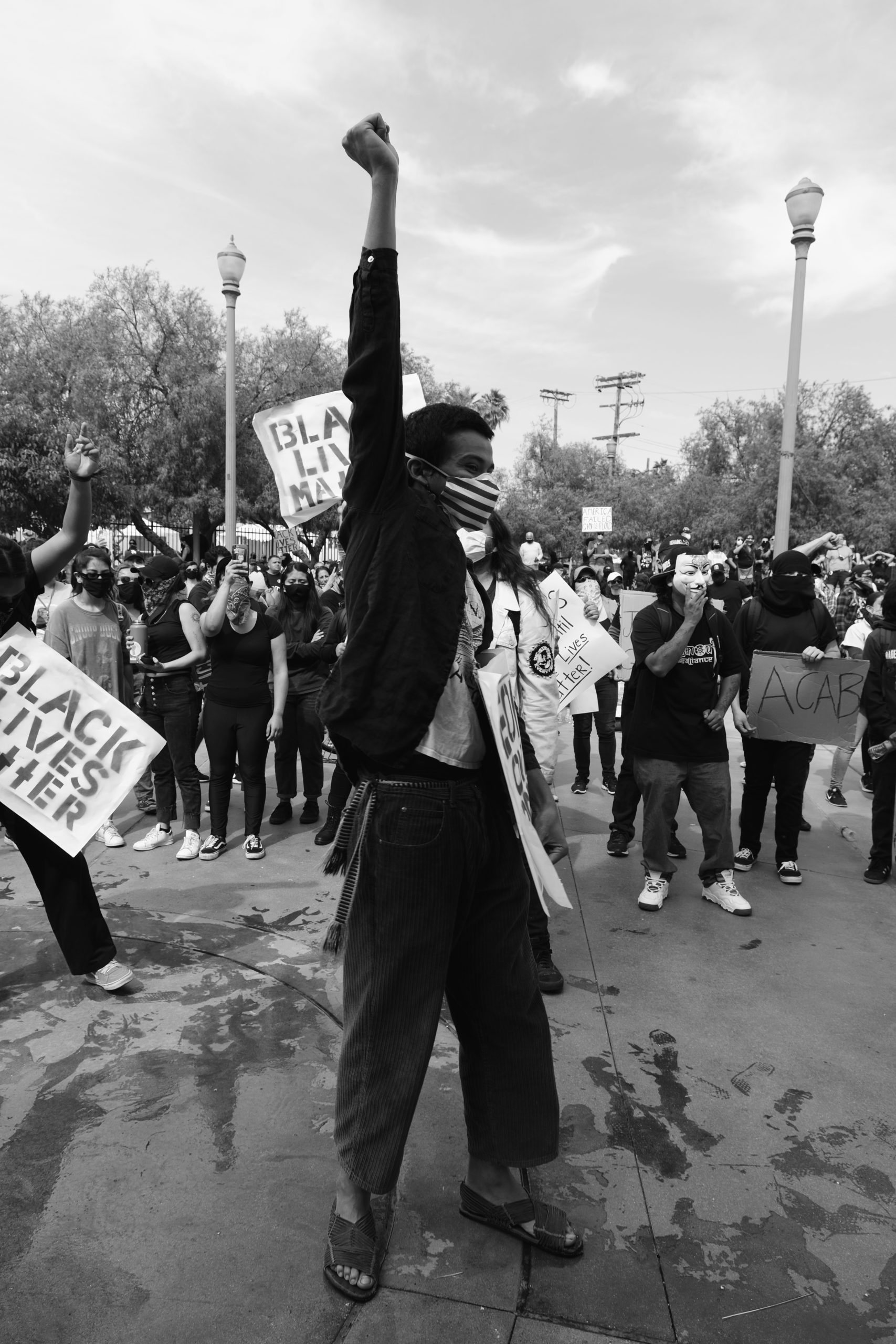
In many countries, critical voices have emerged in relation to the broad scope of restrictions on people’s right to assemble or the implementation of such restrictions, or other public concerns. Where physical protests were suspended or cancelled, protests were then transferred to online spaces. Environmental activists assembled around Fridays for Future moved their assemblies online. In Hungary, civil society put in place the first online protest on social media to oppose the Hungarian “corona law” and attracted nearly 40,000 viewers. The protest was shut down after half an hour. In Poland, human rights advocates protested virtually against the new abortion bills during Covid-19 lockdown by posting selfies with the #ProtestAtHome hashtag. In the United States, a Pew Research Center analysis of tweets found that the #BlackLivesMatter hashtag on Twitter had been used roughly 47.8 million times between May 26 and June 7, 2020, a hitherto unprecedented figure. According to another survey conducted by Pew Research in June 2020, 54 percent of social media users of ages 18 to 29 responded that they had used social media platforms in the last month to look for information about protests or rallies happening in their area. This indicative list of online protests depicts an inescapable trend of the future. An essential by-product of real life problems, law comes as the next natural step. This Article seeks to contribute to this discussion by delimiting and defining the status and contents of a right to protest online on a global scale.

I. International Legal Foundations of the Right to Peaceful Assembly

In 1948, the Universal Declaration of Human Rights (UDHR) recognized everyone’s right to freedom of peaceful assembly and association (art. 20, § 1). Article 21 of the International Covenant on Civil and Political Rights (ICCPR) reaffirmed and elaborated on this right, as well as set out exceptions to it:

“The right of peaceful assembly shall be recognized. No restrictions may be placed on the exercise of this right other than those imposed in conformity with the law and which are necessary in a democratic society in the interests of national security or public safety, public order (ordre public), the protection of public health or morals or the protection of the rights and freedoms of others.”

A number of regional human rights instruments complement this broader international framework, enabling direct enforceability in national jurisdictions, notably the European Convention on Human Rights (ECHR) (art. 11), American Convention on Human Rights (art. 15), American Declaration of the Rights and Duties of Man (art. XXI), African Charter on Human and Peoples’ Rights (art. 11), and Arab Charter on Human Rights (art. 24).

Given the interdependent nature of rights generally and the contents of the right to peaceful assembly specifically, this right is inextricably intertwined with other rights, primarily freedom of association and freedom of expression. Indeed, some of the international instruments such as the ECHR treat assembly and association as part of a singular legal right, secured in article 11, whereas others, such as the ICCPR, provides for two separate rights, codified in articles 21 and 22, respectively. Moreover, the very notion of assembly or protest would be meaningless if stripped of the conditioning cause, dissent, or displeasure which it seeks to express. As stated by the European Court of Human Rights (ECtHR), one of the aims of freedom of assembly is to secure a forum for public debate and the open expression of personal opinions (Ezelin v. France, ¶ 37). The link between the two rights is most apparent where the national authorities’ intervention against an assembly or protest is at least in part related to the “views held or statements made by participants.” (Stankov v. Bulgaria, ¶ 85).

The rights of assembly, association, and expression share a common element of necessary and tolerable critique for democracy and human beings to continue to progress:

“Freedom of expression constitutes one of the essential foundations of a [democratic] society, one of the basic conditions for its progress and for the development of every man. … [I]t is applicable not only to “information” or “ideas” that are favourably received or regarded as inoffensive or as a matter of indifference, but also to those that offend, shock or disturb the [s]tate or any sector of the population. Such are the demands of that pluralism, tolerance and broadmindedness without which there is no ‘democratic society’. This means … that every “formality”, “condition”, “restriction” or “penalty” imposed … must be proportionate to the legitimate aim pursued.” (Handyside v. United Kingdom, ¶ 49).

Likewise, freedom of assembly protects a demonstration that may “annoy or give offence to persons opposed to the ideas or claims that it is seeking to promote.” (Platform Arzte fur das leben v. Austria, ¶ 32).

II. The Case for the Right to Protest Online

To begin with, there is no express articulation in the existing binding corpus of international instruments of a right to protest online. At the same time, there is no prohibition of it. Indeed, the very phrasing of the relevant provisions in the international instruments referenced above is neutral as to the form of manifesting protest. These provisions do not limit the freedom of assembly or the corresponding freedom of association or expression only to physical presence, encounter, or expression. To recall article 21 of the ICCPR: “[t]he right of peaceful assembly shall be recognized;” and article 11 of the ECHR: “[e]veryone has the right to freedom of peaceful assembly and to freedom of association with others…” Given the growing magnitude of digital interaction, one might observe a higher degree of association happening online than offline.

In any event, the relevant judicial praxis, as evidenced by judgments of international courts, has set no bar to applying these rights to events occurring in, or disputes emerging from, the online sphere. For instance, ECtHR jurisprudence has routinely applied the rights and freedoms guaranteed in the ECHR to the internet and new technologies. While no case has been brought to the ECtHR on the specific right to protest online, there are numerous judgments on the right for private and family life, including right to respect for correspondence. Indeed, it would be truly incomprehensible to think of the right to privacy and correspondence as limited to classic, physical context only, which is overshadowed by online interaction. The same is true with regard to the freedom of expression. As observed by the ECtHR, “the [i]nternet has now become one of the principal means by which individuals exercise their right to freedom of expression and information, providing as it does essential tools for participation in activities and discussions concerning political issues and issues of general interest.” (Yildirim v. Turkey, ¶ 54). Any interference from national authorities will constitute a breach of the protected right unless it is prescribed by law, pursues a legitimate aim, and is required to achieve the aim in a democracy (¶ 56). This jurisprudential approach represents a naturally evolved application of the ECHR rights to online contexts. The same standard would be equally applicable to the right to protest online, such as in the scenario when internet service providers and intermediaries can potentially restrict online assemblies or the privacy of participants.

III. Existing Practice and Trends in U.N. Bodies

At a global context, on 6 July 2018, the U.N. Human Rights Council, a 47-member body, adopted by consensus a resolution on “the promotion and protection of human rights in the context of peaceful protests.” The resolution makes clear that, unlike the way it has been understood by some, an assembly does not require a physical gathering of people. Rather, “human rights protections, including for the rights to freedom of peaceful assembly, of expression and of association, may apply to analogous interactions taking place online.” The Human Rights Council expresses concern about undue restrictions that hinder internet users from gathering or sharing information at important political moments, thereby impairing their ability to organize and participate in assemblies. It recognizes that the safe and private usage of communications technology under the protection of international human rights law is essential for the realization of the freedom of expression and the right to peaceful assembly. Hence, the resolution calls on all states to stop or refrain from measures aimed at blocking internet users from obtaining or distributing information online. Although a soft law instrument by formal characterization, the resolution is a significant normative development because it is adopted by consensus under the umbrella of a U.N. organ.

The U.N. General Assembly has subsequently endorsed the Human Rights Council’s position. In a resolution adopted on 17 December 2018, the General Assembly called upon all states to ensure that “the same rights that individuals have offline, including the rights to freedom of expression, of peaceful assembly and of association, are also fully protected online,” in particular by holding back from internet shutdowns and content regulation in a manner that violates international human rights law. The resolution was adopted by a significant 154 votes in favor, none against, and 35 abstentions, yet it failed to pass without a vote.

The U.N. Special Rapporteur on the Rights to Freedom of Peaceful Assembly and of Association has also recognized that digital technology forms an integral part to the exercise of the rights of peaceful assembly and association. The Human Rights Committee, the treaty body that monitors implementation of the ICCPR, has affirmed that the right to peaceful assembly extends to online sphere. In its General Comment No. 37 on article 21 of the ICCPR, the Committee clarifies that this provision “protects peaceful assemblies wherever they take place: outdoors, indoors and online; in public and private spaces; or a combination thereof.”

Although all the instruments discussed above fall under the notion of “soft law” rather than representing legally binding obligations, they are nonetheless authoritative and unanimous in conceiving the application of relevant “hard law” framework to the rights to freedom of peaceful assembly and association online. Therefore, international law ought to protect the right to protest online.

IV. Process, Prospects, and Problems of the Realization of a Right to Protest Online in Real-Life Settings

Despite the existence of a clear and strong international legal protection of the right to peaceful assembly, this right is not absolute. In law and reality, it means that the right is subject to limitations. Such limitations, although clearly expressed in legal terms, provide space for potential contention and abuse. The general international human rights standard requires any restriction be (1) prescribed by law; (2) necessary in a democratic society; and (3) in the interests of national security or public safety, for the prevention of disorder or crime, for the protection of health or morals, or for the protection of rights or freedoms of others. Similarly in the digital context, the freedom to access and use digital technologies for purpose of exercising the right to freedom of peaceful assembly constitutes the default, with limitations being the exception. Whenever such exceptions are invoked, it is incumbent upon states to demonstrate the necessity of the restrictions and implement them only to an extent proportionate to the pursuance of legitimate aims. In no case can a restriction be applied or invoked in a manner that would result in the impairment of the essence of the right (Human Rights Committee, General Comment No. 31).

Being “one of the foundations” of a democratic society, the right to freedom of peaceful assembly should not be interpreted restrictively, unless in gatherings where the organizers and participants have violent intentions, actually incite violence, or otherwise reject the foundations of a democratic society. In order to avert the risk of a restrictive interpretation, the ECtHR has “refrained from formulating the notion of an assembly, which it regards as an autonomous concept, or exhaustively listing the criteria which would define it.” (Navalnyy v. Russia, ¶ 98). However, in its relevant jurisprudence, the ECtHR has clarified that the right to freedom of assembly covers “both private meetings and meetings in public places,” and can be exercised by “individual participants and by the persons organising the gathering.” (Kudrevičius v. Lithuania, ¶ 91). It is of distinct significance that a violation of, or interference with, the right to freedom of peaceful assembly does not need to amount to an outright ban of assembly, be it legal or de facto, but can consist in various other measures imposed by public authorities. The existing case law of the ECtHR has provided several examples (Kudrevičius v. Lithuania, ¶ 100), which could apply and be equally valid to an online context. A prior ban can create a chilling effect on those who may plan to participate in a protest and thus arise to the level of interference, even if the protest subsequently proceeds without obstruction from the authorities. A prior ban of an online platform intended to serve as a venue of protest can likewise have a chilling effect on those planning to participate in that protest. A refusal to permit individuals to travel with the goal of attending a meeting—which in the digital context could translate into blocking an individual’s access to the internet—amounts to an interference with the right to freedom of peaceful assembly. So do the measures taken during the protest, such as dispersal of the meeting, apprehension of participants, or other punishments inflicted upon protesters—the same measures can be equally applicable to participants and organizers of an online protest.

It has been increasingly common for states to shut down access to the internet and communication services during public protests, alternatively known as “blackouts” or “kill switches.” According to data collected by Access Now and the #KeepItOn coalition, one of the most commonly observed causes of internet shutdowns in 2019 was protests. Consequently, “when a government says it is cutting access to restore ‘public safety,’ in reality it could mean the government anticipates protests and may be attempting to disrupt people’s ability to organize and speak out, online or off.” When “a government claim that a shutdown is necessary to fight ‘fake news,’ hate speech, or incendiary content,” it “could be an attempt to hide its efforts to control the flow of information during periods of political instability or elections.” Indeed, internet shutdowns—the most frequent tool employed by governments to suppress online dissent and protest—is impermissible under international human rights law, even in times of conflict or other emergencies. As stated by four Special Rapporteurs on the field of freedom of expression respectively appointed by the U.N., the Organization for Security and Co-operation in Europe, the Organization of American States, and the African Commission on Human and Peoples’ Rights in a Joint Declaration on Freedom of Expression and responses to conflict situations, web content filtering and complete shutdown of communication systems “can never be justified under human rights law.” (¶ 4.c.). To substantiate this statement, it must be noted that whereas the rights to freedom of expression and freedom of assembly and association are not qualified as normatively absolute rights in the sense that they are subject of legally prescribed limitations, such limitations must be necessary and proportionate, and “must be narrowly interpreted.” (Kudrevičius v. Lithuania, ¶ 142). However, a complete internet shutdown is more analogous to a complete denial of the rights than a narrowly qualified limitation.

As the U.N. Special Rapporteur on the Rights to Freedom of Peaceful Assembly and of Association has explained, the right to freedom of peaceful assembly not only imposes a negative obligation on the state to not interfere with the enjoyment of the right; it also creates a positive obligations on public authorities to secure and facilitate the effective enjoyment of this right. States must therefore act in consonance with their international obligation to protect the right to freedom of peaceful assembly online by permitting protesters to peacefully gather online. In other words, states should ensure that access to the internet is not blocked, censored, restricted, or shut down entirely; that the privacy of those peacefully participating in an online assembly is respected; and that they face no actual or subsequent consequences for participation or organization of an online protest, such as arrest, detention, or imposition of penalties. The primary responsibility of states for the realization of the right of peaceful assembly also entails the responsibility to prevent non-state actors, including businesses, from unduly interfering with individuals’ freedom of peaceful assembly. According to Human Rights Council, states should “ensure effective remedies for human rights violations, including those related to the internet.”

Conclusion

Those who undertake to imagine the future of online protests or digital dissent on earth or in space can do so not only on the basis of their power of imagination but also knowing that the byproduct of that imagination is protected by law. As many tragic events in human history that have given rise to new legal and institutional inventions (to name a few, the United Nations, the Universal Declaration of Human Rights, and the Genocide Convention after Second World War), the Covid-19 pandemic and the subsequent governmental limitations on peaceful assembly have brought the right to protest into a new light. However, while the analysis here reveals the existence of legal foundations and safeguards of a right to protest online, including its composite principles, it nonetheless points to a demand for the development of a universally agreed framework and its enforcement. One out of many possible courses of action—at least as an initial step—could be the adoption by heads of state and government at the next U.N. General Assembly plenary of a joint declaration that affirms the right to protest online. In operational practice, courts are the obvious natural candidates to recognize and implement the right to protest online.


*       Qerim Qerimi is a professor of international law, international law of human rights, and international organizations at the University of Prishtina. He is also a visiting professor and member of the Law and Development Research Group at the University of Antwerp Faculty of Law. Additionally, he is a member of Council of Europe’s European Commission for Democracy through Law (Venice Commission) and chair of its sub-commission on the protection of national minorities, and serves as Rapporteur for Oxford International Organizations (OXIO). He has pursued postdoctoral research at Harvard Law School on a Fulbright scholarship.

       See generally, Cass R. Sunstein, Why Societies Need Dissent (2005); Josiah Ober, Political Dissent in Democratic Athens: Intellectual Critics of Popular Rule (2001).

Content, Online Scholarship, Perspectives

Begging the Question: Lăcătuş v. Switzerland and the European Court of Human Rights’ Recognition of Begging as a Human Rights Issue

DANIEL RIETIKER & MARY LEVINE*

INTRODUCTION

On January 19, 2021, the European Court of Human Rights (ECtHR) held in Lăcătuş v. Switzerland,[1] that an outright ban on begging in public places violated Article 8 of the European Convention on Human Rights (“the Convention”), suggesting that certain means of survival are encompassed under the Article’s protection of “private life.”[2] Furthermore, the court concluded that Switzerland’s interference with that protection was not “necessary in a democratic society.”[3] This Article reviews the novelty of the ECtHR’s approach in this new field and analyzes some of the judgment’s shortcomings. In Part I, we present the facts of the case along with the reasoning and main conclusions of the court; in Part II, we critically assess the judgment and its implications.

I. Lăcătuş v. Switzerland

A. Factual Summary

The applicant, Violeta-Sibianca Lăcătuş, is a Romanian national born in 1992, and living in Romania.[4] After failing to find work in 2011, she resorted to begging for change on the streets of Geneva.[5] Despite Lăcătuş using begging as a means of survival, the Geneva Criminal Law Act (“Geneva Act”), section 11A, made it a criminal offense to beg in public places.[6] The law mandated that,

“1. Anyone who begs will be punished by a fine;

2. If the perpetrator organizes the begging of others or if he is accompanied by one or more minors or dependents, the fine will be at least CHF 2,000.”[7]

Accordingly, on July 22, 2011, while Lăcătuş was begging on the streets of Geneva, the local police confiscated 16.75 Swiss francs (CHF), equivalent to 18.35 U.S. dollars, from her, conducted a full body search, and ordered her to pay a fine of CHF 100 (USD 109.54).[8] Over the next two years, she was placed in police custody twice for over three hours, and she was additionally fined CHF 100 eight times.[9] In an attempt to provide an alternative to the monetary punishments, the authority offered Lăcătuş one-day custodial detention for each fine she was unable to pay.[10]

B. Procedural History

Consequently, Lăcătuş appealed her penal orders.[11] On January 14, 2014, the Police Court of the Canton of Geneva denied her appeal and found her guilty of begging under the Geneva Act, thereby confirming the police’s confiscation and full-body search.[12] The court further ordered her to pay a fine of CHF 500 (USD 547.71) or face a five-day custodial sentence.[13] Lăcătuş then appealed the court’s order to the Criminal Appeals and Review Division of the Court of Justice of the Canton of Geneva.[14] On April 2, 2014, the appeals court dismissed her appeal, and on September 10, 2014, the federal court likewise dismissed her appeal.[15]

Because her federal appeal was dismissed and she remained unemployed, she was thereafter detained from March 24–28, 2015, at the Champ-Dollon Remand Prison for failure to pay her fines.[16]

With no domestic remedy, on March 17, 2015, Lăcătuş — now the applicant — lodged a complaint with the ECtHR, insisting that the Swiss ban on begging violated Article 8 of the Convention (right to respect for private and family life), Article 10 (freedom of expression), and Article 14 (prohibition on discrimination).[17] The applicant argued that the Geneva statute banning begging constituted an interference with her private life, as it deprived her of a means to survive.[18] Moreover, she argued that the prohibition on begging prevented her from asking for charity, and further, that the Act discriminated on the basis of financial status and Roma descent.[19]

C. The Court’s Judgment

On January 19, 2021, the ECtHR issued a chamber judgment, unanimously holding that the Geneva Criminal Law Act violated Article 8 of the Convention.[20] Consequently, the chamber declined to consider Lăcătuş’s Article 10 and 14 claims.[21]

The court noted that the Swiss government did not dispute its interference with the right to respect for private life under Article 8; rather, the government argued that it had a legal basis for this interference under the Geneva Act.[22] The Swiss government asserted that the Geneva Act had a legitimate aim because it provided public order and safety, promoted the economic well-being of the country through tourism, and further protected the rights and freedom of others, such as patrons at restaurants, shoppers, and so on.[23] The court recognized these as legitimate government aims; however, the court ultimately found that because the Geneva Act was a blanket prohibition on begging — in other words, an outright ban on a certain type of conduct — the state required a strong justification, and the court needed to apply rigorous scrutiny considering the interests at stake.[24]

Using this framework, the court first assessed the applicant’s demographics and characteristics as a person of manifest vulnerability.[25] The court noted that the applicant came from an extremely poor family, was illiterate, unemployed, and received no social benefits from the Swiss government.[26] Therefore, since begging was her exclusive means of survival, the court determined that Lăcătuş “had the right, inherent in human dignity, to be able to express her distress and to try and satisfy her needs by begging.”[27]

The court then reviewed the nature and severity of the penalty.[28] First, the court acknowledged that the five-day sentence was a severe sanction, particularly given that the sanction was not justified by a sound public-interest rationale.[29] Moreover, the court reasoned that this deprivation of liberty would likely aggravate the applicant’s distress and vulnerability.[30] The court rejected the Swiss government’s assertion that it lacked less restrictive means, relying upon an assessment of similar international legislation.[31] The court reviewed begging legislation in the Council of Europe’s forty-seven member states and found that the Swiss ban on begging was more restrictive and harsher than many other countries’ criminal begging statutes.[32]

As a result, in balancing the interests of the parties, the court determined that a five-day sentence for Lăcătuş was not proportionate to the aim of combatting organized crime and protecting the rights of passersby.[33] Accordingly, the Geneva Act infringed on Lăcătuş’s human dignity, and thus “impaired the very essence of the rights protected under article 8.”[34] She was therefore awarded just satisfaction of nonpecuniary damages under Article 41 in the amount of 922 euros.[35]

II. ASSESSMENT OF THE JUDGMENT

This Part is divided into three sections: Section II.A discusses the novelty of the ECtHR’s approach toward begging. Section II.B evaluates the judgment’s resulting diminished margin of appreciation, both through its use of international materials and given its heightened proof requirements for legitimate government interests. And section II.C examines the court’s failure to analyze Lăcătuş’s Article 10 and Article 14 claims.

A.  Scope and Novelty of the Court’s Approach Toward Begging

The novelty of Lăcătuş stems primarily from the court’s recognition that begging might be a human rights issue. By holding that begging falls within Article 8, the court created a quite expansive definition of “private life.” The court explicitly reasoned in its admissibility assessment that “private life” under Article 8 is a “broad concept, not susceptible of an exhaustive definition.”[36] It can sometimes embrace aspects of the physical and social identity of an individual.”[37] Moreover, the court noted that human dignity is encompassed under the protections of Article 8, further deeming a person’s means of subsistence as a foundational component in her own human dignity.[38]

Some judges critiqued this expansion, suggesting that the facts of Lăcătuş do not clearly establish that the applicant was obliged to beg in order to survive and escape poverty. Judge Ravarani noted that the scope of “human dignity” must be fleshed out even more, indicating that an applicant must do everything possible to avoid the criminalized act in order for human dignity to be invoked.[39]

B. Switzerland’s Diminished Margin of Appreciation

1.    Application of International and Comparative Interpretations

While Lăcătuş focused mainly on expanding the scope of Article 8 protections, the court also applied a comparative law analysis of legislation adopted by member states and considered the relevance of international treaties and sources.[40] This was necessary due to the Swiss government’s argument that bans and restrictions of begging existed in other Council of Europe member states and that, as a result, they enjoyed a considerable margin of appreciation in this domain.[41] The margin of appreciation is the leeway given to a state in determining the necessity of an interference into the right at stake in a given situation, including the proportionality of the impugned measure.[42] It is the expression of the principle of subsidiarity that imposes on the court the duty to apply a certain restraint in assessing the domestic tribunals’ decisions and to limit its own control (the so-called “European control”) to the question of whether a fair balance has been struck between the private interests of the applicant, on the one hand, and the public interests of society, on the other.[43] In other words, as long as the conclusions of the domestic tribunals do not appear arbitrary or manifestly unreasonable, it is not up to the court to replace the considerations by the domestic tribunals by its own assessment.[44]

In coming to its conclusions, the court reviewed various member states’ criminal acts related to begging and the judicial interpretations of this legislation, including opinions by the Constitutional Court of Austria, the Belgian Council of State, the Hungarian Constitutional Court, the High Court of Ireland, and the Italian Constitutional Court. After its review of member states’ judicial interpretations, the court thereafter found that the Swiss ban was comparatively too far reaching.

In particular, the court found that nine of the thirty-eight member states[45] the legislation of which the court examined, did not consider it necessary to ban begging at all.[46] In the eighteen member states that provided rules on the national level, six have banned only aggressive or intrusive forms of begging,[47] seven have otherwise restricted the scope of such legislation,[48] and only five have less nuanced laws in place, prohibiting begging more generally.[49] Finally, in the eleven states where begging laws existed only on the local (regional) level, such as in Switzerland, the scope of the legislation was generally limited too, in particular to aggressive or intrusive forms of begging.[50] In other words, whereas no consensus existed among the member states on the question of banning or restricting begging, it nevertheless turned out that most other member states had only limited restrictions on begging, whereas the Swiss ban on begging was comprehensive. This outright ban on begging, paired with Lăcătuş’s dire need to beg, informed the court’s decision to conclude that Switzerland’s margin of appreciation was limited.[51]

Furthermore, the court assessed relevant international treaty provisions. For example, the court invoked Article 26 of the Council of Europe Convention on Action against Trafficking in Human Beings (“EU Human Trafficking Convention”), suggesting that Swiss authorities inappropriately punished individuals for engaging in unavoidable conduct. In particular, the EU Human Trafficking Convention’s monitoring group has noted that begging is one of the unavoidable behaviors that states should not punish.[52]

2.    Rejecting Switzerland’s “Legitimate” Government Interest

Not only did the court inform itself by relying on international materials, but the court also expressly limited the margin of appreciation in its assessment of the Swiss government’s interests. As mentioned previously, one of the most decisive points to the court was the disproportionate balancing of interests between the applicant and the state. The court found that the Swiss ban on begging was too absolute, and that the sanction was too harsh given the circumstances. Instead of providing Switzerland with a (broad) margin of appreciation to criminalize begging in absolute terms, the court indicated that disproportionate interests would implicate a violation under the Convention. In their discussion, the court cited Parrillo v. Italy,[53] which held that a margin of appreciation may be restricted when a particularly important aspect of an individual’s existence or identity is at stake.[54] As such, the court again diminished state sovereignty in the name of protecting minorities historically targeted by the state.

Thus, even though Article 8 is not an absolute right under the Convention, the court’s high standard for Article 8 assessments suggests that state-imposed restrictions will have limitations under the Convention. The court cited the United Nations Special Rapporteur on Extreme Poverty and Human Rights, who argued that the state interest in keeping the town clean and attractive for tourists cannot result in an absolute ban on conduct, particularly conduct that relates to the applicant’s identity and means of survival.[55] This reliance on the Special Rapporteur’s critique of a state regulation limits state sovereignty and reinforces the court’s commitment to ensuring that impoverished people receive appropriate protection.

C. The Court’s Failure to Assess Articles 10 and 14

In Lăcătuş, the European Roma Rights Center (ERRC) filed a third-party intervention outlining historical and modern “antigypsyism” and its resulting statistical increase on poverty for Roma citizens.[56] The ERRC explained that this increased occurrence of poverty has led to a false narrative of Roma as inherent “criminals.”[57] The ERRC report also analyzed various Council of Europe jurisdictions and demonstrated that the criminalization of begging exacts a disproportionate impact on Roma.[58] Particularly, the report showed that in the development of the Geneva Act on begging, the legislators showed clear discriminatory intent, including one legislator saying “there is begging tourism, which is practiced by travellers — all those gypsies who settle in camps just outside our borders, who hold out their hands by day and, by night, brandish the screwdrivers and crowbars they use to rob our homes.”[59]

From our point of view, it is rather surprising that, in spite of these very precise and explicit submissions by a well-recognized NGO, the court did not want to engage in an analysis of the alleged breach of Article 14.[60] This is particularly surprising considering that the court has identified in the past many situations in which Roma suffered serious violations of their human rights, including instances of discrimination.[61] Moreover, the court, within its examination of the applicant’s Article 8 complaint, clearly and rightly acknowledged her particular vulnerability due to her Roma origin.

While the Geneva Act did not specifically target the Roma community, Roma citizens were disproportionately impacted by the criminalization of begging due to their disproportionate degree of vulnerability and poverty. It is worth mentioning that the court shaped its “indirect” discrimination doctrine in a different case involving alleged discrimination against Roma. In D.H. and Others v. The Czech Republic,[62] Roma children were disproportionately allocated to “special schools” delivering inferior education. While a chamber of the court held that the same educational test was applied to all Czech pupils, the grand chamber reversed, finding that the statistical data gave rise to a strong presumption of “indirect” discrimination, which meant that it was up to the government to prove that the differential impact was the result of objective factors not connected to the racial origins of the applicants. In D.H., the government was unable to provide satisfactory evidence, and the grand chamber found a violation of Article 14 taken in conjunction with the right to education within the meaning of Article 2 of Protocol 1 to the Convention.[63] It would be interesting to know if, in Lăcătuş, the court had used the theory of “indirect” discrimination, whether there would have existed enough evidence, including statistical data, for a sufficiently strong presumption of discriminatory treatment of Roma citizens by the Geneva police and, as a result, whether the court would have reached, mutatis mutandis, the same conclusion as the grand chamber in the case against the Czech Republic.

Finally, the court did not address the question of whether the applicant’s situation also falls under freedom of expression within the meaning of Article 10 and whether there was a violation of this guarantee. In its judgment, the court referred to a June 2012 decision of the Austrian Constitutional Court, in which a Salzburg public security law prohibiting begging on public grounds was considered contrary to freedom of expression.[64] It would have been interesting to know whether the court considers begging an “expression” within the meaning of Article 10 and whether this provision was infringed in the case of Lăcătuş. Having however already found a violation of Article 8, the court did not feel compelled to pronounce an additional ruling under Article 10. Judge Keller, in her separate opinion, expressed the view that begging is a form of expression falling under the scope of Article 10 and that the court should have declared this complaint admissible.[65] She shared, however, the opinion of the majority that it was not necessary, after having found a violation of Article 8, to examine the question of whether there had been a violation of that provision in the present case.[66] It is our understanding that, even if such an approach would not have changed the outcome of Lăcătuş, the finding that begging can be considered an “expression” under Article 10 could have been significant for potential future cases.

CONCLUSION

Lăcătuş v. Switzerland is a leading case for the protection of vulnerable people, and there is no doubt that, judging by the detailed and balanced reasoning, the court wanted to adopt several principles in this new area.

The court wanted to demonstrate that it does not act in a vacuum. To that end, it used many diverse external resources, such as the case law of the Inter-American Court of Human Rights and the African Commission of Human Rights, legal opinions of United Nations experts, and domestic laws and practice. This wide range of external sources indicates that the court considers it important to ground its opinions in international consensus or trends. In Lăcătuş, the comparative analysis allowed the court to show that the canton of Geneva’s solution went further than what was the trend in the majority of member states of the Council of Europe.

We are of the opinion that the judgment expresses considerations of humanity that meet the expectations in a regional human rights court. One of the most remarkable aspects is the use of the notion of human dignity in order to bring into play the right to respect for private life under Article 8, rather than relying upon Article 3 (prohibition of torture and other ill treatment).

A criticism that can be made against the judgment is the court’s choice not to engage in the examination of Articles 10 and 14 once it found a violation of Article 8. Despite the fact that this approach reflects the normal practice of the court and can be justified by the principle of procedural economy, these complaints would have been worth pursuing, in particular the discrimination allegation. In this regard, it must be recalled that the applicant, of Roma origin, belongs to one of the most vulnerable groups in Europe, a group that has suffered and continues to suffer discrimination and ill treatment on a daily basis, as recognized by the Court in its examination of the Article 8 complaint.

In light of what precedes, and in spite of the fact that the judgment does not resolve the fundamental issues underlying the case — namely poverty, marginalization, and discrimination — it nevertheless constitutes a significant step forward in the recognition of human rights.


[1] App. No. 14065/15 (Jan. 19, 2021), https://hudoc.echr.coe.int/eng?i=001-207377. The judgment is available only in French.

[2] Id. ¶ 92.

[3] Id. ¶ 116.

[4] Id. ¶ 2.

[5] Id. ¶ 4.

[6] Id. ¶ 5.

[7] Id. ¶ 16 (unofficial translation).

[8] Id. ¶ 5.

[9] Id.

[10] Id.

[11] Id. ¶ 6.

[12] Id. ¶ 7.

[13] Id.

[14] Id. ¶ 8.

[15] Id. ¶¶ 9–11.

[16] Id. ¶ 14.

[17] Id. ¶¶ 50, 118, 121.

[18] Id. ¶ 50.

[19] Id. ¶¶ 118, 121.

[20] Id. ¶ 116.

[21] Id. ¶¶ 118–23.

[22] Id. ¶¶ 76–79, 94–95.

[23] Id. ¶¶ 76–79.

[24] Id. ¶¶ 96–97, 101–02.

[25] Id. ¶ 107.

[26] Id.

[27] Id.

[28] Id. ¶ 108.

[29] Id. ¶¶ 108–10.

[30] Id. ¶ 109.

[31] Id. ¶ 114.

[32] Id.

[33] Id. ¶ 115.

[34] Id.

[35] Id. ¶¶ 124–27.

[36] Id. ¶ 54.

[37] Id.

[38] Id. ¶ 56.

[39] Id. (Ravarani, J., concurring and dissenting), ¶ 7.

[40] Id. ¶ 19.

[41] Id. ¶ 103.

[42] Id. ¶ 99.

[43] Id.

[44] Id. ¶ 100.

[45] The Council of Europe has forty-seven member states, but it is rather rare that comparative studies, which are conducted by the research division of the court, cover all the members.

[46] Id. ¶ 20 (Albania, Andorra, Finland, Georgia, Greece, Moldova, Portugal, Slovakia, and Ukraine).

[47] Id. ¶ 22 (Estonia, France, Ireland, Italy, Serbia, and Slovenia).

[48] Id. (Azerbaijan, Croatia, Liechtenstein, Luxembourg, Poland, Romania, and San Marino).

[49] Id. (Cyprus, Hungary, Montenegro, United Kingdom, and Turkey).

[50] Id. ¶ 23 (Germany, Austria, Belgium, Bosnia and Herzegovina, Spain, Russia, Latvia, Lithuania, Netherlands, Czech Republic, and Sweden).

[51] Id. ¶ 105.

[52] Id. ¶¶ 39, 112.

[53] App No. 46470/11, ¶ 109 (Aug. 27, 2015), https://hudoc.echr.coe.int/eng?i=001-157263.

[54] Id. ¶ 103.

[55] Id. ¶ 113.

[56] Third-Party Intervention, ¶¶ 8–12, Lăcătuş, App. No. 14065/15.

[57] Id. ¶¶ 13­–17.

[58] Id. ¶¶ 18–24.

[59] Id. ¶ 25.

[60] Judge Lemmens’s concurrence in Lăcătuş touches on these issues. See id. (Lemmens, J., concurring and dissenting), ¶ 2.

[61]  See, e.g., Moldovan v. Romania (No. 2), App. Nos. 41138/98 and 64320/01, 2005-VII Eur. Ct. H. R. 167 (extracts) (concerning destruction of houses and possessions); Hirtu v. France, App. No. 24720/13 (May 14, 2020), https://hudoc.echr.coe.int/eng?i=001-202442 (concerning forced evictions); Nachova v. Bulgaria, App. Nos. 43577/98 and 43579/98, 2005-VII Eur. Ct. H. R. 1 (concerning police brutality); V.C. v. Slovakia, App. No 18968/07, 2011-V Eur. Ct. H. R. 381 (extracts) (concerning forced sterilisation); Lakatošová v. Slovakia, App. No. 655/16 (Dec. 11, 2018), https://hudoc.echr.coe.int/eng?i=001-188265 (concerning shooting spree at Roma family’s home); Ctr. for Legal Res. v. Romania, App. No. 47848/08, 2014-V Eur. Ct. H. R. 1 (concerning death in a medico-social institution); R.B. v. Hungary, App. No. 64602/12 (Apr. 12, 2016), https://hudoc.echr.coe.int/eng?i=001-161983 (concerning verbal abuse and threats).

[62] App. No. 57325/00, 2007-IV Eur. Ct. H. R. 241; see also Oršuš v. Croatia, App. No. 15766/03, 2010-II Eur. Ct. H. R. 247.

[63] G.A. Serghides, The Prohibition of Discrimination Under the European Convention on Human Rights: Interpretation, Application and Mechanism, 31 Hague Y.B. Int’l L. 117, 133–34 (2018).

[64] Lăcătuş, App. No. 14065/15, ¶ 27.

[65] Id. (Keller, J., concurring), ¶¶ 3–13.

[66] Id. ¶¶ 14–17.

[hr gap=”30″]

*       Daniel Rietiker, PhD, is a Senior Lawyer at the ECtHR (Strasbourg), an international law lecturer at Lausanne University, and a member of the adjunct faculty of Suffolk University Law School (Boston). He was a visiting fellow at Harvard Law School in 2014. The views expressed in this piece are strictly personal. Mary Levine is a Law Student at Suffolk University Law School.

Content, Online Scholarship, Perspectives, Ukraine

Uniting for Peace: The Emergency Special Session on Ukraine

MICHAEL RAMSDEN*

In the days following Russia’s invasion of Ukraine the United Nations (UN) General Assembly convened an Emergency Special Session under its Uniting for Peace mechanism. The initiation of this session was prompted by the exercise of the veto power by Russia, thereby impeding the Security Council from adopting a resolution on the situation. The Security Council took the unusual step (by majority vote) of deciding to call an Emergency Special Session given that Russia’s veto had “prevented it from exercising its primary responsibility for the maintenance of international peace and security.” For the first time since 1997, the General Assembly convened an Emergency Special Session on a new situation, broadcast live around the world, in which state diplomats joined together in large numbers to express their collective disapprobation of Russian aggression. It resulted in the adoption of Resolution ES-11/1 by a large majority (141 for, five against and 35 abstentions). This Article discusses the legal significance of this resolution and revisits the powers available to the General Assembly in supporting the maintenance and restoration of international peace and security. It shows that, moving forward, there are various legal solutions open to the General Assembly, some creative, to mitigate the Security Council’s failures to act on the Ukraine situation.

The nature of the Uniting for Peace mechanism has been extensively analyzed, such that only a brief outline of its key features is necessary here. In response to Security Council deadlock on continued UN military action in Korea, the General Assembly adopted Resolution 377A on 3 November 1950. The resolution stipulates that either the General Assembly or Security Council can initiate an Emergency Special Session where, due to a “lack of unanimity of the permanent members,” the Council “fails to exercise its primary responsibility for the maintenance of international peace and security.” In this case, the Assembly “shall consider the matter immediately with a view to making appropriate recommendations to Members for collective measures, including in the case of a breach of the peace or act of aggression the use of armed force when necessary, to maintain or restore international peace and security.” In the ten prior Emergency Special Sessions, the Assembly took and recommended a variety of measures. It has condemned violations of international law and called for cessation of these breaches. It has recommended the imposition of sanctions against offending states. It has established peacekeeping forces with host state consent. Perhaps most famously associated with the Uniting for Peace mechanism, in 1951 the Assembly called upon states to support continued UN military action in Korea, including to repel Chinese aggression, a feat that it has not repeated since.

The output of the first meeting of the Emergency Special Session on Ukraine, Resolution ES-11/1, did not go as far as some of these prior resolutions, but it did return to a legal characterization that it has long avoided: aggression. It deplored “in the strongest terms the aggression by the Russian Federation against Ukraine in violation of Article 2 (4) of the [UN] Charter” and condemned Russia’s declaration as to the necessity of this “‘special military operation.’” It demanded Russia to “cease its use of force against Ukraine” as well as to “immediately, completely and unconditionally withdraw all of its military forces from the territory of Ukraine within its internationally recognized borders.” It also condemned “all violations of international humanitarian law and violations and abuses of human rights,” demanding that parties to the conflict “fully comply with their obligations under international humanitarian law to spare the civilian population.” It recalled the obligations under Article 2(2) of the UN Charter, that all member states, “in order to ensure to all of them the rights and benefits of membership, shall fulfil in good faith the obligations assumed by them in accordance with the [UN] Charter.”

Resolution ES-11/1 is unlikely to be the General Assembly’s final word on the Ukraine situation. The Emergency Special Session is now adjourned, but can be resumed in the future upon requests from member states. Although it is impossible to predict how this unfolding crisis is resolved, it is worthwhile considering the legal options open to the Assembly in seeking to secure peace and, in time, justice for the victims of aggression and other international crimes. To what extent is the Assembly able to take action or otherwise recommend measures to the membership that would be legally analogous to that taken by the Security Council?

This question comes back to the debate on the scope of the General Assembly’s powers and the effect of its resolutions. A commonly held view is that the Assembly, being a deliberative body, is lacking in legal authority to impose its will on states; its powers in Articles 10 to 14 are merely recommendatory. Rather, it is the Security Council that is vested with the powers to bind and coerce the membership, including to justify the use of military force and the imposition of economic sanctions. Furthermore, it is clear from past Assembly practice that it is not necessary for them to act in an Emergency Special Session in order to condemn member states or the Security Council in failing to meet its responsibilities under the UN Charter; it has become routine practice in regular sessions to do so. An Emergency Special Session under Uniting for Peace, on this view, is symbolic, in creating the bracing optics of an urgently convened session to address shocking events, but does not give the Assembly any more power than it possesses under the UN Charter. Yet, even if one accepts that Uniting for Peace does not add to the Assembly’s legal powers, this view ignores the important role that the General Assembly’s solemnly worded resolutions in an emergency situation possess in crystallising a series of legal claims by the community of nations that can be used to support future actions. In this context, the use of the Uniting for Peace mechanism is a symptom of the UN’s institutional failure, with the many (i.e. the 193 members of the Assembly) attempting to do through a process of collective legal interpretation what the few have failed to do through Chapter VII decisions (i.e. the 15 members of the Security Council). The Assembly can legally support future actions against Russia in a variety of ways.

Its finding in Resolution ES-11/1 that Russia has committed aggression in Ukraine provides the first such internationally authoritative determination that this conduct occurred. Prior Assembly findings of this nature in other situations have been used to augment legal action taken by other bodies, including the International Criminal Court’s (ICC) exercise of jurisdiction and the ordering of provisional measures in the International Court of Justice (ICJ). Most relevantly, Resolution 68/262 (2014), which declared Russia’s annexation of Crimea to be of “no validity” was used by the ICC Prosecutor to support the opening of an investigation, on the basis that Crimea was Ukrainian territory. Indeed, in the recently initiated case, Ukraine v Russia, the ICJ drew upon Resolution ES-11/1 to support the ordering of provisional measures to protect the rights of Ukraine from being subject to the use of force by Russia based upon false allegations of genocide under the Genocide Convention.

The General Assembly can also take into account the Russian aggression as a factor in those internal operational matters in which it is empowered to make decisions. Its finding in Resolution ES-11/1 that the “rights and benefits” of membership entail good faith obligations provide a hook for future claims that the Russian government has not acted in accordance with the expectations incumbent on a UN member state. One route is via Article 5 of the UN Charter, which provides that “a member of the United Nations against which preventive or enforcement action has been taken by the Security Council may be suspended from the exercise of the rights and privileges of membership by the General Assembly upon the recommendation of the Security Council.” The obvious impediment here is that Russia would not support its own suspension from the UN when voting on the matter in the Security Council. However, this does not preclude the membership from forming a view as to whether a representative possesses the credentials to represent a state in the Assembly. Normally this is a formality in approving the governmental representatives of a state, but there is precedent for the General Assembly to factor in a regime’s fidelity to the UN Charter in assessing whether to accept or reject credentials. The credentials of the South African apartheid regime were thus rejected by the Assembly due to its “flagrant violation” of the UN Charter. Whether isolating Russia in this way is politically wise is another matter. Yet, it is open to member states to object to the Russian representative based on the South Africa precedent, thereby triggering a consideration of its credentials by the UN Credentials Committee.

Another way in which the General Assembly’s legal determinations might assist in the Ukraine situation is in supporting the legal justification for the imposition of sanctions against Russia. Sanctions raise complex questions of legality, particularly when taken unilaterally outside an international institutional framework. Within the text of the UN Charter, the power to sanction is textually the reserve of the Security Council, which, pursuant to Article 41, are able to take measures to restore or maintain international peace and security. Still, there is a body of Assembly practice in calling upon members to impose sanctions against offending states, including the breaking of diplomatic relations; closure of sea and air ports; trade boycotts; severance of cultural relations; targeted sanctions against individual perpetrators; and arms embargoes. The difference in the Ukraine situation is that states have been quick to impose sanctions without the need for encouragement or endorsement from the Assembly. Still, there is a role, moving forward, for the Assembly to evaluate the legality of sanctions against Russia by, for example, certifying that the conditions for the valid invocation of the law of countermeasures have been met. These conditions, according to Article 49 of the International Law Commission’s Draft Articles on State Responsibility, include proportionality, proper purpose (aimed at inducing Russia’s compliance), and temporal limitation to the period of the breach. While an Assembly resolution would not automatically release states from its various treaty obligations to Russia, the involvement of the Assembly in certifying that these conditions have been met can serve to alleviate concerns regarding abuse that might arise in a single state, or a small group of states, determining the legality of sanctions unilaterally. Furthermore, closer coordination of sanctions through the Assembly would give effect to the international obligation on states to cooperate through international institutions (such as the UN) to bring to an end breaches of peremptory norms (such as the prohibition on aggression).

The General Assembly can also empower judicial or quasi-judicial bodies to address the legal implications arising from Russia’s aggression and its conduct in Ukraine. Resolution 377A noted it to be one of the Assembly’s responsibilities under the Uniting for Peace mechanism to “ascertain the facts and expose aggressors.” The Assembly can advance this purpose most obviously by creating a commission of inquiry with a mandate to collect and evaluate evidence to ascertain violations of international law. The recent precedent set in the Syria situation takes the Assembly’s powers a step further to allow commissions to prepare individual case files of persons suspected of committing international crimes, thereby facilitating future investigations and prosecutions at a domestic or international level. In 2016, Russia sought to resist this innovation as ultra vires but failed. A quasi-prosecutorial mechanism of this nature in turn enhances the Assembly’s ability to meet its responsibility under the Uniting for Peace mechanism to “expose aggressors” in the Ukraine situation. In this respect, it is noteworthy that the Assembly’s subsidiary organ, the Human Rights Council, has established a commission of inquiry to investigate a broad range of violations arising from the Russian aggression. This will, in turn, serve to not only ensure that an international investigation is conducted into these violations, but also provide the Assembly with information to underpin its future findings and legal characterizations on the Ukraine situation.

Furthermore, the General Assembly, acting under Article 96 of the UN Charter, could request an advisory opinion from the ICJ. Ukraine has already initiated proceedings against Russia which, given the latter’s limited acceptance of the ICJ’s jurisdiction, is confined to arguments concerning the application of the Genocide Convention. This provides a hook for the judicial consideration of the reasons purporting to support the invasion, but the Assembly might also confer jurisdiction on the ICJ on a broader basis through a request for an advisory opinion. The ICJ has the power to consider “any legal question” which has been construed broadly to include the conduct of individual states. As the Emergency Special Session on Israel shows, the Assembly has used the Uniting for Peace mechanism to request an advisory opinion on the legal consequences of Israel’s construction of the wall in the Occupied Palestinian Territory. Similarly, the Assembly could ask the ICJ to address the legal consequences arising from Russian conduct on a broader basis, both in February 2022 as well as in relation to earlier incursions into Ukrainian territory, such as its 2014 annexation of Crimea.

Finally, a more radical suggestion is for the General Assembly to create an ad hoc criminal tribunal to try suspects accused of international crimes, including aggression, in relation to the Ukraine situation. A group of leading figures have called for a Special Tribunal for Aggression to be established to prosecute Russia’s aggressive acts. While it has been the Security Council who has established ad hoc tribunals in the past, their failure to act on the Ukraine situation would arguably support the creation of an analogous tribunal by the Assembly under the Uniting for Peace mechanism. This view has gained some traction in UN practice, with the commission of inquiry report on North Korea noting the possibility for states to pool their combined sovereign powers over criminal jurisdiction to empower an Assembly created ad hoc tribunal. Although the Prosecutor of the ICC has initiated an investigation into the Ukraine situation, there are limitations to this Court’s jurisdictional reach, particularly over the crime of aggression. As Russia is not an ICC state party, and the Security Council is unable to make a referral of the situation due to Russia’s veto, the crime of aggression cannot be prosecuted at the ICC in this situation. The establishment by the Assembly of an ad hoc tribunal over the crime of aggression represents one legal option to redress this impunity gap.

The overview of legal options open to the General Assembly says nothing about the sizeable challenges in operationalizing these various options, especially in trying the incumbent Russian leadership for the crime of aggression. Nor has it sought to predict the geopolitical winds of change that might make these options more or less viable as a matter of international politics. However, as states and other actors coordinate their activities and strategize in forging creative solutions to overcome misuses of the Security Council veto, it is the General Assembly, now as in 1950, that can step into the breach. Resolution ES-11/1 has made a start.

      Michael Ramsden, International Justice in the United Nations General Assembly 133–36 (2021).

      Id. at 114–45.

[hr gap=”30″]

*       Michael Ramsden is an associate professor at the Faculty of Law, The Chinese University of Hong Kong and a barrister door tenant at 25 Bedford Row, London. Michael also previously worked in the Appeals’ Division of the International Criminal Court and at United Nations Assistance to the Khmer Rouge Trials. He has published extensively in the areas of international criminal law, international human rights law and international institutional law, including a monograph, International Justice in the United Nations General Assembly, published by Edward Elgar Publishing in 2021.

Content, Online Scholarship, Perspectives

A Hague Convention on Parallel Proceedings

PAUL HERRUP AND RONALD A. BRAND*

Introduction

Two of the most recent conventions produced by the Hague Conference on Private International Law create frameworks for transnational litigation in areas that clearly needed development at a global level. The 2005 Convention on Choice of Court Agreements regulates jurisdiction and the recognition and enforcement of judgments in civil and commercial matters in international cases in which an exclusive choice of court agreement has been concluded. The 2019 Convention on the Recognition and Enforcement of Foreign Judgments in Civil or Commercial Matters applies to the recognition and enforcement of foreign judgments in civil and commercial matters.

Both of the existing conventions resulted from a broader project begun in the early 1990s, considering issues of jurisdiction as well as the recognition and enforcement of judgments. A consensus determination in 2001 that a comprehensive treaty on jurisdiction and judgments recognition was not possible allowed the Hague Conference to focus on specific pieces of that broader project, and led to the two existing conventions.

The question now facing the Hague Conference is whether further international legal instruments can add to the package in a manner that will solve other significant problems raised by cross-border litigation — and solve them well. It is our view that a convention that would purport to require or prohibit national court jurisdiction in the first instance (i.e., regulate “direct jurisdiction”) is neither feasible nor desirable. There is a current and growing need, however, for rules that address questions of parallel proceedings by designating a “better forum” when courts in more than one state are seized with the same or related claims under their own jurisdictional rules.

Global Mobility and Global Dispute Settlement Needs

Any transnational litigation convention must be measured against the progress of global communication and transportation over the past quarter-century, and the near certainty that the global mobility these developments demonstrate will accelerate in the future. The resulting combination of enhanced knowledge of opportunities across borders and reduced transaction costs have brought an unprecedented ability of people, goods, ideas, electrons, and even microbes to move across borders, easily and cheaply. This, in turn, has created social, cultural, and economic connections, as well as the inevitable attendant disputes.

Not only is there a far greater number of persons engaged in global activities, but the breadth, flexibility, and plasticity of the relationships has proliferated. This includes new types of family relationships, as well as new variations in commercial relationships such as licensing and other arrangements in areas including intellectual property rights and data transmission.

This democratization of cross-border activities results in an increase in the number of states with a significant connection, legal or factual, to any given transaction or relationship. For example, in the sale of goods, any stage in the stream of commerce might well justify a jurisdictional connection, including the location of the advertisement for sale, the contract offer, the contract acceptance, the initial packaging of the goods, the loading of the first carrier for transit, the export customs territory, the import customs territory, the storage upon arrival in the import customs territory, the unloading from the final carrier for transit, the purchaser’s facility at destination, the bank through which payment is made or financing is arranged, the office where payment is received, or any other geographic activity conducted by one or more of the parties to the transaction. Each of these factors may be considered important to national rules determining judicial jurisdiction, resulting in there being courts in multiple states in which a legal action may be filed when a dispute arises.

A Convention Regulating Direct Jurisdiction

The fact that there may be multiple states in which jurisdiction for judicial settlement of a dispute exist for a single cross-border relationship does not mean that it is either necessary, or even possible, to prepare a convention purporting to require or prohibit the exercise of jurisdiction as a general matter by national courts. To the contrary, any effort to prepare such a convention will fail — and is not needed in order to improve the field of transnational litigation.

Judicial jurisdiction is an attribute of national sovereignty, and reflects differing appraisals of the proper scope and qualities of a particular kind of exercise of state power. Each state touched by an instance of global mobility may have reasonable grounds from its own perspective to vest its courts with jurisdiction over a resulting dispute, which leads to the possibility of multiple reasonable fora. The mere fact that one state’s jurisdictional nexus may differ from that in another state does not necessarily make litigation in one of those states better than in the other. Different states may legitimately value different interests in determining access to, and protection in, their courts. Neither access to justice nor due process is a finite, unchanging value, and efforts to create rules that definitively limit either of them for global purposes — regarding jurisdiction or any other concept — are presumptuous at best, and likely to be destructive of the very values they purport to champion in the long run.

Mechanical rules of jurisdiction, especially when based upon nineteenth century notions of physical presence, can result in a highly expensive and cumbersome fragmentation of related litigation, with no guarantee that each piece of the litigation will yield non-overlapping results, and with real risks of inconsistent judgments. The oft-stated claim that transactions require ex ante certainty as to jurisdiction is belied by experience. Levels of economic activity in the United States, whose jurisdictional rules allegedly are uncertain, compare favorably to those in Europe, which does attempt to provide rigid, ex ante jurisdictional rules.[1]

The European experience shows that, even on a regional basis with a single court in control of interpretation of jurisdictional rules, ex ante certainty cannot be achieved or can be achieved only after extensive litigation and by creating an artificial legal terrain disconnected from commercial and other realities of mobility. One need only survey case activity before the Court of Justice of the European Union (CJEU) in 2020 and 2021 to illustrate and understand this problem in a system of relatively homogenous states in a single region, with a single court to provide definitive interpretation. In April of 2020, Advocate General Campos Sánchez-Bordona issued his opinion in Verein für Konsumenteninformation v Volkswagen AG, wrestling with tort jurisdiction and the “place where the harmful event occurred” test of Article 7(2) of the Brussels I (Recast) Regulation, in the “Dieselgate” affair and the resulting products liability actions brought on behalf of automobile purchasers. His recommendation that the place of injury (which applies in addition to the place-of-act test under CJEU interpretation), be “the place . . . where the victim purchased the product from a third party,” was qualified by a requirement that “the other circumstances confirm the attribution of jurisdiction to the courts of that State.”[2] Moreover, “[t]hose circumstances must include, at all events, one or more factors which enabled the defendant reasonably to foresee that an action to establish civil liability as a result of his or her actions might be brought against him or her by future purchasers who acquire the product in that place.”[3] In July of 2020, the court ultimately chose a more limited test, providing that “where a manufacturer in a Member State has unlawfully equipped its vehicles with software that manipulates data relating to exhaust gas emissions before those vehicles are purchased from a third party in another Member State, the place where the damage occurs is in that latter Member State.”[4] Even with the rejection of Advocate General Campos Sánchez -Bordona’s more complex test, consider the multiple complex factual predicates to the court’s rule of interpretation:

-unlawfully

-equipped its vehicles

-with software

-that manipulates data

-relating to exhaust gas emissions

-before those vehicles are purchased

-from a third party

-in another Member State.

One need only think for a minute of how such decisions would be made regarding a convention that applied on a global basis, without the homogeneity of the European region, and where every national judicial system could enter conflicting interpretations. The claimed predictability would be non-existent as the world evolves and new types of claims arise from new problems and new technology.

Other CJEU cases of 2020 and 2021 provide additional examples of this problem. In LJ and Others v. Rina SpA, the court entered the sticky area of jurisdiction when companies assert sovereign immunity as a result of sovereign ownership of an otherwise private company. The court’s conclusion that “[t]he principle of customary international law concerning immunity from jurisdiction does not preclude the national court seised from exercising the jurisdiction provided for by that regulation in a dispute relating to such an action, where that court finds that such corporations have not had recourse to public powers within the meaning of international law,”[5] requires very little imagination to realize the problems when expanded to a global treaty context. Similar issues of sovereignty and jurisdiction were raised in Belgische Staat v. Movic BV, where the question involved whether Belgian authorities, which had brought interlocutory proceedings against a foreign corporation, were acting in a public or private (commercial) manner and thus governed by the jurisdictional rules of the Brussels I (Recast) Regulation.[6]

The case of Mittelbayerischer Verlag KG v. SM, decided on June 17, 2021, again raised interpretation problems with Article 7(2) of the Brussels I (Recast) Regulation, wrestling with where the location of a claim falls for jurisdictional purposes when the claim is that an individual’s personality rights have been infringed by content published online on a website. The court ruled that “the courts of the place in which the centre of interests” of that person bring the claim could claim jurisdiction under Article 7(2) “in respect of the entirety of the alleged damage, . . . only if that content contains objective and verifiable elements which make it possible to identify, directly or indirectly, that person as an individual.”[7] One need not be very skilled in constructing hypotheticals to understand how such issues and opinions could affect the uniformity of application normally required in a Hague Convention when multiple courts in contracting states have final interpretive authority.

The Mittelbayerischer Verlag case brings to the forefront the problems of the EU system, which breaks down mechanical direct jurisdiction connecting factors by separating contract jurisdiction from tort jurisdiction (a process long ago discarded in common law legal pleading and thus alien to common law practice), and prohibiting a court with jurisdiction from granting full compensation for the liability it is authorized to determine. Expanding that process to a global realm and saving any hope that words in a convention will lead to predictability and uniform interpretation is a fool’s errand at best.

Perhaps the most telling single case in only the past two years for a demonstration of the potential problems of a global system of direct jurisdiction connecting factors based on the EU model is the Obala case, decided on March 25, 2021. That decision provides a triple interpretation hit at potential global uniformity and complexity, determining that:

  • An action for recovery of a parking ticket fee is a “civil and commercial matter” within Article 1(1) of the Brussels I (Recast) Regulation;
  • A parking ticket is not a “tenancy of immovable property” within Article 24(1) of the Brussels I (Recast) Regulation; and
  • A parking ticket is a contract for the provision of services within Article 7(1)(b) of the Brussels I (Recast) Regulation.[8]

The myriad potential problems for predictability and uniformity of interpretation in a global convention with similar rules are more than can be contemplated in the brief length of this discussion.

The list above involves only some of the cases of the past two years, demonstrating problems of interpretation and technical evolution that would face a global convention built upon wooden application of tests requiring mechanical direct jurisdiction connecting factors. The critical factor for action in the world is not ex ante jurisdictional certainty but a reasonable basis of prediction of possible fora.

One of the principal goals of any Hague Convention should be to improve the world of transnational litigation by reducing the time and expense involved. The time and expense wasted by litigants demonstrated in a relatively small number of CJEU cases, from a relatively short period of time, provide clear demonstration of the cliff the world would be jumping off if similar rules of direct jurisdiction are included in any new Hague Convention.

More important in any process of drafting a new legal instrument, a convention purporting to regulate direct jurisdiction is an exercise in solving a problem that has not been identified. Not only can it be easily demonstrated that any convention including direct required bases of national jurisdiction in national courts would create innumerable litigation problems, but those championing such a convention have yet to identify any significant problems that have arisen in real-life litigation that they seem to be trying to solve. Indeed, the existence of multiple potential fora does not appear to be a significant deterrent to transnational mobility. The challenge generally is not to specify a single forum ex ante, but what to do in those cases in which litigation over the same or related claims materializes in multiple fora. This problem should be explored and investigated from the ground up, rather than starting from well-entrenched positions that are not necessary to the solution of the problem and tend to add time, expense, and confusion in international litigation.

The Need for a Convention Offering Assistance to Courts with Parallel Proceedings Do Occur

An increasing irritant in transnational civil litigation is posed by situations in which multiple states assert jurisdiction, each under its own law, over or related to the same claim or set of claims. The traditional solution in many common law countries is to let litigation proceed in multiple countries, with resolution of the matter (or not) coming at the stage of recognition and enforcement of the first judgment issued by the various courts considering the matter. This approach leads to a race to judgment, and may result in duplicative litigation, significant additional expense for litigants, and potential conflicting judgments. These problems may be modulated by application of the doctrine of forum non conveniens, which usually requires a court to balance a basket of factors and defer to proceedings in another forum only if the other forum is clearly more appropriate to resolve the dispute.[9]

The traditional solution in many civil law states is to rigidly prescribe and rank order jurisdictional bases and, if nonetheless jurisdiction might subsist in multiple fora, then apply a strict lis pendens rule, which bars consideration of a claim or set of claims if another court was “seized” first. This approach leads to a race to the courthouse and very artificial strategic litigation, such as an anecdotally reported proliferation of requests for negative declaratory judgments (e.g., a declaration in favor of a party who expects to be sued in another forum that the party bringing the request has no legal obligations to the other persons).

Both approaches create opportunities and incentives for strategic forum shopping, and neither approach necessarily directs litigation to the forum most suited to dispute resolution in a particular case. Both add to the advantages that a well-funded party has over a less affluent party.

Parallel proceedings in the courts of two or more states can and do result from jurisdictional rules that (appropriately) provide multiple judicial fora for the resolution of a single cross-border dispute. The differences in approaches across legal systems to such parallel litigation suggest the value of an international legal instrument that would move the same or related litigation to a “better forum.” But the determination of the “better forum” does not, and should not, require engaging in the complex and difficult enterprise of mandating or prohibiting preexisting national jurisdiction rules. At the same time, this determination under such an instrument should be accomplished in a manner that will provide far more direction and specificity than are found in existing common law forum non conveniens regimes.

No legal system currently resolves the problem of parallel proceedings with any great distinction, and certainly not in a way that is useful on a global scale. We desperately need fresh thought, unfettered by the shibboleths of past practice or decrepit dogma. The Hague Conference has a once-in-a-generation opportunity to engage in a critical examination of the area, without preconceptions, with due regard to empirical reality, and from the ground up. Whether it will meet that challenge remains to be seen.


[1]      See, e.g., C.I. Jones, The Facts of Economic Growth, in 2A Handbook of Macroeconomics 3, 35 figs. 24 & 25, 36 fig. 26 (John B. Taylor & Harald Uhlig eds., 2016).

[2]      Opinion of Advocate General Campos Sánchez-Bordona, Case C-343/19, Verein fur Konsumenteninformation v. Volkswagen AG, ECLI:EU:C:2020:253, ¶ 81 (Apr. 2, 2020).

[3]      Id.

[4]      Judgment, Case C-343/19, Verein fur Konsumenteninformation v. Volkswagen AG, ECLI:EU:C:2020:534, ¶ 41(July 9, 2020).

[5]      Judgment, Case C-641/18, LG v. Rina SpA, ECLI:EU:C:2020:349, ¶ 61 (May 7, 2020).

[6]      See Judgment, Case C-73/19, Belgische Staat v. Movic BV, ECLI:EU:C:2020:568, ¶¶ 23–24 (July 16, 2020).

[7]      Judgment, Case C-800/19, Mittelbayerischer Verlag KG v. SM, ECLI:EU:C:2021:489, ¶ 47 (June 17, 2021).

[8]      Judgment, Case C-307/19, Obala i lučice d.o.o. v. NLB Leasing d.o.o., ECLI:EU:C:2021:236, ¶ 99 (Mar. 25, 2021).

[9]      See generally, Ronald A. Brand & Scott Jablonski, Forum Non Conveniens: History, Global Practice and Future Under the Hague Convention on Choice of Court Agreements (2007).

[hr gap=”30″]

*       Paul Herrup is member of the Pennsylvania Bar. Ronald A. Brand is the Chancellor Mark A. Nordenberg University Professor and Academic Director of the Center for International Legal Education at the University of Pittsburgh School of Law. Both authors were members of the Experts Group and are current members of the Working Group considering a convention on parallel proceedings at the Hague Conference on Private International Law. This article is prepared entirely in their personal capacity and should not be taken to represent the position of any delegation, state, office, or institution.

Content, Online Scholarship, Perspectives

Towards an “Asian Faction” in International Law?: On Third Worldism and Contingent Eurocentrism Since the Second Hague Conference of 1907

RYAN MARTÍNEZ MITCHELL*

Writing in 1950 about the Second Hague Conference of 1907, Carl Schmitt remarked on the event’s completely different “atmosphere and ambience” as compared with its predecessor. The first conference of 1899 had been, for all intents and purposes, “still purely European” (noch rein europäisch). But when its successor was convened eight years later, “those who ought to have been carried out the door now already stood before it” (die Füße derer, die sie hinaustragen sollten, standen schon vor der Tür).[1] For Schmitt, this was evidence that the erstwhile “public law of Europe” had by then already fallen into an irreversible trajectory of decline.

Another comment on the conference, touching on its significance in strikingly similar terms but from a completely different standpoint, was that of the Chinese diplomat Lu Zhengxiang (a/k/a Lou Tseng-Tsiang), who had gone to the First Hague Conference as a junior delegate before serving as the co-head of the 1907 Qing delegation. Subsequently reflecting on the experience in January 1908, Lu wrote in a memorial to the penultimate Qing Emperor that “there was an invisible atmosphere among the delegations to the effect that, while there has been an ‘American faction’ and a ‘European faction’ [at the Hague conferences] there was originally no ‘Asian faction’; however with the emergence of the topic of extraterritorial consular jurisdiction, the Persian and Siamese delegates were closely aligned with us, and so an ‘Asian faction’ was formed during the meetings.”[2] Going forward, Lu and other diplomats suggested, China should both modernize and seek to build on this nascent solidarity by working with other weak states towards goals such as abolishing extraterritorial consular jurisdiction and reclaiming policy autonomy.

In my recent article on China’s participation at the Second Hague Conference, which appears in the Asian Journal of International Law, I examine in detail the early expressions of Third World solidarity at the conference as well as the event’s impact on China’s domestic legal initiatives. While coalition building with other weak states did not advance much in the near term, work towards China’s own construction of a “modern” nation-state along the lines of Meiji Japan was greatly accelerated by its up-close encounter with Great Power international legal rulemaking in 1907.

The notion of establishing an “Asian faction”—yazhou zhi pai, also translatable as “Asian school”—in international law settings was still quite novel when Lu made this proposal. The international law field as a globalized profession or “invisible college” engaged in continuous activities of research, legal practice, and self-reproduction was itself a recent phenomenon.[3] Meanwhile, explicit Eurocentrism was a central organizing idea in the self-constructed identity of the field, and a major part of its growing imprint on politics and intellectual life in the West. While some international law advocates put more emphasis upon shared Christian heritage and values, and others upon the extension of free markets,[4] cosmopolitan duties,[5] and political liberalism, the general consensus of the field’s leaders had by the 1870s coalesced around a “standard of civilization”—defined largely in terms of obedient acceptance of Western economic penetration and religious proselytism—as the metric for membership in the global community.

The extension of international law ideas and structures to East Asia had been carried out in large part via what would later be called “unequal treaties”: agreements with asymmetrical obligations imposed through the use or threat of force. By the time of the First Hague Conference in 1899, however, Meiji Japan had managed to overcome most of the formal features of subordination. This had been accomplished by the rapid adoption of Western legal, political, and commercial forms, along with the extension of geopolitical power—at China’s expense, particularly after the watershed First Sino-Japanese War of 1894-1895 founding Japan’s claim to Great Power status on terms approaching parity with the West.[6]

By the time Lu made his suggestions for Asian solidarity in 1908, he could only note with regret that the opportunity for cooperation on equal terms with the rising Great Power Japan had been missed decades earlier. A yazhou zhi pai at meetings like the Hague Conferences would thus have to operate, at least for the time being, in competition with Japan’s influence as well as that of Western powers. Yet both the exigencies of domestic state-building and the limitations of international legal forums would get in the way of such efforts.

Lu’s reflections long predated the era of post-World War II decolonizations that gave birth to what has been described as the first generation of “Third World Approaches to International Law” (TWAIL) as a movement and polycentric professional network. The explicitly Eurocentric global international law profession of his time was not amenable to such initiatives. Even in China itself, moreover, such ideas would largely fade in relevance by the interwar period, as competing domestic regimes became ever more reliant on foreign (Western, Soviet, or Japanese) backers for arms and credit. In the wake of the Paris Peace Conference of 1919-1920, moreover, Japan turned towards explicit emulation of the United States’ Monroe Doctrine as a model for local hegemony, thus further associating discourses of pan-Asianism with its own aspirations to dominance. As I detail in an article recently published in the TWAIL Review, these efforts put Chinese diplomats and lawyers on the defensive against regionalist initiatives, a stance they would maintain for decades, despite sporadic interest in a broader solidarity agenda.

Only after the world had been transformed both materially and ideologically by the end of the Second World War and the beginnings of both the Cold War and the era of decolonizations would Chinese officials truly return to regional aims. While Chinese delegates at the Dumbarton Oaks Conversations and San Francisco Conference founding the United Nations emphatically defended both sovereign equality and cosmopolitan institutions such as the International Court of Justice, internal proposals regarding possible initiatives such as a “Pacific Charter” or even a “United Nations of the Pacific” (Taipingyang Lianheguo) ultimately never saw the light of day. In a monograph forthcoming with Cambridge University Press, Recentering the World: China and the Transformation of International Legal Order, I detail these and other episodes in Chinese engagements with international law since the 1850s.

As the book shows, the most proactive pursuit of Third World solidarity undertaken by a Chinese government was the process by which Zhou Enlai and Jawaharlal Nehru in 1954 developed the “Five Principles of Peaceful Coexistence” framework that soon formed the basis for the Final Communiqué of the Asian-African Conference at Bandung. Though a moment of great historical and intellectual importance, Bandung, too, would ultimately prove to be limited in its capacity to produce systemic alternatives to Eurocentric legal order. Especially after China itself “returned” to both Western legal forums and global capitalism, from 1971 and 1978 respectively, its erstwhile revolutionary role was largely cast aside.

Today, as China launches vast initiatives of trade and investment it largely replicates extant practices and relations of production and exchange,[7] rather than overturning them. The contributions to a recent symposium on China and the International Legal Order coordinated by the Harvard International Law Journal, Yale Journal of International Law, and the organizers of the University of Oxford’s “China, Law and Development” project, for example, detail various aspects of this growing position of centrality and (conditioned) agency.

Returning to the Second Hague Conference, we might ask: Were early expressions of non-Western organization and solidarity like those of 1907, then, little more than “dead circuits” or “non-events”?[8] Certainly, Lu’s actual proposal was to have few practical consequences in terms of international law doctrine or structures. Nonetheless, the experiences of 1907 and other such moments marginalized in traditional Western international legal history are worth studying for a number of reasons. China’s role at the Second Hague Conference was of course important as an early tactile encounter with international law and its possibilities that pointed in the direction of the above-mentioned, later Third World developments.

Meanwhile, the event also marked a genuine, practical shift in which relatively weak and “minor” powers in general began to exert meaningful checks on the projects of Great Powers and their legal architects. At the Hague, Lu’s delegation had mainly joined with Latin American states to oppose the novel, hierarchical great power initiatives in these areas. Together, they had struggled against hierarchically-conceived innovations such as a permanent international court whose judiciary was to be organized along lines explicitly intended to reflect relative geopolitical power. The shared commitment to a more robust sense of sovereign state equality emerged early on as a common denominator for Latin and Asian (and, later, African et al.) states’ ambitions in reforming global order.[9]

However, it is also precisely in this aspect that this early experience shares with much later iterations of TWAIL features that some in today’s TWAIL milieu find troubling. First, as noted, both the rhetoric and the practical proposals introduced on behalf of this “resistance” of marginalized actors were firmly centered on the rights of sovereign states. Statist positivism, with its various implications for internal power hierarchies and modes of economic relations, was not challenged as such. For some TWAIL writers today, embrace of a purportedly “Eurocentric epistemology” of statehood precludes real resistance to Eurocentric legal order.[10] Second, although the Asian-Latin American (and some European) “weak state” delegates did manage to defeat several isolated proposals of the great powers, they did not manage to turn this moment of coalition into any lasting organizational forms of influence on international law’s future development. A recurring lack of real-world impact, or at least failure to realize grandly-conceived initial objectives, has not infrequently been reiterated in Third World legal projects ever since.

The mixed legacies of events like the Second Hague Conference, Versailles, San Francisco, and Bandung all raise questions of necessity versus contingency. Were delegates of marginalized states fated to rely primarily on the notion of state sovereignty to articulate resistance to great power hierarchies? Or, could some other common ethos and nexus of cooperation, such as a more robust notion of self-determination, have been equally effective? Could early moments of solidarity like that of 1907 have turned into more lasting forums and institutions, if not for interruption by wars and revolutions? These and other counterfactuals emerge naturally from a close consideration of these key transitional moments in the history of international legal order.

While explorations of China’s international legal history cannot definitively answer these questions, I believe that TWAIL scholars and others interested in overcoming the inherited Eurocentric frames of international legal thought and practice (or aspects thereof) may benefit by further pursuing them. Meanwhile, rather than dwelling on 1907 or any other contingent episode as a sentimental “founding moment” for Third Worldism, I hope that, by studying in context the prototypes and early expressions of later causes, critical international lawyers today can better understand our own “atmosphere and ambience” in terms of its diverse genealogies and, perhaps, similar difficulties being translated into action.

What might it take for those “who ought to be carried out the door” of today’s global legal order—states outside of the remnant developed-world Cold War security alliances, indigenous peoples, the global economic precariat, victims of built-in inegalitarianism in today’s structures for managing world trade, health crises, climate change, et al.—not just to make sporadic, conditional entries through that door, but rather tear it from its hinges?

[1] Carl Schmitt, Der Nomos der Erde im Volkerrecht des Jus Publicum Europaeum 205 (1950).

[2] Zhongguo Di Er Lishi Dang’an Guan 中國第二歷史檔案館, Lu Zhengxiang Chuxi Haiya Baohehui Zouzhe Liangjian 陸徵祥出席海牙保和會奏摺兩件 [Two Memorials of Lu Zhengxiang Regarding Participation at the Hague Peace Conference], Minguo Dang’an 民國檔案, no. 2, 2000, at 37–42.

[3] See, e.g., Martti Koskenniemi, The Gentle Civilizer of Nations: The Rise and Fall of International Law 1870-1960 71–73 (2001); cf. Martti Koskenniemi, To the Uttermost Parts of the Earth: Legal Imagination and International Power 1300-1870 965–67 (2021).

[4] See Ntina Tzouvala, Capitalism as Civilisation: A History of International Law 56–67 (2020); cf. Gerrit W. Gong, The Standard of Civilization in International Society (1984).

[5] See, e.g. Andrew Fitzmaurice, King Leopold’s Ghostwriter: The Creation of Persons and States in the Nineteenth Century 420–434 (2021).

[6] On 1895 as a turning point specifically for the institution of extraterritorial consular jurisdiction in Sino-Japanese relations, see Pär Kristoffer Cassel, Grounds of Judgment: Extraterritoriality and Imperial Power in Nineteenth-Century China and Japan 160 (2011).

[7] For an argument that international law should be studied as a reflection of and means of regulating relations of production (rather than either morally fetishized or nihilistically condemned as a mere smokescreen for power relations), see generally Bhupinder Singh Chimni, International Law and World Order: A Critique of Contemporary Approaches (2nd ed., 2017).

[8] Compare Fleur Johns, On Dead Circuits and Non-Events, in Contingency in International Law: On the Possibility of Different Legal Histories 25, 40–58 (Kevin Jon Heller & Ingo Venzke eds., 2021), with Samuel Moyn, From Situated Freedom to Plausible Worlds, in Contingency in International Law: On the Possibility of Different Legal Histories, supra, at 517, 532–41.

[9] Arnulf Becker Lorca, Mestizo International Law: A Global Intellectual History 1842-1933 158–68 (2014).

[10] See, e.g., Mohsen al Attar, Subverting Eurocentric Epistemology: The Value of Nonsense When Designing Counterfactuals, in Contingency in International Law: On the Possibility of Different Legal Histories, supra note 8, at 145, 160–76. For a perspective focusing on how the state, like other legal forms, can serve as a site of “relative autonomy” reflecting struggles over agency and distribution between social actors, see Umut Özsu, The Necessity of Contingency: Method and Marxism in International Law, in Contingency in International Law: On the Possibility of Different Legal Histories, supra note 8, at 60, 75–92.

[hr gap=”30″]

* Ryan Martínez Mitchell is an assistant professor at the Faculty of Law of the Chinese University of Hong Kong. He holds a B.A. from The New School, a J.D. from Harvard Law School, and a Ph.D. in Law and Archaia Qualification in the Study of Ancient and Premodern Societies from Yale University. His research focuses on the history and theory of international law, legal history, and Chinese law, and is reflected in publications in a number of leading academic journals. His monograph Recentering the World: China and the Transformation of International Legal Order is forthcoming from Cambridge University Press. He is on Twitter @zeguoqiang

Scroll to Top