Content

Online Features, The Impact of International Law on Refugees and Migration

Somewhere Over a Green Rainbow?—The Overlooked Intersection between the Climate Crisis and LGBTQ Refugees

Eoin Jackson*

The international community drafted the UN Refugee Convention (hereinafter ‘The Convention’) with the horrors of the Second World War still fresh in its mind. At the time, LGBTQ people were illegal in most countries and climate change was the stuff of scientific fantasy.[1] Despite this historical context, activists have sought to use the Convention to protect LGBTQ refugees, and now seek to achieve similar success with recognizing climate refugees.

This article analyzes the intersection between recognition of LGBTQ people as refugees and the potential recognition of climate refugees. It intends to briefly sketch out how the climate crisis might exacerbate issues faced by LGBTQ people such that their circumstances may escalate to the point where formal recognition under the Convention would be justified. It also examines how a queer lens could help advance efforts to formally recognize climate refugees under the constraints of the contemporary approach. Part I of this article analyzes the impacts of the climate crisis on LGBTQ refugees. Part II criticizes the recent Human Rights Committee decision in Teitiota v. New Zealand (2020)[2] for failing to consider the differentiated impact of climate change on vulnerable communities. Part III outlines suggestions for future efforts to recognize LGBTQ refugees and intersects these suggestions with the broader movement to recognize climate refugees.

Part I: The LGBTQ Community and the Climate Crisis

LGBTQ people are generally recognized as refugees using the ‘protected social group’ element of the Convention.[3] Most asylum officers will focus on whether there is a nexus between the sexuality/gender identity and persecution of the applicant.[4] Typically, this analysis involves an examination of home countries’ laws, attitudes, and policing of homosexuality/gender identity. Persecution of LGBTQ refugees includes considering how these laws and attitudes impact the capacity of the LGBTQ person to freely express their sexuality/gender identity.[5]

Importantly, many LGBTQ refugees are from the same countries where climate change is likely to have the most immediate impacts. These countries are found in regions of Northern Africa, Southeast Asia, and the Middle East.[6] In other words, countries’ existing poor track records on LGBTQ issues will now face additional social and economic challenges because of climate change.[7] Resources which could have been used to address social progress will need to be diverted to climate mitigation and adaptation measures.[8] This phenomenon most starkly exists in Pakistan, where large government resources will need to be devoted to addressing the impact of devastating floods.[9] However, as tensions increase in countries experiencing extreme weather changes and natural disasters, so does the possibility of groups who deviate from norms being blamed for the crisis. During the Covid-19 pandemic, for instance, LGBTQ people were blamed for the outbreak by leaders in Nigeria, Liberia, and Zimbabwe, among others.[10] Violence and state repression against LGBTQ people also increased during Covid-19, with many LGBTQ centers shut down and people arrested.[11] Should this pattern repeat itself, LGBTQ people will increasingly face demonization under the pretense of being the ‘cause’ of the relevant climate disaster. This demonization may also happen in countries which, at least on paper, have LGBTQ protections or have legalized homosexuality. The instability caused by climate change means that old political norms may break down by extremist forces.[12] Thus, there can be no guarantee that LGBTQ people retain their protected social standing, which may, in turn, complicate efforts to recognize their refugee status when they are from what were previously considered ‘safe’ countries.[13]

The climate crisis exacerbates these issues by inflaming political controversy through the loss of dwindling resources. If LGBTQ people reside on the margins of society, it increases the chance that they will be denied access to these resources. Many LGBTQ communities report a higher rate of homelessness and poverty worldwide.[14] This trend particularly affects the transgender community, who often experience higher rates of hatred and violence, and may struggle to access jobs and affordable housing.[15] As countries experience a loss of wealth, LGBTQ people may be forced to flee to find better economic opportunities.[16] In particular, the violence they experience when accessing resources in an ever-diminishing market may trigger a need to leave what could have been a previously stable country. However, the framework of the Convention does not generally include economic migrants, and it is already difficult to prove that an LGBTQ person merits asylum when there is no direct evidence of political persecution.[17] The climate crisis may therefore raise barriers for LGBTQ people both economically and in terms of being able to adequately convey their need for asylum to officers.

This persecution is also intersectional. Climate change has a worse impact on females, with women being at higher risk of domestic violence and forced migration as the effects of climate change worsen.[18] Similarly, people of color are more likely to reside in areas facing a high rate of pollution or be at greater risk from health problems as a result of climate change.[19] LGBTQ people who exist within this spectrum therefore face multiple hurdles as they tackle the additional challenges posed by intersecting identities. From a refugee law perspective, it also makes it harder to have the LGBTQ aspect of their identity vindicated during the asylum process, as they may seek to confine themselves within the limited scope of the Convention. Gender, for example, is not automatically included under the definition of a refugee but is, like membership of the LGBTQ community, included under the ‘protected social group’ category.[20] This intersectionality means that an LGBTQ woman fleeing climate change focuses on the female aspect of her identity without being able to demonstrate how or why being LGBTQ also exacerbates these effects.[21]

Climate change could therefore heighten the nexus between persecution and identity, such that an LGBTQ person could partially rely on the climate crisis to obtain protection. It could also trigger persecution and a need to flee where none previously existed. However, as noted by Professors Goodwin-Gill and McAdam, it may prove difficult to tie the effects of climate change into persecution while maintaining the nexus between these effects and membership of a protected social group.[22] It is not that the political and economic repression of LGBTQ people would go unrecognized. Instead, there is a theoretical problem that fails to appreciate how these issues were caused by or worsened by the climate crisis.[23] If the cause of the persecution is not viewed holistically, then it is difficult for an asylum system to wholly encapsulate the individuality of the refugee, or the reasoning for justifying an asylum claim. This could, in turn, impact the capacity of the LGBTQ person to communicate how their identity worsened the impact of the instability generated by climate change. If climate change is only viewed in a ‘traditional’ manner (i.e., a focus on physical effects such as increased flooding), there is a risk that the unique difficulties experienced by LGBTQ people will go under-valued. Given how overlooked LGBTQ people often are in the grander scheme of refugee law,[24] climate change may render the compounding of their problems invisible amidst the wider deluge.

Part II: Teitiota v. New Zealand

The UN Human Rights Committee’s recent decision in Teitiota v. New Zealand[25] further indicates the difficulty of incorporating an intersectional perspective on LGBTQ refugees into the climate discourse. In Teitiota, the applicant attempted to halt his deportation back to Kiribati on the basis that the effects of climate change on the island posed a serious threat to life. This argument could have allowed the applicant to reside in New Zealand due to the Convention’s non-refoulement clause. The Human Rights Committee advised that, while it was possible for climate change-based displacement to trigger the non-refoulement clause, the applicant failed in his argument because there was no immediate threat to life.[26]

Of particular interest for this article is the emphasis the Human Rights Committee placed on the requirement that the risk posed by climate change ‘must be personal, that it cannot derive merely from the general conditions in the receiving state, except in the most extreme case.’[27] This requirement is problematic in the LGBTQ context when the decision of the New Zealand High Court (which the Superior Courts and the Human Rights Committee upheld) is examined.[28] Here, the High Court noted that the alleged persecution from climate change was ‘indiscriminate,’[29] and, as a consequence, could not fall within one of the five Convention grounds. In doing so, the Court did not acknowledge the particular vulnerabilities that marginalized people experience because of climate change. Professor Chhaya Bhardwaj correctly views this analysis as ‘surprising,’ given that refusal to allow the applicant to remain in New Zealand also affected his children,[30] whose generation is, per the Inter-Governmental Panel on Climate Change, more likely to be adversely affected by climate change.[31]

The emphasis on human agency when considering persecution under the Convention also complicates LGBTQ climate refugee protection under the existing regime. The Committee asserted that, because the state still had the capacity to engage in ‘intervening acts’ before climate change devastated the island, the threat to life was not imminent.[32] Professor Simon Berhman points out that this ruling leaves states in a dilemma.[33] On the one hand, the state could act to mitigate climate change. However, this intervention is likely to be ineffective considering the limited resources possessed by an individual state, particularly those who struggle with poverty and inequality. In doing so, the state condemns its population to a rejection of refugee claims under the Convention. On the other hand, the state could refuse to act to prevent the worst effects of climate change. This non-intervention results in the eventual decimation of the state’s resources but raises the chance that its population can obtain refugee status. In either scenario, LGBTQ people and, in particular, female members of the LGBTQ community are among the most disadvantaged.[34] They are either likely to bear the brunt of the loss of resources as the state diverts its attention to climate change, or, as Balsari notes, experience the worst effects of the instability arising as a nation falls victim to environmental degradation.[35] These impacts are also gender sensitive, due to the traditional tendency for women to be more dependent on the natural resources of the land, as a result of the lack of broader economic opportunities within oppressive systems.[36] It can also be attributed to the wider trend within political systems in which women are one of the first groups to experience additional discrimination when there are social and cultural tensions caused by a loss of resources.[37]

The intersectional consequences of the Teitiota approach to climate refugees are more apparent when examined in the context of the high threshold set by the Human Rights Committee to demonstrate that there was a serious threat to life. The applicant was obliged to demonstrate that ‘the supply of fresh water [was] inaccessible, insufficient or unsafe’ and that he would be exposed to a ‘situation of indigence, deprivation of food, and extreme precarity’ to make a successful claim.[38] However, as Professor McAdam argues, this threshold is too high where a range of rights are impacted by environmental degradation.[39] In both the queer and female context, insufficient access to food and water could, as documented by Marina Andrijevic, contribute to a rise in domestic violence, or increase the likelihood of falling into poverty as patriarchal structures react to environmental challenges by removing economic opportunities from women and trans communities.[40] Gay men may also experience this backlash and be forced to conform with patriarchal standards by staying in the closet to avoid the backlash experienced by their more visibly vulnerable counterparts. Thus, not only is there a serious threat to life, but broader rights to equality, dignity, and liberty are also impeded.[41] The gender-blind attitude taken in Teitiota will make it difficult for courts to interpret similar cases in a manner that could account for these cumulative violations. If courts view climate change as affecting everyone equally, it is more difficult to justify why LGBTQ people are uniquely vulnerable to its effects. This perspective has consequences for any minority seeking to have their experiences incorporated within modern refugee frameworks.

While Justice Max Barrett correctly praises the Teitiota decision for not precluding a future claim based on the effects of climate change,[42] it does little to ameliorate concerns that the refugee framework ignores intersectional difficulties experienced by people who may be or will be fleeing the effects of climate change.

Part III: The Path Forward for LGBTQ Refugees and Climate Change

Our understanding of the intersection between the climate crisis and its impact on LGBTQ people is in its infancy. While climate refugees remain an unrecognized concept, there are several avenues asylum officers could take to ensure adequate protection of LGBTQ people caught up in the wider stream of migration.

Firstly, a broader interpretation of persecution will assist the general recognition of a climate refugee.[43] Climate inaction will be the central cause of worsening effects of climate change. These increased effects, in turn, will perpetuate social and economic inequity that is consistent with the oppression of LGBTQ people. It will either increase their likelihood of facing a backlash or decrease their ability to advance equality as the state devotes its time and resources to managing climate change-related chaos. Recognizing how and why the effects of climate change are human-oriented, and therefore in line with our perception of persecution, will be an important marker in vindicating climate refugees.[44] There will be a need for this broad lens as more climate refugees flee their homelands in search of safer territory.[45] This should eventually lead to a reckoning in terms of reforming the wider Convention, but for the moment, the broader scope of persecution proposed here may be a useful stop gap.

Secondly, there should be a rejection of the view that climate change is indiscriminate. It is evident, from both a science and policy perspective, that climate change will have a worse impact on women, LGBTQ people, and other marginalized groups. One way in which to reject this view is to adopt the suggestion of Professor McAdam that a ‘range’ of potential rights violations be examined when considering the impact of climate change.[46] A cumulative approach, as opposed to a strict threshold, would also assist LGBTQ  refugees in meeting the harm element to the alleged threat posed by climate change.[47] This approach could draw on the broader cultural and social dynamics that contribute to the disadvantage experienced by LGBTQ people in society. This would mean that LGBTQ people at risk of climate change-driven persecution could have this persecution recognized through citing a range of particular rights they feel have been threatened by the increased effort to challenge their existence.[48] While this solution is imperfect, it is perhaps the most feasible method of recognizing intersectional concerns within the limited framework of the Convention, due to the avoidance of a political battle for wholescale reform.[49] It would also ensure some form of queer lens is present in climate refugee interpretation. Claimants would not only be focusing on the physical effects of climate change, but the resulting social pressure on them to conform with the norms of the devastated vulnerable community. 

Conclusion:

The battle to recognize climate refugees will begin in earnest this decade as the effects of climate inaction come to roost. Those pursuing this goal must ensure that marginalized social groups can see their persecution understood and vindicated through protection. The effects of the climate crisis on the LGBTQ community have thus far been under-researched and under-appreciated. This article intends to shed some light on the future dangers to the LGBTQ community and demonstrate how these dangers could align with Convention interpretations. The Teitiota decision is clearly a pyrrhic victory for climate activists, but it should be built upon. The hope is that any foundation will prioritize feminist and queer lenses to create a nuanced perspective on the climate refugee.

* LL.M. Candidate at Harvard Law School.

[1] Edwin O. Abuya, Ulrike Krause, Lucy Mayblin, The Neglected Colonial Legacy of the 1951 Refugee Convention, 59 J. Int’l Migration 4 (2021).

[2] Teitiota v. New Zealand, UN Human Rights Committee, (2020).

[3] United Nations Refugee Agency, LGBTQI Persons, https://www.unhcr.org/en-us/lgbtiq-persons.html; Volker Türk, Ensuring Protection to LGBTI Persons of Concern, 25 Int’l J. Refugee 1 (2013).

[4] Annamari Vitikainen, LGBT Rights and Refugees: a Case for Prioritizing LGBT Status in Refugee Admissions, 13 Ethics & Glob. Pol. 1, 64 -78 (2020).

[5] Id.

[6] World Meteorological Organization, State of the Climate in Africa 2020 (WMO-No. 1275) (2021); IPCC, Sixth Assessment Report (2022); OECD, Poverty and Climate Change (2015); NW Arnell et al., The Global and Regional Impacts of Climate Change Under Representative Concentration Pathway Forcings and Shared Socioeconomic Pathway Socioeconomic Scenarios, 14 Env’t Rsch. Letters 8 (2019).

[7] S Nazrul Islam, Climate Change and Social Inequality, DESA Working Paper No. 152 (2017).

[8] Id.

[9] Suranjana Tewari, Pakistan Floods Put Pressure on Faltering Economy, BBC News (19th September 2022), https://www.bbc.com/news/world-asia-62830771.

[10] Grame Reid, Global Trends in LGBT Rights During the Covid-19 Pandemic, Hum. Rts. Watch (2021); Graeme Reid, LGBTQ Inequality and Vulnerability in the Pandemic (2020); Hugo Greenhalgh, Religious Figures Blame LGBT+ People for Coronavirus, Reuters (2020).

[11] Id.

[12] Sellers S, Ebi KL, Hess J., Climate Change, Human Health, and Social Stability: Addressing Interlinkages, Environ Health Perspective; Von Uexkull, N., and Buhaug, H., Security Implications of Climate Change: A Decade of Scientific Progress, J. Peace Rsch., 58(1), 162–185, (2021).

[13] See The Williams Institute, LGBTQI+ Refugees and Asylum Seekers: A Review of Research and Data Needs (2022).

[14] The Williams Institute, LGBT People and Housing Affordability, Discrimination, and Homelessness (2020).

[15] United Nations Independent Expert on Protection Against Violence and Discrimination Based on Sexual Orientation and Gender Identity, The Impact of the Covid-19 Pandemic on the Human Rights of LGBT Persons (2021).

[16] Johannes Lukas Gartne, (In)credibly Queer: Sexuality-based Asylum in the European Union, Transatl. Persp. on Dipl. and Diversity (2015).

[17] Id.

[18] Phudoma Lama, Gendered Dimensions of Migration in Relation to Climate Change, Journal of Climate and Development (2021);  Chindarkar, Gender and Climate Change-Induced Migration: Proposing a Framework for Analysis, Env’t Rsch. Letters (2012); Brockhaus, Is Adaptation to Climate Change Gender Neutral? Lessons from Communities Dependent on Livestock and Forests in Northern Mali, Int’l Forestry Rev. (2011).

[19] JD Kaufman, Confronting Environmental Racism, Env’t Health Persp. (2021).

[20] Alice Edwards, Transitioning Gender: Feminist Engagement with International Refugee Law and Policy 1950–2010, Refugee Surv. Q. (2010).

[21]Phudoma Lama, Gendered Dimensions of Migration in Relation to Climate Change, J. Climate and Dev. (2021).

[22] Guy Goodwin-Gill and Jane McAdam, The Refugee in International Law, 4th Edition, Oxford University Press, 2021, 644.

[23] Conor Cory, The LGBTQ Asylum Seeker: Particular Social Groups and Authentic Queer Identities, Geo. J. Gender l. (2019).

[24] Id.

[25] Teitiota v. New Zealand, UN Human Rights Committee, (2020).

[26] For a full overview of the case see Bhardwaj, C. (2021). Ioane Teitiota v. New Zealand (advance unedited version), CCPR/C/127/D/2728/2016, UN Human Rights Committee, 7 January 2020. Env’t L. Rev., 23(3), 263–271.

[27]  Teitiota v. New Zealand, UN Human Rights Committee, (2020).

[28] Teitiota v. The Chief Executive of the Ministry of Business Innovation and Employment [2013] NZHC 3125.

[29] Id.

[30] Bhardwaj, C. (2021). Ioane Teitiota v. New Zealand (advance unedited version), CCPR/C/127/D/2728/2016, UN Human Rights Committee (HRC), 7 January 2020. Env’t L. Rev., 23(3), 263–271.

[31] PCC, Sixth Assessment Report (2022).

[32]  Teitiota v. New Zealand, UN Human Rights Committee, (2020).

[33] Simon Berhman, The Teitiota Case and the Limitations of the Human Rights Framework, Questions of Int’l l. (2020).

[34] Id.

[35] Satchit Balsari, Climate Change, Migration, and Civil Strife, Current Env’t Health Rep. (2020).

[36] UN Environment Program, Women and Natural Resources Unlocking the Peacebuilding Potential (2013).

[37] Id.

[38] Teitiota v. New Zealand, UN Human Rights Committee, (2020).

[39] Jane McAdam, Protecting People Displaced by the Impacts of Climate Change: The UN Human Rights Committee and the Principle of Non-refoulement, Am. J. Int’l L. (2020).

[40] Marina Andrijevic, Overcoming Gender Inequality for Climate Resilient Development, Nature Commc’n (2020).

[41] Christel Querton, Gender and the Boundaries of International Refugee Law: Beyond the Category of ‘Gender-Related Asylum Claims’,Netherlands Q. Hum. Rts. (2019).

[42] Justice Max Barrett, Climate Change Migration and the Views in Teitiota, Irish Jud. Stud. (2021).

[43] Jenny Han, Climate Change and International Law: A Case for Expanding the Definition of “Refugees” to Accommodate Climate Migrants, Ford. Undergraduate L. Rev. (2019).

[44] Joanna Apap, The Concept of ‘Climate Refugee’ Towards a Possible Definition, European Parliament Briefing (2019).

[45] Id.; UN High Commissioner for Refugees (UNHCR), Legal Considerations Regarding Claims for International Protection Made in the Context of the Adverse Effects of Climate Change and Disasters, 1 October 2020, https://www.refworld.org/docid/5f75f2734.html.

[46] Jane McAdam, Protecting People Displaced by the Impacts of Climate Change: The UN Human Rights Committee and the Principle of Non-refoulement, Am. J. Int’l L. (2020).

[47] Id.

[48] Olajumoke Haliso, Intersectionality and Durable Solutions for Refugee Women in Africa, J. Peacebuilding and Dev. (2016).

[49] Brienna Bagaric, Reforming the Approach to Political Opinion in The Refugee Convention, Ford. Int’l L. J. (2020).

Image Credit: Lauri Kosonen, CC BY-SA 3.0, https://creativecommons.org/licenses/by-sa/3.0/deed.en.

Online Features, Online Scholarship, The Impact of International Law on Refugees and Migration

Shared Responsibility: Building a Pathway to Justice for Missing Migrants and Their Families

ANGEL GABRIEL CABRERA SILVA*

Introduction

International human rights law was built on a straightforward legal assumption: that every human rights violation can be pinpointed as a single state’s responsibility. Grounded in a (now outdated) vision of state sovereignty, this doctrinal emphasis on “single-state” responsibility not only oversimplifies the socio-political reality of our times, but in certain circumstances, also imposes severe limitations on the prospects of justice.

The crisis of migrant disappearances sweeping through Central and North America highlights the increasingly evident limitations of this legal framework. As thousands of migrants go missing in transit to the United States, human rights has been a powerful language to mobilize a regional network of advocates. However, and perhaps ironically, human rights law has also proven to be largely insufficient as a tool for justice.

Drawing from my experience as a clinician, this article reflects on the mixed role that human rights play in this regional crisis. The first part summarizes the background context. The second part sheds light on how the emphasis that human rights puts on the model of “single-state” responsibility imposes practical limitations on migrants’ struggles for justice. The third part spotlights an emergent solution; it describes how the legal strategies pursued by collectives of families of Central American migrants are challenging these limits and pushing human rights towards a perspective based on “shared responsibility.” This reformulated perspective is opening a pathway for justice and delivering important lessons for the broader human rights ecosystem.

1. The Regional Crisis of Migrants’ Disappearances

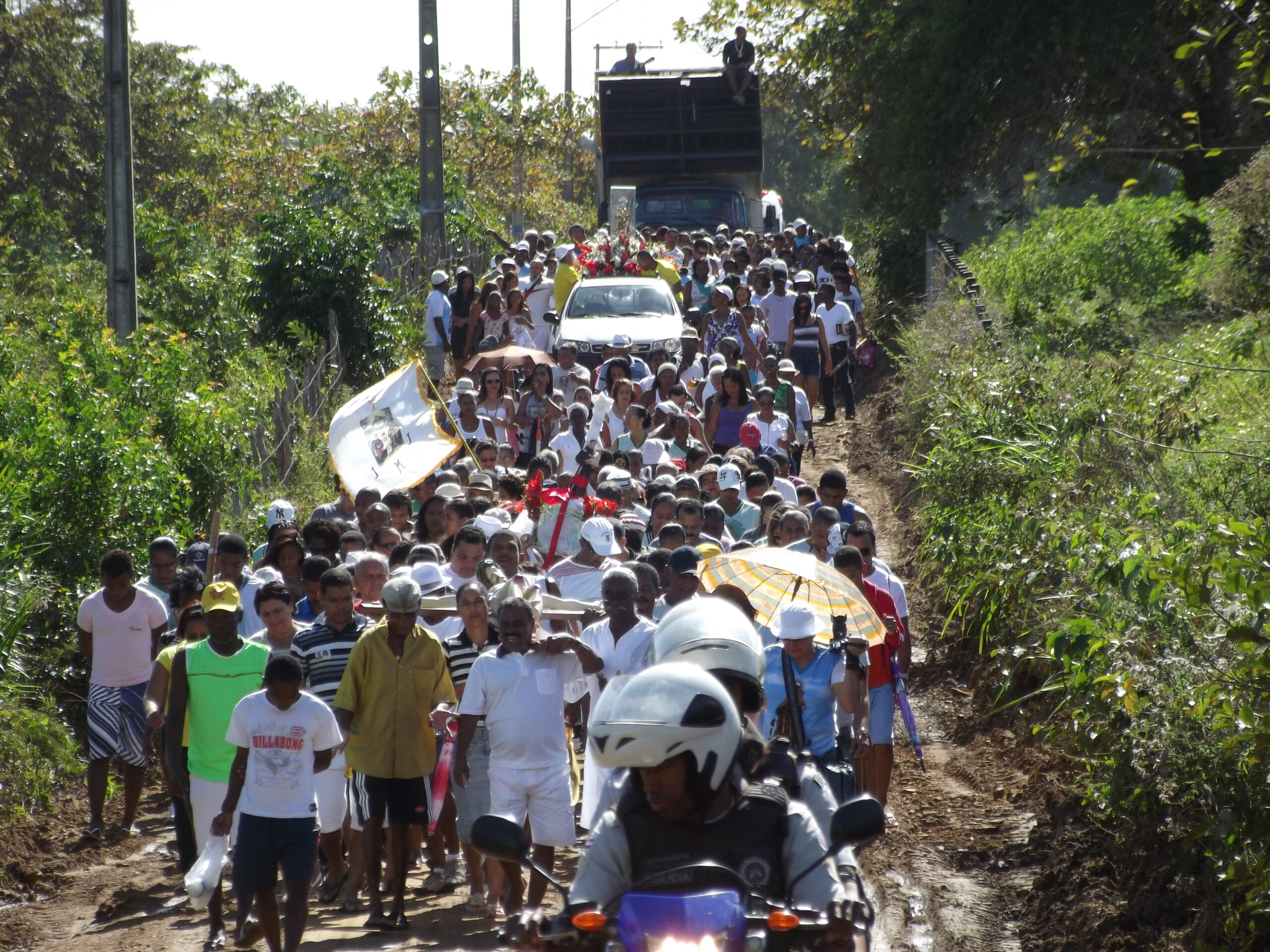
On May 1, 2022, a group of 49 Central American women crossed the border between Mexico and Guatemala.[1] Unlike most of their compatriots, they were bound not to the United States but to Mexico City. The women were taking part in the “XVI Caravan of Mothers of Missing Migrants,” a symbolic event organized every year by the Mesoamerican Migrant Movement to demand justice for the thousands of Central American migrants that have gone missing in their transit to the United States.[2] This year, the caravan represented the struggle of various collectives of Central American families that are still searching for over 2,000 of their missing sons and daughters.[3] That number does not include all cases of missing migrants, but is already higher than the 1,800 cases of missing foreigners reported by Mexican authorities.[4]

The struggle of those women is sadly inserted in a human rights crisis of even greater proportions. Over the last decade, more than 75,000 migrants have gone missing along the corridor that connects Central America, Mexico, and the United States.[5] This figure includes Mexicans, Central Americans, and persons from other countries that have perished or vanished somewhere along the journey north—most of them in Mexico, but also many within the United States. Statistics are by their nature imperfect, but evidence collected by civil society groups suggests that migrants disappear or go missing because they fall victim to criminal organizations, police abuse, or the harshness of the route.[6] What all these migrants have in common is that they are all persons who left their homes hoping to find a better future, but would neither get there nor ever return home.

The regional crisis of missing migrants has an incommensurable human toll on every victim and his or her family. However, its effects are especially harsh when a migrant disappears outside his country of origin. In those situations, the families must grieve the loss of a loved one and, at the same time, they must confront all the migratory and administrative hurdles of trying to access the justice systems of foreign countries—from obtaining a visa to demonstrating their legal standing as relatives of a victim. In the case of Central American families, actions as simple as reporting a disappearance in Mexico or filing a judicial claim in the United States turn into onerous endeavours. More complicated tasks like participating in the search of a missing migrant, inquiring about the status of an investigation, requesting reparations, or even repatriating any mortal remains become extremely complex to complete.

Over the years, civil society groups have denounced and documented the difficulties that migrant’s families face in their pursuit for justice. In Central America, groups of families have organized through various “Colectivos de Familiares” (like COFAMIDE, COFAMIGUA, and many others) to put the issue under the international spotlight.[7] Additionally, non-governmental organizations have established networks to facilitate families’ transnational access to state institutions.[8] International bodies have documented patterns in the disappearances of migrants and failures in state policies.[9] And even academic institutions have made efforts to support the forensic identification of migrant remains and to diagnose the structural bases of the problem.[10]

However, the challenge persists, and the families of missing Central American migrants are still fighting an uphill battle simply to have access to justice. The obstacles that these families confront due to deficient inter-state cooperation then are compounded with the multiple flaws that already hamper the performance of national institutions charged with investigating disappearances. Many of the relatives of missing migrants are thus forced to embark on their own transnational odyssey: this time not to seek a better future, but to pursue justice.

2. Limits of Human Rights Law

Scholars have criticized human rights law for many reasons including its state-centric vision,[11] ideological imperialism,[12] reductive discourses,[13] and tendency to individualize claims.[14] However, the dire situation of families of missing Central American migrants sheds light on another problematic—yet under-analyzed—limit imposed by human rights norms, the doctrinal requirement to pinpoint a specific human rights violation as the individual responsibility of a particular state. Let me briefly summarize the implications of this model of legal reasoning based on “single-state” responsibility.

Under international human rights law, every person has the right to be protected against enforced disappearances.[15] If an enforced disappearance occurs, the victim’s family has a right to truth, justice, and reparations.[16] These standards apply to every state that has ratified the relevant human rights treaties—which arguably includes all states involved in the Central and North American crisis.[17]

Correspondingly, international human rights law establishes rules to determine which state shall bear the responsibility for the realization of all these rights. In the case of enforced disappearances, the primary determinant of responsibility is territorial control.[18] Generally, the state where the disappearance took place is the one responsible for guaranteeing the rights of migrants and their families.[19] Within the regional crisis of missing migrants, this means that either Mexico or the U.S. would hold primary responsibility towards most families of Central American migrants—as most disappearances occur within their borders.

Allocating the primary legal responsibility to the country where a migrant went missing is quite problematic. The transnational nature of the crisis implies that no individual state can meet its obligations to missing migrants on its own. Without coordination with Central American authorities, it is extremely hard for Mexico or the U.S. to procure the necessary evidence to conduct an adequate investigation, perform the identification procedure required to repatriate migrant remains, or communicate with families entitled to reparations. In fact, without regional coordination, neither Mexico nor the U.S. can even receive reports of potential disappearances from relatives of migrants who stayed back home.[20]

The mismatch between human rights law and the complexity of the migration crisis creates some perverse incentives. On the one hand, Central American governments could avoid their responsibilities to missing migrants by simply deflecting claims to their northern neighbors. On the other hand, Mexico and the United States could blame their inefficiency in handling the crisis to the challenges of inter-state cooperation.

Civil society organizations have made great efforts to avoid these pitfalls by fostering deeper inter-state coordination. Their strategies have been quite consequential. In 2015, for example, civil society advocacy led to the creation of the Mexican “Mecanismo de Apoyo al Exterior” (Mechanism for Foreign Support or MAE), an inter-institutional policy established by the Mexican government.[21] The MAE is an unprecedented initiative that aims to offer a solution for families of Central American migrants who have disappeared in Mexico. At its core, the policy aims to use Mexican consulates in Central America as conveyors, to receive reports of migrants that disappeared in Mexico and then transmit the results of investigatory efforts back to the families. In this way, families in Central America can access the Mexican justice system without having to leave their own countries. Additionally, the MAE also strives to facilitate coordination between families in Central America and the complex ensemble of Mexican authorities in charge of searching missing migrants, investigating disappearances, and providing reparations.

The MAE has been formally operating for over half a decade now, but its practical implementation is still incomplete and deficient in many ways.[22] During this time, the improvement of the MAE has become a tactical priority in the agenda of the regional movement for migrants’ rights. One key part of the ongoing improvement efforts seeks to enhance the performance of Mexican institutions involved with the MAE (especially the Mexican consulates and prosecutor’s office). However, another part of ongoing efforts to improve the MAE is to push Central American States to take a more proactive approach to the mechanism. The MAE can hardly succeed if Central American governments do not—at the very least—ensure that migrants’ families know of the MAE’s existence, are able to travel to the cities where Mexican consulates are located and are capable of obtaining technical advice to use the mechanism.

It is at this point where the model of “single-state” responsibility threatens to become increasingly problematic. Even if the MAE has planted the seeds for an unprecedented form of transnational cooperation, civil society efforts to improve its implementation must confront the predominant logic embedded in human rights law. The current logic creates the risk that if Central American states fail to engage adequately with the MAE, they can still squeeze out of formal human rights responsibility. Advocates could denounce recalcitrant states for violating basic moral principles or even for running against general principles of international cooperation.[23] However, at the end of the day, under the formalistic logic of human rights law, the responsibility for migrants who disappear in Mexico would fall upon Mexico, and Mexico alone.

3. Building a Way Forward: A Vision of Shared Responsibility

From a strictly doctrinal perspective, the limitations imposed by human rights law often appear unescapable. However, socio-legal literature abounds with examples of social mobilizations that have been able to deploy human rights norms in innovative ways.[24] The Central American movement for migrants’ rights is a clear example of how advocates can overcome these obstacles. A few years ago, civil society organizations launched an advocacy strategy that is outmaneuvering the doctrinal emphasis on single-state responsibility. While the process is still ongoing, if successful, it may very well create an institutionalized model of shared responsibility around the MAE.

Back in January 2021, a group of family collectives (with the support of the Fundación para la Justicia y el Estado de Derecho and Boston University’s Human Rights Clinic) filed a General Allegation before the UN Working Group on Enforced and Involuntary Disappearances (WGEID).[25] Established in 1980, the WGEID is one of the earliest special procedures created by the United Nations Human Rights Commission—now the UN Human Rights Council.[26] The General Allegation procedure is a non-judicial mechanism intended to alert states to obstacles in the implementation of the “Declaration on the Protection of All Persons from Enforced or Involuntary Disappearance” (the Declaration).[27] The General Allegation mechanism is activated when civil society groups approach the WGEID to denounce situations where the rights protected by the Declaration are being violated. After the reliability of the sources is confirmed, the WGEID transmits the information to the concerned state and typically requests further information.[28] Subsequently, after a state submits its responses to the General Allegation, the WGEID can decide to keep monitoring the situation and assist that individual state to comply with their duties under the Declaration.

Even if the mechanism itself is anything but new, the strategy advanced by this civil society group incorporated two very innovative aspects. The first ground-breaking feature is that the General Allegation was effectively introduced against multiple states. In this case, the civil society coalition denounced all states involved in the regional crisis.[29] To my knowledge, this was one the first occasions in which the WGEID transmitted the submission to multiple states at the same time (Honduras, Guatemala, El Salvador, and Mexico).[30]

The second innovative characteristic of this legal strategy lies in the way it is framed around a transnational solution. Typically, General Allegations are used to denounce violations of human rights. However, the submission went a step beyond that. Besides denouncing the severity of the regional crisis of migrants’ disappearances, it also showcased the potential of the MAE to build a solution and documented the various obstacles that hinder this potential— especially the lack of inter-state coordination.

In this way, the advocacy strategy stands out, not only because it engages all States involved in the regional crisis, but because it does so through the lens of their shared responsibility in building a particular solution (namely the MAE). By stepping beyond a simple denunciation of the crisis itself, this framing avoids falling into the single-state model of allocating responsibility on the basis of territorial jurisdiction. In other words, putting the MAE at the center of the conversation means that the degree of responsibility of a particular state within a pattern of migrants’ disappearances becomes less relevant than the collective responsibility of all States to implement a transnational solution.

Today, this strategy is still developing. After its submission in early 2021, the WGEID transmitted the General Allegation to the States involved—who then were given the opportunity to provide a response and submit information. As is true with many international mechanisms, the procedural delays are lengthy. Knowing that it would take a while to process their submission, family collectives and their NGO allies continued to advocate for the gradual improvement of the MAE. A notable effort came in October of 2021, during a recent visit of the UN Committee on Enforced Disappearances to Mexico, where Central American families were able to highlight the situation of missing migrants as a pressing issue within Mexico’s titanic crisis of disappearances.[31]

However, last January 2023 marked the second anniversary of the General Allegation. During these two years, the civil society coalition prepared a follow-up submission that took another step in their advocacy before the WGEID. This submission emphasizes the need for the WGEID to get more closely involved in monitoring the MAE’s performance. According to its mandate, the WGEID can “provide appropriate assistance in the implementation by States of the Declaration.”[32] Given that the crisis of migrant’s disappearances is ongoing and that the MAE’s implementation remains deficient, the hope is that the WGEID will exercise its mandate to “assist” States more proactively to help create the transnational coordination required to realize the MAE’s full potential.

Naturally, this legal strategy is full of uncertainty—as most innovative strategies are. However, in its first submission, the civil society coalition has already suggested one way forward. The coalition requested the WGEID to conduct a sequence of country-visits to monitor the way each State engages with the MAE in order to recommend coordinated actions to improve its performance.[33] Another potentially effective action would be for the WGEID to become a convening authority that brings representatives of each state and civil society together to deliberate about how best to implement the MAE. However, even for this author, it is unclear what form such proactive measures could (or should) take in practice. The only thing that seems certain is that an ideal solution would require a significant degree of creativity and an openness to experimentation.

Conclusion

It is not an overstatement to say that we live in troubled times. The struggle of the families of Central American migrants is just one among many others transnational social movements who are engaged in and are vying to open new ways forward for the protection of migrant’s rights. In the current global context, the innovative strategy before the WGEID not only holds the potential to advance a solution to this specific crisis but could also inspire other transformative actions.

We can learn two main lessons from the legal struggle of Central American families around the MAE. The first lesson is that human rights strategies need not subscribe to the “single-state” mode of responsibility that prevails in human rights doctrine. As the struggle of these families shows, when such framing becomes an obstacle for justice, activists can strive to articulate their claims in ways that foreground the “shared responsibility” of various states.

The second lesson is the possibility (and importance) of recognizing that the existing framework of human rights institutions is not a fixed set of rules and mechanisms, but an institutional edifice that can be updated—even if only gradually—without the need for formal legal reform. The WGEID is a decades-old human rights body, and yet a regional movement of migrants’ families conceived a strategy that aims to repurpose its procedures so that the institution can rise to the challenge presented by the regional crisis.

The ultimate outcome of the strategy is yet to be seen. However, whatever the future may bring, these lessons can inform struggles in other areas. Across the globe, human rights crises are becoming increasingly too complex to tackle through the strict lenses of mainstream human rights legal doctrine. Climate change, social inequality, and the ever-growing flows of migrants and refugees are challenges with transnational and collective dimensions that demand creative thinking, transnational action, and a whole lot of strategic savvy.

[*] SJD Candidate; LLM’16 Harvard Law School; LL.B. Universidad de Guadalajara. Former Clinical Instructor at Boston University’s International Human Rights Clinic (2021-22). This article was inspired through collaborating with clinical colleagues Susan Akram and Yoana Kuzmova, our partner in Central America, Claudia Interiano and our team of excellent clinical students Rachel Medara, Katherine Grisham and David Andreu. I would also like to thank Susan Akram for her comments to this article and Lloyd Lyall for his help during the editing process. All flaws are my own. The author thanks the University of Guadalajara for its support.

[1]Marcha de Madres Centroamericanas’ Busca an sus Hijos en Mexico, Deutsche Welle (May 8, 2022), https://perma.cc/BHV3-C8AN (last visited Dec. 14, 2022).

[2] Caravan of Mothers of Missing Migrants Kick Off a Global Migration Search Movement, UN News, Nov. 6, 2018, https://perma.cc/5QL6-SBYB (last visited Dec. 14, 2022).

[3] Caravan of Central American Mothers Resumes Search for their Missing Children in Mexico, Pledge Times (May 2, 2022), https://perma.cc/CY48-GX4E (last visited Dec. 14, 2022).

[4] Statistic extracted from the official database of foreigners reported missing and not found in Mexico since 2014. See Version Publica RNDPDNO, National Search Commission, https://versionpublicarnpdno.segob.gob.mx/Dashboard/Sociodemografico (last visited Dec. 14, 2022).

[5] Boston Univ. Int’l Hum. Rts. Clinic, Disappeared Migrants from Central America: Transnational Responsibility, the Search for Answers and Legal Lacunae 7 (2021) [hereinafter Disappeared Migrants From Central America], https://perma.cc/V6MQ-NVL8.

[6] See generally Servicio Jesuita a Migrantes-Mexico, Informe sobre Desaparicion de Personas Migrantes en Mexico: Una Perspectiva desde el Servicio Jesuita a Migrantes-Mexico (Apr. 2022), https://perma.cc/QJ24-LHU2.

[7] COFAMIDE stands for “Comite de Familiares de Migrantes Desaparecidos de El Salvador.” COFAMIGUA stands for “Comite de Familiares de Migrantes Desaparecidos la Guadalupe.” Other examples of family collectives are “Comite de Familiares del Centro de Honduras,” the “Comite de Familiares de Migrantes Desaparecidos de Amor y Fe” and the “Asociacion de Familiares de Migrantes Desaparecidos de Guatemala “AFAMIDEG.” However, this is not an exhaustive list.

[8] One influential coalition is the Forensics Border Coalition which coordinates various organizations working to identify and repatriate migrant remains found in the United States. See Forensic Border Coalition, https://forensicbordercoalition.org/about/ (last visited Apr. 7, 2023).

[9] See Missing Migrant Project, International Organization for Migration, https://missingmigrants.iom.int/ (last visited Dec 14, 2022); Inter-Am. Comm’n. H.R., Human Rights of Migrants and Other Persons in the Context of Human Mobility in Mexico, OEA/Ser.L/V/II., doc. 48/13 (Dec. 30, 2013), https://perma.cc/3TAP-24MB (last visited Dec. 14, 2022).

[10] See Disappeared Migrants From Central America, supra note 5; Boston Univ. Int’l Hum. Rts. Clinic, Missing Migrants in the United States: International Responsibility, the Search for Accountability and Legal Lacunae (2021) [hereinafter Missing Migrants in the United States], https://perma.cc/37WU-YJTJ; Stephanie Leutert, Sam Lee & Victoria Rossi, Migrant’s Deaths in South Texas (2020) https://perma.cc/9R3B-5NJB; Samuel Gilbert, Treated like Trash: The Project Trying to Identify the Bodies of Migrants, The Guardian (Jan. 12, 2020), https://perma.cc/QUU6-NS6N (last visited Apr. 10, 2023) (reporting on the Operation Identification project of the Forensic Anthropology Center at South Texas State University).

[11] See, e.g., Andrew Clapham, Human Rights in the Private Sphere (Clarendon Press 1993).

[12] See, e.g., Samuel Moyn, The Last Utopia: Human Rights in History (Belknap Press 2010).

[13] See, e.g., Makau Mutua, Savages, Victims and Saviors: The Metaphor of Human Rights, 42 Harv. Int’l L. J. 201 (2001).

[14] See, e.g., David Kennedy, The International Human Rights Movement: Part of the Problem?, 15 Harv. Hum. Rts. J. 101 (2002).

[15] International Convention for the Protection of All Persons from Enforced Disappearance [hereinafter ICPAPED], arts. 1 and 24, Dec. 23, 2012, 2716 U.N.T.S. 3.

[16] Id. arts. 1 and 24.

[17] Mexico, Guatemala and Honduras have either ratified the ICPAPED and/or the Inter-American Convention on the Forced Disappearance of Persons. El Salvador and the United States have not ratified either of those treaties but are still States Parties to the American Convention on Human Rights and/or the International Covenant on Civil and Political Rights. These two treaties provide protection against enforced disappearances through the rights to life, personal integrity and protection against arbitrary arrest and detention.

[18] ICPAPED, supra note 15, art. 9.

[19] Id. art. 9.1.a.

[20] Disappeared Migrants From Central America, supra note 5 at 100 (explaining how Central American foreign ministries often neglected to ensure that reports from families of missing migrants who disappeared abroad would prompt an official investigation).

[21] Acuerdo A/117/15 por el que se crea la Unidad de Investigación de Delitos para Personas Migrantes y el Mecanismo de Apoyo Exterior Mexicano de Búsqueda e Investigación y se establecen sus facultades y organización, Diario Oficial de la Federación [DOF] 16-12-2015 (Mex.), https://perma.cc/8CNL-D678 (last visited Dec. 14, 2022).

[22] For details about the flaws in the MAE’s implementation, see Disappeared Migrants From Central America, supra note 5 at 95-101.

[23] This duty has been explicitly invoked in the context of migration. See U.N. International Migration Review Forum, Progress Declaration of the International Migration Review Forum, ¶ 6, Res. A/AC.293/2022/L.1 (May 12, 2022), https://perma.cc/Y6KQ-XXKE (last visited Dec. 14, 2022).

[24] See Sally Merry, Human Rights and Gender Violence: Translating International Law into Local Justice (Chicago Univ. Press 2016); Shannon Speed, Rights in Rebellion: Indigenous Struggles and Human Rights in Chiapas (Stanford Univ. Press 2007); Stones of Hope: How African Activists Reclaim Human Rights to Challenge Global Poverty (Lucie White & Jeremy Perelman, Eds., Stanford Univ. Press 2011).

[25] Boston Univ. Int’l Hum. Rts. Clinic & Fundacion para la Justicia y el Estado Democratico de Derecho, General Allegation to the United Nations Working Group on Enforced or Involuntary Disappearances (Jan 26, 2021), https://perma.cc/J93B-J8TL (last visited Dec. 14, 2022).

[26] Commission on Human Rights Res. 20 (XXXVI), U.N. Doc. E/CN.4/RES/1980/20 (Feb. 29 1980), https://perma.cc/N8UX-YQM3 (last visited Dec. 14, 2022).

[27] Human Rights Council, Rep. of the Working Group on Enforced or Involuntary Disappearances on its Revised Methods of Work, U.N. Doc. A/HRC/WGEID/102/2 (May 2, 2014) https://perma.cc/9AT8-C4NW (last visited Dec. 14, 2022).

[28] Id. arts. 33-34.

[29] The General Allegation submitted in January 2021 denounced Mexico, Honduras, Guatemala and El Salvador. See Boston Univ. Int’l Hum. Rts. Clinic & Fundacion para la Justicia y el Estado Democratico de Derecho, supra note 25. Information about the United States was submitted at a later time. This document, however, is not public.

[30] The information submitted through the General Allegation was transmitted by the WGEID in conjunction with the Special Rapporteur on Extrajudicial, Summary or Arbitrary Executions; the Special Rapporteur on the Human Rights of Migrants; the Special Rapporteur on Torture and other Cruel, Inhuman or Degrading Treatment or Punishment; and the Special Rapporteur on Truth, Justice and Reparations. See Working Group on Enforced and Involuntary Disappearances et al., Letter dated Apr. 16, 2021 from the WGEID et. al. to Mexico, AL MEX 5/2021 (Apr. 16, 2021) https://perma.cc/25DQ-KBD2 (last visited Mar. 17, 2023); Working Group on Enforced and Involuntary Disappearances et al., Letter dated Apr. 16, 2021 from the WGEID et. al. to Guatemala, AL GTM 4/2021 (Apr. 16, 2021) https://perma.cc/SWX3-XNS3 (last visited Mar. 17, 2023); Working Group on Enforced and Involuntary Disappearances et al., Letter dated Apr. 16, 2021 from the WGEID et. al. to El Salvador, AL SLV 1/2021 (Apr. 16, 2021) https://perma.cc/NJC5-JSYD (last visited Mar. 17, 2023); Working Group on Enforced and Involuntary Disappearances et al., Letter dated Apr. 16, 2021 from the WGEID et. al. to Honduras, AL HND 2/2021 (Apr. 16, 2021) https://perma.cc/X53W-F8X4 (last visited Mar. 17, 2023).  A communication to the United States is still pending.

[31] Comm. on Enforced Disappearances, Rep. of the Comm. on Enforced Disappearances on Its Visit to Mexico Under Article 33 of the Convention, ¶ 36-37, U.N. Doc. CED/C/MEX/VR/1 (Recommendations) (May 16, 2022), https://perma.cc/C54D-M5WN (last visited Dec. 14, 2022).

[32] Human Rights Council Res. 7/12, U.N. Doc. A/HRC/RES/7/12, art 2(h) (2008), https://perma.cc/R42V-AUGA (last visited Dec. 14, 2022).

[33] Disappeared Migrants From Central America, supra note 20 at 11.


Cover Image: Digasalinas, CC BY-SA 3.0: https://creativecommons.org/licenses/by-sa/3.0/deed.en

Content

Vol. 64 Book Review

“Domestic Application of International Law: Focusing on Direct Applicability” by Judge Yuji Iwasawa

https://brill.com/coverimage?doc=%2Ftitle%2F61826&width=200&type=webp

By Sinh Vuong Nguyen and Sarah Lorgan-Khanyile

Yuji Iwasawa’s “Domestic Application of International Law: Focusing on Direct Applicability” provides a timely elaboration on how to navigate the rapidly evolving landscape of international law. Iwasawa argues that tectonic shifts in international law have been prompted by the increased interconnectedness of States and the changing role of treaties. Where treaties once centered on the relations between States, they now increasingly center on the relations between States and individuals. As Iwasawa suggests, international law, now more than ever, reaches into the private lives of individuals. In light of these changes, he embarks on a “comprehensive study on the domestic applicability” of the rules of international law, focusing primarily on private international law. Elaborating on his previous doctrinal scholarship, Iwasawa attempts, in our view with great success, to “reconstruct the theory of direct applicability and put forward a renewed framework of analysis.”[i]

Iwasawa articulates a crucial distinction  between the direct applicability and the domestic legal effect of the rules of international law.[ii] According to Iwasawa, direct applicability concerns whether a rule of international law is “susceptible of being applied [domestically] without further measures.”[iii] In contrast, domestic legal effect is the binding legal effect (or lack thereof) of a rule of international law under the domestic legal system. Iwasawa mobilizes this distinction to argue that many courts are wrong to have concluded that direct applicability is a prerequisite to a rule of international law having domestic legal effect. The correct position, he posits, should be the opposite: domestic legal effect is the precursor to direct applicability.[iv] We agree. Direct applicability is a phenomenon occurring at the domestic level. In that regard, a state can only apply that which has already acquired the force of law. Further, the argument that only rules classified as directly applicable on the international plane may acquire domestic legal force is tantamount to a prohibition on the domestic application of rules classified on the international plane as not directly applicable. There is no evidence that such a prohibition exists under international law.

Iwasawa concludes that direct applicability is a question to be determined under domestic law. His argument is straightforward: “Since the legal force and rank of international law in domestic law are determined by domestic law, it is logical to conclude that the direct applicability of international law is also determined by domestic law.”[v] Admittedly, under his own conception, direct applicability and domestic legal effect are qualitatively different concepts. To that extent, just because domestic legal effect is decided by domestic law does not automatically mean that direct applicability must likewise be a matter decided by domestic law. Iwasawa’s argument is nevertheless defensible when considered from the perspective of private international law. The direct applicability of a rule of international law is a legal issue. Whether international law or domestic law decides the question of direct applicability is a question of the relevant choice of law to decide a legal issue. It is a truism that the forum state decides its own choice of law rules. Put differently, the forum state decides for itself whether domestic law or international law applies to decide the question of direct applicability. We submit that this is the proper basis for explaining why direct applicability is a question to be decided by domestic law. For completeness, we note that it is theoretically not impossible for the forum state’s choice of law rules to decide that international law decides the question of direct applicability, but even then, reliance on international law is justified through domestic law.

Iwasawa’s conclusion—that direct applicability is a matter to be decided under domestic and not international law—demands immediate reconsideration of the argument that the direct applicability of a treaty is governed by that particular treaty.[vi] Using the example of human rights treaties, Iwasawa forcefully argues that the question of direct applicability cannot be divined from these treaties.[vii] Here, Iwasawa’s expertise in international human rights law shines through.[viii] First, using human rights treaties to ascertain directives on the direct applicability of human rights obligations presupposes that the parties to human rights treaties have “intended” for human rights obligations to be directly applicable. But treaty parties are not very interested in the mechanisms of domestic implementation of human rights treaties; this is why all of the leading human rights instruments come with domestic implementation clauses. To that end, we find most persuasive Iwasawa’s warning that any inferred intention of the parties would be “in most cases purely fictitious.”[ix] Second, direct applicability, if understood abstractly, ignores the reality of the varied constitutional structures of states, and the reality that a treaty provision may be directly applicable in one state but not another.[x]

For all of Iwasawa’s achievements, his theoretical framework leaves a few open questions for future scholarship:

First, Iwasawa’s definition of direct applicability as “susceptible of being applied without further measures” remains unclear in terms of the juridical consequences that follow when a legal rule is applied. The paradigmatic example of directly applicable international law is a rule of international law which creates judicially enforceable individual rights in domestic law,[xi] but Iwasawa also suggests that a rule of international law can also be applied by domestic courts and administrative authorities without there being any individual rights created, for instance, as a defense to a legal claim.[xii] Because the direct application of a rule of international law may find manifestation in manifold instances, it is, in our view, a missed opportunity to define an underlying thread tying these manifold instances together.

Second, Iwasawa’s definition of direct applicability runs into some difficulty in the context of dualist systems. Having argued that domestic legal effect is a prerequisite to direct applicability, Iwasawa nevertheless argues that questions of direct applicability are still relevant in dualist systems under the logic that once “the text of the treaty is given the force of law, the question arises as to whether a provision of that treaty can be directly applied without the need for further measures.”[xiii] One could be forgiven for taking the view that, since dualist systems first require the incorporation of international law into the domestic legal system, it must follow that such incorporation amounts to a “further measure” rendering direct applicability a fortiori impossible. It is unfortunate that Iwasawa did not explain this incongruence in greater detail.

Third, Iwasawa’s thesis that direct applicability is a matter governed by domestic law runs into some difficulties in the field of EU law. It is well-settled by the Court of Justice of the European Union (CJEU) that the direct applicability of EU law is governed by EU law itself.[xiv] To that end, Iwasawa’s argument that “the concept of direct applicability is not fundamentally different in international law and EU law”[xv] conflicts with  the CJEU’s case law. At the same time that Iwasawa accepts that “the legal force, direct applicability, and rank of EU law in domestic law are all determined by EU law”, he concludes that “[t]he legal force, direct applicability, and rank of international law in domestic law are thus determined by the domestic law of each State.”[xvi]  Iwasawa’s positions can be reasonably reconciled in that the direct applicability of EU law is a sui generis exception from the direct applicability of international law generally speaking. But if an exception was intended, it would have been most helpful for more explanation on the rationale underlying it.

Iwasawa’s monograph is, in conclusion, a laudable effort to bring coherence and analytical rigor to a technical, difficult, and practically significant intersection between private and public international law. In thoroughly articulating the law behind domestic governance of direct applicability in international law, Iwasawa offers a rich framework to scholars and practitioners alike. Promising to influence future scholarship on the topic, the monograph invites further consideration of direct applicability and analyses of domestic governance of direct applicability as opposed to approaches of nonconforming systems (like the EU).


[i] Yuji Iwasawa, Domestic Application of International Law: Focusing on Direct Applicability, ix (Brill Nijhoff, 2022) [hereinafter “Monograph”]. Please find the book available here.

[ii] Id. at 148–50.

[iii] Id. at 146.

[iv] Id. at 154.

[v] Id. at 162.

[vi] Id. at 47–48.

[vii] See discussion infra id. at chapters 2.B.1.–2.B.6.

[viii] Judge Iwasawa previously served as Head of the Human Rights Committee.

[ix] Monograph at 48.

[x] Id.

[xi] Id. at 154.

[xii] Id. at 157–58.

[xiii] Id. at 7.

[xiv] Id. at 96.

[xv] Id. at 139, 141.

[xvi] Id. at 162.

Content, Online Scholarship, Perspectives

Evolution of Business & Human Rights Obligations – From Soft Law to Voluntary Initiatives to Emerging International Standards & National Regulations

PATRICK MILLER & KABIR DUGGAL*

Introduction

Milton Friedman famously stated that a business has no purpose except to increase shareholder value. This approach is increasingly dying.[1] Most international commercial lawyers have a general sense of human rights law—though it is often dismissed as a collection of non-binding, aspirational pronouncements having little practical effect on the way business is conducted or how businesses advise their clients. Indeed, human rights law in international law is often understood as obligations of states in relation to humans with a limited role for business. As a result, businesses often have only a passing understanding of the legal regimes related to business and human rights (“B&HR”).

Businesses which are not steeped in these issues can be forgiven for assuming that regimes related to B&HR are limited to the non-binding, aspirational arena, particularly as this may have been true for a time. On the one hand, we see an increased focus on Environmental, Social, and Governance (“ESG”) obligations, although these tend to be non-binding or aspirational. At the same time, we notice the creation of hard law obligations which are enforced by national governments.

Inquiries into corporate misconduct in the 20th century rarely went beyond the question of whether corporations even had a duty to protect human rights. The international conventions described below were landmark milestones in setting out a coherent framework establishing the bounds of corporate conduct and the obligations that multinationals have to various stakeholders. These milestones laid a foundation for national governments to begin enacting “hard law” regulations.[2]  We expect that ESG and B&HR obligations will take a firmer form in the years to come—although these changes will often be a result of political pressure, national priorities, and global initiatives.

This article traces the key recent developments in B&HR from international agreements to some of the leading national regulatory regimes.

I. The International Framework

International law has traditionally focused on the role of states. While the role of non-state actors has played a limited role, certain efforts to identify international obligations for businesses exist.

A. The UN Global Compact (2000)[3]

Conceived by former UN Secretary Kofi Annan, the UN Global Compact is a voluntary initiative where companies commit to implement universal sustainability principles and take steps to support UN goals.  The UN Global Compact is “open to any company that is serious about its commitment to work towards implementation of the UN Global Compact principles throughout its operations and sphere of influence, and to communicate on its progress.”[4] Principle I requires a company to comply with all applicable laws and internationally recognized human rights while Principle 2 requires that companies are not complicit in human rights abuses.[5] The remaining eight principles provide specific provisions for labor, environment, and anti-corruption.[6]  Even though the Compact is a voluntary initiative, by signing up, companies must produce an annual “Communication on Progress” (COP) that details their work to embed the ten principles in their activities. So far, 21,493 companies from 162 countries have signed up for the Global Compact.[7]

B. The (Draft) Norms on the Responsibilities of Transnational Corporations (2003)[8]

In 2003, a Working Group chaired by Professor David Weissbrodt submitted the “Norms on the Responsibilities of Transnational Corporations and Other Business Enterprises with regard to Human Rights” (the “Norms”) to the UN Sub-Commission on the Promotion and Protection of Human Rights.  The Norms were the first attempt to create human rights norms specifically aimed at transnational corporations.

There were specific Norms addressing non-discriminatory treatment, security of persons, rights of workers, anti-bribery provisions, consumer protection, and environmental protection. The document also identifies 14 obligations and 5 provisions aimed at implementing the Norms. The Norms were subject to “periodic monitoring and verification” by the UN, including by existing mechanisms, and a mechanism to be created regarding the application of the Norms.  Even though the Norms were regarded as a landmark step, they were not approved by the UN Commission on Human Rights because they faced opposition from several states and the business community.[9]

C. The UN Guiding Principles on Business and Human Rights (2011)[10]

Following the failure of the Norms, the former UN Secretary General Kofi Annan appointed Harvard Professor John G. Ruggie as a Special Representative on Business and Human Rights. This led to the creation of the UN Guiding Principles on Business and Human Rights (the “Guiding Principles”).  The Guiding Principles are based on three pillars: (i) a state bears the duty to protect against human rights abuses within its territory, (ii) a corporation must respect human rights and address adverse human rights impacts with which they are involved, and (iii) a state has the primary responsibility to remedy any human rights abuses within its territory.

While the Guiding Principles do not have a formal accountability mechanism,[11] they envision that “effective grievance mechanisms” are available based on multi-stakeholder and other collaborative initiatives. As a largely voluntary initiative, the Guiding Principles are often invoked by parties in their international pleadings to argue the failure of due diligence (see Bear Creek Amicus Reply[12] or Guatemala Counter-Memorial)[13] or the need for human rights assessment (Metlife Amicus).[14]

D. Draft UN Legally Binding Instrument to Regulate Activities of Transnational Corporations (2021)[15]

Despite the failure of the Norms, since 2014, there have been efforts to create a Legally Binding Instrument to Regulate the Activities of Transnational Corporations and Other Business Enterprises (the “Instrument”). The Open-Ended Intergovernmental Working Group (OEIGWG) created by the UN Human Right Council drafted this Instrument.  The Draft makes clear that the purpose of this Instrument is to clarify the human rights obligations of business enterprises and facilitate the implementation of these obligations (art. 2.1). The Instrument places primacy of obligation on state parties who are required to “regulate effectively the activities of all enterprises within their territory, jurisdiction or otherwise under their control” (art. 6.1).

Art. 16 provides that states shall take all “necessary legislative, administrative or other action including the establishment of adequate monitoring mechanisms” to ensure implementation.  Indeed, the Instrument envisions the creation of an International Fund for Victims to provide legal and financial aid (art. 15.7).

II. Efforts within National Law

We see a nascent effort to move obligations from voluntary regimes to obligations in domestic law.  At this stage, the obligations are limited; however, with greater pressures from the public and with concerns about climate change, we might see further action. Listed below are examples of human rights obligations on businesses.

A. US: Uyghur Forced Labor Prevention Act (UFLPA)

Since the 1930 Tariff Act, the US has had legislation prohibiting products created by forced labor from entry into the country. However, carveouts allowed nearly all products to escape inquiry by the Government.

Over the past few years, the US Government has sought to enforce its regulations prohibiting the import of goods produced using forced labor through its increasing use of Withhold Release Orders by the US Customs and Border Protection Agency (“USCBP”) and its implementation of the Uyghur Forced Labor Prevention Act (“UFLPA”).[16]

Many Guidance documents on complying with these regimes reference the Guiding Principles and other international best practices such as human rights due diligence as methods of ensuring that a company’s supply chains practices comport with their responsibilities under the law.

The UFLPA came into effect on 21 June 2022.[17] It expands the scope of the US Government’s approach to prohibiting goods which it suspects were produced using forced labor from entering the US market.[18] The enforcement plan for the UFLPA creates a rebuttable presumption that all goods (or component parts of such goods) imported into the US that have a nexus to the Xinjiang region of China, or a list of restricted entities that use Uyghur labor, were produced under conditions of forced labor.[19]

The enforcement guidance states that US Customs and Border Protection “will implement an enforcement plan that identifies and interdicts goods from high-priority sectors that are found to have a nexus to production in Xinjiang, subsidiaries and affiliates of Xinjiang Production and Construction Corps, and any other producing entity found to utilize forced labor via a government-labor scheme.”[20]

The UFLPA applies to all imports into the US and, importantly, does not contain a de minimis exception. Thus, even if one button on a jacket has a nexus to Xinjiang, this shipment would be prohibited from entry. It also applies to manufacturers that use Uyghur labor in other areas of China if they are on the list of restricted entities. Its geographical scope is broader than the Xinjiang region.

If USCBP determines that products are within the scope of the Act, the evidentiary burden to rebut the presumption of forced labor is extremely high. There have not yet been any reports of importers successfully rebutting the presumption of forced labor. Rather, importers have focused on demonstrating to the USCBP that the subject goods do not fall within the scope of the Act, i.e., they have no nexus to Xinjiang and/or Uyghur labor.

B. Due Diligence Regimes in EU Countries

The European Commission has recently proposed a prohibition on the import and/or export of products that were produced using forced labor.[21] Although some EU countries require multinationals of sufficient size to establish a human rights due diligence framework to identify and prevent human rights abuses, others, including Germany[22]and France,[23] have implemented human rights due diligence regimes for international supply chains.

Companies which are subject to the regulations by virtue of their size (e.g., employee numbers or revenue) must conduct their operations in accordance with governments’ expanding ESG priorities. These companies, for instance, should develop contractual frameworks with their counterparties that solidify these requirements as obligations, particularly when their counterparties are not subject to similar ESG-type regulation. For example, Section 6 of the German Due Diligence law discusses implementing: (i) contractual assurances that suppliers will comply with human rights obligations; and (ii) contractual control mechanisms when abuses are discovered.

In February 2022, the European Commission made public its Draft Directive on the proposed standard for due diligence on human rights and environmental issues (the “EU Draft Directive”).[24] The EU Draft Directives applies to EU companies which have either (i) more than 500 employees and a net worldwide turnover of EUR 150 million, or (ii) more than 250 employees and a net world turnover of more than EUR 40 million provided 50% of the net turnover was in a “high risk” sector (such as textiles, clothing and footwear, agriculture, forestry, fisheries, and extraction of mineral resources among others).  It also applies to non-EU companies which have either (i) net turnover of more than EUR 150 million in the EU, or (ii) net turnover of more than EUR 40 million but not more than EUR 150 million, provided that at least 50% of its net worldwide turnover was in a “high-risk” sector (art. 2).  The EU Draft Directives lay down rules (i) on obligations for companies regarding actual and potential adverse impacts on human rights and the environment with respect to their operation, their subsidiaries, and the value chain operations, and (ii) on liability for violations of the obligations.  The EU Draft Directive will be enforced by Member States that create supervisory authorities. These supervisory authorities can take remedial action, including the imposition of sanctions.  When pecuniary sanctions are imposed, they are based on a company’s turnover (art. 20).

Conclusion

ESG obligations at the international and regional level remain at a nascent stage. With increased public focus and efforts by both the UN and the EU, however, we will likely see the creation of binding obligations that companies managing international supply chains will have to consider.

[*] Patrick Miller is the Founding Attorney of Impact Advocates APC, a law firm focused on international commercial dispute resolution, responsible supply chains and ESG-related matters. He is a strong advocate for ESG & social businesses and passionate about assisting these companies when they encounter commercial disputes. Kabir Duggal is an SJD Candidate at Harvard Law School and a Lecturer-in-Law at Columbia Law School.  The views expressed are personal and the authors reserve the right to change the positions stated herein.

[1] See Colin Mayer, Leo E. Strine Jr. & Jaap Winter, 50 Years Later, Milton Friedman’s Shareholder Doctrine Is Dead, Fortune (Sept. 13, 2020), https://fortune.com/2020/09/13/milton-friedman-anniversary-business-purpose/.

[2] Scholars have referred to a “Galaxy of Norms” which includes both international conventions and national ‘hard law’ obligations. See, e.g., Elise Groulx Diggs, Milton C. Regan & Beatrice Parance, Business and Human Rights as a Galaxy of Norms, 50 Geo. J. Int’l L. 309 (2019).

[3] The Ten Principles of the UN Global Compact, United Nations, https://unglobalcompact.org/what-is-gc/mission/principles.

[4] About the UN Global Compact: Frequently Asked Questions, United Nations Global Compact, https://unglobalcompact.org/about/faq.

[5] The Ten Principles of the UN Global Compact, supra note 3, at Principles 1 and 2.

[6] Id. at Principles 3 to 10, available at: https://unglobalcompact.org/what-is-gc/mission/principles.

[7] United Nations Global Compact Website Cover page, U.N. Global Compact, https://unglobalcompact.org/.

[8] U.N. Econ. and Soc. Council, Sub-Comm’n on the Promotion and Prot. of Hum. Rts., Norms on the Responsibilities of Transnational Corporations and Other Business Enterprises with Regard to Human Rights, U.N. Doc. E/CN.4/Sub.2/2003/12/Rev.2 (Aug. 26, 2003), https://digitallibrary.un.org/record/501576?ln=en#record-files-collapse-header.

[9] Pini Pavel Miretski ¶ Sascha-Dominik Bachmann, The UN ‘Norms on the Responsibility of Transnational Corporations and Other Business Enterprises with Regard to Human Rights’: A Requiem, 17 Deakin L.R. 5, 8-9 (2012) (“Such explicit support for the Norms was accompanied by often fierce opposition from various states and the majority of the business community.  Such opposition arose from the moment the Norms were formally introduced as a discussion paper after their approval by the Sub-Commission.  Most states expressed strong reservations, emphasizing their determination not to depart from the traditional framework of international law, which stresses the central and pivotal role of the state as a legal subject of public international law.  The Norms were eventually abandoned in 2005 and the task of regulating transnational corporate accountability was transferred to other UN organs.”) (internal citation omitted).

[10] Guiding Principles on Business and Human Rights, U.N. Office of the High Comm’r For Hum. Rts. (2011),https://www.ohchr.org/sites/default/files/documents/publications/guidingprinciplesbusinesshr_en.pdf.

[11] In contrast, the 2011 OECD Guidelines for Multinational Enterprises provides for “National Contact Points” “to further the effectiveness of the Guidelines by undertaking promotional activities, handling enquiries and contributing to the resolution of issues that arise relating to the implementation of the Guidelines . . .” as well as the “Investment Committee” that shall “periodically or at the request of an adhering country hold exchanges of views on matters covered by the Guidelines and the experience gained in their application.”  See Procedural Guidance, OECD Guidelines for Multinational Enter. 68 (2011), https://www.oecd.org/daf/inv/mne/48004323.pdf.

[12] Bear Creek Mining Corp. v. The Republic of Peru, ICSID Case No. Arb/14/21, Bear Creek’s Reply to the Amicus Curiae Submissions of Dhuma and Dr. Lopez ¶ 18 (Aug. 18, 2016).

[13] Daniel W. Kappes and Kappes, Cassiday and Associates v. Republic of Guatemala, ICSID Case No. ARB/18/43, Guatemala’s Counter-Memorial ¶¶ 1, 152 (Dec. 7, 2020).

[14] MetLife, Inc., MetLife Servicios S.A. and MetLife Seguros de Retiro S.A. v. Argentine Republic, ICSID Case No. ARB/17/17, Amicus Curaie Submission (Mar. 30, 2021), ¶ 90.

[15] Legally Binding Instrument to Regulate, in International Human Rights Law, The Activities of Transnational Corporations and Other Business Enterprises, U.N. Open-Ended Intergovernmental Working Grp. on Transnat’l Corps. and Other Bus. Enter. With Respect to Hum. Rts. (2021), https://www.ohchr.org/sites/default/files/Documents/HRBodies/HRCouncil/WGTransCorp/Session6/LBI3rdDRAFT.pdf.

[16] Forced Labor, U.S. Customs and Border Prot., https://www.cbp.gov/trade/forced-labor.

[17] Strategy to Prevent the Importation of Goods Mined, Produced, or Manufactured with Forced Labor in the People’s Republic of China: Report to Congress, U.S. Dept. Homeland Sec. (June 17, 2022), at 8, https://www.dhs.gov/sites/default/files/2022-06/22_0617_fletf_uflpa-strategy.pdf.

[18] Id.

[19] Id. at v (“The UFLPA establishes a rebuttable presumption that goods mined, produced, or manufactured wholly or in part in Xinjiang or by an entity on the UFLPA Entity List are prohibited from U.S. importation under 19 U.S.C. § 1307.”).

[20] Id. at 19.

[21] Philip Blenkinsop, EU Proposes Banning Products Made With Forced Labour, Reuters (Sept. 14, 2022), https://www.reuters.com/markets/europe/eu-proposes-banning-products-made-with-forced-labour-2022-09-14/.

[22] See Lieferkettensorgfaltspflichtengesetz [LkSG] [Act on Corporate Due Diligence Obligations in Supply Chains], July 16 2021, https://www.bmas.de/SharedDocs/Downloads/DE/Internationales/act-corporate-due-diligence-obligations-supply-chains.pdf;jsessionid=71731FA3BE835852C39F24D5BEFF8C60.delivery1-replication?__blob=publicationFile&v=2.

[23] See French Duty of Vigilance Law – English Translation, Bus. and Hum. Rts. Res. Ctr. (Dec. 14, 2016), https://www.business-humanrights.org/en/latest-news/french-duty-of-vigilance-law-english-translation/.

[24] Just and Sustainable Economy: Commission Lays Down Rules for Companies to Respect Human Rights and Environment in Global Value Chains, Eur. Comm’n (Feb. 23, 2022), https://ec.europa.eu/commission/presscorner/detail/en/ip_22_1145.


Annual Symposia, Symposia

Reassessing Enforcement: Strengthening Compliance with International Law

Harvard International Law Journal

2023 Symposium

Register now at tinyurl.com/ILJRegister

For a campus map and directions, please visit the HLS website here.

[hr gap=”10″]

Human Rights Compliance: Challenges from Practice

Professor Hélène Tigroudja

Hélène Tigroudja is a member of the UN Human Rights Committee and Law Professor at Aix-Marseille University (France), Co-Director of the Law School’s Master Program of International Law, Director of the Summer School on Practice of Human Rights and Expert on reparations before the International Criminal Court. Since 2002, she has participated in expert and field missions around the world for the United Nations, the Council of Europe, the Inter-American Court of Human Rights, UNESCO and the European Union, among others, on human rights issues. A senior Research Fellow (Hauser Global Professor) at New York University (NYU) since September 2017.

Her main areas of expertise, teaching and research cover a wide range of human rights issues: international and regional human rights law, mass violations, women’s rights, migration, reparations, immunities of States and international organizations, law of armed conflict, domestic implementation of international obligations, counter-terrorism, etc. She is the co-author with Prof. Ludovic Hennebel of a treatise in international human rights law published in French (Pedone, Paris) in 2016.

Professor Benyam Dawit Mezmur

Benyam Dawit Mezmur is currently Eleanor Roosevelt Fellow at the Harvard Law School, Human Rights Program. He is a Professor of Law at the University of the Western Cape in Cape Town, South Africa, and serves as Deputy Dean for Research and Post-Graduate Studies at the Law Faculty. He is also Coordinator of the Children’s Rights Project at the Dullah Omar Institute for Constitutional Law, Governance, and Human Rights, at UWC.

Since 2012, he is serving on the United Nations Committee on the Rights of the Child, and served its Chairperson from 2015-2017. Within the Committee, he has served as coordinator of various working groups including on SDGs; on a communications procedure (OPIC); and the Working Group that co-drafted (with the Committee on Migrant Workers) the joint General Comment on children’s rights in the context of international migration. During his time as Chairperson (2016), the Committee held its Day of General Discussion on children’s rights and the environment.

At the regional level, Benyam served on the African Committee of Experts on the Rights and Welfare of the Child, a treaty body of the African Union, for a little over a decade (from 2010-2021). He served as its Chairperson twice (2012-2014 and 2015-2017) and was focal person on violence against children and later served as its special rapporteur on children and armed conflict.

Ms. Arlene Brock

Arlene Brock served as Bermuda’s first national ombudsperson, she led the African Ombudsman Research Centre in South Africa, a training and advocacy organization for 40 ombudsmen and their staff on the African continent. Ms. Brock is an alumna of Harvard Law School her she obtained a Master of Laws (LLM) in 1991. She served as a Fellow (2019) and Senior Fellow (2020) of the Advanced Leadership Initiative at Harvard University where she worked on the development of a a ‘visual podcast’ series to present counter-narratives to the negative stereotypes of Black peoples that have persisted over the past four centuries. Previous professional work includes serving as a family magistrate, a mediator for union negotiations, an employment arbitrator, and an insolvency litigator.


Edward A. Smith Lecture – H.E. Judge Yuji IWASAWA

H.E. Judge Yuji IWASAWA has been a Judge of the ICJ since June 2018.

Judge Iwasawa is an alumnus of Harvard Law School. He studied here 45 years ago (1977-1978) to obtain an LL.M. He holds an S.J.D. from the University of Virginia and an LL.B. from the University of Tokyo. He is currently also a Vice-Chair of the London-based International Law Association and a member of the Institut de droit international.

Prior to his election, he was a professor of international law at the University of Tokyo Faculty of Law. He served on the Human Rights Committee under the ICCPR for nearly 12 years. He was elected as its Chairperson twice (2009-2011, 2017-2018). He was also formerly President of the Japanese Society of International Law, Judge of the Asian Development Bank Administrative Tribunal, and a member of the U.N. Permanent Forum on Indigenous Issues.

He was also a Visiting Fellow at the Lauterpacht Centre for International Law at the University of Cambridge three times (1991-1993, 1997, 2000-2001), a Visiting Fellow at the University of Paris (2015-2016), and a Visiting Professor at Columbia Law School (2014). He has also lectured at The Hague Academy of International Law (2002).

His books include: “International Law”, a standard textbook on international law in Japanese, published in 2020; “Domestic Application of International Law” published by Nijhoff last year; “International Law, Human Rights, and Japanese Law” published by Oxford University Press in 1998; and “WTO Dispute Settlement” published in 1995. The last book was the first of its kind in the world but it is not so well-known because it was published in Japanese.


Enforcement Challenges in Cyberspace

Professor Mariana Salazar Albornoz

Mariana Salazar Albornoz is a Professor of International Law, International Humanitarian Law and International Criminal Law at Universidad Iberoamericana in Mexico City. She recently concluded her 4-year mandate as a Member of the Inter-American Juridical Committee of the Organization of American States, where she served as Rapporteur on International Law Applicable to Cyberspace, promoting further transparency and understanding of the topic among the American States. She also served as Rapporteur on Privacy and Data Protection in the same Committee.

Ms. Salazar is currently a Member of the ICRC’s Global Advisory Board on the Protection of Civilians from Digital Threats during Conflicts, as well as of the Editorial Board of the International Review of the Red Cross. She has been recently appointed by the UN Secretary-General as Member of the Board of the UN Register of Damage Caused by the Construction of the Wall in the Occupied Palestinian Territory.  She is an Academic Programs Associate for the Auschwitz Institute for the Prevention of Genocide and Mass Atrocities. Previously, she served for 13 years at the Ministry of Foreign Affairs of Mexico as, among others, Coordinator of International Law. Ms. Salazar holds a Law degree from Universidad Iberoamericana and a master’s degree in International Law from the Graduate Institute of International and Development Studies in Geneva. She is also a member of the International Law Association and of the Mexican Council on Foreign Relations.

Professor Duncan Hollis

Duncan B. Hollis is Laura H. Carnell Professor of Law at Temple Law School and co-faculty director of Temple’s Institute for Law, Innovation & Technology (iLIT).  His scholarship engages with issues of international law, interpretation, and cybersecurity, with a particular emphasis on treaties, norms, and other forms of international regulation.

Together with Oxford University Professor Dapo Akande, he is co-convenor of the Oxford Process on International Law Protections in Cyberspace and its accompanying Compendium. He is a non-resident Scholar at the Carnegie Endowment for International Peace, an appointed member of the U.S. Department of State’s Advisory Committee on International Law, and an elected member of the American Law Institute. From 2016-2020, he served as a member of the OAS’s Inter-American Juridical Committee, including as Rapporteur for projects on binding and non-binding agreements and improving the transparency of State views on international law’s application to cyberspace.

Professor Hollis’s books include The Oxford Guide to Treaties (OUP, 2nd ed., 2020), the first edition of which received the 2013 ASIL Certificate of Merit for High Technical Craftsmanship and Utility to Practicing Lawyers; the 7th and soon to be published 8th edition of International Law (Aspen) (with Allen Weiner and Chimène Keitner); and Defending Democracies: Combatting Foreign Election Interference in a Digital Age (OUP, 2021) (with Jens Ohlin). His articles have appeared in various journals and books, including the American Journal of International Law, European Journal of International Law, Texas Law Review, Virginia Journal of International Law, and Harvard Journal of International Law.

Professor Hollis consults regularly with various States, the United Nations, and other international stakeholders on issues of international law and international relations, including advising the Microsoft Corporation on its Digital Peace agenda.

Ms. Veronica Glick

Veronica Glick is a partner in Mayer Brown’s Washington, D.C. office and a member of the firm’s National Security and Cybersecurity practices. Veronica focuses her practice on complex and cutting-edge legal issues regarding national security, cybersecurity and international law, with particular experience responding to multi-jurisdictional cyber incidents.

Veronica served on a pro bono basis as Deputy Chief Counsel for Cybersecurity and National Security to the U.S. Cyberspace Solarium Commission, a bipartisan commission established by Congress to develop a comprehensive strategy to defend the U.S. from significant attacks in cyberspace. She is also a Term Member of the Council on Foreign Relations and a member of the United Nations Experts Committee countering terrorism through information and communications technologies (ICT).  Within this committee she focuses on the prevention of exploitation of ICT and initiatives to facilitate sharing of digital evidence, while protecting human rights and the right to privacy.

She received a J.D. from Columbia Law School, where she was a John Paul Stevens Public Interest Fellow and an LL.B. from the London School of Economics.

She is a partner at Mayer Brown, focusing her practice on complex and cutting-edge legal issues regarding national security, cybersecurity and international law, with particular experience responding to multi-jurisdictional cyber incidents. She served on a pro bono basis as Deputy Chief Counsel for Cybersecurity and National Security to the U.S. Cyberspace Solarium Commission, a bipartisan commission established by Congress to develop a comprehensive strategy to defend the U.S. from significant attacks in cyberspace.


Holding States Accountable: International Tribunals & Crime of Aggression

Professor Jennifer Trahan

Jennifer Trahan is a Professor at NYU’s Center for Global Affairs where she directs the Concentration in International Law and Human Rights. She also serves as Convenor of the Global Institute for the Prevention of Aggression. She is a leading expert on topics of international law, international justice, and international criminal tribunals.  She serves as one of the US representatives to the Use of Force Committee of the International Law Association and holds various positions with the American Branch. She also served on the Council of Advisers on the Application of the Rome Statute to Cyberwarfare. She additionally is part of a working group advising Ukraine and others on the Special Tribunal for the Crime of Aggression. Her book, “Legal Limits to Security Council Veto Power in the Face of Atrocity Crimes” (Cambridge University Press 2020) was awarded the “2020 ABILA Book of the Year Award” by the American Branch of the International Law Association.

Professor Charles C. Jalloh

Charles C. Jalloh is a Distinguished Professor of Law at Florida International University, a member of the International Law Commission and the founding editor-in-chief of the African Journal of Legal Studies and the African Journal of International Criminal Justice. He was formerly assistant and then associate professor of law at the University of Pittsburgh School of Law, where he was selected as the Buchanan Ingersoll & Rooney Faculty Scholar for 2013-2014. He has published widely on issues of international criminal law, one of his main areas of research interest, including book chapters as well as articles in some of the leading peer-reviewed journals in the field as well as books with prestigious academic presses.

Professor Jalloh has advised states and international organizations on issues of domestic and international law in his previous role as counsel in the Crimes Against Humanity and War Crimes Section, Department of Justice Canada; the Trade Law Bureau of the Canadian Department of Foreign Affairs and International Trade; an associate legal officer in Chambers in the International Criminal Tribunal for Rwanda working on high profile cases involving the 1994 Rwandan genocide; the legal adviser to the Defense Office in the Special Court for Sierra Leone, and as visiting professional, the International Criminal Court (ICC).  In 2015, he served as the first amicus counsel representing the African Union Commission in proceedings before the Appeals Chamber of the International Criminal Court.

Content, Essays, Online Scholarship, Ukraine

Turning Sanctions into Reparations: Lessons for Russia/Ukraine

EVAN J. CRIDDLE*

Abstract

Within the past year, members of Congress have introduced nearly a dozen bills to make Russia pay for its military aggression against Ukraine. This Essay argues that none of the bills are satisfactory because they would either violate international law or fail to deliver meaningful compensation to Ukraine. Instead, the Essay urges policymakers to use economic sanctions as leverage to compel Russia to make reparations through an international claims-settlement process.

Introduction

When Russia invaded Ukraine in February 2022, the international community launched a vigorous counteroffensive without firing a shot. Over thirty States imposed economic sanctions against Russia, including sweeping asset freezes, import bans, export controls, and investment restrictions.[1] Russia lost access to nearly half of its central bank reserves, valued at roughly $300 billion,[2] as well as its $10 billion sovereign direct investment fund.[3] Foreign regulators targeted Russian officials and oligarch-allies of the Kremlin, seizing mega-yachts, helicopters, real estate, and artwork worth tens of billions of dollars, and blocking hundreds of millions of dollars in private bank accounts.[4] These measures delivered a heavy blow to the Russian economy, but they failed to achieve their primary purpose: compelling Russian President Vladimir Putin to call off his ruinous “special military operation.”[5] Rather than back down, Putin pressed forward with a brutal campaign that systematically reduced Ukrainian cities to rubble.

As this tragedy was unfolding, international observers began to inquire whether economic sanctions, which have failed so spectacularly to curb Russian aggression,[6] might be repurposed to alleviate suffering in Ukraine. Some commentators urged the United States and its allies to confiscate and transfer Russia’s frozen assets to Ukraine as humanitarian aid.[7] Others proposed using frozen assets to bankroll Ukraine’s national defense or to promote reconstruction after the war.[8] Each of these suggestions found supporters in Congress, generating a flurry of bills to unlock Russia’s frozen assets for Ukraine’s benefit.

Part I of this Essay sorts through these legislative proposals to expose their legal and practical deficiencies. Most of these proposals would authorize the Executive Branch to confiscate Russian assets, violating international investment law and triggering duties of repayment under the Takings Clause of the Fifth Amendment and customary international law.[9] Some members of Congress have called for abolishing Russia’s sovereign immunity as a way to deliver financial assistance to Ukraine,[10] but this would violate the United States’ obligations under customary international law. Congress could authorize the forfeiture of private Russian assets linked to public corruption or other criminal activities, as some policymakers have proposed,[11] but those assets are insufficient to bankroll Ukraine’s reconstruction. Thus, none of the bills introduced in Congress would secure substantial reparations for Ukraine while also respecting the rule of international law.

Part II outlines a better strategy for leveraging Russia’s frozen assets to secure reparations for Ukraine. Under international law, the United States and its allies may use asset freezes, trade and investment restrictions, and other economic sanctions to compel Russia to compensate Ukraine for the harm produced by its illegal invasion. The greater the injuries caused by Russian attacks, the greater Russia’s legal obligation to compensate Ukraine at the end of the war. For this strategy to work, however, the United States and its partners must remain patient and resolute, keeping Russian assets on ice and refusing to lift other sanctions until Russia compensates Ukraine. While this strategy will take time to bear fruit, it is realistic to expect that it will generate substantial (if imperfect) compensation for Ukraine without undermining international law.

I. Legislative Proposals

Russian aggression has inflicted catastrophic destruction and suffering in Ukraine. Missile and artillery strikes, aerial bombardment, and kamikaze drone attacks have devastated major cities, including Kharkiv, Kherson, Kyiv, Mariupol, and Severodonesk, inflicting trillions of dollars in damage.[12] Thousands of Ukrainians have perished, many as victims of Russian war crimes.[13] Many more have suffered serious mistreatment, including torture, at the hands of Russia’s military.[14] Given the scale and gravity of these harms and Ukraine’s urgent need for financial assistance, it makes sense that sympathetic policymakers in the United States would explore every option to make Russia “pay a heavy price” for its aggression in Ukraine.[15]

Unfortunately, recent congressional proposals to hold Russia financially accountable for its aggression have serious flaws. Nearly all of the bills proposed to date raise serious constitutional concerns, and most would violate the United States’ obligations under international law. Others are too limited in scope to move the needle on Ukraine’s relief and reconstruction.

Confiscation

In the first weeks of Russia’s invasion of Ukraine, members of Congress circulated a series of bills to empower President Biden to confiscate Russia’s frozen assets for the benefit of Ukraine. “Confiscation,” for these purposes, refers to extinguishing a party’s legal interests in assets and vesting title in the U.S. government.[16] Authorizing the Executive Branch to confiscate Russia’s frozen assets could make hundreds of billions of dollars available to Ukraine, bolstering its national defense, alleviating suffering, and advancing its eventual reconstruction after the war.

Federal legislation does not currently allow the Executive Branch to confiscate Russian assets. The International Emergency Economic Powers Act (IEEPA) does empower the President to block transactions involving foreign assets during a national emergency,[17] and President Biden has used this authority to immobilize Russian assets in the United States.[18] However, IEEPA does not permit the Executive Branch to confiscate foreign assets unless the United States “is engaged in armed hostilities or has been attacked by a foreign country or foreign nationals.”[19] Thus far, these prerequisites for asset confiscation are not satisfied: the United States has not suffered an “attack” from Russia within the meaning of the IEEPA,[20] and President Biden has declared that the United States “will not be directly engaged” in Ukraine’s self-defense “either by sending American troops to fight in Ukraine or by attacking Russian forces.”[21] In recognition of these limitations, Treasury Secretary Janet Yellen has emphasized that confiscating Russian assets is “not something that is legally permissible in the United States.”[22] IEEPA does not allow the Executive Branch to confiscate and transfer Russian assets to Ukraine.

Several bills would alter the status quo by empowering the President to confiscate Russia’s frozen assets.[23] A representative example is the Asset Seizure for Ukraine Reconstruction Act (ASURA), introduced by Senator Sheldon Whitehouse and several colleagues.[24] This draft legislation would empower the President to confiscate assets “valued in excess of $2,000,000” that are subject to U.S. sanctions based on “corruption, human rights violations, the malign influence of the Russian Federation, or conflicts in Ukraine.”[25] Confiscated assets would “vest in the Government of the United States,” after which they could be liquidated or sold for Ukraine’s benefit.[26]

ASURA quickly attracted constitutional objections. The American Civil Liberties Union (ACLU) argued that the bill would violate the Fifth Amendment’s Due Process Clause because it did not afford an opportunity for foreign asset holders to challenge confiscations in court.[27] In response to this concern, Representatives Tom Malinowski and eighteen co-sponsors proposed a watered down version of ASURA in the House of Representatives.[28] The House version does not purport to expand the President’s confiscation authority but instead merely expresses the “sense of Congress” that “[t]he President should take all constitutional steps to seize and confiscate assets . . . of foreign persons whose wealth is derived in part through corruption linked to or political support for the regime of Russian President Vladimir Putin.”[29]

Even setting aside due process objections to ASURA, there are reasons to question whether Congress can and should authorize the President to confiscate Russian assets. For example, confiscating assets from Russia—a nominally “friendly” foreign power—without compensation would violate the Takings Clause, as the Supreme Court held nearly a century ago in Russian Volunteer Fleet v. United States.[30] Thus, even if Congress were to expand the President’s statutory authority to confiscate Russian assets, the Constitution would prevent the President from using this authority to take Russian assets without compensation.

Confiscating Russian assets would also violate international law. Under customary norms of international investment law, the wholesale confiscation of Russian assets would constitute a wrongful expropriation, triggering a duty of compensation.[31] If the United States unilaterally confiscated Russia’s frozen assets for Ukraine’s benefit, therefore, Russia could claim a right to reimbursement under international law.[32]

Neither the Senate nor the House version of ASURA is currently on track to become law, and that is almost certainly for the best.[33] As noted, the Senate version is unconstitutional and would violate the United States’ obligations under international law. The House version avoids these pitfalls, but only because it does not grant any new powers to the Executive Branch. Under both versions, the President is unable to confiscate Russia’s frozen assets without leading the United States into combat—a step that the White House has firmly ruled out. Thus, neither version of ASURA offers a workable solution for delivering financial assistance to Ukraine.

Forfeiture

Another option for unlocking Russia’s frozen wealth is asset forfeiture. Under current federal law, asset forfeiture takes three forms. First, some federal criminal statutes, such as the Racketeering Influenced and Corrupt Organizations Act (RICO), authorize the federal government to initiate in personam actions for criminal forfeiture of property connected to various illegal activities.[34] Second, the federal government may seek civil forfeiture of property linked to certain designated crimes, such as embezzlement and money laundering, through in rem civil actions.[35] Third, under the Tariff Act of 1930, the federal government may initiate administrative forfeiture proceedings in rem against certain types of personal property that have been seized under U.S. customs laws, including a “vessel, vehicle, aircraft, merchandise, or baggage” valued at $500,000 or less.[36] Together, these three avenues for asset forfeiture offer opportunities for the Executive Branch to harvest the ill-gotten gains of Russian oligarchs and corrupt politicians for Ukraine’s benefit.

Recognizing the potential of asset forfeiture, the Biden administration in April 2022 proposed a “comprehensive legislative package” to “establish new authorities for the forfeiture of property linked to Russian kleptocracy.”[37] The White House proposal would establish “a new, streamlined administrative process,” backstopped by expedited judicial review, to facilitate the administrative forfeiture of private assets belonging to sanctioned Russian nationals which are related to specified unlawful conduct.[38] The White House plan would also facilitate criminal forfeiture by expanding RICO’s definition of “racketeering” to include sanctions evasion and by “making it unlawful for any person to knowingly or intentionally possess proceeds directly obtained from corrupt dealings with the Russian government.”[39] Forfeited assets would then be earmarked “to remediate harms of Russian aggression toward Ukraine.”[40] Several Senators have endorsed the White House plan and are collaborating across the political aisle to develop draft legislation that would expand the administration’s authority to pursue forfeiture against private Russian assets.[41]

Expanding domestic forfeiture law in these ways could unlock hundreds of millions of dollars for Ukraine’s benefit,[42] but Congress must first resolve some significant legal issues.[43] As Professor Paul Stephan has observed, the White House proposal raises several due process concerns.[44] First, applying new forfeiture legislation retroactively to Russian assets seized at the beginning of the war might infringe the Fifth Amendment’s Due Process Clause.[45] Second, due process might also require that federal agencies strengthen procedural safeguards by giving foreign asset-holders individualized notice of forfeiture proceedings.[46] Third, applying forfeiture to conduct that bears no meaningful connection to the United States might implicate due process concerns to the extent that it would extend the reach of U.S. law to transactions with no meaningful contact to the United States.[47] If Congress wants to prevent Russia from challenging the White House plan successfully in court, any legislation it enacts must attend to these constitutional concerns.

Even if Congress manages to pass new legislation expanding the federal government’s forfeiture powers, this victory would be little more than symbolic when assessed against the backdrop of Russia’s financial accountability for the war in Ukraine. The harm Ukraine has suffered from Russian attacks—whether measured in lives lost, property damage, or the disruption of economic activity—is many orders of magnitude greater than the value of the yachts, planes, real estate, and other private assets that the United States and its partners have seized from Russian elites. The only way to make significant headway on Russia’s financial obligations to Ukraine would be to tap Russia’s massive central bank reserves and sovereign wealth funds. Yet, the White House’s “comprehensive legislative package” for asset forfeiture would not leave those sovereign assets untouched. Any serious effort to make Russia pay for Ukraine must therefore venture beyond asset forfeiture to find mechanisms for accessing Russia’s sovereign wealth.

Abrogating Sovereign Immunity

With these concerns in mind, some commentators have called for Congress to abrogate Russia’s immunity from civil litigation in domestic courts.[48] At present, the Foreign Sovereign Immunity Act (FSIA) does not permit aggrieved parties to bring civil actions against foreign States, much less to execute judgments against foreign central bank reserves, based on injuries suffered in armed conflicts.[49] This means that the federal government may not pursue forfeiture against Russia’s sovereign assets, and Ukrainian plaintiffs cannot sue Russia in U.S. courts for injuries caused by Russian attacks.[50] If Congress were to eliminate Russia’s sovereign immunity under the FSIA, this would establish a powerful new mechanism to make Russia pay for its aggression against Ukraine.

Representatives Debbie Dingell and Fred Upton have introduced legislation to make this idea a reality. Their proposed Ukrainian Sovereignty Act would eliminate sovereign immunity for civil actions seeking money damages “for physical injury, including death, property damage, or loss of property caused by [a] foreign state’s invasion of another sovereign nation located in Europe . . . by or at the direction of the foreign state,” provided that the invasion was condemned by the U.N. General Assembly and both chambers of Congress.[51] The Ukrainian Sovereignty Act also provides that the sovereign assets of an aggressor State—including central bank reserves—“shall not be immune from attachment in aid of execution, or from execution, upon a judgment entered by [an American] court.”[52] These provisions would clear the way under domestic law for Ukrainian civilians to sue Russia in U.S. courts.[53]

Whether the Ukrainian Sovereignty Act would pass muster under international law is another matter. In an influential 2012 judgment, Jurisdictional Immunities of the State, the International Court of Justice (ICJ) declared that customary international law entitles States to immunity from civil litigation in foreign courts for claims arising from war-related injuries.[54] In particular, the ICJ held that war crimes committed by German armed forces against Italian civilians during World War II were covered by sovereign immunity because they involved the exercise of sovereign powers (acta jure imperii), rather than commercial activities (acta jure gestionis).[55] According to the ICJ, sovereign immunity barred litigation in Italian courts as a threshold matter even if Germany’s war crimes violated peremptory norms of general international law (jus cogens).[56] Although the ICJ’s opinion remains controversial[57] and lacks the formal status of binding precedent under international law,[58] it shapes how international lawyers understand the customary international law of State immunities today.[59]

The ICJ’s analysis in the Jurisdiction Immunities case suggests that Russia also enjoys sovereign immunity in U.S. courts. Russia’s aggression, however contemptible, is a military campaign that entails the exercise of sovereign powers. Russia has not waived its sovereign immunity, nor is it likely to do so. Although Russia’s armed attacks violate jus cogensnorms, including the prohibitions of aggression, war crimes, and crimes against humanity, this would not diminish Russia’s immunity from litigation in foreign courts under the ICJ’s reading of customary international law. Consequently, if Congress were to abrogate Russia’s sovereign immunity, it could set the United States on a course to violate international law. If the United States wants to deliver the message that international law—including the prohibition against aggression, which Russia has so flagrantly violated— is worthy of respect, it would be a mistake for Congress to disregard Russia’s sovereign immunity under international law.

Members of Congress deserve praise for exploring every option to hold Russia accountable financially for its aggression in Ukraine. Russia’s brazen violation of Ukraine’s sovereign rights cries out for robust remedies. In the final analysis, however, there is little that Congress can do to hold Russia accountable within the constraints imposed by the Constitution and international law. Congress may strengthen the federal government’s authority to compel the forfeiture of private Russian assets, but this would produce only a tiny fraction of the funds needed for Ukraine’s relief and reconstruction. When it comes to Russia’s central bank reserves and other sovereign assets, the Constitution and international law afford Congress little room to maneuver. Thus, if U.S. policymakers want to make Russia pay for its war crimes in Ukraine, they would do well to look for solutions outside Congress.

II. How To Make Russia Pay

Fortunately, there is another way that the United States and its partners can make Russia pay for Ukraine: they can use asset freezes, trade restrictions, and other economic sanctions as leverage to compel Russia to deliver war reparations through an international claims-settlement mechanism. Unlike the flashy legislative proposals that have dominated public debates since the outset of the war, a strategy based on multilateral economic coercion could eventually succeed in delivering significant reparations to Ukraine without violating the Constitution and international law.

Russia’s Responsibility To Make Reparation

As a first step, the United States and its partners should put Russia on notice that it bears financial responsibility under international law for the catastrophic harm it has caused in Ukraine. An “essential principle” of international law is that every internationally wrongful act triggers a duty to provide “reparation.”[60] As the Permanent Court of Justice explained in the Chorzów Factory case, this “reparation must, as far as possible, wipe out all the consequences of the illegal act and reestablish the situation which would, in all probability, have existed if that act had not been committed.”[61] When restitution in kind is not possible or would be insufficient to compensate an injured State for their loss, international law requires the “payment of a sum corresponding to the value which a restitution in kind would bear” plus “damages for loss sustained which would not be covered by restitution in kind or payment in place of it.”[62]  Since Russia’s invasion into Ukraine constitutes a manifest violation of the U.N. Charter,[63] there can be no serious question that Russia bears responsibility under international law to compensate Ukraine in full for the grave injuries produced by its armed attacks. Ideally, the United States and its partners would seek additional resolutions from international institutions, such as the U.N. General Assembly, condemning Russia’s aggression and affirming Russia’s obligation to make full reparation to Ukraine.

Economic Sanctions as Countermeasures

Next, the United States and its partners should make clear that they are using asset freezes and other economic sanctions as countermeasures to compel Russia to satisfy its responsibility to compensate Ukraine.

Under international law, a “countermeasure” is an “act of non-compliance, by a State, with its obligations owed to another State,” taken “in response to a prior breach of international law by that other State and aimed at inducing it to respect its obligations.”[64] To be permissible under international law, countermeasures may only be used to induce a recalcitrant State to comply with its international obligations.[65] Moreover, countermeasures must, “as far as possible, be taken in such a way” that they can be reversed as soon as the recalcitrant State has resumed compliance with international law.[66] States therefore may not use countermeasures to confiscate foreign assets, because this would result in a permanent deprivation.[67] Instead, when a State freezes or seizes foreign property as a countermeasure, it must preserve the property so that the property can be returned intact when countermeasures end.

Ordinarily, only a State that has suffered injury from a breach of international law may use countermeasures against a responsible State. When an “obligation breached is owed to the international community as a whole” (erga omnes), however, any State may use countermeasures to compel “cessation of the internationally wrongful act” and “performance of the obligation of reparation . . . in the interest of the injured State or of the beneficiaries of the obligation breached.”[68]

These features of international law would support efforts by the United States and its partners to use economic sanctions as countermeasures against Russia. Russia’s aggression in Ukraine violates an obligation erga omnes—the bedrock legal requirement to refrain from “the threat or use of force against the territorial integrity or political independence of any State.”[69] In addition to the original act of invasion, Russia’s war crimes and crimes against humanity in Ukraine also violate obligations erga omnes.[70] Accordingly, all States are entitled under international law to demand that Russia cease its belligerent conduct and make reparations, including though the payment of compensation.[71] States may also use asset freezes, trade restrictions, and other economic sanctions as countermeasures to compel Russia to compensate Ukraine for its injuries.[72] Although the United States and its partners may not confiscate Russian assets as a countermeasure,[73] nothing would prevent them under international law from maintaining asset freezes for as long as it takes to convince Russia to compensate Ukraine.

The Long Road to Reparations

International economic sanctions rarely succeed in persuading States to call off armed conflict,[74] so it should come as no surprise that asset freezes and other economic sanctions have not yet convinced Putin to pull out of Ukraine. This does not mean that economic sanctions cannot persuade Russia to provide redress after the war. In the past, the international community has used economic sanctions successfully on a number of occasions to make uncooperative States disgorge reparations. For instance, following the 1991 Gulf War, Iraq provided compensation to Kuwait through the U.N. Compensation Commission (UNCC) in exchange for relief from international economic sanctions.[75] Similarly, in 2003, Libya abandoned its nuclear aspirations, dismantled its missile and chemical weapons programs, and compensated terrorism victims in return for sanctions relief.[76] These examples demonstrate that economic sanctions can be powerful tools for extracting reparation even from rogue States ruled by obstinate autocrats.

Applying this strategy to Russia might seem unpromising because its success would depend on Putin’s willingness to make concessions in exchange for easing sanctions. Putin has staked his political reputation on thumbing his nose at foreign adversaries, such as the European Union and the United States. All signs suggest that he is settling in for a long campaign in Ukraine, wagering on Russia’s ability to outlast Ukrainian resistance and international outrage.[77] Putin might win this bet; with energy prices surging and with weak Ukrainian grain exports threatening global food supplies,[78] it is unclear how long world leaders will be able to sustain, let alone ratchet up, economic sanctions against Russia. Trade and investment restrictions are a double-edged sword, inflicting economic pain not only on Russia, but also on the European Union, the United States, and the broader global economy. Over time, economic and political pressures are likely to limit how long the United States and its partners can maintain costly trade and investment restrictions.

Even so, time is not necessarily on Putin’s side. As long as economic sanctions remain in place, Russia will find it difficult to promote economic growth, attract foreign capital, maintain liquidity, and buffer its economy against currency volatility. Moreover, as far as asset freezes are concerned, the United States and its partners can afford to be patient. Preventing Russia from accessing its frozen central bank reserves and other sovereign wealth imposes minimal costs on the United States and its partners. There is no way Russia can recover its sovereign assets and the frozen wealth of its ruling elite without cooperation from the United States and its partners. Hence, if Russia wants to reclaim any of its frozen assets, it will have no choice but to meet sanctioning States at the negotiation table. If history is any guide, Russia will eventually accept a deal on war reparations in exchange for normalizing trade relations, unblocking private assets, and reclaiming some portion of its sovereign wealth. When that day arrives, a comprehensive negotiated settlement on reparations could unlock a substantial percentage of Russia’s frozen assets for Ukraine’s reconstruction.

There are a variety of models for how Russian assets could be dispersed to the Ukrainian government and Ukrainian nationals. Russia could make a lump sum payment to Ukraine to resolve all war-related claims, perhaps paid in part from central bank reserves and other assets currently locked in offshore accounts. Russia and Ukraine could establish a bilateral claims-settlement body akin to the Iran-U.S. Claims Tribunal, which handled expropriation claims arising from the Iran Hostage Crisis.[79] The United Nations could revive the recently shuttered UNCC to handle Ukrainian claims against Russia.[80] Each of these models would present daunting administrative challenges.[81] Those responsible for distributing reparations would have to take care to allocate funds prudently, efficiently, and equitably to advance relief and reconstruction while avoiding institutional corruption and weeding out fraudulent claims. Ultimately, however, all of these approaches offer practical mechanisms for delivering reparations to Ukraine.

Pending a comprehensive settlement on war reparations, the United States and its partners can leverage Russia’s frozen assets to assist Ukraine in other ways. Some U.S. officials have called for a new “Marshall Plan” to support Ukraine through international loans and other financial assistance.[82] Were this proposal to become a reality, the United States could condition financial assistance on Ukraine’s agreement to repay international loans using Russian reparations. This debt repayment strategy could help to defuse domestic political opposition to international development assistance, while also strengthening the resolve of the United States and its partners to keep sanctions in place until Russia eventually relents on war reparations.

Conclusion

Congress’s problematic proposals to convert Russia’s frozen assets into reparations for Ukraine should serve as a cautionary tale about the legal limits of economic sanctions. Both domestic constitutional law and international law constrain how the United States may handle frozen assets. When deployed as countermeasures, asset freezes may be used only for limited purposes under international law. States may not use confiscate foreign assets, nor may they abrogate foreign sovereign immunity through asset forfeiture or civil litigation in domestic courts.

If Congress were to proceed down one of those legally proscribed paths, as some members of Congress have proposed, the costs for the United States would be high. Confiscating Russian assets or abrogating Russia’s sovereign immunity would undermine international norms that safeguard trillions of dollars in U.S. direct foreign investment abroad, potentially inviting retaliation from Russia and setting a dangerous precedent for future international disputes.[83] These measures may also discourage foreign direct investment in the United States, threaten the dollar’s pole position as a favored currency for foreign central bank reserves, and weaken the United States’ ability to use economic sanctions to influence other States’ behavior in future crises. Moreover, responding to Russian aggression with illegal expropriations would play into Putin’s hands by eroding the rules-based international order. It would add fuel to Putin’s argument that Russia’s adversaries have equally dirty hands, so there is no meaningful difference between Russia’s “special military operation” and the sanctions other States have levied in response. The United States and its partners need not play into this false narrative. By adhering strictly to the law of countermeasures, they can compel Russia to compensate Ukraine while also upholding the rule of international law.

So far, the Biden administration has adhered to this playbook.[84] The Treasury Department has kept Russia’s sovereign assets on ice, while the Department of Justice has sought opportunities to target Russian oligarchs for criminal, civil, and administrative forfeiture based on their personal criminal activities. These measures might appear feeble and ineffective in comparison to Putin’s ruthless military campaign, but it is still too early to assess their full impact. Viewed on a longer time horizon, the economic sanctions against Russia are laying the groundwork for a negotiated endgame in which Russia will pay dearly for its aggression—likely using assets that are currently frozen around the world. In the meantime, Congress would be wise to hold the course, resisting the temptation to enact hasty statutory shortcuts that would violate the Constitution and international law.

[*] Ernest W. Goodrich Professor, William & Mary Law School. This essay has benefited from conversation with Scott Anderson, Chimène Keitner, and Paul Stephan, as well as workshop participants at William & Mary Law School.

[1] See U.S. Dep’t of the Treasury, Treasury Prohibits Transactions with the Central Bank of Russia and Imposes Sanctions on Key Sources of Russia’s Wealth, (Feb. 28, 2022), https://home.treasury.gov/news/press-releases/jy0612; Elena Chachko & J. Benton Heath, A Watershed Moment for Sanctions? Russia, Ukraine, and the Economic Battlefield, 116 Am. J. Int’l L. Unbound 135, 135-36 (2022).

[2] New Financial and Trade Sanctions Against Russia, Cong. Res. Serv. (Mar. 17, 2022), https://crsreports.congress.gov/product/pdf/IF/IF12062#:~:text=Tightening%20Financial%20Sanctions.&text=3771%3B%20H.R.,entities%20incorporated%20in%20Russia%20(H.R..

[3] John Hyatt, How Putin Used Russia’s Sovereign Wealth Fund to Create a “State-Sponsored Oligarchy, Forbes, Mar. 8, 2022, https://www.forbes.com/sites/johnhyatt/2022/03/08/sanctions-on-russian-fund-show-dashed-hope-of-moscows-cooperation-with-democracies/?sh=1a90fb99a431. 

[4] Fact Sheet: President Biden’s Comprehensive Proposal to Hold Russian Oligarchs and Elites Accountable, White House (Apr. 28, 2022), https://www.whitehouse.gov/briefing-room/statements-releases/2022/04/28/fact-sheet-president-bidens-comprehensive-proposal-to-hold-russian-oligarchs-accountable/ [hereinafter Biden Proposal].

[5] Andrew Osborn & Polina Nikolskaya, Russia’s Putin Authorizes ‘Special Military Operation’ Against Ukraine, Reuters (Feb. 24, 2022), https://www.reuters.com/world/europe/russias-putin-authorises-military-operations-donbass-domestic-media-2022-02-24/.

[6] Before Russia’s 2022 full-scale invasion of Ukraine, economic sanctions also failed to persuade Russia to withdraw from Crimea, which it had seized in 2014. See Anders Åslund & Maria Snegovaya, The Impact of Western Sanctions on Russia and How They Can Be Made Even More Effective (Atlantic Council 2021), https://www.atlanticcouncil.org/wp-content/uploads/2021/05/The-impact-of-Western-sanctions-on-Russia-and-how-they-can-be-made-even-more-effective-5.2.pdf (observing that “Western sanctions have not succeeded in forcing the Kremlin to fully reverse its actions and end aggression in Ukraine”).

[7] E.g., Simon Johnson & Oleg Ustenko, A Basic Income for Ukrainians, Paid for with Frozen Russian Assets, Politico (Mar. 2, 2022), https://www.politico.com/news/magazine/2022/03/02/frozen-russian-assets-humanitarian-relief-00013286.

[8] E.g., Laurence H. Tribe, “Does American Law Currently Authorize the President to Seize Sovereign Russian Assets?,” Lawfare, May 23, 2022, https://www.lawfareblog.com/does-american-law-currently-authorize-president-seize-sovereign-russian-assets; Philip Zelikow & Simon Johnson, How Ukraine Can Build Back Better: Use the Kremlin’s Seized Assets to Pay for Reconstruction, Foreign Aff. (Apr. 19, 2022), https://www.foreignaffairs.com/articles/ukraine/2022-04-19/how-ukraine-can-build-back-better.

[9] See Asset Seizure for Ukraine Reconstruction Act § 2(1), H.R. 6930, 117th Cong. (Apr. 28, 2022) [hereinafter House ASURA]; Asset Seizure for Ukraine Reconstruction Act, S. 3838, 117th Cong. (2022) [hereinafter Senate ASURA]; Oligarch Asset Forfeiture Act, H.R. 7086, 117th Cong. (2022); Make Russia Pay Act, H.R. 7083, 117th Cong. (2022); Repurposing Elite Luxuries into Emergency Funds for Ukraine Act, H.R. 7596, 117th Cong. (2022); Yachts for Ukraine Act, H.R. 7187, 117th Cong. (2022).

[10] See Ukrainian Sovereignty Act, H.R. 7205, 117th Cong. (2022).

[11] See Confiscating Corrupt Criminal Proceeds Act of 2022, H.R. 7015, 117th Cong. (2022).

[12] Paola Tamma, Payback Time: The West Studies How To Make Russia Foot the War Bill, Politico (Apr. 12, 2022), https://www.politico.eu/article/payback-time-west-make-russia-pay-war-ukraine-bill/.

[13] Ukraine: Civilian Casualty Update 27 June 2022, U.N. Office of the High Commissioner for Human Rights, June 27, 2022, https://www.ohchr.org/en/news/2022/06/ukraine-civilian-casualty-update-27-june-2022.

[14] Id.

[15] Remarks by President Joe Biden on the Assistance the United States Is Providing to Ukraine, White House, Mar. 16, 2022, https://www.whitehouse.gov/briefing-room/speeches-remarks/2022/03/16/remarks-by-president-biden-on-the-assistance-the-united-states-is-providing-to-ukraine/.

[16] Cf. United Nations Convention Against Transnational Organized Crime art. 2(g), G.A. Res. 55/25, U.N. GAOR, 55th Sess, U.N. Doc. A/RES/55/25 (2001). (defining “confiscation” as “permanent deprivation of property by order of a court or other competent authority”).

[17] 50 U.S.C. § 1702(a)(1)(B) (2001).

[18] Fact Sheet: United States, G7 and EU Impose Severe and Immediate Costs on Russia, White House, Apr. 6, 2022, https://www.whitehouse.gov/briefing-room/statements-releases/2022/04/06/fact-sheet-united-states-g7-and-eu-impose-severe-and-immediate-costs-on-russia/.

[19] 50 U.S.C. § 1702(a)(1)(C); see also Trading With the Enemy Act of 1917, 40 Stat. 411, as amended 50 U.S.C. § 4305(b)(1) (providing that “[d]uring the time of war the President may” order the confiscation of enemy assets to “vest . . . in the interest of and for the benefit of the United States”); Scott R. Anderson & Chimène Keitner, The Legal Challenges Presented by Seizing Frozen Russian Assets, Lawfare (May 26, 2022), https://www.lawfareblog.com/legal-challenges-presented-seizing-frozen-russian-assets (explaining why the IEEPA does not permit confiscating Russia’s frozen assets).

[20] See Paul B. Stephan, Seizing Russian Assets, 17 Capital Mkts. L.J. (forthcoming). But see Tribe, supra note 7 (arguing that Russian cyberattacks should be considered sufficient to permit asset confiscation under IEEPA).

[21] Joseph R. Biden, Jr., What America Will and Will Not Do in Ukraine, N.Y. Times, (May 31, 2022), https://www.nytimes.com/2022/05/31/opinion/biden-ukraine-strategy.html.

[22] Transcript of Press Conference from Secretary of the Treasury Janet L. Yellen in Bonn, Germany (May 18, 2022), https://home.treasury.gov/news/press-releases/jy0793.

[23] See sources cited supra note 8.

[24] Senate ASURA, supra note 8.

[25] Id. § 2(a)-(b).

[26] Id. § 2(c).

[27] See Jeff Stein, ACLU Helped Defeat Plan To Seize Russian Oligarchs’ Funds for Ukraine, Wash. Post (Apr. 8, 2022), https://www.washingtonpost.com/us-policy/2022/04/08/aclu-ukraine-russia-oligarchs/ (discussing the ACLU’s pushback against the Senate’s ASURA).

[28] House ASURA, supra note 8.

[29] Id. § 2(2).

[30] See 282 U.S. 481, 491-92 (1931). In contrast, Congress may authorize the confiscation of “enemy” property without compensation during armed conflict. United States v. Chemical Foundation, 272 U.S. 1, 11 (1926).

[31] See G.A. Declaration on the Human Rights of Individuals Who Are Not Nationals of the Countries in Which They Live, A/RES/40/144, 13 Dec. 1985, Art. 9 (“No alien shall be arbitrarily deprived of his or her lawfully acquired assets.”).

[32] See Articles on Responsibility of States for Internationally Wrongful Acts art. 31, U.N. Doc. A/56/10, GAOR, 56th Sess., Supp. No. 10 (2001) [hereinafter ARSIWA] (“The responsible State is under an obligation to make full reparation for the injury caused by the internationally wrongful act.”).

[33] The House bill sailed through the House in a near-unanimous vote, only to languish in the Senate Foreign Relations Committee. See All Actions H.R. 6930—117th Cong. (2021-2022), https://www.congress.gov/bill/117th-congress/house-bill/6930/all-actions. The Senate version never made it out of the Senate Committee on Banking, Housing, and Urban Affairs. See Action Overview S.3838—117th Cong. (2021-2022), https://www.congress.gov/bill/117th-congress/senate-bill/3838/actions.

[34] 18 U.S.C. § 982 (2016).

[35] Id. §§ 981, 983-85.

[36] 19 U.S.C. §§ 1905-09; see generally Types of Federal Forfeiture, U.S. Dep’t of Justice, https://www.justice.gov/afms/types-federal-forfeiture#:~:text=Description,part%20of%20the%20defendant’s%20sentence (discussing these three varieties of forfeiture).

[37] Biden Proposal, supra note 4.

[38] Id.

[39] Id.

[40] Id. Consistent with the White House proposal, Representative Tim Burchett has introduced a bill in the House to encourage the use of civil forfeiture to strip assets from Belorussian and Russian nationals to fund humanitarian relief in Ukraine. See Confiscating Corrupt Criminal Proceeds Act of 2022, H.R. 7015, 117th Cong. (2022).

[41] See KleptoCapture: Aiding Ukraine Through Forfeiture of Russian Oligarchs’ Illicit Assets, Senate Judiciary Committee Hearing (July 19, 2022), https://www.judiciary.senate.gov/meetings/kleptocapture-aiding-ukraine-through-forfeiture-of-russian-oligarchs-illicit-assets (discussing these efforts).  

[42] Time will tell to what extent federal agencies will be able to establish the factual predicate for criminal, civil, or administrative forfeiture by connecting specific Russian assets to illegal activities in the United States or abroad.

[43] See Rishi Batra, Resolving Civil Forfeiture Disputes, 66 U. Kansas L. Rev. 399, 409-10 (2017) (observing that victim compensation is a traditional objective of civil forfeiture law).

[44] Statement of Paul B. Stephan, University of Virginia School of Law, Before a Hearing of the Senate Judiciary Committee on KleptoCapture: Aiding Ukraine through Forfeiture of Russian Oligarchs’ Illicit Assets, on July 19, 2022, at 5-12, https://www.judiciary.senate.gov/imo/media/doc/Testimony%20-%20Stephan%20-%202022-07-19.pdf.

[45] Id. at 6-8 (discussing the Supreme Court’s retroactivity analysis in Landgraf v. USI Film Prod., 511 U.S. 244, 267 (1994)).

[46] See id. at 11-12 (discussing this concern).

[47] See id. at 9 (expressing concern that expanding liability under the Foreign Corrupt Practices Act to transactions without substantial contacts to the United States would constitute an assertion of “universal jurisdiction over bribery and related corruption” everywhere in the world); see generally Anthony J. Colangelo, Constitutional Limits on Extraterritorial Jurisdiction: Terrorism and the Intersection of National and International Law, 48 Harv. Int’l L.J. 121, 123 (2007) (explaining how “constitutional limits—most notably those contained in the Fifth Amendment’s Due Process Clause— . . . restrict the ability of the United States to apply extraterritorially . . . U.S. code provisions outlawing conduct that is not subject to universal jurisdiction under international law”).

[48] See, e.g., Tim Hutchinson et al., How the US Can Make Russia Pay Ukrainians for Destroying their Country, CNN (Apr. 11, 2022), https://www.cnn.com/2022/04/11/opinions/ukraine-russia-monetary-damages-legislation/index.html.

[49] 28 U.S.C. §§ 1604-05. For an illuminating discussion of the FSIA’s application to frozen Russian assets, see Ingrid Wuerth, Does Foreign Sovereign Immunity Apply to Sanctions on Central Banks?, Lawfare, Mar. 7, 2022, https://www.lawfareblog.com/does-foreign-sovereign-immunity-apply-sanctions-central-banks.

[50] The FSIA does not bar plaintiffs from bringing civil actions against individual Russian officials or oligarchs, but some Russian officials could claim immunity ratione personae for their involvement in the Ukraine invasion. See Chanka Wickremasinghe, Immunities Enjoyed by Officials of States and International Organizations, in International Law 349, 362-69 (Malcolm Evans ed., 5th ed. 2018) (discussing these features of foreign official immunity under international law).

[51] Ukrainian Sovereignty Act, supra note 9, § 2(a).

[52] Id. § 2(b).

[53] The Biden administration would also have to permit individual claimants to access frozen Russian assets for the satisfaction of judgments, rather than keep them blocked to maintain leverage for future negotiations with Russia.

[54] Jurisdictional Immunities of the State (Germany v. Italy; Greece intervening), 2012 ICJ Rep. 99.

[55] Id. at 125, ¶ 60.

[56] Id. at 134-35, 140-42, ¶¶ 77, 92-97.

[57] See Simoncioni v. Repubblica Federale di Germania, Corte cost., 22 ottobre 2014 n. 238, Gazzetta Ufficiale [G.U.] (ser. spec.) n. 45, 29 ottobre 2014, I, 1, http://gazzettaaufficiale.it, translated at http://www.cortecostituzionale.it/documenti/download/doc/recent_judgments/S238_2013_en.pdf (declining to follow the Jurisdictional Immunities judgment); Claire E.M. Jervis, Jurisdictional Immunities Revisited: An Analysis of the Procedure Substance Distinction in International Law, 30 Eur. J. Int’l L. 105, 105 (2019) (critiquing the ICJ’s “sclerotic approach to the interaction between substantive and procedural law in the Jurisdictional Immunities case”); Kimberley N. Trapp & Alex Mills, Smooth Runs the Water Where the Brook Is Deep: The Obscured Complexities of Germany v. Italy, 1 Cambridge J. Int’l & Comp. L. 153 (2012) (exploring alternative approaches the Court could have taken to deciding the case).

[58] See Statute of the International Court of Justice art. 59 (“The decision of the Court has no binding force except between the parties and in respect of the particular case.”).

[59] See, e.g., Monica Hakimi, Constructing an International Community, 111 Am. J. Int’l L. 317, 334 (2017) (“The ICJ’s jurisprudence . . . limits the authority of international or national courts to enforce jus cogens norms.”).

[60] Factory at Chorzów (Pol. v. F.R.G.), 1928 P.C.I.J. (ser. A.) No. 17 (Sept. 13), at 47.

[61] Id.

[62] Id.

[63] See Aggression Against Ukraine, G.A. Res. A/RES/ES-11/1, Mar. 2, 2022, https://unwatch.org/wp-content/uploads/2022/05/A_RES_ES-11_1-EN.pdf (deploring “in the strongest terms the aggression by the Russian Federation against Ukraine in violation of Article 2 (4) of the Charter”).

[64] Christian J. Tams, Enforcing Obligations Erga Omnes in International Law 20 (2005); see also Case Concerning the Gabčíkovo-Nagymaros Project (Hungary v. Slovakia), ICJ Reports (1997) 1, ¶¶ 82-87; Air Services Agreement Case (France v. United States), 18 RIAA 416, ¶ 83 (1978); ARSIWA, supra note 32, ch. V (discussing circumstances precluding wrongfulness generally).

[65] ARSIWA, supra note 32, art. 49(1) (“An injured State may only take countermeasures against a State which is responsible for an internationally wrongful act in order to induce that State to comply with its obligations . . . .”).

[66] Id. art. 49(3).

[67] See Elizabeth Zoller, Peacetime Unilateral Remedies: An Analysis of Countermeasures 15 (1984).

[68] Id. art. 48(1)-(2); see also Martin Dawidowicz, Public Law Enforcement Without Public Law Safeguards? An Analysis of State Practice on Third-Party Countermeasures and Their Relationship to the UN Security Council, 77 Brit. Y.B. Int’l L. 333 (2007) (arguing that customary international law authorizes these “collective countermeasures”); Evan J. Criddle, Standing for Human Rights Abroad, 100 Cornell L. Rev. 269, 297-332 (2015) (explaining how States may apply countermeasures in the interests of foreign “beneficiaries”).

[69] U.N. Charter art. 2(4).

[70] See Barcelona Traction, Light & Power Co. (Belg. V. Spain), 1970 I.C.J. Rep. 3, 32, ¶¶ 33–34 (Feb. 5) (characterizing the prohibitions against aggression and genocide and “the principles and rules concerning the basic rights of the human person” as “obligations erga omnes”).

[71] See U.N. High Commissioner for Human Rights, Thematic Study of the Office of the United Nations High Commissioner for Human Rights on the Impact of Unilateral Coercive Measures on the Enjoyment of Human Rights, Including Recommendations Aimed at Ending Such Measures, 7–8 ¶ 22, U.N. Doc. A/HRC/19/33 (Jan. 11, 2012), available at http://www.ohchr.org/ Documents/HRBodies/HRCouncil/RegularSession/Session19/A-HRC-19-33_en.pdf (“Where human rights or other obligations owed to the international community as a whole (obligations erga omnes) are concerned, any State may take lawful measures against the State that breached the said erga omnes obligation . . . .”); Mary Ellen O’Connell, The Power and Purpose of International Law: Insights from the Theory and Practice of Enforcement 245 (2008) (“[T]he weight of opinion supports the right of states to take countermeasures in cases of erga omnes obligations with a jus cogens character.”); Tams, supra note 58, at 249–51 (“[I]ndividual States are entitled to take countermeasures in response to systematic or large-scale breaches of obligations erga omnes.”).

[72] See Omer Yousif Elegab, The Legality of Non-forcible Counter-measures in International Law 64-65 (1988) (explaining that countermeasures may be used to seek compensation for internationally wrongful acts).

[73] See id. at 111 (“[N]o form of confiscatory expropriation will be acceptable as counter-measures.”); David J. Bederman, Counterintuiting Countermeasures, 96 Am. J. Int’l L. 817, 824 (2002) (“Whatever countermeasure a state selects has to be capable of being reversed.”); Evan Criddle, Rebuilding Ukraine Will Be Costly. Here’s How to Make Putin Pay., Politico, Mar. 30, 2022, (explaining that this principle applies to frozen Russian assets); Paul Stephan, Response to Philip Zelikow: Confiscating Russian Assets and the Law, Lawfare, May 13, 2022 (explaining why states under international law may seize, but not confiscate, foreign state assets under the international law of countermeasures). But see Philip Zelikow, A Legal Approach to the Transfer of Russian Assets to Rebuild Ukraine, Lawfare, May 12, 2022 (arguing that asset confiscation would be a lawful countermeasure).

[74] See Gary Clyde Hufbauer et al., Economic Sanctions Reconsidered 10 (3d ed. 2007) (finding that “most attempts at altering military adventures [through sanctions] have not been successful”).

[75] See Lea Brilmayer, Understanding “IMCCs”: Compensation and Closure in the Formation and Function of International Mass Claims Commissions, 43 Yale J. Int’l L. 273, 297-98 (2018).

[76] See Jonathan B. Schwartz, Dealing with a “Rogue State”: The Libya Precedent, 101 Am. J. Int’l L. 553 (2007) (discussing negotiations leading to this result).

[77] See Catherine Belton, Putin Thinks West Will Blink First in War of Attrition, Russian Elites Say, Wash. Post (June 3, 2022), https://www.washingtonpost.com/world/2022/06/03/russia-putin-economy-attrition-war/.

[78] See European Council, Infographic – Ukrainian Grain Exports Explained, https://www.consilium.europa.eu/en/infographics/ukrainian-grain-exports-explained/ (last visited Dec. 30, 2022) (explaining that Russian aggression has disrupted Ukrainian grain exports and impacted global grain prices); European Parliament, Briefing: Economic Repercussions of Russia’s War on Ukraine – Weekly Digest (Dec. 20. 2022), https://www.europarl.europa.eu/RegData/etudes/BRIE/2022/733754/IPOL_BRI(2022)733754_EN.pdf (discussing economic pressures on European countries resulting from regional sanctions against Russian oil and natural gas).

[79] See Brilmayer, supra note 68, at 296-97.

[80] See id. at 297-98.

[81] For example, if Russia were to make a lump sum payment to Ukraine, Ukraine would have to decide how to allocate these funds to ameliorate suffering and promote reconstruction. This might include establishing an institutional mechanism at the national level to distribute reparations directly to private claimants. Alternatively, Russia and Ukraine could establish an international claim-settlement mechanism, such as a bilateral claims-settlement body. In either scenario, the vast number of potential claimants would present enormous administrative challenges.

[82] See Kate Connolly, Pete Buttigieg Calls for a New Marshall Plan to Rebuild Ukraine, Guardian (May 24, 2022), https://www.theguardian.com/world/2022/may/20/pete-buttigieg-says-us-backs-new-marshall-plan-to-rebuild-ukraine.

[83] See Bureau of Economic Analysis, Direct Investment by Country and Industry, 2020, https://www.bea.gov/news/2021/direct-investment-country-and-industry-2020 (noting $6.15 trillion in U.S. direct investment abroad at the end of 2020).

[84] See Readout of Russian Elites, Proxies, and Oligarchs (REPO) Task Force Deputies Meeting, U.S. Dep’t of Justice, Sept. 30, 2022, https://www.justice.gov/opa/pr/readout-russian-elites-proxies-and-oligarchs-repo-task-force-deputies-meeting (“Together with our partners, the steps we have taken so far have immobilized Russian assets as one of several means to induce Russia to come into compliance with its international law obligations, including the obligation to pay reparations.”).

Image credit: chuttersnap, CC0 1.0: https://creativecommons.org/publicdomain/zero/1.0/deed.en
Scroll to Top