Content

Fall Symposia, Symposia

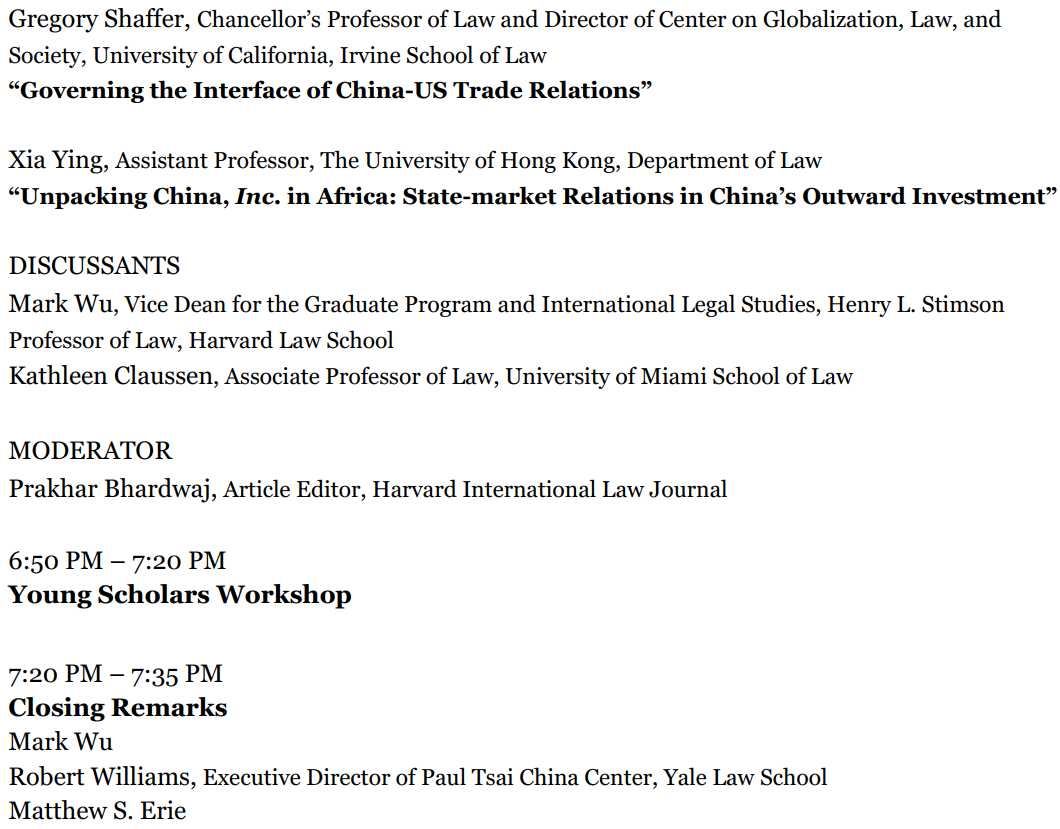
‘China and the International Legal Order’ Virtual Symposium

Thursday, October 15 on Zoom

5:00 – 7:30 PM EST

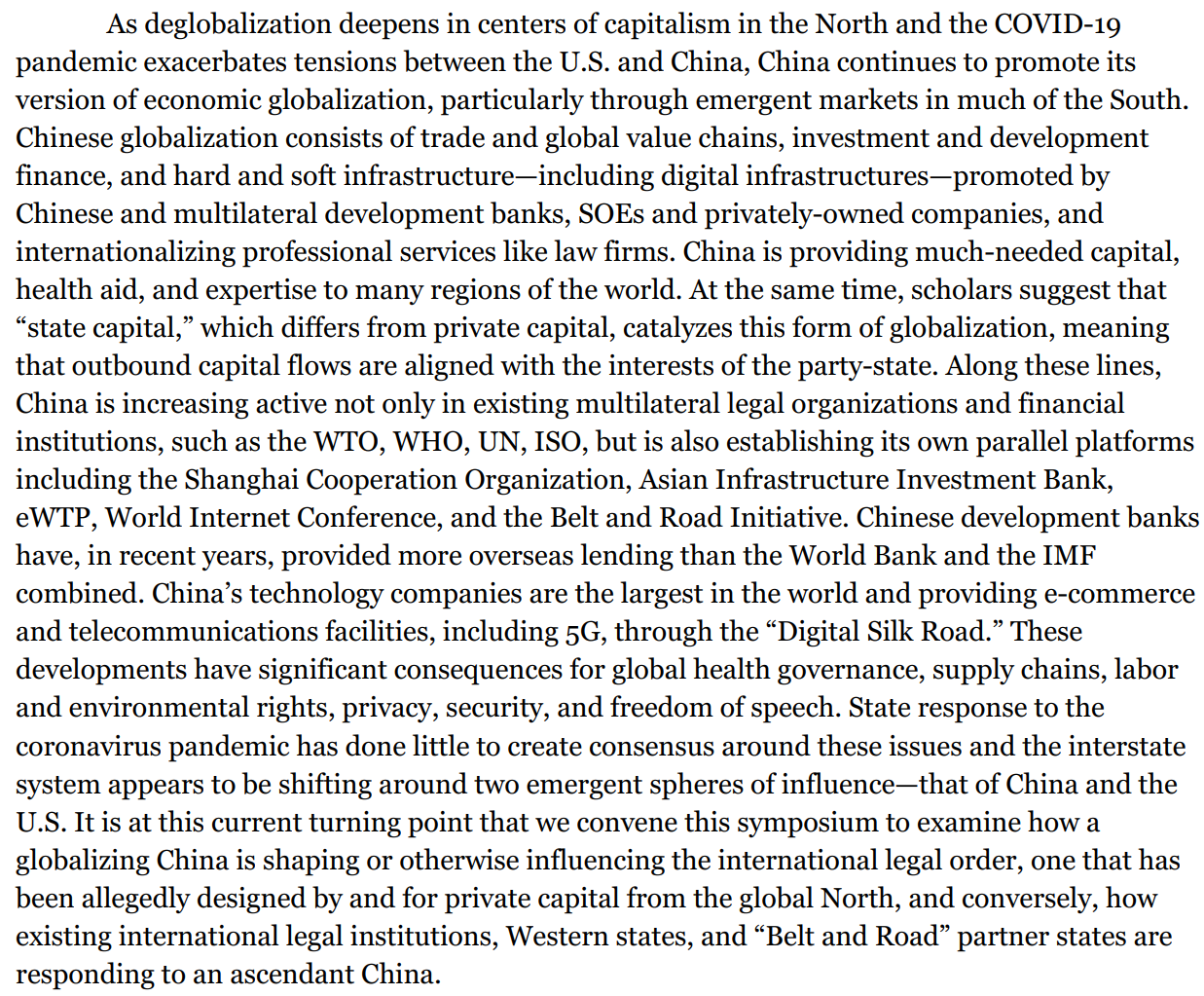
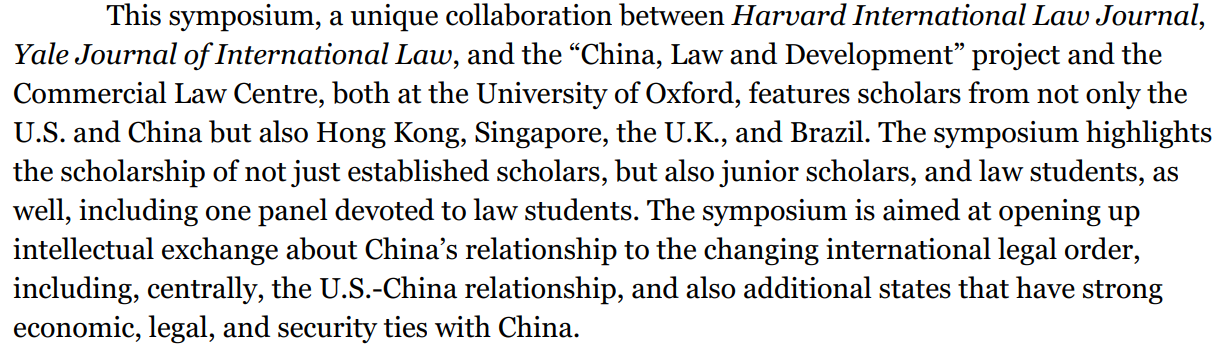
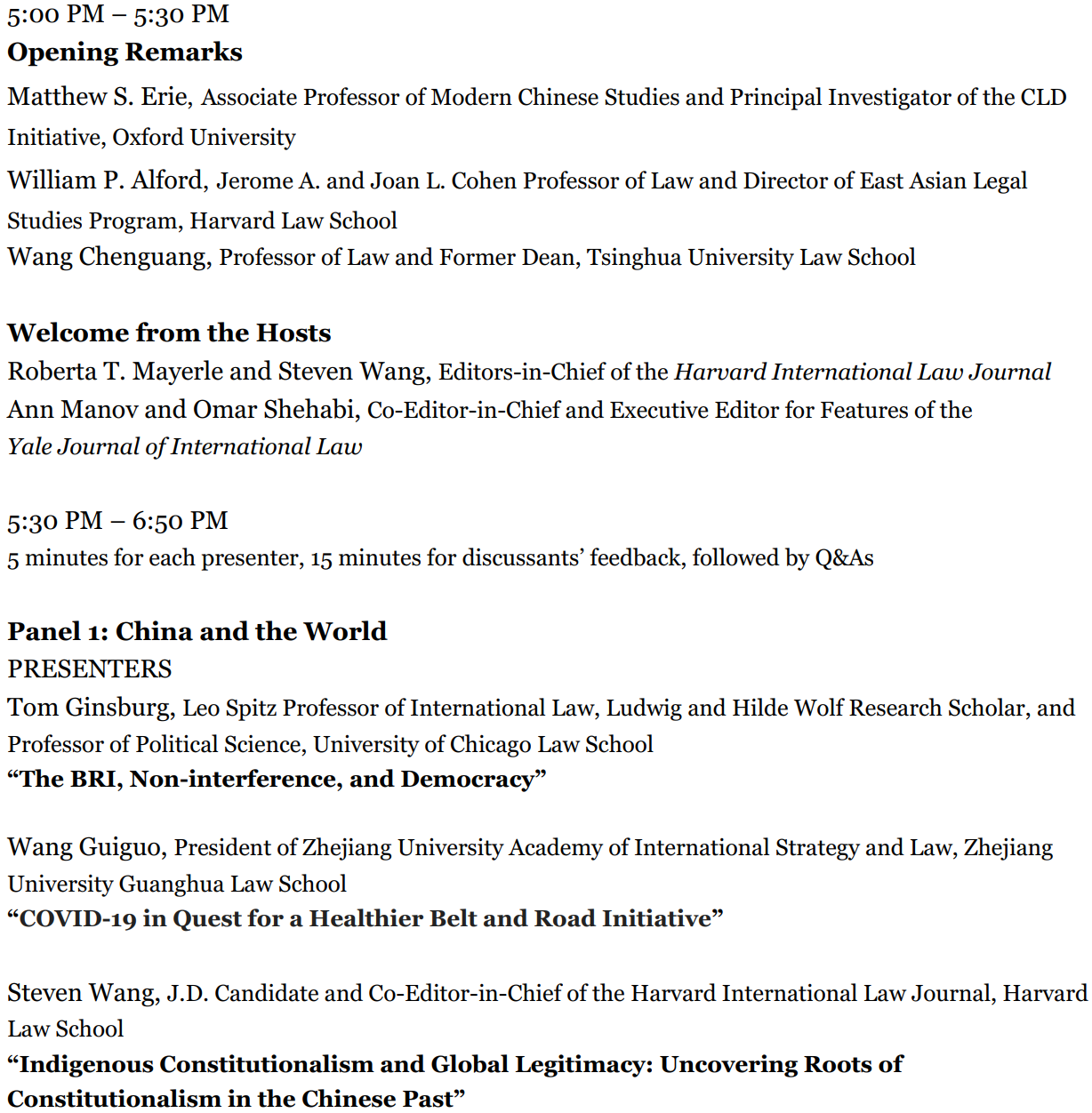
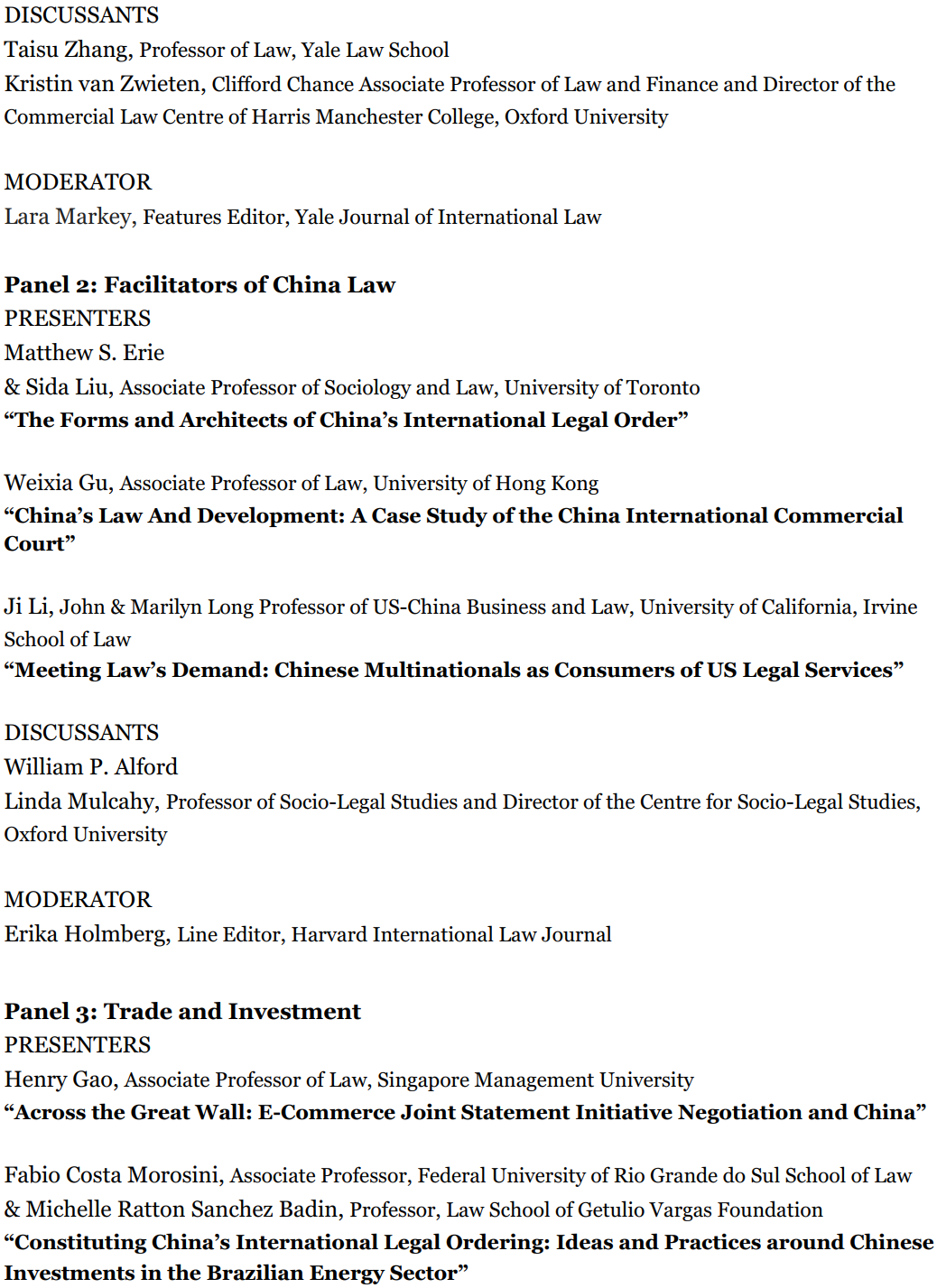
The ILJ Fall Symposium “China and the International Legal Order” will take place virtually on Thursday, October 15. This symposium is a unique collaboration between the Harvard International Law Journal, Yale Journal of International Law, and Oxford University’s “China, Law and Development” project and Commercial Law Centre. To register, please click here and provide your name, email address, affiliation, and job title (including student).

Online Scholarship, Perspectives

Speech Crimes and Persecution: Undoing the Legacy of Nahimana

Featured image ©OSeveno/WikimediaCommons.

By: Radhika Kapoor and Sharngan Aravindakshan

On the international accountability front, there presently exists an excellent opportunity for clarifying the scope and threshold for speech crimes in international criminal law. In late 2019, the International Criminal Court (“ICC”) authorized the ICC Prosecutor to proceed with investigating atrocities committed against the Rohingya population of Myanmar. In addition, the United Nations International Fact Finding Mission on Myanmar (“FFM”), in its 440-page report on large-scale violations by government forces in Myanmar, stressed the Myanmar government’s strategic and effective use of Facebook to spread hate against the Rohingya among the general populace. Given the emphasis placed on Facebook’s role in fanning the flames of anti-Rohingya hate, it is likely that the prosecution’s charges against the persons responsible will include at least one count of a speech crime, possibly including hate speech amounting to persecution. This article picks up the jurisprudential trail of persecutory speech as a crime against humanity (“CAH”) from the Nahimana Judgment by the Appeals Chamber of the International Criminal Tribunal for Rwanda (“ICTR”) and examines the soundness of its rationale. It then locates the existing standard for persecutory hate speech in the context of the Myanmar-Facebook issue, which instantly makes clear the deficiencies of Nahimana’s muddled legacy.

Nahimana’s Obfuscation

The ICTR Trial Chamber in Prosecutor v. Nahimana was required to determine whether hate speech (both simpliciter as well as speech accompanying calls for violence) might constitute the underlying actus reus for persecution as a CAH. The Trial Chamber held that it could, ruling that hate speech “targeting a population on the basis of ethnicity, or other discriminatory grounds” could constitute persecution (¶1072). Subsequently, the case reached the ICTR Appeals Chamber. In the years since that final ruling on hate speech as persecution, issued in 2007, the Nahimana Appeal has come to be considered a significant metric to assess hate speech as persecution. However, the Nahimana Appeals judgment failed to articulate a clear, replicable benchmark for hate speech as persecution in international criminal law, both by limiting itself to violations of particular fundamental rights and by misguidedly insisting on calls to violence.

Although the ICTR Statute does not define persecution as a CAH, a series of cases at the International Criminal Tribunal for the former Yugoslavia (“ICTY”) laid important foundations for identifying actions amounting to persecution as a crime against humanity.  For instance, the ICTY Trial Chamber in Tadić found that persecution ought to entail an act of discrimination that contravened an individual’s fundamental rights (as enshrined in customary and treaty law). Subsequently, the ICTY Trial Chamber in Kupreskić held that in addition to contravening fundamental rights, the act of persecution should also rise to a level of gravity that was similar to other CAH. This general definition—that persecution required a contravention of fundamental rights, rising to a level of gravity that was similar to other CAH—was accepted by the ICTY Appeals Chamber in Krnojelac, and later by the ICTR Appeals Chamber in Nahimana.

On applying this conception of persecution to the facts at hand, the Nahimana Appeal found that hate speech simpliciterand hate speech that incited violence, targeting a population on the basis of ethnicity or other discriminatory ground, violated the right to respect for dignity and the right to security, respectively (¶ 986). However, the Appeals Chamber also went on to state that “hate speech alone” might not violate a person’s rights to life, freedom, and physical integrity (¶ 986).

To be sure, there can be little dispute with this; not every instance of hate speech necessarily violates these three enumerated rights. But why did the Appeals Chamber class these rights separately from the fundamental rights to security and dignity? Presumably, the Appeals Chamber’s rationale was that violations of rights such as security and dignity would struggle to meet Kupreskić’s gravity threshold before being classified as persecution, while violations of more “serious” rights such as freedom and physical integrity would more easily cross that threshold. This is hinted at in the subsequent paragraph of the judgment, which explicitly questioned whether the violations of the fundamental rights of respect to dignity and security were “as serious” as the other CAH listed in the ICTR Statute (¶ 987). However, in the very same paragraph, the Appeals Chamber also recognized that it was the “cumulative effect” of all the underlying acts of the crime of persecution which must reach a level of gravity equivalent to that for other CAH (¶ 987), thereby doing away with any need to distinguish between the effect of violation of different fundamental rights, despite having so distinguished between them. Nowhere, in fact, did the Appeals Chamber justify its illusory, hierarchical differentiation between various fundamental rights.

Additionally, while assessing whether the speech in question satisfied Kupreskić’s “gravity” threshold, the Nahimana Appeals Chamber emphasized the physical impossibility of speech “in itself” successfully killing or physically harming persons (¶ 986). It is difficult to dispute this platitude; however, an insight into the Appeals Chamber’s reasoning can be found in the significance it placed upon the “calls for violence” that accompanied the speech in question to assess that it did, indeed, rise to the level required by Kupreskić. At the same time, the Appeals Chamber seemed skittish about the possibility of what it termed as “mere” hate speech rising to Kupreskić’s standard (¶ 987). The Appeals Chamber did not explain the reason for its forced differentiation between these two kinds of speech.

A Complicated Legacy

Contrary to the Nahimana Appeal Chamber’s insistence, persecution as a CAH does not have to “kill” or “injure” a person in order to attract criminal responsibility; its commission is complete if a fundamental right has been breached, on discriminatory grounds, with a level of gravity similar to other CAH. In any case, given the chapeau requirements of Article 3 of the ICTR Statute, any speech capable of amounting to persecution as a CAH must be “part of a widespread or systematic attack” against any civilian population on national, political, ethnic, racial, or religious grounds. This in effect automatically excludes isolated incidents of hate speech or hate speech not linked to mass violence. Creating an additional layer of differentiation between “mere” hate speech and hate speech calling is both incorrect and unnecessary for the purposes of persecutory speech as a CAH. As the Trial Chamber correctly pointed out, denigrating or dehumanising speech can also generate the requisite conditions conducive to large-scale attacks against the targeted population.

Regardless, the spectre of Nahimana continues to haunt international criminal jurisprudence. As recently as 2018, the Appeals Chamber for the International Residual Mechanism for Criminal Tribunals in Šešelj, after relying on the Nahimana Appeal, muddied the waters further by hinging its finding that there was no persecution upon whether the concerned speech had actually “incited violence” against the victims (¶ 163). Given that the crime of persecution does not – either statutorily or customarily – require a “physical element”, this trend is worrying.

The Nahimana Standard in Myanmar: Hate Speech on Facebook

Over the course of the past decade, senior officials and authorities in Myanmar disseminated inflammatory messages targeting Muslims—particularly members of the Rohingya community —through a variety of channels, including pamphlets, songs, print media, and social media.  Significantly, much of this hate speech was disseminated through Facebook. Accordingly, the FFM in its report paid particular attention to the official Facebook accounts of public authorities in Myanmar used to disseminate anti-Rohingya hate speech. These included the official Facebook pages of the Office of the Commander-in-Chief, the State Counsellor’s Information Committee, and the Ministry of Information.

The FFM identified a series of Facebook posts from official accounts implying that murdering non-Buddhists was a “small sin”; repeatedly referring to the Rohingya as “blood-thirsty Bengali terrorists,” illegal immigrants, “aliens,” and “extremists”; and accusing “Bengali terrorists” of “mass murder.” Note that the term “Bengali” is frequently invoked to imply—without basis—that the Rohingya are illegal aliens who do not belong to Myanmar. In its report, the FFM also highlighted various comments under these posts, which used similarly extreme anti-Rohingya language, including references to Islam as the “evil-religion [that would] disappear from our land one day,” and assertions that the Rohingya were “animals” while Rohingya women were dishonest, “unattractive [and] have bad hygiene.”

These posts and communications formed part of the Myanmar authorities’ overarching attempt to paint the Rohingya as a band of terrorists who posed an existential danger to Buddhist lives within Myanmar, paving the way for a military crackdown against the Rohingya in 2017. The FFM acknowledged this as well, finding anti-Rohingya hate speech to be linked to the larger, underlying theme of showing the existence of a “Muslim threat” to the “Buddhist character” of Myanmar.

That a large portion of this campaign of hate was executed on Facebook is not a coincidence. Facebook was already the primary medium for public communication, and Myanmar authorities would frequently rely on it to transmit official information to the public. The official Facebook account of the Office of the Commander-in-Chief had 2.9 million followers, the Ministry of Information had 1.3 million followers and the State Counsellor’s Information Committee had 400,000 followers. Facebook became an easy medium for both anti-Rohingya rhetoric as well as deliberate misinformation from official Myanmar mouthpieces. In a country where Facebook was so ubiquitous that it had come to be considered the Internet, incendiary posts by influential Myanmar authorities spread like wildfire.

It is noteworthy that the Myanmar authorities’ hate speech on Facebook may not have always called for violence or other forms of coercive action—although some certainly did. (Indeed, the authorities’ stratagem appears to have been to paint the Rohingya as violent, instead.) However, despite Nahimana’s indelible—yet unfounded—insistence to the contrary, the crime of hate speech as persecution does not require calls to violence or violations of one’s right to life and physical integrity. As the Appeals Chamber in Nahimana also recognized in principle but failed to incorporate into its findings, hate speech simpliciter—which is devoid of calls to violence—blatantly violated the right of the Rohingya community to dignity, thereby depriving them of a fundamental right enshrined in international law. Today, in the year 2020, it would be difficult for a reasonable trier of fact to deny that the cumulative upshot of the concerned acts, i.e., the various instances of hate speech disseminated by the Myanmar authorities on Facebook in the background of the ongoing and increasing violence against the Rohingya, was a key factor in creating the explosive atmosphere required for the mass, widespread violence against the Rohingya. Hate speech, when resulting in the deprivation of fundamental rights and on meeting the required gravity threshold, constitutes the crime of persecution as CAH. In Myanmar’s case, the government’s consistent anti-Rohingya rhetoric on Facebook to spread instantaneous and widespread racial hatred against the Rohingya should accordingly be tested on the anvil of this threshold. Hopefully, unlike Nahimana, this opportunity to clarify the law will not be missed.

[hr gap=”30″]

Online Scholarship, Perspectives

River Borders, Cartographic Aggression and International Law: An Analysis of the Kalapani Dispute

By: Mary Kavita Dominic

Since May 2020, tensions have been simmering between India and Nepal over the historically disputed territory of Kalapani. These tensions threaten to boil over with the Parliament of Nepal passing a Constitutional Amendment Bill that alters the country’s maps to include this strategically key area within its borders. This has been widely perceived as an act of cartographic aggression by Indian officials. As with any border dispute, it would be useful to unscramble this diplomatic standoff through a legal prism. Of particular import are some of the questions that this issue raises in connection with river boundaries and cartographic assertions.

Legal Staticity versus Geographic Dynamism

The Kalapani dispute is symptomatic of an egregious marriage between natural geographies and modern-day Westphalian states. The status of River Kali as a boundary river between India and Nepal lies at the heart of this dispute. The predisposition of these nation-states towards permanent sovereignty and clearly demarcated borders has been vexed by the indeterminacy and transitory nature of Kali.

In 1816, Kali was designated as the boundary river between India and Nepal in Article V of the Treaty of Sugauli. Concluded between the Kingdom of Gurkha (present-day Nepal) and the British East India Company, the treaty had identified the territory lying to the east of Kali as falling within Nepal’s sovereignty. In return, the King of Nepal had renounced all claims on the region lying to the west of the river.

What appeared to be a straightforward provision in this treaty, however, was rendered incongruous by the topography of Kali. It was asserted by Nepal that the source of Kali was located in the mountains near Limpiyadhura, which is higher in altitude than the rest of the river’s flow. In keeping with this reasoning, it laid claim to the land that stretched downwards from Limpiyadhura and extended to the East. Conversely, India contended that the source of the river was situated further east in Kalapani, a sliver of land wedged between the borders of India, Nepal, and the Tibetan Autonomous Region of China.

Intrinsic to this dispute, therefore, was the problem of identifying the main channel of Kali, which in turn had implications for delimiting the border between India and Nepal. In fact, this dilemma was not unique to the Kalapani dispute. With shifting climate patterns across the world, the dynamism of river boundaries has posed a challenge for international law.

Interpretation of River Border Treaties

International law is no stranger to the ambiguities posed by geographical features in boundary agreements. A case in point is the 2002 border dispute between Nigeria and Cameroon, where the International Court of Justice (“ICJ”) had to identify the mouth of the river Ebeji. Nigeria had claimed that the mouth of Ebeji had changed over time. Acknowledging that the river did not indeed have a single mouth, the court sought to settle this dispute by ascertaining the intention of the parties at the time of the border agreement and making use of maps to identify the location of the mouth of Ebeji (¶¶ 59–60).

Here, in a manner reminiscent of the Kalapani dispute, the parties had to grapple with the indeterminacy of river borders and the resulting ambiguities in a boundary agreement. While resolving this issue, the court found it fit to rely on the original intention of parties as well as cartographic evidence. Such an approach was typical of the “Intent School” of treaty interpretation, whereby emphasis was placed on the intention of the parties to the treaty.

In a similar vein, it might be useful to glean the original intention of the parties to the Treaty of Sugauli, since its terms are unclear as to the delineating river channel. Towards this end, examining the travaux préparatoires of this treatywould be an instructive resource. However, both India and Nepal are yet to furnish any evidence, cartographic or otherwise, that predate the treaty or qualify as its preparatory works. Instead, both states have chosen to rely on surveys and cartographic exercises undertaken after the conclusion of the Treaty.

For instance, Nepal has mostly cited topographic surveys published by the East India Company from 1820 to 1846. Additionally, its former director-general of the Department of Survey has drawn attention to maps prepared by the Survey of India from 1850 to 1856. For their part, Indian officials have also referred to a post-dated map for advancing their claims, namely an 1875 map drawn up by the British colonial government.

The logic behind this approach can be attributed to the teleological school of treaty interpretation. Arguably, under customary international law, subsequent practice of parties is prioritised as a primary source of treaty interpretation, over and above secondary sources such as travaux préparatoires. This position is also reflected in the Vienna Convention on the Law of Treaties (“VCLT”; see articles 31 and 32). Although India and Nepal have not yet ratified the VCLT, it would be in their interest to demonstrate that subsequent surveys and cartographic exercises in the Kalapani-Limpiyadhura region have shown the river boundary to be coextensive with their respective interpretations. Indeed, Nepal, which is a signatory to the VCLT and India, whose Supreme Court has affirmed the customary status of the VCLT, would have much to gain from citing maps as subsequent conduct that affirms their position in relation to the Treaty of Sugauli.

Against this backdrop, it must be pointed out that the 1875 map cited as evidence by the Indian authorities does not carry a Nepali certification. On the other hand, Nepal claims that the maps prepared between 1850 and 1856 were issued by the Survey of India with the participation of Nepali authorities. While this has been consistently denied by India, if it were to be proven otherwise, it might prima facie weaken India’s position. After all, a cooperative cartographic exercise would be better indicative of subsequent practice, as compared to the unilateral drafting of a map. This brings us to the next bone of contention, i.e., the evidentiary value of maps under international law.

Evidentiary Value of Maps

Maps have always figured prominently in territorial disputes. In the past, courts and tribunals were loath to place excessive reliance on them, particularly when they described territory of which the creators had little knowledge or when they were sketched in order to promote a country’s claims. In fact, maps were mostly treated as secondary or hearsay evidence with little or no value.

With the establishment of the ICJ, however, there arose cases where this question had to be settled more conclusively. In a 1953 case between the United Kingdom (“UK”) and France, where both states asserted sovereign claims over a group of islets and rocks, Judge Carneiro observed that the evidence supplied by maps was not always decisive in the settlement of legal questions relating to territorial sovereignty. Although it could constitute proof of the exercise of sovereignty, he opined that a more searching and specialized study would be required in order to decide which of the contending maps prevailed (Individual Opinion, ¶ 20).

This principle, however, appears to have undergone some dilution in two subsequent cases. In the Frontier Land case decided in 1959, the ICJ had to decide between contradictory documents that attributed two plots of land in the Belgo-Dutch Frontier to the states of Belgium and the Netherlands, respectively. The court held that the map of a Delimitation Commission which was incorporated by reference in a treaty, but was inconsistent with the text of the instrument, would prevail over the written provision (pp. 220, 225-226).

This was taken a step further in the Temple of Preah Vihear case, where the ICJ had to decide if the territory surrounding the ruins of the Temple of Preah Vihear fell within the sovereignty of Cambodia or Thailand. In this case, the relationship between the map and the treaty was far less direct than the Frontier Land Case. Nevertheless, the Court treated a map, not formally approved by a Delimitation Commission, as if it were part of the treaty. In the eyes of the majority, Thailand had, by her conduct or lack thereof, acquiesced in the map as representing the outcome of the delimitation (pp. 21-24).

Thus clearly, there has been a shift in the evidentiary value attributed to maps, particularly when delimitation disputes are involved. In the present case, there does not appear to be a map attached to the Treaty of Sugauli. Although there exists a Nepal-India Joint Technical Level Boundary Committee (“JTBC”) that issues boundary base maps, it has declared the Kalapani-Limpiyadhura region as beyond its capacity to resolve. It is in this context, where there is no consensus about the accurate map, that previously mentioned factors of treaty interpretation including intention, subsequent conduct, etc., become relevant in the political dialogue between India and Nepal.

Concluding Remarks

At the end of the day, this cartographic tussle over the source of a river exposes the land bias inherent in international law. As much as interstate disputes appear to concern the position of a river boundary, the true subject of the dispute is often land territory. Staying true to this principle, the differences over the origin of Kali is nothing but a territorial dispute over strategically important land, located at the trijunction of India, Nepal, and China.

In such a high-stakes territorial dispute, it is important that both India and Nepal resolve this amicably without falling foul of international law. With both sides accusing each other of unilateral or exclusionary acts, including the passing of a map in the Parliament of Nepal or India’s construction of a road on disputed territory, this objective stands frustrated. More regrettably, it undermines the spirit of the long-standing Treaty of Peace and Friendship between the two countries.

[hr gap=”30″]

Content, Online Scholarship, Perspectives

“Contracting Out” Human Rights in International Law: Schrems II and the Fundamental Flaws of U.S. Surveillance Law

By: Genna Churches and Monika Zalnieriute

Introduction

In the midst of COVID-19 pandemic, on July 16, 2020, the Court of Justice of the European Union (“CJEU”) in Luxembourg handed down a long-awaited judgement on international data transfers in the Schrems II case. The European Union (“EU”) Court found that U.S. law does not provide the “essentially equivalent” protection for personal data to that guaranteed by EU law, and therefore invalidated the key mechanism for EU-United States data transfers—this time known as Privacy Shield—for the second time in a decade. While the CJEU generally upheld the validity of another legal basis for international data transfers—Standard Contractual Clauses (“SCCs”), the Court also implied that these clauses are not an avenue for continued transfers of personal data from the EU to the United States.

Schrems II is a win for human rights in the EU and beyond, yet, the long-term political impact of this judgement in securing human rights in the digital economy is less certain in light of the $7.1 trillion transatlantic economic relationship at stake. Until now, U.S. companies, including Facebook, Amazon, and Google, have relied on private self-certifications schemes, such as Privacy Shield, to assure the EU of “essentially equivalent” protection for personal data of EU residents, despite the extensive scope of U.S. surveillance programs. The U.S. government maintains that the protection under its national security laws “meets” and “exceeds” the safeguards “in foreign jurisdictions, including Europe,”  suggesting that structural changes in the U.S. legal system are unlikely. Instead, the European Commission (“EC”) and U.S. Department of Commerce may soon carve out another solution for EU companies to “contract out” the protection for human rights where public authorities are unwilling to ensure it.

International Data Transfers and U.S. Surveillance Law:  Schrems I

Following the Edward Snowden revelations about mass surveillance programs in 2013, various privacy advocates in the EU opposed the exposure of their personal data to such regimes. Snowden revealed U.S. surveillance programs including PRISIM and UPSTREAM, which collect data directly from undersea cables or from providers. These programs were authorized by executive powers under the U.S. legal system and often failed to guarantee the basic constitutional rights for U.S. citizens, let alone foreigners. The long-running Schrems saga began when Austrian privacy activist, Maximillian Schrems, lodged one such complaint with the Irish Data Protection Commissioner (“DPC”) about Facebook Ireland’s transfer of data to the United States. His complaint highlighted the incompatibility of U.S. surveillance programs and existing EU law permitting transfers to the United States. Under EU law at the time, the EC’s Safe Harbor Decision created an arrangement where U.S. data importers could “self-certify” that they provided “essentially equivalent” to that guaranteed under EU law, including the protection of fundamental rights under the EU Charter of Fundamental Rights (“EUCFR”). Schrems challenged the adequacy of these arrangements in ensuring “essentially equivalent” protection in his complaint, which the DPC rejected. Schrems then took his complaint to the High Court of Ireland, which referred two questions to the CJEU in the case now known as Schrems I. In that case, the CJEU invalidated Safe Harbor, because it did not afford “essentially equivalent” protection for personal data to that guaranteed under EU law (¶¶ 98, 104–106).

Facebook and other companies then relied upon SCCs, a mechanism created under another EC adequacy decision (“SCC Decision”), which enabled data transfers where contractual arrangements could provide the “essentially equivalent” protection to that under the EU legal order. In 2015, the Irish DPC asked Schrems to reformulate his original complaint in light of the invalidation of Safe Harbor. The revised complaint focused on Facebook’s data transfers outside of the EU based on SCCs (Schrems II ¶¶ 151–153), claiming the reliance on SCCs could not be valid due to U.S. law obliging private companies to provide access to personal data to public authorities under U.S. surveillance programs. Following the reformulation of his complaint, the EC and U.S. officials replaced Safe Harbor with a new version of a “self-certification” regime for EU-United States data transfers—the EU-United States Privacy Shield.

Based on Schrems’ revised complaint, the DPC raised a number of questions before the High Court of Ireland, which then referred 11 questions to the CJEU in Schrems II. These questions turned the focus towards the suitability and validity of SCCs and, by inference, the validity of Privacy Shield under the General Data Protection Regulation (“GDPR”).

International Data Transfers Continued: Schrems II

The Schrems II judgement challenges the mechanisms for EU-United States personal data transfers based on fundamental inadequacy of U.S. law to ensure the “essentially equivalent” protection to that guaranteed by EU law. The CJEU found that in circumstances where adequate safeguards exist in third countries, or where contractual terms can provide the “essentially equivalent” protection to EU law, the use of SCCs is valid. The Court then chose to engage directly with the validity of EU-United States data transfers under Privacy Shield, finding it invalid due to the fundamental inadequacy of safeguards for personal data provided by U.S. law.

The CJEU first focused on the standard contractual clauses, finding the SCC Decision valid (¶ 105). However, the Court stressed that data controllers must assess the level of protection afforded across the agreed contractual clauses between the data controller and the third country importer/processor, any access by public authorities to the data, and the legal system of the third country (¶¶ 93, 105). The CJEU reiterated that the SCCs must afford appropriate safeguards, enforceable rights, and effective legal remedies (¶ 103), with data controllers/exporters obliged to act if there is a conflict between the SCCs and third country laws, including an incompatibility with national security laws, by suspending data flows (¶¶ 134–135). Where SCCs cannot provide an “essential equivalent” to EU law, and data controllers have not acted, the CJEU held that National Data Protection Authorities (“DPAs”) must suspend, limit, or even ban international data transfers (¶¶ 113, 121).

However, the CJEU held that DPAs cannot act to suspend, limit, or ban data transfers where there is an adequacy decision, such as Privacy Shield, in place. The Court asserted that DPAs “cannot adopt measures contrary to that decision, such as acts intended to determine with binding effect that the third country covered by it does not ensure an adequate level of protection” (¶ 118).  The CJEU noted that DPAs must still investigate complaints received, and if concerned about the equivalence of protection under an adequacy decision, bring an action before national courts questioning adequacy. If the national court agrees, it can make reference for a preliminary ruling on the validity of an adequacy decision in question (¶¶ 120, 121).

The CJEU then moved on to assess the adequacy of protection under U.S. law to determine the validity of the Privacy Shield. The Court held it invalid because of the largely unrestrained surveillance regime, a lack of redress under those regimes, and the lack of independence for the ombudsperson (¶ 199). Noting the EC can only make a decision on adequacy if the third country’s legislation provides all the necessary guarantees to ensure an adequate level of protection (¶¶ 129, 162, 167), the CJEU assessed the level of protection afforded by the United States. It found that U.S. surveillance regimes like PRISM and UPSTREAM which collect data directly from undersea cables or from providers like Google and Facebook, permitted under section 702 of the Foreign Intelligence Surveillance Act (“section 702 FISA”), were not limited to what was strictly necessary for the purposes of foreign intelligence. In particular, the legislation did not lay down any limitations or scope of the programs nor impose any minimum safeguards (¶¶ 179, 180). The CJEU also assessed the Presidential Policy Directive 28 (“PPD-28”—a response to the Snowden revelations attempting to restrain mass surveillance) and Executive Order 12333 (“EO-12333”—a 1981 order permitting expanded surveillance powers authorized by the executive), finding they did not grant actionable rights against U.S. authorities (¶¶ 181, 182, 184). The CJEU noted that the EU legal order provides a right to a hearing before an independent and impartial tribunal (article 47 of the EUCFR) (¶ 186), and that Privacy Shield created a specific role of an ombudsperson for EU data transfers. However, the Court held that surveillance programs based on section 702 FISA and EO-12333, even when read in conjunction with PPD-28, do not provide data subjects with actionable rights, leaving them with no effective remedy (¶ 192). The CJEU also highlighted a lack of independence in the oversight systems of Privacy Shield, as the role of the ombudsperson was related to the executive (¶ 195). Thus, the Court concluded that the Privacy Shield Decision could not provide an “essentially equivalent” protection for personal data to that guaranteed under the EU legal order and, therefore, was invalid (¶ 199).

So How Can Data Be Transferred to the United States Now?

After this pronouncement, many are asking how can data be lawfully transferred from the EU to the United States? The SCCs (and for that matter Binding Corporate Rules) are also unusable because the CJEU in Schrems II ruled that U.S. law—as a whole—does not provide adequate protection required under EU law for international data transfers. The Court partially answered this question: “transfers of personal data to third countries may take place in the absence of an adequacy decision under Article 45(3) of the GDPR or appropriate safeguards under Article 46 of the GDPR.” (¶ 202). In other words, the Court has not prohibited data transfers to the United States where “essentially equivalent” safeguards are provided.  However, data controllers and exporters now face the very real dilemma of having to contract for the impossible—to form contracts under SCCs or article 46 of the GDPR, which protect the rights of the data subject despite the scope of the U.S. surveillance programs. With the CJEU’s findings that because of the extensive U.S. surveillance regime, the United States does not afford essentially equivalent safeguards, and confirmation that SCCs cannot bind a public authority in the third country (¶¶ 123, 125), it now appears impossible to transfer data lawfully from the EU to the United States. Some commentators suggest that not all organizations are subject to the U.S. surveillance regime. However, given the scope of the surveillance programs, as discussed by the CJEU, and the possibility of surveillance access even before the data reaches the data importer, such as through the “tapping” of undersea cables (¶¶ 62–63), the adequacy of protection from surveillance by any company is doubtful.

Will “Contracting Out” Human Rights to the United States Be Possible?

In light of the fundamental inadequacy of U.S. surveillance law to guarantee the level protection required by EU law, the remaining avenue for data transfers points to the use of contracts under the SCC Decision. Contractual obligations between businesses can play a role in protecting human rights in international law, for example in ensuring workers are protected in supply chains and offshore manufacturing. However, these contracts do not bind the government or public authorities in foreign countries, and the local laws in those countries may still over-ride contractual terms. Therefore, contractual clauses to protect data transferred to the United States will not be adequate because of the extensive surveillance powers granted to public authorities under the U.S. legal system, which can easily override those clauses.

The U.S. surveillance regime shows no sign of contracting. Often, as the CJEU found, there is little specific legislation which limits foreign surveillance programs, instead, they are authorized by a supervisory body or through executive order. While the EU Parliament called to overhaul the U.S. foreign surveillance regime following the Snowden revelations, calls for amendment in the United States were reinvigorated in late 2019 following reported breaches of section 702 FISA. However, proposed reforms have now stalled. With U.S. comments in response to Schrems II that the U.S. safeguards for data protection under national security programs “meets” or “exceeds” those in European jurisdictions, the stalemate between the EU and the United States is set to continue.

The use of SCCs in light of the scope of the U.S. surveillance framework places an impossible burden on data controllers to attempt to “contract out” the protection of human rights. The Berlin DPC has already issued advice to data controllers to cease EU-United States transfers, reinforcing the importance of a valid legal basis for data transfers. Fines for breaching the GDPR can be up to four percent of a company’s global revenue. The CJEU was clear that the DPAs are obliged to act against unlawful transfers, so it seems a risky business for private companies to keep doing “business as usual” after Schrems II. “Contracting out” human rights protection will simply not work for the CJEU, where the local laws in third countries, such as the United States, fundamentally violate those rights.

Conclusion

Schrems II has lived up to the hype—the decision will have far reaching effects. In response to the judgement, the EC could act quick to negotiate another agreement with the U.S. counterparts, just like it did earlier with the Safe Harbor and Privacy Shield, again authorizing data flows to the United States. However, without changes in the U.S. surveillance regime, we can be certain that any future adequacy decisions will be challenged by privacy advocates, costing DPAs millions of Euros in further court costs. Similarly, attempts to “contract out” human rights protection under SCCs, given the inability of the United States to provide “essentially equivalent” protection, expose data controllers to fines under the GDPR. Yet, the high stakes of the transatlantic economy weaken the EU position, while the bargaining power of the United States suggests that structural changes—that would bring the United States in line with “essential equivalence”—are unlikely any time soon. Failing U.S. changes, tech companies might have to process personal data in Europe, as legally “contracting out” protection for human rights might be next to impossible.

[hr gap=”30″]

Content, Essays, Online Scholarship

Envisioning Foundations for the Law of the Belt and Road Initiative: Rule of Law and Dispute Resolution Challenges

By: Malik R. Dahlan

Abstract: China’s Belt and Road Initiative (“BRI”) is the largest transnational program of infrastructure investments in the world today. Works carried out under the rubric of BRI is expected to amount to several trillion United States (“U.S.”) Dollars by the 2030s and to take place in over 65 countries. This raises the question of how project disputes that arise with works carried out under the BRI will be settled, and whether a multilateral legal regime will arise to affect those settlements as an alternative to the usual methods of resolving investment disputes and enforcing international arbitration clauses supported by intergovernmental investment treaties. This Essay examines the increasing challenges facing investors and states given the lack of an overriding BRI authority nor multilateral framework. It seeks to provide a deeper legal understanding of how dispute resolution is carried out now; it further argues that the BRI will in time give rise to new legal norms and institutions, the outlines of which are already visible. One essential development will be the creation of a dispute resolution regime that responds to the array of challenges posed by projects carried out under the BRI badge, which may not be compatible with traditional dispute resolution mechanisms—most notably, investor–state dispute settlement.

[Click here for PDF]

Introduction

President Xi Jinping laid out the concept of the Belt and Road Initiative (“BRI”) as a connector between cultures on the Eurasian landmass in 2013. The aim, he said, was to establish an “interest,” a “destiny” and “liability” community through existing bilateral or multilateral mechanisms and regional cooperation platforms. The goals were to promote bilateral cooperation, form collaborative relations with other developed countries, and utilize existing multilateral institutions in new ways.

To the best of our knowledge, no national nor international legal instrument has been established to indicate the legal nature of the BRI. One can trace some declaratory origins in the 2015 “Vision and Actions” to Promote the Co-Construction of a “Silk Road Economic Belt” and a “21st-Century Maritime Silk Road” (the “B&R Document”) and working reports presented at the National People’s Congress, and a series of related speeches delivered by Chinese authorities on occasions. However, the B&R Document is best seen as a kind of guidance,1“Soft law” refers to a quasi-legal instrument that doesn’t carry any legally binding force, or whose legally binding force is weaker than that of traditional laws and regulations. as well as a form of proclamation paper.  In 2017, at the inaugural Belt and Road Forum, another explanatory policy document, “Building the Belt and Road: Concept, Practice and China’s Contribution” (the “B&R CPCC”) was issued by the Office of the Leading Group for the BRI. The B&R CPCC is explicit in stating the cooperation goals, the focus on bilateralism, the importance of collaboration with other developed countries and the utilization of existing multilateral institutions, among other principles. In the words of one Chinese academic, the BRI is a “partnership-based approach,” which puts the emphasis on bilateral cooperation. This is fundamentally different from the usual basis of international economic cooperation carried out under multilateral treaties or shared rule-of-law principles. Some have gone as far as to argue that the vague legal status of the BRI might be one of its strengths, since soft law common aims are much easier to negotiate and agree upon than hard law treaties. This may help to alleviate concerns of the BRI Participating Members about doing business with a partner with China’s economic weight. It also suggests that China is learning by doing. How are disputes between contracting parties to BRI projects to be resolved? At present, the BRI is more a “grand strategy” than a coherent international program of investment overseen by overarching institutions. Rather, a particular program of Chinese investments in a particular country takes place as an ad hoc project or within the framework of an intergovernmental bilateral investment treaty (“BIT”) that does not provide a granular conceptualization of a rule of law construction or say how exactly conflicts are to be resolved on individual projects funded by Chinese investments. In particular, the BRI lacks: (1) a multilateral treaty covering all participating nation states; (2) a secretariat or other central body to standardize projects and provide a forum for deliberation and development; or (3) a dispute resolution system that offers an acceptable level of legal certainty.

Thus far, China has not provided legal determinacy in any theoretical context familiar to Western academia. Nor has the question of whether the BRI can continue to rely on existing legal instruments, or whether it requires its own institutional or legal arrangements, received much attention in the legal literature.

An added complication is the increasingly polarized international trade relations, within which BRI projects are taking place, particularly in Asia and Africa, where they are often portrayed as an expression of China’s attempts to gain influence, or even hegemony, over particular countries and regions. This polarization has, of course, been accelerated by the effects of the COVID-19 pandemic on the political economy of global trade and investment and has led to a further deterioration of relations between China and the United States (“U.S.”), with the latter still developing a clear articulation of its policy towards China. The breakdown in multilateralism and cooperation between the U.S. and China, which has disrupted investment and global supply-chains, adds extra political risk to many projects. It also places yet more emphasis on the need for legal certainty through dispute resolution.

At present, the designation of a project as “belonging” to the BRI does not have a great deal of substantive meaning beyond providing an incentive for China’s banks to provide it with funding. BRI schemes do not have to relate to the improvement of Eurasian trade routes, since a number of schemes have been carried out in Latin America. On the other hand, some projects, such as the $64 billion China–Pakistan Economic Corridor (“CPEC”), relate to vital geopolitical needs. In the first section of this Essay we put forward some reasons why the BRI should develop a more cohesive identity, above all through the implementation of a common framework of rules to resolve disputes. In the two sections that follow, we look at what that framework will be. In section two we argue that the use of mediation will increasingly replace international arbitration as the dispute resolution method “written in” to BRI contracts—a significant change to present practices. In section three we detail and evaluate Beijing’s attempts to establish an international commercial court system, following the example of the Delaware Court of Chancery and the London Commercial Court—but with Chinese characteristics.

I. The Urgent Need for an Overall Dispute Resolution Mechanism

The previous considerations may help us understand what makes a dialogic process attractive and what makes it unworthy. More specifically, those considerations may help us recognize what kind of dialogue could result worth pursuing in the area of International Human Rights Law. In what follows, I shall briefly illustrate these claims through three examples taken from the The Judicialization of Peace article.

At present, there is no set terms of BRI global engagement (accession) nor the mechanism to resolve disputes that arise out of such engagement. The use of national courts is possible, of course, but since BRI projects take place in countries with common law, continental, and Islamic hybrid legal traditions, many parties unfamiliar with these legal jurisdictions will be understandably nervous about allowing courts to safeguard their interests. The differences in Participating Members’ political, economic, and cultural environments mean that disputes could be resolved through a variety of mechanisms, which may lead to different outcomes for the same kinds of disputes. There is also a question of how experienced national systems are in handling large and complex construction cases. Projects carried out under the BRI mainly take the form of large-scale infrastructure ventures, so disputes can arise from a number of routes, such as market entry, the construction and financing of projects, and the implementation and coordination of environmental standards. Complications arise from the scale of projects, their many stakeholders (which may include the parties to the construction contract, the lender, the guarantor, and the host government), the complex technical issues thrown up by the construction process, and the operation of trade and maritime rules once the asset has been commissioned.

Meanwhile, and aside from the ongoing U.S.–China “trade wars,” challenges in establishing an effective dispute resolution mechanism are ever increasing with high stakes for wider conflict. These include time-consuming processes, a lack of transparency in decisions, dangers to state sovereignty, the high costs of international arbitration, and the inadequacy of the dispute resolution mechanism provided by the World Trade Organization (“WTO”).2In accordance with the “Vision and Actions on Jointly Building Silk Road Economic Belt and 21st-Century Maritime Silk Road” (III. Framework), “The Belt and Road Initiative is a way for win-win cooperation that promotes common development and prosperity and a road towards peace and friendship by enhancing mutual understanding and trust and strengthening all-round exchanges.” From the middle to long term perspective, disputes with respect to manufacture and trade of products and services will inevitably arise, under which situation the WTO rules will play a role. For example, the rules of the WTO provide a guide to resolving trade disputes but they are not always clearly applicable, partly because of sector coverage and the nature of the parties (i.e. states). This means that WTO rules cannot fully resolve disputes between Participating Members, especially those that are not members of the WTO.3For example, Turkmenistan, Uzbekistan, Afghanistan, Azerbaijan, Bahrain, Iran, Iraq, Lebanon, and Syria are not member states of the WTO.

Another channel for dispute4Please note that the “dispute” here refers to that between foreign investor(s) and the host country. resolution is provided by investor–state dispute settlement (“ISDS”) provisions, which are found in BITs or free trade agreements (“FTAs”). However, to date, China has yet to sign investment agreements with 12 of the countries along the Belt and Road.5The 12 countries include East Timor, Bangladesh, Afghanistan, Nepal, Maldives, the Kingdom of Bhutan, Iraq, Jordan, Pakistan, Latvia, Bosnia and Herzegovina, and the Republic of Montenegro. In the more than 30 BITs that China has concluded with Participating Members, the ISDS provisions only applied to compensation in the event of expropriation.6The more than 30 countries include some of the most important host countries for Chinese investors, such as the People’s Republic of Mongolia, the United Arab Emirates, Turkey, and Kazakhstan. As a result, the investor–state arbitration mechanisms are not applicable if the host country violated other provisions of the BIT, such as the principle of fair and equitable treatment.

The reluctance of parties to submit their disputes to national courts has led to a preference for writing arbitration clauses into international investment contracts. In terms of enforcement, among all the Participating Members of the BRI, around 60 are contracting parties of the “Convention on the Recognition and Enforcement of Foreign Arbitral Awards” (the “New York Convention”). This allows arbitration awards from a tribunal in a signatory state to be enforced in any of the others, and some 92% of states involved with BRI projects are members of the New York Convention. As a result, international arbitration is the resolution mechanism of choice for many parties with complex, high-cost, high-risk projects. The question is whether international arbitration will remain so in the future, or whether BRI will lead to the rise of another legal system, with more pronounced Chinese characteristics.

Today, the legal protection for foreign direct investment (“FDI”) under public international law is guaranteed not by a multilateral framework but by a network of more than 3,000 BITs. Most of these legal instruments provide foreign investors with substantive legal protection (including the right to “fair and equitable treatment,” “full protection and security,” “free transfer of means,” and the right not to be directly or indirectly expropriated without full compensation) and access to ISDS for redress against Host States for breaches of such protection. But what about the protections for the Host States that sit across Chinese investors at the negotiation table?

Firstly, problems arise if the Host State wishes to have a foreign judgment enforced in a Chinese court. Until July 2019, in practice, there were only two ways for the Chinese people’s courts to recognize and enforce such rulings: namely, bilateral judicial assistance treaties or the application of the reciprocity principle.7Minshi Susong Fa (民事诉讼法) [Civil Procedure Law] (promulgated by the Standing Comm. Nat’l People’s Cong., Apr. 9, 1991, amended June 27, 2017, effective July 1, 2017), art. 280. In the case of the former, China has signed BITs with almost 40 countries.8China has signed civil and commercial judicial assistance BITs with 39 countries, 37 among which have come into effect. As for the 37 effective BITs, four do not have provision with respect to recognition and enforcement of foreign judgements, which are those signed between China and Singapore, Korea, Thailand, as well as Belgium.  However, these do not include some of those with which it has the close economic relationships, such as the U.S., Singapore, and South Korea. Among the more than 65 Participating Members of the BRI, fewer than 10 have signed civil (commercial) judicial assistance treaties with China. In other words, domestic judgments or decrees will neither be recognized nor enforced by other BRI Participating Members in most circumstances. As for the latter, only a few foreign judgments have been recognized and enforced in accordance with the reciprocity principle,9For example, the Intermediate People’s Court of Nanjing recognized and enforced judgement made by the High Court of Singapore in Kolmar v. SUTEX in 2016, since the High Court of Singapore recognized and enforced a Chinese judgement regarding the case Giant Light Metal Technology (Kunshan) Co Ltd v. Aksa Far East Pte Ltd in 2014. In 2017, the Intermediate People’s Court of Wuhan recognized and enforced a U.S. judgement with respect to the case Liu Li v. Tao Li and Tong Wu. Jie (Jeanne) Huang, Reciprocal Recognition and Enforcement of Foreign Judgments in China: Promising Developments, Prospective Challenges and Proposed Solutions, U. Sydney L. Sch. Legal Stud. Res. Paper Series, Mar. 2019, at 3–5. because of the “factual reciprocity” requirement. This means that Chinese courts only consider recognizing and enforcing foreign judgments when courts from the applying country have previously recognized and enforced judgement made by Chinese courts. With the deepening and evolution of the BRI, these two methods are clearly unable to the meet the requirements of the Chinese economy.10What’s worth mentioning is that, against the background of the BRI, there is a trend in facilitating recognizing and enforcing foreign judgements by Chinese people’s courts. For example, in accordance with Article 7 of the Nanning Declaration at the 2nd China-ASEAN Justice Forum, “[i]n countries that have not yet concluded international treaties of recognizing and enforcing foreign civil and commercial judgments, if there is no precedent for refusing to recognize and enforce civil commercial judgments on the grounds of reciprocity in the judicial process of recognizing and enforcing the country’s civil and commercial judgments, within the scope permitted by the law in China, it can be presumed that there is a reciprocal relationship between each other.” The Nanning Declaration at the 2nd China-ASEAN Justice Forum, China Int. Com. Ct., http://cicc.court.gov.cn/html/1/219/208/209/800.html (last visited July 26, 2020). In the future, parties may also have recourse to the Hague Choice of Court Convention, which would allow for the recognition and enforcement of court decisions in a way analogous to the New York Convention. At present, China, like the U.S., has signed but not ratified the convention. This is discussed in more detail below.

Secondly, Participating Members of the BRI institutionalize and explain international rules differently. Normative and practical approaches to the legal and regulatory frameworks are often divergent and mismatched. Therefore, it is becoming clear that current dispute resolution mechanisms cannot match the distinct development and nature of the BRI and its diverse composition. We also note that, given the nature of the BRI and the cultural and sociopolitical characteristics of the Chinese approach to dispute resolution, any approach that does not include soft dispute resolution mechanisms such as mediation or dispute boards will be problematic.

The absence of an institutionally established dispute resolution system, soft or hard, will pose problems for the overall success of the BRI and its underlying raison d’être. Without a neutral means to resolve disputes, and a way of integrating that with a coherent set of legal principles accepted by the Participating Members, any decision reached by Chinese courts, or by courts in the country where the project is located, risks being seen as prejudiced by national interests or the interests of national companies.

II. The Rise of Mediation

For international construction projects, arbitration is presently seen as the best available process for resolving disputes. As a recent report by Queen Mary University London and Pinsent Masons puts it, the combination of “neutrality, confidentiality, flexibility and [the] commercial nature of the process along with the facility to choose who will determine their dispute are paramount factors that continue to influence their selection of arbitration.” As a result, 71% of the survey’s sample of international disputes went to arbitration. Nevertheless, this dispute resolution method is inevitably lengthy, expensive, and just as adversarial as a court case.

It is likely that if the BRI gives rise to a global facilitative method of dispute resolution, it will include the incorporation of mediation, rather than arbitration, clauses. This is partly because mediation implies mutual compromise rather than maximal evaluative claims, so there is a cultural “fit” with Chinese notions of restoring “harmony.” More practically, mediation is quick compared with arbitration and offers a better chance of preserving commercial relationships than arbitral awards, which are often winner-take-all and may have the added sting of a costly award.

This likelihood is also suggested by recent developments in China: the Chinese People’s Court has promoted mediation in its “Opinions of the Supreme People’s Court (“SPC”) on Further Deepening the Reform of the Diversified Dispute Resolution Mechanism of the People’s Courts” and “Provisions of the SPC on Invited Mediation by the People’s Courts” promulgated in June 2016.

This is further evidenced by the speed with which the Chinese government signed the United Nations Convention on International Settlement Agreements resulting from Mediation (the “Singapore Convention”), which is due to enter into force in September 2020. China was one of the first countries to sign, in August 2019, along with the U.S., India and Singapore. The convention will provide a legal basis for the right to invoke and enforce settlement agreements resulting from mediation and may give greater confidence to the parties that mediation offers them a sufficiently robust alternative to arbitration.

A third indication is the memorandum of understanding that was signed on January 24, 2019 by the Singapore International Mediation Center and the China Council for the Promotion of International Trade. This established a panel of mediators tasked with the resolution of BRI disputes. The International Chamber of Commerce (“ICC”) has also established a commission and published mediation guidance specifically for the BRI.

Finally, the wider legal environment is becoming more accepting of mediation as a way of handling large, complex claims. For example, the International Bar Association (“IBA”) Rules on Investor­–State Mediation now provides a legal framework for mediation in the investor–state (“IS”) context. Mediation has also been included in free trade and investment agreements,11Anna Joubin-Bret & Barton Legum, A Set of Rules Dedicated to Investor–State Mediation: The IBA Investor–State Mediation Rules, 29 ICSID Rev. Foreign Inv. L.J. 17 (2014). such as the EU–Canada Comprehensive Economic and Trade Agreement and the Trans-Pacific Partnership, and it also features in some BITs.12For example, the Thailand Bilateral Investment Treaties. In July 2016, the intergovernmental Energy Charter Conference (“ECT”) published a Guide on Investment Mediation to lead governments and companies in the energy sector through the mediation process, and the International Center for Settlement of Investment Disputes (“ICSID”) has also embraced mediation as part of its dispute resolution process, recognizing that its traditional conciliation process too closely mirrors arbitration and that a more pragmatic approach is needed.13ICSID has joined the ECT and the Center for Effective Dispute Resolution (“CEDR”) in running mediation programs for IS Mediators, recognizing that special knowledge and skills are needed for mediation in the ISDS context. Wolf von Kumberg, Jeremy Lack & Michael Leathes, Enabling Early Settlement in Investor–State Arbitration, The Time to Introduce Mediation Has Come, 29 ICSID Rev. Foreign Inv. L.J. 133, 136 (2014) (“Conciliation is a non-binding form of arbitration.”); 2 ICSID, History of the ICSID Convention: Documents Concerning the Origin and the Formulation of the Convention on the Settlement of Investment Disputes between States and Nationals of Other States 413 (1968, reprt. 2009) (“conciliation [under the ICSID Convention] could in certain cases be a disguised form of arbitration.”); Frauke Nitschke, The ICSID Conciliation Rules in Practice, in Mediation in International Commercial and Investment Disputes 3, 4–5 (Catharine Titi & Katia Fach Gómes eds., 2018).

Putting all this together, it seems advisable for participants and consultants involved in BRI-badged schemes to familiarize themselves with the mediation process and the strategies that parties can adopt when they undergo it. However, unlike arbitration, there is no guarantee that the process will lead to a definite result, so there has to be a hard law process to deal with unresolved cases. This is where China’s domestic court system may play an increasingly important role.

III. The China International Commercial Court (“CICC”)

On January 23, 2018, the Communist Party’s Leading Group for Deepening Overall Reform proposed the establishment of a BRI Dispute Resolution Mechanism and Institution by means of international commercial courts. These have since been set up in Xi’an and Shenzhen and have commenced operation. The court in Xi’an deals with disputes involving the “silk economic belt,” and Shenzhen handles disputes arising from the “maritime silk road.”

Following the example of the Singapore International Commercial Court, among others, the aim is to establish a mechanism that offers a choice between litigation, arbitration and mediation—a “one-stop-shop” dispute resolution mechanism that will work with international commercial mediation and arbitration institutions such as the WTO, the Asia International Arbitration Center, and so on.14As regards what international dispute resolution institutes have been included, please find more details below. The general aims is to bring a new internationalism and openness to the Chinese domestic legal system; the specific goal is to devise a Chinese mechanism for the mutual recognition and enforcement of judgments, thereby helping, it is hoped, to achieve the paramount aim of laying the foundations of a legal system throughout the BRI area.

The CICC hears cases that have “significant nationwide impact,” such those that involve the unification of international adjudication standards, have great social impact, or are significant in interpreting international treaties and rules. To increase the capacity of the courts, the system includes five international commercial arbitration institutions and two international commercial mediation institutions, including:

  • The China International Economic and Trade Arbitration Commission (“CIETAC”)
  • The Shanghai International Economic and Trade Arbitration Commission
  • The Shenzhen Court of International Arbitration
  • The Beijing Arbitration Commission
  • The China Maritime Arbitration Commission
  • The Mediation Center of China Council for the Promotion of International Trade, and
  • The Shanghai Commercial Mediation Center

We should note that these institutions are essentially Chinese, located in China and act as branches of the Supreme People’s Court in Beijing. In order to enhance the international appeal of this nascent system, it would be advisable to include international commercial mediation and arbitration institutions from other jurisdictions when this list is expanded in the future.15Mark Feldman, A Belt and Road Dispute Settlement Regime, remarks at the United States Department of State on Belt and Road Dispute Resolution 14–17 (June 13, 2019).

Although the CICC has been described as “China’s Belt and Road court,” the jurisdiction of the CICC is not limited to disputes related to BRI. The CICC will deal with any trade and investment disputes over a threshold value of about $50 million,16Provisions of the Supreme People’s Court on Several Issues Regarding the Establishment of the International Commercial Court, China Int. Com. Ct., http://cicc.court.gov.cn/html/1/219/208/210/817.html (last visited July 26, 2020), art. 2 (“The International Commercial Court accepts the following cases: (1) first instance international commercial cases in which the parties have chosen the jurisdiction of the Supreme People’s Court according to Article 34 of the Civil Procedure Law, with an amount in dispute of at least 300,000,000 Chinese yuan; (2) first instance international commercial cases which are subject to the jurisdiction of the higher people’s courts who nonetheless consider that the cases should be tried by the Supreme People’s Court for which permission has been obtained; (3) first instance international commercial cases that have a nationwide significant impact; (4) cases involving applications for preservation measures in arbitration, for setting aside or enforcement of international commercial arbitration awards according to Article 14 of these Provisions; (5) other international commercial cases that the Supreme People’s Court considers appropriate to be tried by the International Commercial Court.”). but may only hear commercial cases when one or both parties are foreigners, stateless persons, foreign enterprises, or other organization.17Id. art. 3 (“A commercial case with one of the following situations can be regarded as an international commercial case under these Provisions: (a) one or both parties are foreigners, stateless persons, foreign enterprises or other organizations; (b) one or both parties have their habitual residence outside the territory of the People’s Republic of China; (c) the object in dispute is outside the territory of the People’s Republic of China; (d) legal facts that create, change, or terminate the commercial relationship have taken place outside the territory of the People’s Republic of China.”); The State Council Information Office Held a Press Conference on the “Opinion on the Establishment of The Belt and Road International Commercial Dispute Settlement Mechanism and Institutions, China Int. Com. Ct., http://cicc.court.gov.cn/html/1/219/208/210/769.html (last visited July 26, 2020) (“[I]nternational Commercial Courts will primarily accept international commercial disputes that arise between equal commercial entities … we have excluded two other types of cases: the trade or investment disputes between countries, and investment disputes between the host country and the investor. These two categories are settled in accordance with existing international dispute settlement rules.”). That said, they will perform a number of important functions for the BRI projects. As noted by Mark Feldman, the CICC will provide fair and impartial dispute resolution services by pursuing a party consent-based model,18Feldman, supra note 15, at 19–30. Feldman observes that “Provisions of the Supreme People’s Court on Several Issues Regarding the Establishment of the International Commercial Court” “sets out both consent-based and compulsory forms of jurisdiction.” To be more specific, in accordance with Article 11(2), “[t]he International Commercial Court supports parties to settle their international commercial disputes by choosing the approach they consider appropriate through the dispute resolution platform on which mediation, arbitration and litigation are efficiently linked.” thereby advancing the CICC’s ambition to build a reputation for impartiality and to extend its international influence, as well as establishing the International Commercial Dispute Prevention and Settlement Organization.19List of Deliverables of the Second Belt and Road Forum for International Cooperation, Ministry Foreign Aff. China, https://www.fmprc.gov.cn/mfa_eng/zxxx_662805/t1658767.shtml (last visited July 26, 2020), ¶ III(11) (“The China Council for the Promotion of International Trade, China Chamber of International Commerce, together with the industrial and commercial organizations and legal service agencies from over 30 countries and regions including the European Union, Italy, Singapore, Russia, Belgium, Mexico, Malaysia, Poland, Bulgaria and Myanmar jointly established the International Commercial Dispute Prevention and Settlement Organization (ICDPASO).”).

From the point of view of Chinese investors, the CICC offers a way to avoid the involvement of the courts in the country in which the project takes place, particularly if the host country has not yet developed a sophisticated commercial legal code. Rather, they will have access to proceedings carried out in accordance with Chinese civil law and in the Chinese language, with judges drawn from Chinese courts. The judgments will have the status of SPC judgments and be final, subject to an appeal to the Number Four Civil Division for a retrial.

From the point of view of the Chinese authorities, the CICC offers a means to establish the reputation of Chinese dispute resolution among foreign litigants, thereby providing an alternative to Western arbitral tribunals. It also provides a training ground for the Chinese personnel in the application of international legal principles,20Such as neutrality, fairness, justice, and transparency. The principle of party autonomy is a core principle in party-centered commercial activities. Parties are free to choose to submit disputes to a national court or an international platform. both from contact with the International Commercial Expert Committee (“ICEC”), set up to offer advice to the CICC, international commercial arbitration institutions, international commercial mediation institutions, and from the SPC’s issuing of judicial interpretations and its disclosure of the details of significant individual cases.21See, e.g., Typical Cases Released by the People’s Courts for Providing Judicial Services and Guarantee to the Construction of the “Belt and Road Initiative,” Sup. People’s Ct., http://www.court.gov.cn/zixun-xiangqing-14897.html (last visited July 26, 2020); Second Batch of Typical Cases Concerning the Construction of the “Belt and Road Initiative,” Sup. People’s Ct., http://www.court.gov.cn/zixun-xiangqing-44722.html (last visited July 26, 2020).

However, from the point of view of foreign litigants, what certainty do they have that the CICC will not give Chinese parties some kind of “home team advantage?” A recent report from President Trump’s Whitehouse included a number of criticisms of China’s “predatory” commercial practices, including a claim that Beijing is “seeking to arbitrate One Belt, One Road-related commercial disputes through its own specialized courts, which answer to the [Chinese Communist Party (‘CCP’)].” To some extent, perceived bias is a problem faced by all international commercial court systems, of which there are more than 10 around the world at the time of writing, and probably reflect the general opinion held about a political system (as in the above quote). To counter this, the CICC has set up the ICEC, made of up to 31 legal practitioners or academics chosen by the SPC from 14 foreign countries as well as Hong Kong, Macao, and Taiwan. The aim has been to choose leading figures in the areas of international trade and investment law with records of professionalism and neutrality. The panel will preside over mediation cases, provide advice on specialized legal issues, and offer policy advice to the SPC and the CICC. To reassure litigants of the court’s competence, the SPC chose 14 of its own judges based on their familiarity with international treaties, international practices, and international trade and investment practices, as well as their ability to hear testimony in English.22See, generally, Xiangzhuang Sun, A Chinese Approach to International Commercial Dispute Resolution: The China International Commercial Court, 8 Chinese J. Comp. L. 45 (2020).

The question to be answered is whether foreign parties will choose to write clauses into their contracts providing for any disputes to be resolved in the CICC system rather than relying on international arbitration clauses. Furthermore, a weakness of the CICC is the question of whether their awards are enforceable outside China. While there are, as yet, only some 10 agreements on judicial cooperation, it is not clear if any BRI documents contain provisions requiring other governments to respect or enforce decisions from the CICC.

There are, however, some mechanisms that already exist: for example, in the Hong Kong Special Administrative Region of the People’s Republic of China (“P.R.C.”), domestic Chinese judgments could be enforced under the Mainland Judgments (Reciprocal Enforcement) Ordinance as well as the Arrangement Concerning Mutual Assistance in Court-ordered Interim Measures in Aid of Arbitral Proceedings by the Courts of the Mainland and of the Hong Kong Special Administrative Region, a measure that was passed in 2019. China could also apply the Hague Convention on the Recognition and Enforcement of Foreign Judgments, of which it is a signatory. It has been reported that China is considering ratifying the Hague Convention on the Choice of Court Agreements, which it signed in September 2017. The problem here is that the Hague Convention only includes 29 states, less than 20% of the New York Convention, which means court decisions cannot be enforced between some B&R countries. China has signed bilateral judicial assistance agreements or treaties with 39 countries, of which 37 have entered into force. Among these, four do not provide for the recognition and enforcement of judgments of foreign courts: Singapore, South Korea, Thailand, and Belgium. Nevertheless, reciprocal agreements or bilateral agreements, to some extent, help to realize the mutual execution of court judgments. The enforceability of CICC judgments is likely to be an important criterion of international commercial parties when deciding which dispute resolution clauses to include in their contracts. Here, the Chinese system is indirectly competing with the New York Convention, which facilitates arbitration recognition and enforcement in more than 150 states and regions.

Meanwhile, a development that is likely to reassure parties is the 2019 Convention on the Recognition and Enforcement of Foreign Judgments in Civil or Commercial Matters (the “2019 Hague Convention”), which was adopted by the delegates of the 22nd Diplomatic Session of the Hague Conference on Private International Law (“HCCH”) on July 2, 2019. “[B]y offering certainty and legal security in cross-border transactions and litigation,” the 2019 Hague Convention “will inspire confidence in civil court judgments handed down in other member states.” “[A]n important gap in the landscape of private international law has finally been filled by the HCCH,” which has been signed by China, as noted by the Secretary General of the HCCH, Dr. Christophe Bernasconi. Nevertheless, it will take time for China to join the convention officially.

Conclusion

In the absence of a multilateral legal framework, an institutional organization (secretariat), and uncertainty regarding dispute resolution under the BRI, the rule of law is hardly visible. However, there are some promising signals made on the third front. On the one hand, there is visible progress in the Mainland and Hong Kong Closer Economic Partnership Arrangement (“CEPA”) which is the first free trade agreement ever concluded by the Mainland of China and Hong Kong. The main text of CEPA was signed on June 29, 2003 and, as of 2019, the Hong Kong Government has committed to train mediators and State officials under CEPA. This is key to this discussion as it demonstrates that China is already engaged in resolving investment disputes through mediation. BRI Participating States could equally make use of mediation in its B&R Agreements with China.

In addition, a breakthrough announcement, known as the Beijing Joint Declaration of BRI Arbitration Institutions, was made during the November 6–7 2019 Belt and Road Arbitration Institutions Roundtable Forum organized by CIETAC. In 2020, during the COVID-19 pandemic, CIETAC supplemented the declaration with the “Working Mechanism under the Beijing Joint Declaration” to expedite mediations. The Beijing Joint Declaration is a compact that states that the 47 undersigned institutions will work to speed up the construction of a sound legal and business environment for international arbitration services against the background of the BRI, establishing a platform for innovative legal cooperation and promoting the fusion and development of both legislation and enforcement in various jurisdictions, so as to construct the road towards the rule of law for the BRI and guarantee the steady and orderly advancement of the BRI.

Despite the widespread cynicism over its motives and criticisms of the indeterminacy of its rules and practices, the BRI offers little substantive challenges to the international order as we know it, because it is orientated towards increased trade and market access. In fact, what China seeks to capture are the twin benefits of improving its international environment through infrastructure and the employment of surplus capital in the form of FDI. In other words, Western scholars may have been essentializing a legal adversity with China without perhaps understanding or indeed defining other dimensions of challenges in China’s investment law and policy. The undefined BRI rules of engagement and other notions emanating from the Chinese national governance system may challenge rule of law notions accidentally, and this may have unintended consequences.

This notion is best explained by Lee Jones of Queen Marry University of London, who asks “Does China’s Belt and Road Initiative Challenge the Liberal, Rules-Based Order?” He states, “China seeks a way to cooperate across value divides by setting aside ideological and cultural differences and focusing on shared material gains.” He suggests that “the essence of the BRI as a spatial fix for Chinese capitalism, and party-state’s governance regime, will inevitably generate challenges to existing global rules, irrespective of the intentions of the authors of [the B&R Document] and [Building the Belt and Road: Concept, Practice and China’s Contribution (the “B&R CPCC”)] . . .”

This is not the end of the regionalism debate. It is not even the beginning of the end. Ever since it was put forward for the first time in 2013, the BRI has attracted attention, not just regionally, but all over the world. The BRI has been difficult to comprehend not only as a new kind of economic and political ordering created by the emergence of China as a regional hegemon, but also in terms of its classification within a spectrum of trade categories with a specific and technical meaning. The BRI is sui generisinitiative, focused mainly on infrastructure. It is governed, so far, by bilateral agreements and treaties backed up by a set of principles and guidelines that do not have an overall body of governing law or a coherent set of institutions to formulate, interpret, or enforce them.

The jurist John Jackson, who played a key role in the creation of the WTO, has argued that the international economic legal system can accommodate a multiplicity of systems and economic modalities. If this is so, then it can be argued that what the BRI would like to achieve is more than a free trade area but less than a common market. By providing an open, inclusive and balanced investment and trade cooperation platform, the BRI aspires to achieve a community of “common destiny.” During the construction process; investment, commercial, or trade disputes between individuals, undertakings, institutes, authorities, and states engaging within the BRI cannot be avoided. However, there is no simple dispute resolution mechanism that could efficiently resolve the above-mentioned conflicts.

Against the background of continuous controversy and massive investment flows, at a minimum, the BRI clearly requires an international dispute resolution mechanism. This could be affiliated with the Asian Infrastructure Investment Bank (“AIIB”), one of the few multilateral institutions within the BRI ecology, thereby giving it an international organization credibility, international law standards, and a form of governance that is not entirely Chinese.23See, generally, Steven Wang, Is the AIIB a Challenger or Harmonizer, in Oxford China L. Dev. Res. Brief, July 10, 2019. Mediation may provide the model form of dispute resolution for the BRI and the BRI Participating Members, deriving a spirit of access to justice and rule of law to accommodate their tremendous diversity, sensitivities, and peculiar political and legal complexities.

For the sake of renewed and enhanced internationalism, we should not expect that China will not remain the driver and engine behind the BRI. The time has come to define terms of engagement for this new spirit of pluralism even if anchored on the foreign-ness of traditional Chinese notions of “harmony” as long as they are smart, transparent, fair, and efficient. This needs to be premised on international standards and rules that allow for harmonization and the efficient resolution of disputes that arise along the BRI. Ultimately, grand strategies and visions must never jeopardize the long and promising road ahead for the future of  a rule of law global order.

[hr gap=”30″]

Distinguished Voices, She Leads

Women in International Law: Distinguished Voices


Women in International Law: Distinguished Voices

The Women in International Law: Distinguished Voices series is a digital library created by the Harvard International Law Journal in partnership with the Women in International Law Interest Group (“WILIG”) of the American Society of International Law (“ASIL”) to highlight the experiences and stories of a diverse group of distinguished women in international law and to celebrate their achievements and contributions to the field.

Conversation with Judge Rosemary Barkett
Conversation with TRACY ROBINSON
Scroll to Top