[Click here for PDF]†
By Roberto Gargarella*
Responding to Courtney Hillebrecht, Alexandra Huneeus, with Sandra Borda, The Judicialization of Peace, 59 Harv. Int’l L.J. 279 (2018).
In their recent article, The Judicialization of Peace, Courtney Hillebrecht and Alexandra Huneeus, with the collaboration of Sandra Borda, made an impressive contribution to the discussion of the role of international courts in domestic politics. This Comment engages in this conversation about the role of international tribunals in Colombia’s peace process, challenging some of the views presented by the authors, and suggesting some alternatives to the authors’ approach. In particular, the Comment objects to the way in which they understand the working of international tribunals, with the help of a theory of democracy that significantly differs from the one the authors seem to be assuming in their article.
Introduction
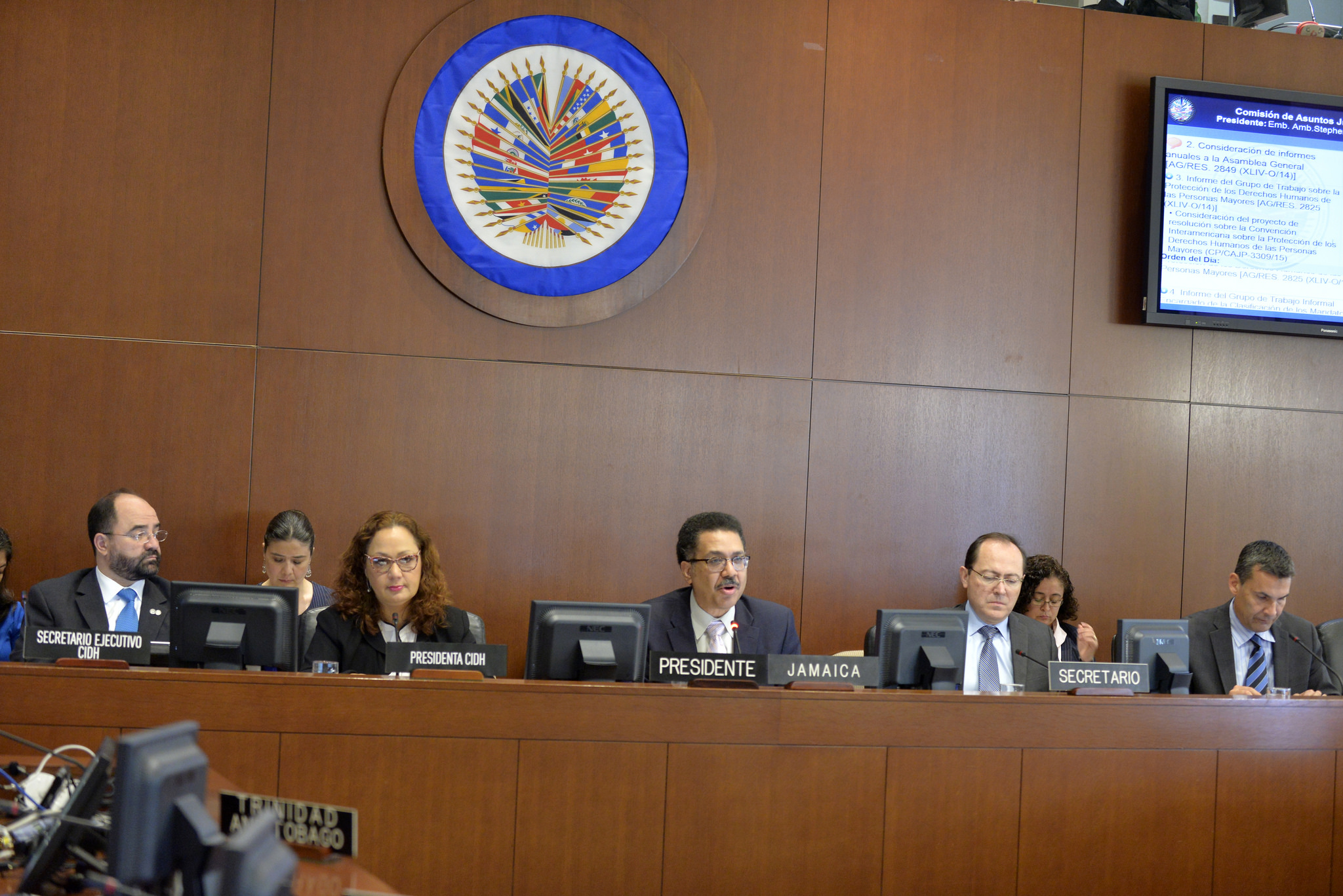
In their recent article, The Judicialization of Peace, Courtney Hillebrecht and Alexandra Huneeus, with the collaboration of Sandra Borda, made an impressive contribution to the discussion of the role of international courts in domestic politics. Their analysis is focused on the case of Colombia and the still-ongoing peace process. Local authorities launched this process in 2016, under the supervision of two international courts, namely the Inter-American Court of Human Rights (“IACtHR”) and the International Criminal Court (“ICC”). Drawing on empirical data, the Article examines the actual influence of the international courts on the construction of peace and offers “a more nuanced approach” to the question, thus challenging alternative and “too simplistic” views on the subject. In addition, the authors distinguish three different paths through which international courts engage with, and are engaged by, local actors, in the construction of peace: a “top-down” path, through which international courts let locals know about their expectations regarding the peace process; a “shadow” path, which refers to the way in which state and non-state actors negotiate “in the shadows of the law,” using international law to legitimate their policy preferences; and a “bottom-up” path, through which local actors push back, usually against courts, trying to persuade courts about their own views.
In what follows, I shall take part in this conversation about the role of international tribunals in Colombia’s peace process, challenging some of the views presented by the authors, and suggesting some alternatives to the authors’ approach. In particular, I shall object to the way in which they understand the working of international tribunals, and do so with the help of a theory of democracy that significantly differs from the one the authors seem to be assuming in their article.
In order to advance my arguments, I shall proceed as follows. First, I shall present the ideal democratic theory—a dialogic approach to democracy—that I shall use as my normative standpoint. Then, I shall examine some practical implications derived from the use of this theory, which should be relevant for recognizing some of the difficulties affecting the article on which I am commenting. Finally, I shall focus my attention on the working of the Colombian Constitutional Court during the peace process, and study it from the aforementioned dialogic perspective.
I. Why Should We Care About Deliberation? What Kind of Democratic Dialogue Could We Propose?
At one point in their article, the authors assert that “the terms of Colombia’s peace were produced through—not despite—the international courts’ ongoing deliberative engagement with the peace process” (p. 329). More specifically, in a section called “Judicialization as Deliberation,” and after having reviewed the “three main paths by which [international] courts engaged with, and were engaged by, domestic actors” (p. 294) the authors state:
These multiple modes of interaction were an important part of the four-year process that resulted in the 2016 peace agreement. They remind us that the impact of international courts does not happen in a top-down directive manner alone. Judicialization, by this telling, took the form of deliberation. The impact of the courts’ jurisdiction was to make the ongoing peace debate more infused with references to the guidance and constraints provided by international law, to make more actors at the domestic level aware of the international courts and laws, and, ultimately, to allow the manner in which these international norms were debated and understood to shift.
(p. 316).
These judgements seem to me problematic. The problems I am thinking about derive from the lack of precision they show concerning how to understand the ideas of democracy and deliberation. To recognize what I am saying, we can think about the following example. Imagine that most normative decisions about Colombia’s peace process resulted from orders, comments and suggestions coming from an empowered group of Colonels, now in charge of the three Armed Forces. Those facts would not justify us describing the “participation of the Armed Forces as deliberation.” More significantly, that kind of participation by the Armed Forces in the peace process would be in any way attractive for those of us concerned about democracy; after their intervention, the process did not become more “deliberative.” In sum, democracy is not improved when deliberation is reduced to a procedure that is fundamentally structured by the pressures and decisions of actors that have limited democratic legitimacy
In my view, a theory of democratic dialogue—like the one I have tried to advance in my writings on the subject[1]—does not demand that we consider all kinds of dialogic instances or examples as valuable or positive (positive, I mean, in moral, political, or legal terms). Rather, this theory encourages us to pay attention to the specific characteristics of such decision-making process and recognize whether certain basic requirements about public discussion and social inclusion are being properly considered. In addition, a dialogic theory requires us to reflect about some basic questions concerning the who, how, what, and for what purpose of the dialogue: Who are debating? Why? About what and for what reason?.
Given that I have written substantially about these issues, let me just illustrate what an adequate deliberative process would demand, through a few brief points and examples:
Equality. First, a valuable debate requires the different actors to be situated in positions of relative equality. Thus, for instance, a debate organized by the pater familias, where the authoritarian father has the “final,” unquestioned authority would not be interesting for our purposes. The same could be said regarding a deliberation between “We the People”[2] and their representatives; and even—and more relevant for our analysis—regarding a “conversation” between different branches of power, or a “dialogue” between national and international authorities. For example, if the local judiciary decided one thing, but an international court decided the opposite with “final” authority, then it would seem odd to suggest that those institutions engaged in a “conversation”: what kind of conversation would this be, if the local authorities had no real possibility to contradict what the international court decided, or the latter had the “last say” in all matters related to human rights law?
Non-Discretional Procedures. In connection with the previous point, I would also stress that public debates should be structured in ways that are respectful to the interests of their participants; they should be based on procedures that, for example, limit the risks of manipulations or abuses by one or part of the participants. Debates should be structured around justified procedures that, among other things, prevent participants from operating discretionally. In that respect, and as an illustration, one could maintain that public hearings like those organized by different Latin American courts, in recent years, failed the proposed test: participants in those hearings never came to know, after the end of the debates, what happened with the arguments that presented at the hearings (whether they had influenced the court’s decision or were ignored altogether); which arguments mattered to the court; which were discarded and for what reasons, etc. In each case, it was for the judges to decide, with complete discretion, when and how to call for a public hearing, and what to do with the arguments that were voiced in those hearings.[3]
The Limits of Public Dialogue. Public debates should be limited to matters of “public morality.” In other words, they should not deal with issues related to how people live or should live their own lives. In a proper democratic order, individuals should be allowed to live their own lives as they wish, without external, perfectionist intrusions.[4] In fact, a deliberative theory assumes that each person must be “sovereign” in what concerns her own private life, in the same manner that a community should be “sovereign” concerning issues of public morality.[5] For instance, for this theory, an ordinance as the one that was declared unconstitutional in the case Romer v. Evans,[6] would be out of order: democratic politics should not interfere with issues related to the individual’s most intimate decisions.
All the “Potentially Affected.” Deliberative democrats assume that the chances to adopt more impartial resolutions are maximized when “all those potentially affected” take part in their discussion. For similar reasons, they assume that the risks of improper biases augment when only a few or only a small segment of society becomes in charge of making such public choices. The established legal practice in the Americas, however, does not seem to follow these criteria. For instance, in most cases, criminal law decisions (that is, decisions concerning what conducts are going to be criminalized and in what way) tend to be reserved or transferred to expert commissions, and the citizenry at large are prevented from intervening in those relevant discussions. A good illustration of this criterion appears in article 39 of Argentina’s 1994 Constitution, which establishes that “Bills referring to constitutional reform, international treaties, taxation, budget, and criminal legislation shall not originate in popular initiatives.”
Dialogue Inclusive of the Public. In line with the previous comment, I would add that public dialogue should not be restricted to a communication or exchange of arguments among national or international authorities. More specifically, a proper dialogue should always be open to “We the People” and, in particular, be sensitive to the voices of individuals and groups that we can reasonably assume find serious difficulties for having access to and influence in the decision-making process. Consequently, dialogues that were limited to public agents should not be seen, in principle, as attractive expressions of what I have been here calling a proper, possible dialogue.
Particularly, in the context of the legitimacy problems that characterize the Judiciary, both at the national and international level, and also in light of the crisis of representation that affects the political system, the prospective of a “dialogue between the branches” does not look like a particularly exciting proposal. Of course, for many of us who have been criticizing traditional forms of judicial review during decades, the emergence of institutional alternatives that, in one or another way, dilute the power of the judges’ “last word,” represents good news.[7] However, in an institutional context like the one I suggested (which also includes profound and unjustified inequalities; a concentrated media; political campaigns that are financed by rich corporations, etc.), the perspective of promoting more “dialogue” between the branches loses much of its potential attraction: for advocates of a deliberative democracy, a dialogue between elites and high public officers produces highly unattractive results.
Genuinely Deliberative. Participants in the conversation should exchange and discuss their viewpoints, be sensitive to the others’ ideas and motivated to modify their own viewpoints when they realize that they were wrong in all or part of their arguments, or recognize that the others’ viewpoints were more persuasive. The point I want to make here has two main dimensions: one is motivational, and the other is more structural. The motivational aspect of the matter is crucial: participants need to be sensitive to “the force of the better argument,” according to Habermas’s formulation.[8] However, here I want to stress the structural aspect of deliberation, particularly in the face of an institutional system that has been built around the idea of “checks and balances”. This system, in my view, was directed to prevent “mutual oppressions,” but not equally well-prepared for the promotion of dialogue. In fact, the Madisonian thrust behind the proposal for a system of “check and balances” was to provide each of the branches with “defensive tools”: each part of the government had to prepare to resist the foreseeable attacks coming from the other branches. As Madison put it, in Federalist 51, it was necessary to give“those who administer each department the necessary constitutional means and personal motives to resist encroachments of the others.” Of course, “public debate” may also emerge from the peculiar institutional structure that was then chosen,[9] but it seems clear to me that the system of “checks and balances” was directed at preventing or channeling “civil war,” rather than to encouraging a collective conversation of any kind.[10]
Participation and Deliberation. For this view, instances of political participation should, in principle, be promoted and encouraged (see the point above). However, this approach also assumes that, if such instances of political participation are not preceded by politics of transparency; diffusion of information; opportunities for discussion, confrontation of viewpoints, mutual correction, etc., the entire process of consultation becomes suspect. Think, for instance, about the Brexit experience and how that process was carried out—in a hurry, without a previous and proper distribution of information, with few opportunities for public exchange of arguments, and so on.[11] Or think about a case like that of Bolivia and the ratification process that followed the writing of the new 2009 Constitution. The Bolivian Constitution was composed of by 411 articles, and hundreds of sub-clauses, and the citizenry was invited to ratify or deny the validity of the document. What would the people’s ratification or rejection mean, in such a context? In that opportunity, people were forced to say “yes” or “no” about hundreds of different, important, and sometimes contradictory issues. In sum, there seems to be something deeply wrong in processes of popular consultation of the revised kind (that is, concerning how the deliberative process is structured), which threatens to undermine the meaning and worth of having a popular consultation.[12]
II. Practical Implications
The previous considerations may help us understand what makes a dialogic process attractive and what makes it unworthy. More specifically, those considerations may help us recognize what kind of dialogue could result worth pursuing in the area of International Human Rights Law. In what follows, I shall briefly illustrate these claims through three examples taken from the The Judicialization of Peace article.
A. Gelman v. Uruguay
Let me begin with the example of a decision by the Inter-American Court of Human Rights (IACtHR) in Gelman v. Uruguay.[13] The case plays an important role in the context of the article I am commenting. In fact, the authors claim that they want to offer “a more nuanced mapping of when and how international accountability courts can affect peacemaking processes” (p. 287). This fine-tuned approach would differ from alternative views that tended to “make general statements about the effects of international justice mechanisms on peace processes” (p. 287).[14] In part, this “more nuanced approach” is advanced against what different skeptics and reformers—including, among others, Ariel Dulitzky, Jorge Contesse and myself—wrote on the subject, particularly after the Gelman v. Uruguay decision.[15] In my view, our disagreements on the matter refer not so much to the form in which we describe the working of international tribunals, but rather to the way in which we understand the nature of those tribunals and the scope of their work.[16] More particularly, I believe, our disagreements originate in our different approaches to democracy.
For instance, if I were required to summarize my criticisms to the Gelman decision in just one line, I would say that the decision was wrong for not being properly “nuanced,” this is to say not sufficiently sensitive to the different democratic character or pedigree of the different amnesty laws passed in Latin America in recent years.[17] This was the main conclusion of my analysis, after revising different amnesty laws in the region, and recognizing that these diverse amnesty laws had extremely diverse democratic origins and legitimacy.[18] Taking a dialogic or deliberative conception of democracy as my standpoint, I objected to the decision of the IACtHR after considering that given the relatively weak democratic credentials of the IACtHR, the international court should have better calibrated the strength, modes, and scopes of its intervention.
Perhaps, it is there—in how we understand and define our basic normative standpoints—where our main differences with the authors reside. For instance, in their article, the authors claim that, in the realm of transitional justice, “the reality is that international courts sometimes hinder peace, sometimes foster a better peace, and sometimes are indifferent” (p. 286). The authors seem to be saying that international courts, in general, are doing a pretty good job in the area. This general conclusion would be grounded on the fact that international courts have neither proposed “too punitive” solutions, nor became “spoilers of peace and democracy” (p. 330). Now, claims as such express normative assumptions that the authors do not—but should—clarify. Unfortunately, without a better idea of what democracy or penal moderation means, it becomes almost impossible to determine whether a certain decision or practice favors rather than undermines democracy. Similarly, the authors praise the international courts’ contribution to political deliberation. But, again, we need certain previous conceptual clarifications before concluding that international or domestic court are favoring rather than preventing the achievement of those desired goals. We need to know, for instance, how the idea of political deliberation is defined, or we need to have a clearer notion about how a deliberative democracy should work.
B. The Colombian Peace Agreement
A second, relevant example concerns the debate that was launched in Colombia around the peace agreement. That debate may become of little or no interest if the voices of all those “potentially affected” are not consulted; if participants do not participate in the dialogue from a relatively equal position; if the established procedures for debate are not structured in ways that are respectful to the different participants; if the voices of those affected are not seriously considered; etc.
And what would a democratic approach say concerning the alleged contribution of international courts to the Colombian peace process? Perhaps, one could partially agree with what the authors claim in the Article and assert, with them, that “the terms of Colombia’s peace were produced through—not despite—the international courts’ ongoing deliberative engagement with the peace process” (p. 329). But immediately then we should pose a question like the following: Why would this result be attractive from our chosen deliberative perspective? The presence of more “veto points,” more “interest groups,” or more international actors taking part of this conversation says very little about the chance of achieving more impartial decisions, or about the possibilities of improving our democratic decision-making process. As Carlos Nino once put it: “There is no guarantee that the results of this cumbersome mix of different decisions centers reflect the present, majoritarian conclusion of all the people concerned following a free and open debate.”[19]
C. Constitutional Interpretation
Finally, the deliberative view sketched above may also be important in order to improve our thinking about questions of constitutional interpretation. For many of us, advocates of a dialogical democracy, constitutional interpretation requires an open and ongoing discussion about the meaning of the Constitution, where all the Constitution’s subjects intervene in an equal footing.[20] This view about legal interpretation seems to greatly differ from the one that the authors take as given in their article. In their piece, legal interpretation seems to refer, not to norms that belong to all, and whose meaning needs to be defined collectively by all, over time, but rather to an extremely complex process that calls for the intervention of experts, who are supposed to help other agents (non-experts) to understand the intricacies and complexities of international law.
In a section named “Engaging the International Courts Through Legal Interpretation,” the authors claim:
International law and international courts possess a highly specialized vocabulary and language. Further, the courts have a strategic advantage in that they possess insider knowledge of their own workings, and the extent of their resources and capacity. To engage with international courts effectively, actors must gain knowledge of this language and institutional structure.
(p. 311). I tend to disagree with this approach. In contrast to it, a deliberative perspective would suggest, first, that in order to properly participate in the collective conversation about the content and meaning of the law—a conversation that fundamentally belongs to local actors—international tribunals and authorities have to recognize the limited democratic legitimacy that they have, and also the particular institutional place they occupy in this dialogue.[21] It seems clear that, as a result of their expertise and experience, international tribunals and authorities can make an important contribution to the collective conversation about the scope, contents and limits of the law. But, again (and I am not interested in making a nationalist or parochial point about this), they have to understand that they are not supposed to come into the collective conversation so as to “teach” the rest of the participants what they do not understand about the law; or assume that their role in this conversation is to “reveal” to the rest how to rightly understand the meaning of international law (a meaning that, supposedly, would be incomprehensible to lay people).
III. The Colombian Constitutional Court
The previous considerations about deliberation, democracy, and legal interpretation may also help us to improve our analysis about the working of domestic courts in the construction of peace. In their approach to this specific topic, the authors state, for example: “International law and the [intentions of international tribunals] were used—and usurped—within the domestic political and judicial debate over peace, imbuing those debates within the narrative of law and judicialization” (p. 302). In my opinion, this claim manifests some of the difficulties that characterize the authors’ approach to the subject. The phrase suggests a view that is based, among other things, on a controversial understanding of what “the law” is and how it should be interpreted. The authors seem to be assuming that international law represents an important “portion” of the law to be applied in these circumstances, and that domestic political and judicial authorities “import” that “portion” of the law, sometimes “using” it as they should, and sometimes “usurping” it as they should not. This understanding of the relationship between international law and domestic law seems problematic, both as a description of the legal practice, and as an indication about how this entire process should work. More specifically, the authors’ description of the three paths through which the peace debate became thoroughly judicialized (“top-down,” “bottom-up,” and “shadows”) does not properly capture how non-political actors use and should use international law and international court’s decisions. In fact, the Colombian Constitutional Court (CCC) demonstrated, at least in some fundamental decisions related to the peace process, that it perfectly understood what role it was supposed to play, in the context of a dialogic democracy. Unfortunately, the authors’ approach seemed both unable to properly capture these virtuous decisions by the Court, and also incapable of recognizing the reasons and dimensions of the CCC’s failures in other similar circumstances. Let me try to illustrate and justify these claims.
According to the view that I have here advanced, “the law” is composed of local, national, and international dispositions (which include well-established legal practices) that are (as it should be) collectively interpreted and re-interpreted by the different members of the legal community, in an ongoing, unfinished process. Of course, it seems clear that international decisions appear, in many occasions, abused, misused, manipulated, or “usurped” by local authorities. However, and after acknowledging this, one should immediately recognize that domestic authorities (and the citizenry, in general) have to actively participate in the discussion about the meaning of the law that is going to be applied at the local level.
This alternative, deliberative understanding of the law helps us to better understand how the “judicialization of peace” has actually been working in Colombia, and at the same time offers useful tools for advancing a critical examination of such practice. For instance, in the article, the authors demonstrate that, in certain rulings, the CCC made an extensive use of decisions coming from international authorities, while in other occasions it did not; and also that, in occasions, the CCC quoted a certain international tribunal much more than the other, but immediately then tended to do the opposite thing without properly justifying its shifting foundations (p. 309). I understand that these oscillations by the CCC may suggest a certain misuse of “external” sources. However—I would suggest—in order to present a proper description and analysis of what the Constitutional Court has actually been doing, we need to do a different exercise, where “counting” citations of decisions by international courts would not help us much. What we need to know is how the Court processed those external antecedents; how it engaged with the arguments offered by international authorities; how it integrated certain ideas and interpretations proposed by international courts in its own reasoning; in sum how it carried on the “ongoing conversation” about the meaning, content, scope and limits of the law. Those are the relevant questions, I believe, and are also questions whose answers promise to help us improve both our description and critical evaluation of the Court’s work.
In my view, and contrary to what the authors suggest, the Colombian Constitutional Court demonstrated, in crucial occasions, to be well aware of its juridical duties and also about the nature of its duties. In particular, the CCC showed it was aware of the fact that it was participating in an ongoing collective conversation about the meaning of the law—a conversation that includes many actors and voices (coming from above and below) different from the same CCC. Moreover, the Court recognized that public decisions had to be taken in a deliberative manner, and that its own decisions had to honor this objective. Many of the Court’s most relevant decisions confirm those assumptions and show its commitment to the ideals, forms and procedural requirements of a deliberative democracy.[22]
In what specifically concerns the peace process, some of the Court’s most recent decisions illustrate how important this deliberative understanding of the law was, for the same Court; and when and how the Court failed in the application of that understanding.
Take, for instance, the decision made by the Court in May 2017, when it examined the norm allowing the government to “fast-track” laws related to the 2016 Peace Agreement (Constitutional Amendment 1, 2016).[23] The government had promoted these procedural reforms—the “fast track”—in order to accelerate the implementation of the Agreement (and particularly the amnesty law that the members of the guerrilla demanded). Through its decision on the case, the tribunal considered that two basic parts of the “fast track” mechanism created by Congress were unconstitutional. According to one of the objected clauses, all changes to each of the laws developing different aspects of the Agreement had to be approved by the government before coming to a congressional vote. According to the second objected clause, Congress could only vote to approve or deny the law, implementing the peace process without the possibility of debating and voting on each of the articles individually. For the Court, implementing those two clauses would have implied replacing the Constitution by altering the deliberative and decision-making powers of Congress.[24] In the words of the President of the Constitutional Court at that time, Luis Guillermo Guerrero, the ruling was not aimed at undermining the force of the Peace Agreement, but rather to “open up spaces for democratic deliberation.”[25]
From a democratic perspective, the Court’s strict scrutiny of the “fast-track” law seemed totally justifiable: the government needed to show that it was doing its very best in order to “build democratic legitimacy,” but instead showed that it was willing and ready to circumvent the constitutional and procedural requirements of democratic deliberation. The Colombian Constitutional Court reasonably resisted the government’s ill-fated initiative, and in that way reaffirmed its commitment to deliberative democracy.
This interesting judgment of the Court contrasts with another, more recent decision, where the tribunal, in my view, failed to understand what the same deliberative concerns that it had employed once and again before, required it to do, in the new case.[26] On that occasion, the Court upheld a Congress-approved legislation, which established that the Peace Agreement between the government and the FARC could not be amended for the next twelve years (Constitutional Amendment 2, 2017). This is to say, the following three governments would be unable to modify approved parts of the accord. The short-term purpose of the political initiative was obvious: it was directed to shield the Agreement from potential changes to be introduced by the incoming government. According to the norm that was upheld on that occasion, “institutions and authorities of the state have the obligation to comply with what is established in the final accord in good faith . . . until the end of three complete presidential periods following the signing.” For the Court, that article incorporated a “principle of stability and security that is deferential to the purposes of the Agreement.” Unfortunately, on this occasion, and against what its own legal discourse usually suggested, the Court limited rather than encouraged democratic deliberation: it accepted an unreasonable limit to the collective conversation about how to deal with one of the most important and serious problems in Colombia’s history. Fearing that the incoming government would promote a political decision (about the peace agreement) that the Court anticipated as mistaken, the Court validated the decision by (now ex-) President Santos to prevent the coming generations from continuing to reflect about a difficult matter that affects the life of the vast majority of Colombians.
Conclusion
In this Comment, I revised some of the arguments that appear in The Judicialization of Peace, and offered some alternatives to them. In particular, I suggested that the authors’ analysis would be enriched if they clarified their own views about democracy, deliberation, and constitutional interpretation. I also offered some ideas about what a deliberative theory could look like and suggested that this alternative approach could help us to better explain and critically evaluate the development of the Colombian peace process and the intervention of international and domestic tribunals.
† Suggested citation: Roberto Gargarella, Some Reservations Concerning the Judicialization of Peace, 59 Harv. Int’l L.J. Comment (Feb. 3, 2019), https://journals.law.harvard.edu/ilj/2019/02/reservations_peace/
* Professor at the University of Buenos Aires and the University Torcuato di Tella. Senior Researcher at the National Research Council, CONICET (Argentina).
[1] See, e.g., Roberto Gargarella, Deliberative Democracy, Dialogic Justice and the Promise of Social and Economic Rights, in Social and Economic Rights in Theory And Practice 105 (Helena Alviar et al., eds. 2014); see also Roberto Gargarella, Full Representation, Deliberation, and Impartiality, in Deliberative Democracy 260 (Jon Elster, ed., 1998).
[2] U.S. Const., pmbl.
[3] See, e.g., Miguel Benedetti & Jimena Saenz, Las Audiencias Publicas Ante La Corte Suprema [Public Hearings before the Supreme Court] 280–81 (2016) (Arg.).
[4] Carlos Nino, The Ethics of Human Rights (1991).
[5] For a general analysis on the subject see, for example, id.
[6] 517 U.S. 620 (1996) (invalidating a state constitutional amendment passed in Colorado, which prevented protected status based upon homosexuality or bisexuality).
[7] See, e.g., Mark Tushnet, Weak Courts, Strong Rights (2008); Jeremy Waldron, Law and Disagreement (1999).
[8] See 1 Jurgen Habermas, Theory of Communicative Action, 24, 25, 28, 36, 42 (1984).
[9] See generally Cass Sunstein, The Partial Constitution (1993).
[10] I have defended this view, for example, in Roberto Gargarella, We the People Outside of the Constitution: The Dialogic Model of Constitutionalism and the System of Checks and Balances, 67 Current Legal Probs. 1, 22–23 (2014).
[11] See Thomas Colignatus, The Brexit Referendum Question Was Flawed In Its Design, LSE Brexit (May 17, 2017), http://blogs.lse.ac.uk/brexit/2017/05/17/the-brexit-referendum-question-was-flawed-in-its-design/ [https://perma.cc/V4GM-7WBA].
[12] See European Union Observation Mission, Final Report on Bolivian Constitutional Referenedum of January 25, 2009, at 35 (2009), http://eeas.europa.eu/archives/eueom/missions/2009/bolivia/pdf/eueom_bolivia_2009_final_report_en.pdf [https://perma.cc/EX5G-WQL8].
[13] Gelman v. Uruguay, Merits and Reparations, Judgment, Int-Am. Ct. H.R. (ser. C) No. 221 (Feb. 24, 2011).
[14] Seemingly, for these “simplistic” views, international courts would constrain national policy-making “in a top down manner” (p. 286), and push for “punitive” solutions, in ways that spoiled “peace and democracy” (p. 330). In the realm of transitional justice, the authors claim, “the reality is that international courts sometimes hinder peace, sometimes foster a better peace, and sometimes are indifferent” (p. 286).
[15] For instance, right before presenting their “more nuanced approach,” the authors quote Dulitzky’s and Contesse’s writings, and their suggestions saying that the IACtHR should become more deferential to national actors (p. 285). See, e.g., Jorge Contesse, Contestation and Deference in the Inter-American Human Rights System, 79 L. & Contemp. Probs. 123 (2016); see also Ariel Dulitsky, An Inter-American Constitutional Court?, 50 Tex. Int’l L.J. 45 (2015); Ariel Dulitzky, The Inter-American Human Rights System Fifty Years Later: Time for Changes, 127 Quebec J. Int’l L., (Special Edition) 127 (2011). In addition, they quote my own criticisms to the Gelman decision, when I claimed that the IACtHR’s decision was “not sufficiently respectful of democracy” (p. 285).
[16] In fact, Ariel Dulitzky and Jorge Contesse have advanced very moderated and well-balanced criticisms to the functioning of international courts. In other words, I would not consider their analyses to be “non-nuanced.”
[17] Actually, this was exactly what I wrote in the more complete piece I presented on the subject. See Roberto Gargarella, No Place for Popular Sovereignty. Democracy, Rights, and Punishment in Gelman v. Uruguay, 2013 SELA (Seminario Latinoamericano De Teoría Constitucional Y Política [Latin American Seminar On Constitutional And Political Theory]) Paper, 3, 16. In that opportunity, I stated: “the [IACtHR] assumed a vision of democracy that was not only based on distrust of the citizenry but moreover . . . completely insensitive to relevant nuances as regards the robustness or legitimacy of popular decision-making.” Id. at 37. Earlier in the paper, I asserted: “the approach adopted by the IACtHR in Gelman belied a schematic structure lacking any nuance.” Id. at 15. In other words, rather than condemning the overall work of the IACtHR, I basically challenged one decision by the Court for not having a “more nuanced approach” in relation to democracy and human rights.
[18] More specifically, I complained about the tribunal’s resistance to differentiate between the amnesty law that had been enacted in Uruguay, after a long and profoundly deliberative, democratic process, and other amnesties conceded in the region out of non-democratic or hardly democratic decision-making processes. See id. at 15. In my article, I distinguished four main cases, related to four main examples: 1) the self-amnesty proclaimed by the National Reorganization Process in Argentina (Argentina’s last dictatorship) before surrendering power; 2) the self-amnesty proclaimed by the regime of Alberto Fujimori in Peru following the massacre at Barrios Altos, and after he had shut down the democratic Congress; 3) the pardon laws passed by the democratic government under President Raúl Alfonsín in Argentina putting an end to the trials of persons responsible for the serious human rights violations that took place in Argentina starting in 1976; and 4) the Expiry Law passed in Uruguay and reaffirmed in two instances by popular vote. See id. 7–11.
[19] Carlos Santiago Nino, The Constitution of Deliberative Democracy 166 (1996).
[20] I have advanced this view, for example, in Roberto Gargarella, La interpretación y el diálogo democrático [Interpretation and Democratic Dialogue], Revista Del Centro De Estudios Constitucionales [Journal. Ctr. for Const. Stud.], enero – junio, 2017, at 169 (Mex.)
[21] A crucial point emerges, but one which I cannot properly address within the context of this paper. The discussion concerns the question about who should be allowed to participate in these particular conversations. My intuition is that the Habermasian notion of “those potentially affected” would mainly, although not only, refer to local participants, who have a special stake in what concerns the violation of rights of local authorities. See Habermas, supra note 8.
[22] See Leonardo Garcia Jaramillo, Constitucionalismo Deliberativo [Deliberative Constitutionalism] (2015). See generally Roberto Gargarella, Latin American Constitutionalism (2013), Roberto Gargarella, The Legal Foundations of Inequality (2010).
[23] Corte Constitucional [C.C.] [Constitutional Court], mayo 17, 2017, Sentencia C-332/17 (Colom.), http://www.corteconstitucional.gov.co/relatoria/2017/C-332-17.htm [https://perma.cc/G9Q7-EYL7?type=image] (examining the constitutional status of the “fast-track” mechanism created by Congress in order to accelerate the implementation of the peace agreement).
[24] Juanita León, Las dos caras del golpe al fast track [The two sides of the blow to Fast Track], La Silla Vacía (May 18, 2017) (Colom.), https://lasillavacia.com/historia/las-dos-caras-del-golpe-al-fast-track-60989 [https://perma.cc/XKF7-VGWF].
[25] Corte Constitucional [C.C.] [Constitutional Court], octubre 11, 2017, Sentencia C-630/17 (Colom.), http://www.corteconstitucional.gov.co/relatoria/2017/C-630-17.htm [https://perma.cc/NC43-3M87?type=image] (referring to the purpose of fast track authority) (translated from “abriendo espacios para la deliberación democrática”).
[26] See id. (examining the constitutional status of a law shielding the peace agreement from political reforms in the following twelve years).