Content

Essays, Online Scholarship

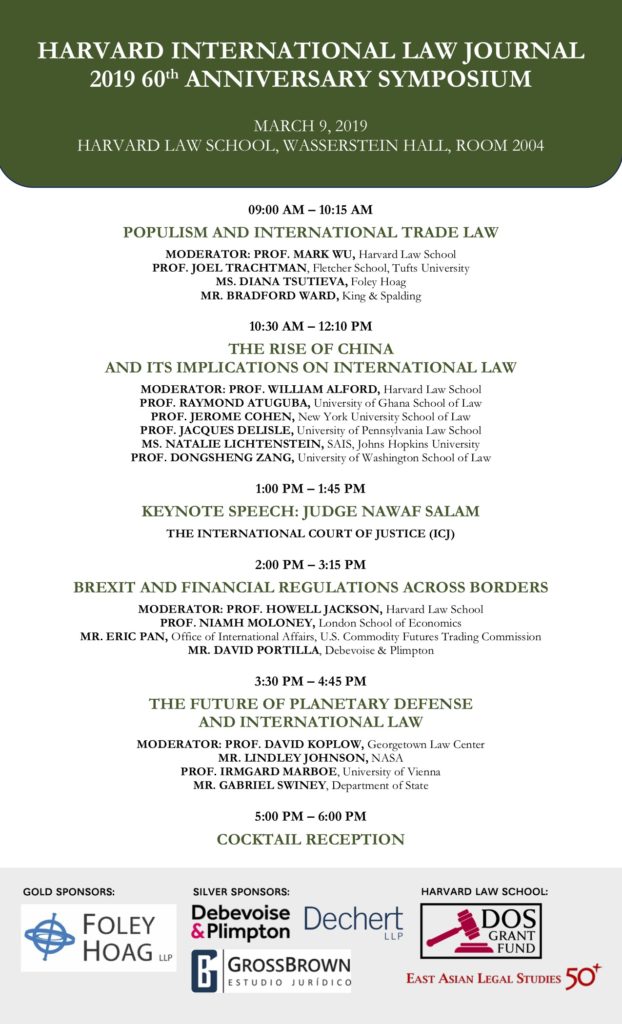
The Future of Planetary Defense and International Law

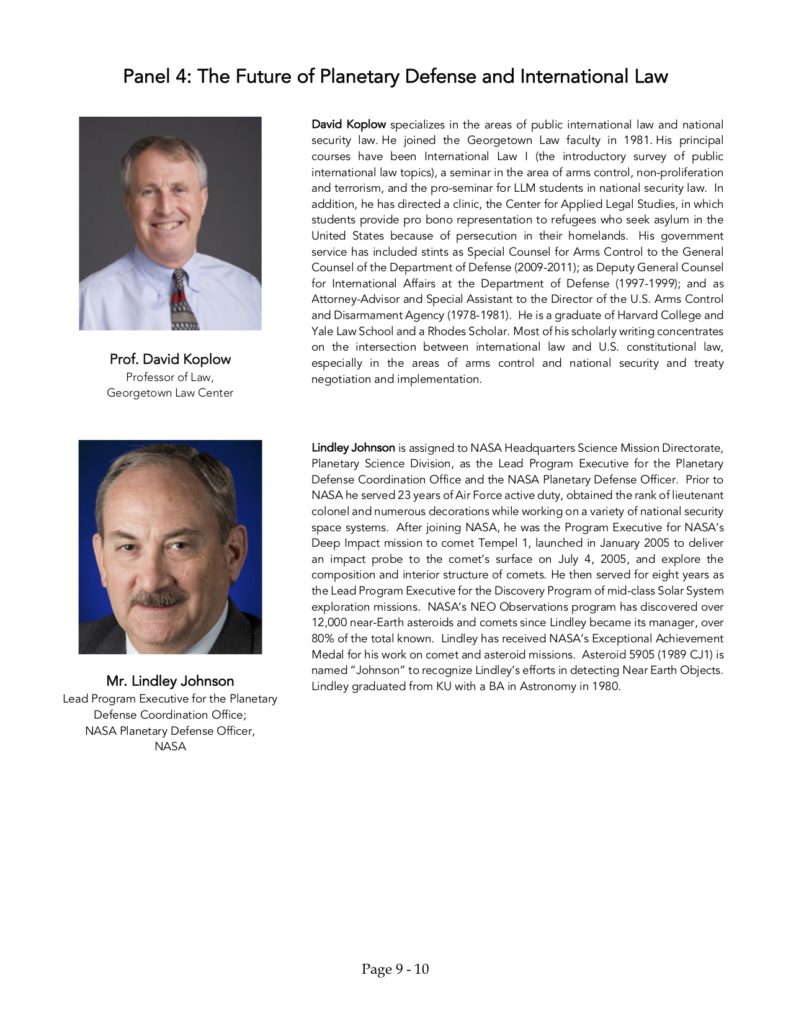
Editor’s Note: The following piece is a reflection from Georgetown Professor David Koplow on the space law panel he moderated at our International Law Symposium on March 9, 2019.

The panel on “The Future of Planetary Defense and International Law” addressed the provocative legal, scientific, and policy questions regarding what should be done if it is discovered that a large asteroid is on a collision course with Earth?

This problem is significant because: a) we know that asteroids do strike the planet all the time, although most of them are too small to notice or care about; and b) an impact by a large asteroid could, depending upon its size, composition, and other factors, cause devastation on a local, regional, or even global scale. At the moment, there is no known such threat on the horizon, but astronomers acknowledge that they are currently unable to detect, identify, and track a large number of potentially hazardous objects. Even more worrisome, humans have no tested, reliable, in-place capability for promptly and effectively responding to such a danger, especially if it were detected with little advance warning time.

In response, NASA and its counterpart space agencies in other countries have undertaken efforts to survey the population of near-Earth objects and to develop techniques that could be employed to deflect a dangerous intruder. Sophisticated experiments are underway or planned to study the nature and characteristics of asteroids and to explore mechanisms for altering their trajectories – but these are far from completion.

Although the subject of planetary defense lies overwhelmingly within the realm of science and technology, there are interesting and important legal aspects, too, and the panel addressed two of special note.

The first legal conundrum arises from the possibility that one conceivable technique for attempting to alter the trajectory of an oncoming asteroid would be to employ the vast power of a nuclear explosion on, inside, or near it.  Indeed, if the warning time were short, that may prove to be the only effective deflection technique. However, key provisions in some important, long-standing, and widely-adhered-to treaties stand in the way.  These instruments were crafted with problems vastly different from planetary defense in mind – they were designed to pre-empt a nuclear arms race in space, and they have proven remarkably successful in foreclosing what could otherwise have developed into a dangerous and destabilizing exoatmospheric competition. The difficulty in reconciling these very distinct types of objectives – dodging an oncoming asteroid and foreclosing additional military applications in space – may prove to be a severe international challenge.

A second principal legal issue arises from the possibility that an attempt to divert an asteroid might, unfortunately, prove to be only “partially” successful.  Suppose that the human intervention was unable to maneuver the asteroid sufficiently to make it miss Earth altogether, but did serve to alter its trajectory somewhat, so that it impacted Country X, instead of Country Y, where it would have struck if nothing had been done. Under applicable treaties, a country has “absolute” liability for damage caused on the surface of the Earth by its activities in space. That legal standard could result in an enormous exposure – the state(s) that in good faith exercised their best efforts to try to save the planet from an impact might incur an enormous financial responsibility for all the harm suffered by Country Y.

The most promising route considered by the panel for addressing both these legal issues is to exercise the powers of the United Nations Security Council. Under Chapter VII of the U.N. Charter, the Security Council holds a unique law-making ability, and possesses the authority to supersede the provisions of other treaties. If prompted by a genuine emergency, the Security Council could therefore authorize states to exert their best efforts for planetary defense, notwithstanding the provisions of the arms control treaties and it could likewise modify the usual liability standards. Of course, it will not be easy or automatic to draft suitable provisions that would deftly address the dangers and the costs without unleashing an unwanted arms competition and without leaving Country Y to fend for itself in response to a catastrophe.


David A. Koplow, Professor of Public International Law and National Security Law at Georgetown University Law Center


Content, Online Scholarship, Perspectives

The Case of Naït-Liman v. Switzerland Before the European Court of Human Rights: Where Are the Limits of the Global Fight Against Torture?

By Daniel Rietiker*

Introduction

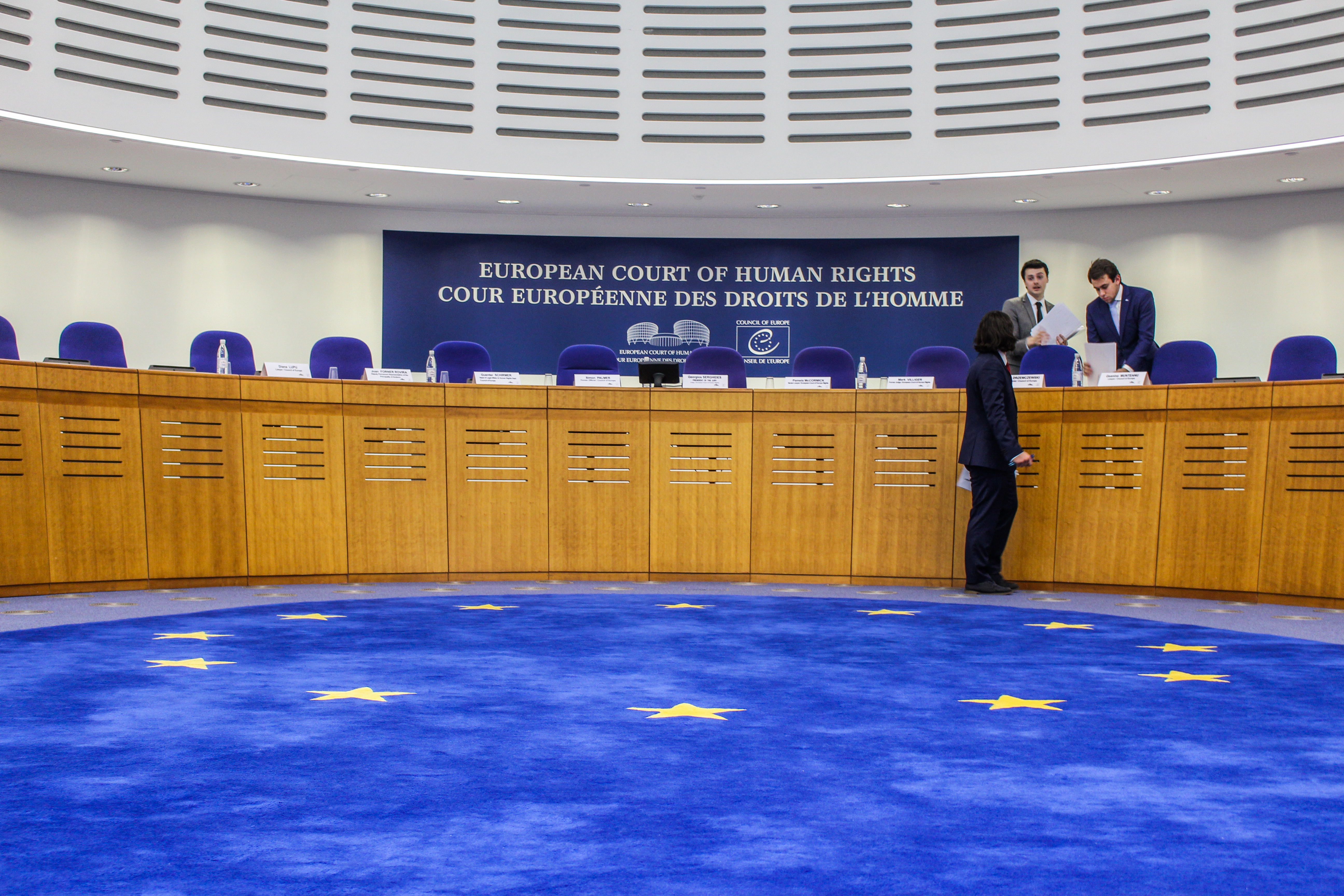
On March 15, 2018, in the case of Naït-Liman v. Switzerland, the European Court of Human Rights (“ECtHR”) held that there had been no violation of the right to access a court within the meaning of Article 6, § 1 of the European Convention on Human Rights (“ECHR”). The case concerned the refusal by the Swiss courts to examine the applicant’s civil claim for compensation for the non-pecuniary damage arising from acts of torture allegedly inflicted on him in Tunisia in 1992.
I offer a critical discussion of this important case with an attempt to define the limits in the global fight against torture. In Part I, I present the facts of the case, as well as the reasoning and the main conclusions of the Court; in Part II, I critically assess the judgment from three different angles. In the final Part, I add several personal conclusions.

I. The ECtHR Decision

The applicant, Abdennacer Naït-Liman, born in 1962, is a Tunisian national who has acquired Swiss nationality during the proceedings before the Swiss tribunals.

He was arrested in April 1992 by the police in Italy and taken to the Tunisian consulate in Genoa. He was then taken to Tunis by Tunisian authorities. He alleges that, from April 25, 1992 to June 1, 1992, he was detained and tortured in Tunis in the premises of the Ministry of the Interior on the orders of A.K., the then-Minister of the Interior. In 1993, he fled Tunisia for Switzerland, where he was granted asylum in 1995.

On July 8, 2004, the applicant lodged a claim for damages with the courts of the Canton of Geneva against Tunisia and against A.K. This claim was not successful and rejected by all courts, in last instance by the Federal Supreme Court, which dismissed it on May 22, 2007. The latter court held that it lacked territorial jurisdiction and that the Swiss courts did not have jurisdiction under the “forum of necessity” in the case at hand, owing to the lack of a sufficient link between, on the one hand, the case and the facts, and, on the other, Switzerland. A forum of necessity is a subsidiary forum, enshrined in Article 3 of the Federal Law on Private International Law, which reads as follows:

Where the Act does not provide for any forum in Switzerland and proceedings abroad prove impossible or it cannot reasonably be required that they be brought, the Swiss judicial or administrative authorities of the locality with which the case has a sufficient connection shall have jurisdiction.

On November 20, 2007, the applicant lodged an application with the Court, whose second section delivered a Chamber judgment on June 21, 2016, holding, by four votes to three, that there had been no violation of Article 6 of the ECHR. On November 28, 2016, a panel of five judges accepted a request to refer the case to the Grand Chamber.

Regarding the merits of the case, the Court applied the traditional test, namely whether the limitation of the access to a court pursued a legitimate aim and was proportionate. It identified several legitimate aims pursued by the restriction on the right of access to a court, which were all related to the proper administration of justice, particularly in terms of the problems in gathering and assessing the evidence, the difficulties linked to execution of a judgment, the State’s wish to discourage forum-shopping, the risk of attracting similar complaints, which could create an excessive workload for the domestic courts, as well as the risk of potential diplomatic difficulties entailed by civil jurisdiction in such circumstances.

With regard to the proportionality of the restriction on the right to access to a court, the Grand Chamber identified two concepts of international law that were relevant for the present case: universal jurisdiction and the forum of necessity.

With regard to a possible international custom in the field of universal jurisdiction, although the States’ practice was evolving, the prevalence of universal civil jurisdiction was not yet sufficient to indicate the emergence, far less the consolidation, of an international custom which would have obliged the Swiss courts to find that they had jurisdiction to examine the applicant’s action. As it currently stood, international treaty law, in particular Article 14 of the UN Convention Against Torture also failed to recognize universal civil jurisdiction for acts of torture, obliging the States to make available civil remedies in respect of acts of torture perpetrated outside the State territory by the officials of a foreign State.

The Court concluded that international law had not obliged the Swiss authorities to open their courts to Mr Naït-Liman on the basis of universal civil jurisdiction for acts of torture.

The Court had then to determine whether international law had imposed an obligation on the Swiss authorities to make a forum of necessity available to the applicant. As the forum of necessity was not generally accepted by the States, it could not be concluded that there existed an international custom rule enshrining the concept of forum of necessity. The Court further noted that there was also no international treaty obligation obliging the States to provide for a forum of necessity.

It followed that international law did not impose on the Swiss authorities the obligation to open their courts with a view to ruling on the merits of the applicant’s compensation claim. Therefore, Switzerland enjoyed a wide margin of appreciation in this area. In other words, its freedom to decide whether or not it considered appropriate to grant to the applicant access to court was not restricted by international law. In order to determine whether the Swiss authorities had exceeded their margin of appreciation in the present case, the Court was required to examine, in turn, Section 3 of the Swiss Federal Law on Private International Law and the decisions issued by the Swiss courts.

The Court concluded that by introducing a forum of necessity with the criteria laid down in Section 3, the Swiss legislature had not exceeded its margin of appreciation. Moreover, it was reasonable to not to take into account the links to Switzerland that the applicant has created since he was awarded asylum in Switzerland because those links did not exist at the moment of the alleged acts of torture.

In conclusion, the Court considered that the Swiss courts’ refusal to accept jurisdiction to examine Mr Naït-Liman’s action seeking redress for the acts of torture to which he was allegedly subjected had pursued legitimate aims and had not been disproportionate to them. It followed that there had been no violation of the right of access to a court within the meaning of Article 6 of the ECHR.

Judge Wojtyczek expressed a partly dissenting opinion. Judge Dedov and Judge Serghides each expressed a dissenting opinion. The latter argued, inter alia, that the majority opinion had not sufficiently taken into account the principle of effectiveness, one of the key principles in the Court’s jurisprudence.

II. Assessment of the Judgment

In part II, I will critically assess the reasoning and main conclusions of the Court. The Part is divided into three sections. Section A will deal with the right of the victims of torture to remedy and reparation; Section B will be devoted to one aspect of the Court’s interpretation methodology in the present case, as well as to its impact on the proportionnality of the restriction to the right to access to court, and Section C, finally, will examine the question whether the erga omnes effect of the prohibition of torture compelled Switzerland to open its courts to the applicant.

A. Remedy and Reparation for Victims of Torture

Without doubt the most important achievement of the judgement lies in the fact that the Court, in several paragraphs, clearly confirmed and highlighted the right for victims of acts of torture to obtain appropriate and effective redress, and that States are encouraged to give effect to this right by endowing their courts with jurisdiction to examine such claims for compensation, including where they are based on facts with occurred outside their geographical frontiers. The following paragraph is a quotation from the “general conclusions” of the Court’s judgment:

[¶] 218. [I]t should be reiterated that this conclusion does not call into question the broad consensus within the international community on the existence of a right for victims of acts of torture to obtain appropriate and effective redress, nor the fact that the States are encouraged to give effect to this right by endowing their courts with jurisdiction to examine such claims for compensation, including where they are based on facts which occurred outside their geographical frontiers. In this respect, the efforts by States to make access to a court as effective as possible for those seeking compensation for acts of torture are commendable.

The Court further stated that the right to obtain such redress is firmly embedded in international law and, in particular, Article 14 of the UN Convention Against Torture, which had been ratified by Switzerland on December 2, 1986. Indeed, Article 14 states, “Each State Party shall ensure in its legal system that the victim of an act of torture obtains redress and has an enforceable right to fair and adequate compensation, including the means for as full rehabilitation as possible.”

In addition, the Court rightly referred to the UNGA Resolution 60/147, adopted on December 16, 2005, containing in its annex the “Basic Principles and Guidelines on the Right to a Remedy and Reparation for Victims of Gross Violations of International Human Rights Law and Serious Violations of International Humanitarian Law,” which enshrine in their section VII the right of victims to equal and effective access to justice, adequate, effective and prompt reparation for harm suffered, as well as access to relevant information concerning violations and reparation mechanisms.

Furthermore, the Grand Chamber, in the logic of the ECHR as a “living instrument which…must be interpreted in the light of present-day conditions,” one of its most prominent interpretation principles, expressed the opinion that States are under the duty to follow the potential developments in this dynamic area of law and update their laws and practices accordingly:

[¶] 220. Nonetheless, given the dynamic nature of this area, the Court does not rule out the possibility of developments in the future. Accordingly, and although it concludes that there has been no violation of Article 6 § 1 in the present case, the Court invites the States Parties to the Convention to take account in their legal orders of any developments facilitating effective implementation of the right to compensation for acts of torture, while assessing carefully any claim of this nature so as to identify, where appropriate, the elements which would oblige their courts to assume jurisdiction to examine it.

In other words, the Court accepted and reiterated without hesitation the existance of the right of victims of torture to redress and compensation and left open the door for future developments in the field. The exact scope of this right, however, and in particular the question whether States are obliged to guarantee this right even for acts of torture that were inflicted outside their territories by foreign officials, as the applicants submitted, was more disputed.

B. The Court’s Refusal to Read the ECHR as a Whole
and Its Impact on the Proportionality of the Restriction

Interpreting an international treaty is not a precise, mathematical exercise, but rather an art of identifying those rules among others whose application seems appropriate in a certain situation. In the present case, the Court made strong use of the comparative element in order to determine the (broad) margin of appreciation on which Switzerland could rely. This comparative approach is appropriate and in line with international law, deriving from Article 31 § 3 (c) of the Vienna Convention of the Law of Treaties (“VCLT”), according to which “relevant rules of international law” have to be taken into consideration in treaty interpretation. On the other hand, other important interpretation principles, flowing directly from Article 31 § 1 of the VCLT, the so-called general rule of treaty interpretation prescribing that “[a] treaty shall be interpreted in good faith in accordance with the ordinary meaning to be given to the terms of the treaty in their context and in the light of its object and purpose,” are not mentioned in the legal analysis of the Grand Chamber.

In particular, the Court did not refer to the principle requiring a treaty provision to be interpreted in light of the entire text of the treaty, a principle raised by one of the third party interveners, Citizens’ Watch, and applied by the Court, inter alia, in ¶ 68 of Klass v. Germany and ¶ 48 of Stec v. United Kingdom (“The Convention must also be read as a whole…”). From my point of view, the lack of consideration of this method of interpretation had important repercussion on the proportionality of the restriction to the right to access a court for the following reasons.

In the instant case, a lot of energy has been used by the Court to determine the width of the margin of appreciation on which Switzerland could rely as a result of the absence of a consensus in this domain. If this is as such not wrong, that the margin of appreciation, as interpreted by the Court in ¶ 78 of Dickson v. United Kingdom and ¶ 68 of Emonet v. Switzerland in a given situation is not determined exclusively by the existence (or absence) of consensus of the Member States of the Council of Europe, but also by the nature and importance of the right at stake, the intensity of the interference, as well as the nature and importance of the aim pursued.

In particular, the Court did not consider the absolute nature of the prohibition of torture within the meaning of Article 3 of the ECHR, as a norm of jus cogens. In the leading case in the field of extraordinary rendition El-Masri v. the former Yugoslav Republic of Macedonia, the Grand Chamber of the Court held:

[¶]195. The Court reiterates that Article 3 of the Convention enshrines one of the most fundamental values of democratic societies. Unlike most of the substantive clauses of the Convention, Article 3 makes no provision for exceptions and no derogation from it is permissible under Article 15 § 2 even in the event of a public emergency threatening the life of the nation …. The Court has confirmed that even in the most difficult circumstances, such as the fight against terrorism and organised crime, the Convention prohibits in absolute terms torture and inhuman or degrading treatment or punishment, irrespective of the conduct of the person concerned ….

The Court chose not rely on this strong language, supposedly because the main question that it had to decide was whether Switzerland had committed a violation of the right to access a court within the meaning of Article 6 of the ECHR. In other words, not confronted with an explicit torture complaint within the meaning of Article 3 of the ECHR, the Court concluded almost automatically from the broad margin of appreciation in the instant case due to lack of consensus concerning universal civil jurisdiction and forum necessitatis to the proportionality of the restriction without pondering the competing interests at stake.

As a result, while the Court heavily—perhaps too heavily—considered how the questions of forum of necessity and universal civil jurisdiction for victims of torture was dealt with abroad, it took a narrow approach towards its own instrument, the ECHR, and did therefore not take into account the broader picture of the case, namely that Mr. Nait-Liman had endured serious acts of torture. From my point of view, this fact could have played a certain role in the question of whether the restriction of the applicant’s right to access a court has been proportionate.

C. The Erga Omnes Effect of the Prohibition of Torture
Did Not Compel Switzerland to Open Its Courts to the Applicant

The prohibition of torture is, as the Court itself has recognized in, for example, ¶ 61 of Al-Adsani v. the United Kingdom, one of the rare norms of jus cogens and an obligation erga omnes. The ICJ, in ¶ 33 of its Barcelona Traction Case, held that, by their very nature, certain obligations are the concern of all States and that, in view of the importance of the rights involved, all States can be held to have a legal interest in their protection; they are obligations erga omens. In ¶ 34 of the judgment, the ICJ gave some examples for such obligations, such as the outlawing of acts of aggression, and of genocide and to “the principles and rules concerning the basic rights of the human person, including protection from slavery and racial discrimination.”

This has been confirmed later within the Articles on the Responsibility of States for Internationally Wrongful Acts. In accordance with their Article 48 § 1(b), “[a]ny State other than an injured State is entitled to invoke the responsibility of another State in accordance with paragraph 2 if…the obligation breached is owed to the international community as a whole.” Moreover, paragraph 2(b) of the same provision adds that “[a]ny State entitled to invoke responsibility under paragraph 1 may claim from the responsible State…performance of the obligation of reparation in accordance with the preceding articles, in the interest of the injured State or of the beneficiaries of the obligation breached” (emphasis added).

Within the ECHR, a special mechanism establishes, at least in theory, an erga omnes obligation allowing States Parties to file inter-State complaints. In accordance with Article 33 of the ECHR, “[a]ny High Contracting Party may refer to the Court any alleged breach of the provisions of the Convention and the Protocols thereto by another High Contracting Party” (emphasis added). It derives from the wording of this provision that a State Party to the ECHR does not have to be directly injured by a breach of the Convention rights in order to rely on this mechanism.

Practical and concrete examples, however, where States that were not directly affected by a violation of international law intended to invoke responsibility of another States for the safeguard of interests of the international community are very rare, if not inexistance. Antônio Augusto Cançado Trindade, former president of the Inter-American Court of Human Rights and now judge at the ICJ, argues that while the concept of obligation erga omnes has certainly entered in the international case-law, in particular the jurisprudence of the ICJ, that court had, in spite of those references, not yet extracted the consequences of the affirmation of the existence of the concept.

The same can basically be argued for the ECHR, where the examples of inter-State complaints, in particular the successful ones, are very rare. Moreover, the more recent applications do not contain an erga omnes logic, but have been filed by States Parties pursuing the protection of the interests of their own nationals, in the logic of the traditional “diplomatic protection” exercised by States in favour of their nationals. Examples include Georgia v. Russia I in 2014 and subsequent applications (all pending), and Ukraine v. Russia (several applications since 2014, all pending).

To sum up this section, whereas the ECHR is very tough on States Parties when they commit torture on their own territory, States Parties to the ECHR and the Court seem to care less when the impugned facts happen abroad, without obvious link to one of the States Parties to the ECHR. This is understandable and justifiable considering the weakness of the concept of obligation erga omnes in international law, which remains ineffective in practice. The result reached by the ECHR also expresses the clear quantitative difference between a well-integrated regional system of human rights protection, such as the ECHR system, on the one hand, and a universal system, where the same solidarity between members and strong institutions are often lacking, on the other.

Conclusion

Having regard to what precedes, the detailed and well researched judgement explains, in general, convincingly why there was no violation of the right to access a court. It contains some very positive aspects, in particular the confirmation of the existence of the right of victims of torture to remedy and compensation. Moreover, the Court did not shut the door for similar claims in the future by emphazising that this area is dynamic and subject to change and, in the same logic, by inviting the States Parties to the Convention to take account in their legal orders of any developments facilitating effective implementation of the right to compensation for acts of torture.

As a result, it can be argued that the Court struck a defendable balance between the arguments and interests at stake. In particular, even if the concept of obligation erga omnes is more than wishful de lege ferenda, it is not a reality on the global scale yet. As a result, Switzerland, as a State Party to the ECHR, was not compelled, based solely on the prohibition of torture as an obligation erga omnes, to open its tribunals in the sense claimed by the applicant, who had been tortured in Tunisa by Tunisian officilas and who had only Tunisian nationality at the material time.

On the other hand, I argue here that, once it concluded that Article 6 ECHR is applicable to the present case, the Court had certain elements to consider the restriction to the applicant’s right to access a court disproportionate. In terms of judicial policy, it could have done so in a narrow, case-specific manner, without admitting a general duty to establish universal jurisdiction for all future cases of civil actions for reparation of torture. A broader and effective interpretation of Section 3 of the Swiss Federal Law on Private International Law, in light of the special nature of the prohibition of torture in international law (jus cogens), would not have constituted a revolutionary development, but could have enabled the applicant to seek remedy and reparation for the crimes that he had endured in Tunisia. In the same time, it would have constituted a discrete, but significant step for the rights of future victims of torture. To recall and stress the right to an effective remedy and to reparation in favor of victims of torture, on the one hand, but not to find a violation of Article 6 ECHR in the very particular situation of the applicant, on the other, looks, from my point of view, somehow half-hearted and runs at odds with the—generally—very effective and practical protection of human rights guaranteed by this unique Court that has, in the past, so much contributed to the peace and rule of law on the European continent.


*     PhD., Senior Lawyer at the ECtHR (Strasbourg), international law lecturer at Lausanne University, member of the adjunct faculty of Suffolk University Law School (Boston MA). He was a visiting fellow at Harvard Law School in 2014. The views expressed in this post are strictly personal.

     See Int’l Law Comm’n, Rep. on the Second Part of Its Seventeenth Session 3–28 January 1966 and on Its Eighteenth Session 4 May–19 July 1966, U.N. Doc. A/6309/Rev.1, at 50, cmt. 4 (1966).

   A.A. Cançado Trindade, International Law for Humankind: Towards a New Jus Gentium 313 (2nd ed., 2010).


Content, News, Print Archives

Volume 60, Issue 1

Content, Online Scholarship, Perspectives

The Justice Conundrum: Africa’s Turbulent Relationship with the ICC


By Jon Silverman

In Volume 59 of the Harvard International Law Journal, authors Courtney Hillebrecht and Alexandra Huneeus, with Sandra Borda, argue in “The Judicialization of Peace” that the International Criminal Court (“ICC”) and the Inter-American Court of Human Rights, in their positive engagements with Colombia’s long-running internal conflict, have “facilitated and hastened a change in the settled norms around transitional justice.” They posit that this hastening has been achieved through a long series of dialogues between courts—both internal and international—and government, and among non-state actors, such as NGOs, the media and academia. The authors use the term “shadow effect” to describe the engagement of the courts, particularly the ICC, with the peace process in a way which nurtured transition within a framework of legal accountability.

The authors point out that this outcome confounded expectations because, during four years of negotiations, many had predicted that the involvement of the two courts would impede the peace process. The Colombian experiment is certainly instructive, but can it be seen as a blueprint for changing “the settled norms of transitional justice?”  As the authors of the article point out, “Colombia has more stable institutions and a stronger domestic judiciary than any other situation before the ICC.” This post will query whether any of the lessons from Colombia are applicable to sub-Saharan Africa, where the ICC has focused all of its prosecutions, and whose states, in the main, suffer from weak institutions and destabilizing ethnic contestation.

I have drawn this post from qualitative research, funded by the British Academy, into the engagement of the ICC with two East African states, Kenya and Uganda, where the court has been seen as anything but a midwife of accountability. My research included some thirty semi-structured interviews with civil society representatives, including judges and advocates, about the ICC and the so-called “impunity gap” in Africa. I supplement this ethnography with more general observations about the performance of the ICC’s Office of the Prosecutor (“OTP”) over a decade and a half.

Sparring with the ICC

A plethora of explanations have been offered for Africa’s growing disaffection with the ICC. Mueller suggests that initial support for the court was strong as long as its investigations centered on non-state actors such as the Lord’s Resistance Army, but when the focus shifted toward ex-heads of state and even serving presidents, self-preservation became the dominant response. This ICC challenge to the principle of immunity from prosecution for leaders and senior officials for genocide, war crimes and crimes against humanity is anathema to the African Union (“AU”) and was condemned by the Assembly of the AU, meeting in Equatorial Guinea in July 2014.

For Evelyne Owiye Osaala, primary responsibility lies with the UN Security Council (“UNSC”) for being “selective in the recognition and waiver of immunities for international crimes in favour of the interests of its permanent members.” This argument is commonly voiced on the African continent by those who believe that U.S. President George W. Bush and U.K. Prime Minister Tony Blair should have been held to account legally for the invasion of Iraq in 2003. For many, the thesis that the UNSC demonstrates partiality was strengthened by the capture of the former Ivory Coast president, Laurent Gbagbo, by French and American troops in 2011 when Paris and Washington demonstrably threw their weight behind Gbagbo’s election opponent, Alessane Outtara.                 

By contrast, Nel and Sibiya point out that the ICC has opened preliminary investigations in Iraq, Colombia, Afghanistan and Georgia, “thereby dispelling the myth that the ICC only focuses on situations in Africa.”

The Bashir Effect

All of these assessments have merit, but the real issue is whether a subtler approach by the OTP, relying on a “shadow effect” rather than confrontation, might have done more to challenge long-cherished presumptions of the inviolability of presidents on the continent. It is undeniable that the March 2009 issuing of an ICC warrant for the arrest of Sudanese president, Omar al-Bashir, began the process of framing the court as an instrument of Western colonialism, a viewpoint summed up by the Gambia’s then Information Minister, Sheriff Baba Bojang, who reportedly called the ICC “an international Caucasian court for the persecution and humiliation of people of colour, especially Africans.”

The indictment did not deter Bashir from successfully testing the concept of impunity by visiting Nigeria for an African Union summit in 2013 and South Africa in 2015. The visit which provided the impetus for this research study was Bashir’s visit to Uganda in 2016, when he attended the re-inauguration of President Museveni. At the ceremony, the Ugandan leader’s attack on the ICC as “a bunch of useless people”, provoked a walkout by the ambassadors of the US and Canada.

Like South Africa, Uganda had once been a proponent of the ICC and, indeed, was the first country to refer a case—that of the Lord’s Resistance Army leader, Joseph Kony—to the court, after it came into being in 2002. Announcing the referral, Museveni and the ICC Prosecutor, Luis Moreno-Ocampo appeared at a joint press conference in London, which an opposition member of parliament in Uganda criticized as a misstep because it gave the impression that the OTP was doing the bidding of the Ugandan president. As if to assert his independence, Ocampo followed this up with a visit to Kampala at which he declared that he would “interpret the referral as concerning all crimes under the Rome Statute committed in Northern Uganda, leaving open the possibility of investigating alleged atrocities by government forces.”

It is true that Ocampo’s dealings with Colombia also opened up the possibility that the army, as well as the FARC rebels, might come under investigation from the court but crucially, the Colombian government eschewed a strategy of confrontation with the OTP for one of “judicial diplomacy.” This entailed cooperating with all requests for information and for meetings with the OTP during field visits and in 2009, adopting the Rules of Evidence and Procedure of the ICC and ratifying the Agreement on the Privileges and Immunities of the Court.

This deft legal courtship between Colombia’s institutions and the OTP made it unnecessary for one side to be seen as a supplicant and the other as a potential punisher. By contrast, in East Africa, a civil society with far shallower roots used the ICC indictment against Sudan’s Bashir to lock horns with leaderships determined to uphold the immunity of heads of state, with predictable consequences. When Bashir made a return state visit to Uganda in November 2017, the Uganda Victims Foundation could have had little hope of success when filing an application at the International Crimes Division of the High Court for enforcement of the outstanding arrest warrants. The court duly declined to issue a provisional warrant and instead fixed the hearing to a later date, “effectively quashing any attempts to arrest the Sudanese president.”

The Kenyatta/Ruto Prosecution

As the “Judicialization of Peace” makes clear, the OTP could plausibly present the opening of a preliminary investigation in Colombia as a means of facilitating and nurturing the peace process. In Kenya, by contrast, the OTP failed to persuade the then-government to voluntarily refer the post-election violence of 2007 to the ICC and so the prosecutor, for the first time in the court’s history, had to use his proprio motu powers to initiate an investigation. The danger of thus “owning” the intervention—which led to indictments against President Uhuru Kenyatta and his deputy, William Ruto—was that the OTP would be as much on trial as were the defendants.

In 2007, Kenyatta and Ruto were bitter opponents and their tribal communities—Kenyatta’s Kikuyu and Ruto’s Kalenjin—engaged in bloodshed which led to more than one thousand deaths, mainly in the Rift Valley. But, for the 2013 election, while under indictment from the ICC, they formed an alliance which effectively subverted the notion of “victim-centered justice,” so central to the ICC’s mandate. A report by the civil society alliance, Kenyans for Peace with Truth and Justice, put it like this:

In a strange ironical reversal, Mr Kenyatta and Mr Ruto now presented themselves as victims, the hapless targets of an imperialistic plot against Africans. A plot, moreover, that would ultimately undermine democracy in Africa by blocking reconciliation efforts, such as those that the political alliance headed by Uhuru, representing the Kikuyus, and Ruto, representing the Kalenjins was purportedly trying to achieve. In turn, the ICC was cast as the pliant tool of a Western conspiracy against Kenya’s sovereignty.

The Weakness of the Office of the Prosecutor

When the trial began in The Hague, it became apparent early on that the OTP was struggling. The prosecutor, Fatou Bensouda, later complained that over half the witnesses in the case against William Ruto withdrew or retracted their initial testimony, and others were killed or bribed in the Kenyatta case:

The level of interference with those witnesses was such that it started before; it was maintained throughout the cases; and even after. My office was trying to find various ways to protect and preserve the evidence and bring it before the judges This was a huge challenge, including their own protection as well as that of most of their families. We were having to protect witnesses even against their own communities; it became very complicated in the end. Not only were the witnesses pulling away from the case, but there were even attempts at interfering with their family members.

Lawyers interviewed for this research argue that the OTP should have expected this level of non-cooperation, which makes its determination to go ahead with the prosecution all the more surprising (a similar interpretation can be made about the case against Laurent Gbagbo which also collapsed at trial in early 2019). Here again, by exercising its “shadow effect,” the ICC may have a more potent, if less showy, weapon than by prosecuting. After all, faced with an unwillingness to cooperate by a state, the OTP has none of the resources available to a domestic prosecutor, such as subpoenas, surveillance and policing, and cannot visit the scenes where the crimes were perpetrated without the acquiescence of national state authorities.

In the Kenyatta case, requests for information from the Kenyan authorities went unanswered and the Attorney-General refused to hand over phone, land and asset records. But lawyer Gary Summers, who was part of the Kenyatta defense team from August 2011 onwards, believes the OTP can’t escape blame for the failure of the prosecution:

It was amateurish. You can’t just rely on human rights NGOs to find witnesses and interview them.  You needed trained investigators on the ground in Kenya to check the sources of some of the allegations. The OTP relied far too heavily on the report of the Waki Commission [the commission set up by the Kenyan government in 2008 to investigate the post-election violence of the previous year] to find witnesses. Indeed, the case against Kenyatta started with a single informant, Witness, no 4. The ICC needs a prosecutor who is ruthlessly focused on the target. This wasn’t the case with either Ocampo or Fatou Bensouda

(Interview with author, October 29, 2016).

Edigah Kavulavu of the International Commission of Jurists, Kenya Section, supported the prosecutions but remains disappointed by the way they turned out:

The general mood here was that we would get justice through the ICC. And that the Kenyan case would be an example to the rest of the world. But the OTP only had a small outreach office in Nairobi, from where witnesses were interviewed. And there was no proper profiling of victims. The OTP based its judgements about witnesses/victims almost entirely on information from civil society NGOs. And when the case finally opened in court, it was obvious that Ocampo was not trial-ready

(Interview with researchers, November 1, 2016).

Searching for any positive legacy of the Kenyatta/Ruto prosecution, it should be noted that it was the catalyst for discussions leading to the setting up of an International Crimes Division in Kenya’s High Court to make good on the promise of complementarity.

Likewise in Uganda, following the 2008 Juba Peace Agreement between the government and the Lord’s Resistance Army, a war crimes division was established in the High Court (later rebranded, when Uganda adopted the International Criminal Court Act, as the International Crimes Division). Nevertheless, the performance of the ICC in Africa has been a poor one, as it continues to grapple with the ongoing geo-political turbulence of internecine and inter-state rivalries.

The Individual or the Community?

This post has sought to examine the fractious relationship between the ICC and Africa through the prism of the “judicialization of peace” achieved in Colombia. It has pointed out the significant differences between a state with relatively stable institutions underpinned by a self-confident civil society and countries where the impunity of leaders may have been challenged but not overturned. But there is another distinction which has to be considered.

The ICC was established to try crimes committed by individuals rather than states, and in prosecuting Uhuru Kenyatta, the ICC addressed his individual criminal liability for crimes committed during the 2007 post-election violence rather than putting the state of Kenya on trial. However, within Kenyan society, Kenyatta’s individuality is intimately bound up with a heritage of Kikuyu patrimonial obligations. Historically in this patron-client arrangement, there is “a shared understanding of the appropriate relationship between leaders and their communities that gave rise to complex moral economies in which rulers were expected to provide for their followers in return for their support.”

In Uganda, Museveni, from the Bahima tribe, is seen as a bulwark against the “troublesome” Acholi of the northern region (from which the Lord’s Resistance Army sprang). In other words, in these East African countries, a criminal prosecution of the patron can be presented as an attack on the clan, raising the possibility of all those dependent on the patron being deprived of material benefits and political influence if he is brought down. In these circumstances, it was all too easy for the embattled Kenyatta to make a case that, as the representative of the largest ethnic group, he embodied the nation, standing resolute against an alien, Western-backed institution, the ICC. With the African Union implacably opposed to the court, the post-Enlightenment notion of individual responsibility and culpability is steadily being reinterpreted on the African continent as a concept of collective condemnation and the ICC made to look like the cuckoo in the nest.


Jon Silverman is Professor of Media and Criminal Justice at the University of Bedfordshire (UK), where his research projects have included media coverage of war crimes trials in Sierra Leone and Liberia and the relationship between the International Criminal Court and Africa. He is about to embark on research into the impact of social media on ethnic relationships in Sierra Leone and Liberia. In 2017, he was an international election observer on behalf of the National Democratic Institute for the second round of the Liberian presidential election.

Content, Perspectives

ECtHR Orders Permanent Ban: Can international courts impose disciplinary measures on legal representatives?


By Leyla-Denisa Obreja

On December 12, 2018, the European Court of Human Rights (ECtHR) issued a press release announcing its decision to “permanently” prohibit Ukrainian lawyer, Nataliya Yevgenivna Tselovalnichenko “from representing or otherwise assisting applicants in both pending and future applications.” This unprecedented decision contains questionable legal arguments to justify a permanent ban. The ECtHR has not made public any information regarding the Court’s reasoning, nor the deliberative process, which led to this disciplinary sanction. As such, we do not know the facts of the case that led to the ban. Although the ECtHR may have banned representatives in singular proceedings before, this decision was unexpected. Is the Court acting within its competence when it applies lifelong disciplinary sanctions? This post will analyze the legality of this action in two respects. First, it will examine this action in the specific context of the ECtHR’s legal regime. Second, it will consider the decision of an international court to ban a legal representative in the general context of existing international rules and practices.

What we know about the ban

The ECtHR claims to have reached this decision out of “concern not to prejudice applicants” and in light of the “fraudulent and abusive behaviour” of Ms. Tselovalnichenko. Specifically, the Ukrainian lawyer has allegedly “submitted documents which had obvious signs of forgery, while in several [other cases] she had lodged applications on behalf of deceased applicants without informing the Court of their deaths.” These are the only facts the ECtHR mentions with respect to the alleged misconduct of the Ukrainian lawyer. Press reports indicate that Tselovalnichenko is a human rights activist and, as of 2016, Chairwoman of the NGO “Luhansk Human Rights Initiative.” These reports suggest that she is known by experts in the field for trying to “flood” the European Court with applications related to the Donbas hostilities. In the aftermath of Euromaidan and the 2014 Ukrainian revolution, Donbas has seen escalating conflicts between the Ukrainian government and separatist, pro-Russian forces.

The procedural rule acting in support of this ban is Rule 36(4b) of the Rules of the European Court. It states that “[i]n exceptional circumstances and at any stage of the procedure, the President of the Chamber may, where he or she considers that the circumstances or the conduct of the advocate or other person appointed under the preceding sub-paragraph so warrant, direct that the latter may no longer represent or assist the applicant and that the applicant should seek alternative representation.”

The ban in the context of ECtHR rules

Rule 36(4b) contains three requirements that must be met in order for a ban to be imposed on a legal representative: exceptionality, authority, and procedure. Each of these elements will be examined in turn.

Exceptionality: It is unclear what constitutes “exceptional circumstances” under the Rules of the Court. If the “exceptional” nature of the conduct was based on the allegation of forgery, it then begs the question as to whether the Court is invested with the capacity and authority to declare that the document is forged in the first place. It is also unclear whether the Court conducted an investigation in cooperation with the Ukrainian authorities and how the Court came to conclude that these documents were forged. Despite the fact that European laws vary in how they conceptualize and sanction forgery and other types of fraud, it appears that in most States, this conduct would be subject to an investigation and sanction. The ECtHR is not authorized to investigate, nor to institute, criminal proceedings against individuals. Nevertheless, under Rule 36, it can impose a ban on the applicant’s counsel, with or without prior or subsequent criminal proceedings in Member States.

Authority: Under Rule 36, the President of the Chamber orders the ban. According to Rule 1, “the term Chamber means any Chamber of seven judges […] and the expression President of the Chamber means the judge presiding over such a Chamber.” The press release does not identify the Judge who ordered the ban, nor does it provide any details about the Chamber in question.

Procedure: Once banned, Rule 36 states that the legal representative may not continue to assist or represent the applicant. Further, the ban can be declared at any point in the proceedings. This rule, combined with the fact that it is the President of the Chamber who orders the ban, suggests that the ban can only be imposed within a specific and singular procedure. The use of the word “applicant” further implies that the ban extends to the representation of an applicant in a singular proceeding. Neither Rule 36, nor any other rule of the Court, mentions the possibility of a permanent ban. In exercising such a measure, the Rules of the Court do not indicate how the representative in question can appeal a ban. Since a permanent ban is not provided for in the Rules of the Court, following the principle of legality, the decision of the Court is likely ultra vires, or not sufficiently justified by the existing Rules of the Court.

However, several other Rules of the Court could act in support of this decision. These are Rules 44B and 44D. Rule 44B suggests that the “President of the Chamber may take any [appropriate] steps” if the parties fail to abide by the orders of the Court. Rule 44D underlines that in the case of “abusive, frivolous, vexatious, misleading or prolix submissions,” the President of the Chamber can ban a representative from the proceedings, “refuse to accept all or part of the submissions or make any other order which he or she considers it appropriate to make.” A broad interpretation of Rule 44D could indeed justify the ban, as the President of the Chamber maintains the authority to “make any order he or she consider[ed] appropriate.” Admittedly, these actions are permissible during a singular proceeding. Yet they do not extend further, affecting future acts of representation before the Court.

The ban in the context of human rights law

What makes this ban surprising is the fact that it was declared by a human rights body. It is imperative to briefly examine whether this ban has indeed followed the very spirit of the norms the Court is called to defend and enforce. A similar ban by any international judicial or quasi-judicial body would be worth examining, but the operative area of the ECtHR, specifically the defense of human rights, makes this paradox particularly worthy of our attention. This ban implicates the right to reputation, the freedom to exercise a profession, and the right to an effective remedy. 

It is easy to see how the right to reputation, which falls under Article 8 of the European Convention of Human Rights (and Article 12 of the UDHR), might have been jeopardized by the ECtHR’s press release. It is common for the right to reputation to clash with the freedom of expression. The proper balance between these competing rights is often hard to maintain, a problem that the Court has had to address in several cases. Previously, the Court has drawn the line at the commission of a criminal offense: “Article 8 cannot be relied on in order to complain of a loss of reputation that is the foreseeable consequence of one’s own actions such as, for example, the commission of a criminal offence.” By claiming that the Ukrainian lawyer was “fraudulent, abusive” and forged documents without instituting criminal proceedings or otherwise cooperating with the Ukrainian authorities to uncover the authenticity of these documents, the ECtHR might have overstepped its bounds. Moreover, it appears that the involvement of the Ukrainian government came only after the Court reached its decision. Nevertheless, because many of the facts surrounding this ban are still unknown, it may be premature to claim that the ECtHR has violated Mrs. Tselovalnichenko’s rights. Many elements must be met for a violation of the right to reputation to exist, among which are the seriousness of the attack on the person’s reputation and a “prejudice to personal enjoyment of the right to respect for private life.” 

It is also necessary to consider the freedom to exercise a profession and to seek a remedy. In 2000, the Council of Europe adopted a series of recommendations for Member States that seek to guarantee the freedom of exercise of the profession of lawyer. Principle VI dictates that disciplinary proceedings must give lawyers the opportunity to participate in the proceedings and apply for judicial review. Further, Principle I stipulates that decisions to practice as a lawyer “should be subject to a review by an independent and impartial judicial authority.” In support of these principles, the Council of Europe recalls various instruments, including the European Convention on Human Rights and UN Basic Principles on the Role of Lawyers. It is unclear whether the Ukrainian lawyer has had the opportunity to participate in these proceedings and justify her actions and the legality of the documents she submitted. From the press release, it is apparent that these safeguards were not respected.

How other international courts impose disciplinary bans

Appearing before an international court requires a certain level of decorum, preparation, and professionalism. The stakes are high and the risk of misconduct can arise. In anticipation of these risks, other international courts have adopted rules and procedures to clarify the disciplinary measures that can be taken against legal representatives.

In the case of the International Court of Justice (ICJ), procedural rules do not regulate exclusions or bans for legal counsel and advocates. Despite this fact, Chen argues that the ICJ has permissive rules of admissibility of evidence. The author suggests that the ICJ might not have excluded evidence obtained illegally in certain cases, including the Corfu Channel Case. Examining the ICJ’s practices with respect to forged, privileged, and confidential evidence, Chen argues the Court should promulgate a set of rules to regulate its exclusionary discretion. The ECtHR exercises a similar amount of discretion in the imposition of bans. In fact, the ECtHR has developed a fair trial doctrine that states “a trial is not necessarily corroded by the use of illegally obtained evidence.” Given the ECtHR’s discretion to exclude evidence, it is necessary to ask whether the exclusion of evidence, rather than the exclusion of a representative, would have been more suitable in the case of the Ukrainian lawyer. Comparative legal practices suggest that illegally obtained evidence might be declared admissible under exceptional circumstances. It remains unclear why the ECtHR opted for a ban instead of declaring the alleged forged evidence inadmissible and allowing the representative to continue the proceedings.

The International Criminal Court (ICC) has a Code of Professional Conduct for Counsel. Chapter IV regulates disciplinary measures and establishes the forms of misconduct, the counsel’s liability, the procedure to file a complaint of misconduct, the limitation period, and the authority of the Disciplinary Board to take action. Counsel has a right to participate in the proceedings and submit a response. There, certain standards of equitability are in place and the disciplinary regime is more coherent and organized.

The Inter-American Court of Human Rights does not have regulations regarding the possibility of applying disciplinary measures, but it does refer to incomplete or illegible evidence in Article 59 of its Rules of Procedure. Article 59 permits the Court to allocate supplementary time to the parties to “correct [the] defects or to submit relevant clarifications” related to the evidence brought before the Court. A failure to comply with this rule could lead to the Court dismissing the evidence in question.

The rules of the Court of Justice of the European Union (CJEU) provide for the possibility of exclusion of a representative. Article 46 of the Rules of Procedure of the Court of Justice state that “the Court may at any time, having heard the person concerned and the Advocate General, decide to exclude an agent, adviser or lawyer from the proceedings by reasoned order. That order shall have immediate effect.” These rules also incorporate the necessity of a hearing before proceeding with a declaration of exclusion. The International Bar Association has drafted a Guide for Establishing and Maintaining Complaints and Discipline Procedures (2007), that underlines the importance of giving a lawyer “reasonable opportunity and time to respond to the complaint” in disciplinary procedures.

Not all international courts and quasi-judicial bodies have rules in place for declaring bans and exclusions. Yet when they exist, they usually incorporate a review system and some type of procedural safeguards.

Discussion

Given the massive caseload of the ECtHR and the enhanced risk of misconduct by the applicant’s counsel, the Court should codify rules on the procedures and safeguards of temporary or permanent bans and other disciplinary measures. There have not been many public cases involving bans at the ECtHR, which has denied experts the opportunity to scrutinize the Court’s lack of safeguards and guarantees for legal representatives in the Court’s procedures. One author notes, however, a pressing need for international courts to adopt common ethical standards for lawyers in light of “issues of dishonesty and documentary evidence” in the practice of the CJEU and the ECtHR.

However, the case of Tselovalnichenko’s ban raises several questions as to the limits of an international court’s authority and the relationship between the court’s actions and the competence and jurisdiction of a State party.  First, can an international court permanently prohibit a legal representative from appearing before a court without a prior investigation in cooperation with the relevant Member State? Second, how can and should an international court signal to a State party that it suspects forgery has taken place while maintaining the court’s impartiality? Laws and regulations that guarantee the independence and freedom of counsel in an international context must be put in place to guarantee that State actors do not try to exercise pressure over lawyers when their interests are implicated in a dispute.

Lastly, how can international courts sanction legal representatives if the ability and competence to practice law stems, not from the mandates of international courts themselves, but from the national bar associations and government institutions that regulate the legal profession. It follows, therefore, that future reforms might be needed to clarify the rules and conditions that legal representatives must satisfy to carry out their activities before these courts. In Europe, many have called for the adoption of a European Convention to Protect Lawyers, underlining increased risks in Eastern Europe. Future rules should regulate the disciplinary procedures under which lawyers are suspended or banned at a domestic and national level, and how the consequences of these bans inform each other and limit the representative powers of lawyers. 


Leyla-Denisa Obreja is a human rights scholar and lawyer. She recently completed a PhD program at Bond University (Australia) on the topic of States’ due diligence obligations to prevent intimate partner violence.


Scroll to Top