
Content

Content, Online Scholarship, Perspectives

The Legal Significance of U.S. Recognition of the Armenian Genocide: Implications for Strategic Litigation

ANOUSH BAGHDASSARIAN*

I. Introduction

One year ago, on April 24th, 2021, President Biden did what no U.S. President had done before and recognized the atrocities committed against the Armenian population by the Ottoman Empire in 1915 as genocide. Descendants of Armenian Genocide survivors living in the United States, scholars, attorneys, and others close to the Armenian community, saw this acknowledgement as a step towards accountability.[1] Not only did this recognition place political pressure on Turkey[2] and offer a moral sense of redress through the recognition of the victims’ dignity, but it also opened doors for strategic litigation in U.S. courts that had been closed previously. Before Biden Administration’s recognition, many claims brought in U.S. courts seeking redress for harms suffered in connection to the Armenian Genocide were unsuccessful because the executive branch had not clearly designated the 1915 events as genocide. Without this designation, the judiciary often cited the “act of state doctrine”[3] or similar principles of deferring to the executive with regard to matters of foreign affairs, to dismiss Armenian Genocide cases before reaching their merits. Now that this obstacle to Armenian Genocide litigation has been removed with U.S. official recognition, litigants can try to bring Armenian Genocide claims again in U.S. courts with hope to reach the merits stage. Even without guarantee to win on the merits, the ability to reach this stage gives litigants both a greater chance of success as well as a sense of fairness in that their claims will be decided on the basis of their strength in law and will be less influenced by geopolitics.

Through an examination of the trajectory of Armenian Genocide litigation in the United States, this Article addresses the legal significance of U.S. genocide designations, a particularly timely analysis. In just the past year the United States has officially declared three atrocities genocide: the Ottoman Empire’s Genocide of the Armenians,[4] China’s Genocide of the Uyghurs,[5] and Myanmar’s Genocide of the Rohingya.[6] Not only is such recognition important for upholding human dignity and signaling the United States’ intolerance for impunity, but it also opens possible avenues for accountability and redress in the United States. Even if litigation for the Armenian Genocide may be limited given the fact that over a century has passed since its perpetration and evidence may be stale, lacking, or inadmissible, a review of the ways in which recognition for the Armenian Genocide could have propelled failed cases forward shed light on the importance of recognition for other potential genocide-related litigation in the United States for ongoing genocides today.

II. History of U.S. litigation involving the Armenian Genocide: “Impermissibly Intruding on Foreign Affairs”

For the past 100 years, creative lawyers have attempted to bring cases in the United States for descendants of Armenian Genocide survivors, mostly against banks or life insurance groups. Oftentimes those cases would fail: without the executive branch’s recognition (or even after the legislative branch’s recognition in 2019[7]), the judiciary hesitated to deem the killings of 1915 a genocide through its decisions. Courts would often decide that the nature of the 1915 events was not yet fully settled by the executive and fell outside the judicial powers, thereby hindering certain avenues for justice for descendants of those affected in the Genocide. This Section reviews some of those failed cases implicating lack of U.S. recognition of the Armenian Genocide as one of the reasons for dismissal, in order to better understand the legal implications of President Biden’s designation of the 1915 massacres of 1.5 million Armenians as genocide.

Courts have long recognized that foreign affairs are a matter to be left to the executive branch. The Constitution reserves exclusively to the federal government the power to make and resolve war, including the power to legislate restitution and reparations claims.[8] Within the ambit of the executive’s foreign affairs power is the legal designation of a mass killing as genocide. In Sarei v. Rio Tinto, PLC, the dissenting judge articulates the broad scope of this power:

“The political branches may choose to take no action against terrible evils to preserve essential alliances, as they did with respect to the Soviet Union during World War II; to avoid entanglements that would cost blood and money despite the justice of the cause, as with the Rwandan genocide; to avoid giving offense to regimes whose votes are useful to us in the United Nations or whose disinvestment in treasury securities would damage our economy; and to avoid ejection of our military bases from foreign territory if we characterized their history in an offensive manner, as with the Armenian genocide by Turkey. These political decisions are not pretty, but they are an integral part of the management of foreign affairs, and this task is for good reasons not assigned to the judiciary.”[9]

The court’s concern of impermissibly intruding into foreign affairs is what has stopped many U.S. cases related to the Armenian Genocide before they could reach an assessment on the merits. This Part will review four cases: Deirmenjian v. Deutsche Bank A.G.;[10] Bakalian v. Central Bank of Republic of Turkey;[11] Movsesian v. Victoria Verischerung A.G.;[12] and Davoyan v. Republic of Turkey.[13]

A. Deirmenjian v. Deutsche Bank A.G.

In Deirmenjian, California residents of Armenian descent filed a putative class action against German banks operating in Turkey, alleging that the banks withheld money from Armenian account holders following the Armenian Genocide.[14] The defendants claimed that “as a matter of Turkish … and international law the Republic of Turkey is the successor state of the Ottoman Empire,” and it “has not disavowed its acts.”[15] As a consequence, the defendants argued, adjudication of the action could interfere with the United States’ relations with Turkey. The court engaged in a choice of law analysis and decided that Turkish law would apply to the claims, rather than U.S. or, more specifically, California law.[16] The choice of law analysis is consequential. California Code of Civil Procedure poses no statute of limitation on actions brought to recover money or other property deposited with any bank.[17] Thus, under California law, the plaintiffs’ claims would likely not have been time-barred. Conversely, under Turkish law, the claims were time-barred after ten years, and thus the plaintiffs found no recourse.[18]

The choice of law analysis included a governmental interest test. First, the court examined each jurisdiction’s interest in applying its own law to the particular case to determine whether a true conflict existed.[19] Then, the court evaluated and compared the nature and strength of each jurisdiction’s interest to determine whose interest would be more impaired if its policy was subordinated.[20] In carrying out this analysis, the court worried whether its decision would disrupt U.S. relations with Turkey. To prove the possibility of disruption, the defendants cited the fact that in 2000, several former executive officials wrote to the Chairman of the House Committee on International Relations and urged the defeat of a bill that would have officially categorized the Armenian tragedy as genocide.[21] The appellate court ultimately decided that Turkey’s interests in applying its laws to conducts that occurred within its borders and in regulating companies doing business there predominated over California’s interests in applying its law.[22] This finding only served to reinforce judicial hesitation in ruling on cases regarding redress for the Armenian Genocide.

B. Movsesian v. Victoria Verischerung A.G.

Not only are federal courts presumed to relegate any foreign affairs matters to the executive, but states are too.[23] Under the Supremacy Clause, the Constitution and acts of Congress preempt state law.[24] State law therefore must yield to federal law where: (1) an express provision for preemption is included in federal law; (2) federal law was intended to occupy the relevant field; or (3) state law conflicts with federal law.[25] Under this formulation, a state law that interferes with foreign affairs may be unconstitutional if it “may disturb foreign relations.”[26] However, a state law with no more than an “incidental or indirect effect in foreign countries” would be valid.[27] This is known as the “incidental effects test,” whose application the Supreme Court[28] and several circuits have addressed, one example of which is Movsesian.

In Movsesian, the Ninth Circuit held that a California statute vesting state courts with jurisdiction over insurance actions by Armenian Genocide victims and extending the statute of limitations for victims’ claims was unconstitutional. It found that the statute at issue had “more than some incidental or indirect effect” on foreign affairs because it established “a particular foreign policy for California — one that decrie[d] the actions of the Ottoman Empire and [sought] to provide redress for ‘Armenian Genocide victims’ by subjecting foreign insurance companies to lawsuits in California.”[29] Ultimately, the Ninth Circuit held that the California Armenian Genocide insurance statute impermissibly intruded on foreign affairs by “impos[ing] the politically charged label of ‘genocide’ on the actions of the Ottoman Empire (and, consequently, present-day Turkey),” and by requiring courts to make a “highly politicized inquiry” into whether a policyholder “escaped” the Ottoman Empire “to avoid persecution”.[30] The court further said,

“The passage of nearly a century since the events in question has not extinguished the potential effect of section 354.4 [of the California Code of Civil Procedure: Armenian Genocide victims; insurance policy claims; waiver of statute of limitations] on foreign affairs. On the contrary, Turkey expresses great concern over the issue, which continues to be a hotly contested matter of foreign policy around the world.”[31]

Later cases have cited Movsesian as a representative case for the principle that a state could be deemed to have intruded impermissibly on foreign affairs by “express[ing] a distinct point of view on a specific matter of foreign policy” and “send[ing] a political message on an issue of foreign affairs by providing relief and a friendly forum to a perceived class of foreign victims.”[32] However, when the federal government designates an atrocity as genocide, such concerns of intruding impermissibly on foreign affairs cease to exist because the act of state defense does not extend to acts of genocide — which constitute  a “‘clear and unambiguous’ violation of the law of nations.”[33] Thus, the California statute in Movsesian might not have been preempted had the genocide designation been in place at the time.

C. Davoyan v. Republic of Turkey

Davoyan, a case brought around the same time as Movsesian, furthered this hesitancy to reach the merits of Armenian Genocide-related cases absent of U.S. designation of the atrocities as genocide. In Davoyan, grandchildren of Armenians and former Turkish citizens brought a putative class action against the Republic of Turkey and Central Bank of the Republic of Turkey, alleging that their grandfathers were deprived of citizenship, deported, and had their property seized and expropriated by Turkey or its predecessor government under the Ottoman Empire.[34] Similar to Movsesian, the Davoyan court declines to decide this case because they did not wish to answer the question of whether the events of 1915 were genocide. The court concluded,

“In either case, [referencing Movsesian], allowing the lawsuit to proceed would involve judicial interference in foreign relations—here because establishing that ‘genocide’ occurred is a jurisdictional prerequisite. In light of the political question doctrine and analogous Ninth Circuit precedent, this Court cannot resolve such an inherently political question that our Constitution reserves for the other two coordinate branches of government. Therefore, this lawsuit must be dismissed.”[35]

It is clear that a case like Davoyan would have been able to move further along had the genocide designation already been in place.

D. Bakalian v. Central Bank of Republic of Turkey

Most recently in Bakalian, grandchildren of Armenians and former Turkish citizens brought a putative class action against two Turkish national banks, similarly seeking compensation for property taken from their ancestors. They brought the case under the Foreign Sovereign Immunities Act (FSIA), which establishes the limitations on whether a foreign sovereign nation may be sued in U.S. courts.[36] While foreign sovereigns enjoy jurisdictional immunity by default, exceptions exist under the FSIA.[37] One of these exceptions is the expropriation exception, which grants U.S. courts jurisdiction over foreign states in cases where rights in property taken in violation of international law are at issue.[38]

Although the court in Bakalian did not reach the substantial legal questions concerning FSIA jurisdiction, it did raise an important question, of whether the judiciary could be the first branch to decide that a genocide has occurred. The court rested its decision “on a straightforward statute of limitations determination” and found that the plaintiffs’ claims were time-barred.[39] Otherwise, the court further elaborated, it would have had to decide “a complex issue of first impression: whether the FSIA necessarily authorizes the judiciary to decide in the first instance whether a genocide has occurred even if a foreign state denies that it has.”[40] The genocide determination was critical in this case because it was necessary to allow the cause of action to properly fall within the expropriation exception. For many years, including when Bakalian was decided, there was a judge-made exception to the FSIA in which courts had interpreted the expropriation exception to incorporate international human rights law. Thus, some courts held that a state’s systematic expropriation of its nationals’ property in conjunction with an alleged genocidal scheme could establish jurisdiction under the FSIA’s expropriation exception.[41]

While this legal path could have been available for descendants of Armenian Genocide survivors just a few months prior to President Biden’s official recognition, it is unfortunately cut off by a quiet ruling by the Supreme Court in February 2021.[42] In Germany v. Philipp, the Court held that the expropriation exception to the FSIA does not cover expropriations of property belonging to a country’s own nationals, on the reasoning that the expropriation exception is tied to the international law of expropriation specifically, and does not incorporate broader international law, including human rights law.[43] Under international human rights law, including laws prohibiting genocide, there might be a cause of action against a sovereign in a foreign court; by contrast, under the international law of expropriation, a foreign sovereign’s taking of its own nationals’ property — that is, a domestic taking — remains a domestic affair.[44] Thus, descendants of those Armenians who were citizens of the Ottoman Empire and whose property was taken by the Ottoman Empire would not be able to use this exception to hold the Turkish government or its instrumentalities accountable for their ancestors’ loss of property since the Supreme Court held that the expropriation exception excludes domestic takings.

III. Conclusion

While the expropriation exception of the FSIA may no longer be a viable litigation avenue, there are still available paths for genocide litigation in the United States through civil federal statutes like the Alien Tort Statute,[45] possible criminal prosecution under the Genocide Statute,[46] and both primary and secondary liability state law tort claims, including negligence per se, intentional infliction of emotional distress, unjust enrichment, conspiracy, aiding and abetting of wrongful death, assault, battery, and more. In each of the four cases discussed above, an official genocide designation by the United States would have likely helped the cases go further and preserved the plaintiffs’ day in court.

This can be seen in one comparative case currently being litigated in New York, Kashef v. BNP Paribas. The plaintiffs brought this case against a French corporation for aiding and abetting the Sudanese regime in its perpetration of genocide and raised twenty tort claims under New York law.[47] The atrocities that took place in Sudan are widely known and have been condemned by the United States as genocide.[48] The Second Circuit held that the act of state doctrine does not apply,[49] because “international law does not recognize an act that violates jus cogens as a sovereign act.”[50] In other words, acts of genocide and other atrocities allegedly committed by the Sudanese government violated jus cogens norms[51] and thus could not be considered “official acts” of Sudan.[52]

Kashef demonstrates how genocide recognition can help defeat the act of state doctrine defense. According to the district court, the act of state doctrine also bars claims against private entities if an inquiry into “the motives of [a] foreign government” is necessary to determine whether the defendant’s alleged conduct caused the plaintiff’s injury.[53] Thus, to impose secondary liability on BNP Paribas, the court held that it would need to conclude that the Sudanese government engaged in tortious conduct within its territorial boundaries against its own people, and having an official genocide determination is certainly one way to do that.[54]

The Kashef case demonstrates a way forward for accountability for jus cogens violations through state tort law against corporations or banks operating within and beside those sovereign states. In this scenario, foreign sovereign immunity might not pose a bar. To the extent that banks or corporations are not agents or instrumentalities of the state, they are not immune from jurisdiction in the United States. Even for national banks which are considered to be state agents or instrumentalities, the commercial activities exception under the FSIA might help absolve that immunity. The commercial activities exception applies when a cause of action is based on (1) a commercial activity carried on in the United States by the foreign state; (2) an act performed in the United States in connection with a commercial activity of the foreign state elsewhere; or (3) an act outside the territory of the United States in connection with a commercial activity of the foreign state elsewhere and that act causes a direct effect in the United States.[55] Numerous foreign banks and corporations have been held to lack immunity through this exception, and it is reasonable to expect the same exception to continue to apply in similar situations.[56] Thus, with ways around immunity and the act of state doctrine, genocide litigation has a foreseeable path forward in the United States.

While the same reasoning may well be true for litigation of Armenian Genocide claims, the United States perhaps does not intend the recognition to implicate any FSIA exceptions. Tellingly, the State Department said that “[t]he President’s recent statement was not intended to impact Turkey’s sovereign immunity from the civil jurisdiction of United States courts.”[57]

However, as Davoyan demonstrated, new statutes can be written to preclude the statute of limitations from another country, and state courts are bound by their state law unless the statute is unconstitutional. Now this specific California statute might be favored over foreign law because it may not raise as many red flags as before the recognition. Movsesian would have moved further without the determination of a “highly politicized inquiry” of the genocidal nature of the 1915 events. The same was true for Bakalian.

Just the idea that the official genocide recognition could open legal avenues that were closed due to the lack of genocide designation, is a striking testament to the importance of political will in order for certain legal avenues to be available. Official genocide designations have a value and significance that can be felt tangibly within the law, in addition to the intangible added political pressure along with the catharsis in feeling a sense that the victims and survivors’ dignity has been at least partially restored.

Official U.S. recognition/designation is particularly important for the ongoing human rights abuses and genocides in Myanmar and China today, as recourse to those countries’ legal systems are clearly unavailable and any complicity that can be litigated in U.S. courts can help provide some form of redress to those affected by the conflicts in real time. In recent history, such designations have been retroactive, leaving little recourse for those who suffered and only opening narrow avenues for litigation after the fact. However, designations as the crimes are happening are critical to stopping them and preventing more harm while we still can. In the field of U.S. human rights litigation, legal avenues are often blocked in the absence of political will. Hence, it is important to note the legal significance that comes from designations of ongoing genocides to identify how U.S. litigation can be a valuable avenue for efforts of redress and accountability today and in the future.


[1] See, e.g., Miriam Berger, What it means for the U.S. to recognize massacre of Armenians as genocide, Washington Post (Apr. 24, 2021), https://www.washingtonpost.com/world/2021/04/22/armenia-genocide-recognize-biden-turkey/.

[2] See, e.g., Natalie Longmire-Kulis, Recognizing the Armenian Genocide Marks a Historic Turning Point in American Foreign Policy, Just Sec. (Apr. 25, 2021), https://www.justsecurity.org/75881/recognizing-the-armenian-genocide-marks-an-historic-turning-point-in-american-foreign-policy/.

[3] The act of state doctrine prohibits courts from sitting in judgment of another government’s acts. See generally, John Harrison, The American Act of State Doctrine, 47 Geo. J. Int’l L. 507 (2016).

[4] Statement by President Joe Biden on Armenian Remembrance Day, The White House (Apr. 24, 2021), https://www.whitehouse.gov/briefing-room/statements-releases/2021/04/24/statement-by-president-joe-biden-on-armenian-remembrance-day/.

[5] Fadel Allassan, Biden signs historic bill punishing China for Uyghur genocide, Axios (Dec. 23, 2021), https://www.axios.com/biden-signs-uyghur-forced-labor-bill-f4280bcb-adc4-4a7e-87e9-36307e29f83a.html.

[6] Secretary Antony J. Blinken on the Genocide and Crimes Against Humanity in Burma, U.S. Dep’t of State (Mar. 21, 2022), https://www.state.gov/secretary-antony-j-blinken-at-the-united-states-holocaust-memorial-museum/.

[7] Anoush Baghdassarian, Congressional Recognition of the Armenian Genocide – 104 years of Denial, Harvard Hum. Rts. J. (Dec. 27, 2019), https://harvardhrj.com/2019/12/congressional-recognition-of-the-armenian-genocide-104-years-of-denial/.

[8] See, e.g., Von Saher v. Norton Simon Museum of Art at Pasadena, 592 F.3d 954, 965–66 (9th Cir. 2010).

[9] Sarei v. Rio Tinto, PLC, 671 F.3d 736, 815–16 (9th Cir. 2011).

[10] Deirmenjian v. Deutsche Bank A.G., No. CV 06-00774 MMM CWX, 2006 WL 4749756 (C.D. Cal. Sept. 25, 2006).

[11] Bakalian v. Cent. Bank of Republic of Turkey, 932 F.3d 1229 (9th Cir. 2019).

[12] Movsesian v. Victoria Verischerung A.G., 670 F.3d 1067 (9th Cir. 2012).

[13] Davoyan v. Republic of Turkey, 116 F. Supp. 3d 1084 (C.D. Cal. 2013).

[14] Deirmenjian, 2006 WL 4749756, at *1.

[15] Id. at *24.

[16] Deirmenjian v. Deutsche Bank A.G., 548 F. App’x 461, 463–66 (9th Cir. 2013).

[17] Cal. Civ. Proc. Code § 354.45 (West).

[18] Deutsche Bank A.G., 548 F. App’x at 466.

[19] McCann v. Foster Wheeler LLC, 225 P.3d 516, 524 (Cal. 2010).

[20] Id. at 527.

[21] Deirmenjian v. Deutsche Bank A.G., No. CV 06-00774 MMM CWX, 2006 WL 4749756, at *26 (C.D. Cal. Sept. 25, 2006).

[22] Deutsche Bank A.G., 548 F. App’x at 466. It is interesting to note, though, that the district court was not completely without favor towards California’s interests in adjudicating the case. For example, earlier in the litigation, when presented with a motion to dismiss the case from U.S. courts on grounds of forum non conveniens (that is, the U.S. being a comparatively inconvenient forum), the court held that California had a local interest in resolving the controversy as “California is home to the largest populations of Armenians in the world outside the Republic of Armenia…California has expressed strong localized interest in ensuring that Armenian residents obtain relief for claims arising out of or related to the Genocide.” Deirmenjian, 2006 WL 4749756, at *16–17. In response to the defendant’s arguments that Germany has a strong interest in monitoring the activities of its banks, the court agreed but held that “Germany’s interest is outweighed by the interest of the United States and California in ensuring that residents are able to obtain adequate redress for their grievances.” Id. at *16. Lastly, the court held that “in the absence of any similar public sentiment in the European forum under consideration in this case, or a more tangible present-day connection to this subject matter of plaintiffs’ claims, this forum has the stronger public interest in adjudication of plaintiffs’ claims.” Id. at *17. These quotes are important because they demonstrate that perhaps with enough public policy reasons to support the decision in one forum, a foreign country’s interests can be outweighed.

[23] Deutsch v. Turner Corp., 324 F.3d 692, 714 (9th Cir. 2003) (“In the absence of some specific action that constitutes authorization on the part of the federal government, states are prohibited from … modifying the federal government’s resolution of war-related disputes.”).

[24] Const. art. VI, cl. 2.

[25] See generally Crosby v. Nat’l Foreign Trade Council, 530 U.S. 363 (2000).

[26] US Awami League, Inc. v. City of Chicago, 110 F. Supp. 3d 887, 892 (N.D. Ill. 2015) (citing Zschernig v. Miller, 389 U.S. 429, 434–41 (1968)).

[27] Id.

[28] See generally Zschernig v. Miller, 389 U.S. 429 (1968). The Court struck down an Oregon law it deemed to be an “intrusion by the State into the field of foreign affairs” because it required judges to determine the overlap of rights protected by foreign law and Oregon law. The Court distinguished this from an earlier decision of its regarding a California law, reiterating the fact that state laws with only “some incidental or indirect effect in foreign countries” do not intrude on the federal domain. Id. at 432–33.

[29] Movsesian v. Victoria Verischerung A.G., 670 F.3d 1067, 1076 (9th Cir. 2012).

[30] Id.

[31] Id. at 1077. To demonstrate this political turmoil, the Court referred to New York Times and BBC articles that discussed Turkey’s retaliatory response to the French bill that criminalized Armenian Genocide denial, and President Obama’s circumvention of the use of the word so as not to anger Turkey. Id.

[32] Id.; Cassirer v. Thyssen-Bornemisza Collection Found., No. CV 05-3459-GAF (CTX), 2012 WL 12875771, at *17 (C.D. Cal. May 24, 2012), aff’d in part, rev’d in part, 737 F.3d 613 (9th Cir. 2013) (citing Movsesian).

[33] See, e.g., Filartiga v. Pena-Irala, 577 F.Supp. 860, 862 (E.D.N.Y. 1984).

[34] Davoyan v. Republic of Turkey, 116 F. Supp. 3d 1084, 1090–93 (C.D. Cal. 2013).

[35] Id. at 1104.

[36]  28 U.S.C. § 1604 (“Subject to existing international agreements to which the United States is a party at the time of enactment of this Act a foreign state shall be immune from the jurisdiction of the courts of the United States and of the States except as provided in sections 1605 to 1607 of this chapter.”).

[37] 28 U.S.C § 1605 (General exceptions to the jurisdictional immunity of a foreign state).

[38] 28 U.S.C. §1605(a)(3).

[39] Bakalian v. Cent. Bank of Republic of Turkey, 932 F.3d 1229, 1235–36 (9th Cir. 2019).

[40] Id.

[41] Cases in Seventh, Fifth, and Ninth Circuits demonstrated this exception. See, e.g., Abelesz v. Magyar Nemzeti Bank, 692 F.3d 661, 675 (7th Cir. 2012), aff’d sub nom. Fischer v. Magyar Allamvasutak Zrt., 777 F.3d 847 (7th Cir. 2015). Additionally, the 7th circuit observed that all U.S. courts to consider the issue recognize genocide as a violation of customary international law. Id. The Ninth Circuit stated that it is settled that genocide violates international law. See, e.g., Sarei v. Rio Tinto, PLC, F.3d 736, 759 (9th Cir. 2011).

[42] Federal Republic of Germany v. Philipp, 141 S. Ct. 703, 705 (2021).

[43] Id. at 714.

[44] Id. at 705.

[45] 28 U.S.C. § 1350.

[46] 18 U.S.C. § 1091.

[47] Kashef v. BNP Paribas S.A., 925 F.3d 53, 55 (2d Cir. 2019).

[48] Steven R. Weisman, Powell Declares Genocide in Sudan in Bid to Raise Pressure, N.Y. Times (Sept. 9, 2004), https://www.nytimes.com/2004/09/09/international/africa/powell-declares-genocide-in-sudan-in-bid-to-raise.html.

[49] Kashef, 925 F.3d at 61–62.

[50] Siderman de Blake v. Republic of Argentina, 965 F.2d 699, 718 (9th Cir. 1992).

[51] “A jus cogens norm, also known as a peremptory norm of international law, is a norm accepted and recognized by the international community of states as a whole as a norm from which no derogation is permitted and which can be modified only by a subsequent norm of general international law having the same character.” Id. at 61.

[52] Id. at 60.

[53] Kashef v. BNP Paribas S.A., 316 F. Supp. 3d 770, 774 (S.D.N.Y. 2018), vacated and remanded, 925 F.3d 53 (2d Cir. 2019) (quoting O.N.E. Shipping Ltd. v. Flota Mercante Grancolombiana, S.A., 830 F.2d 449, 453 (2d Cir. 1987)).

[54] Kashef, 925 F.3d 53. While the district court was concerned that it would be impermissibly intruding on the foreign affairs powers of the other branches in issuing this decision, the Second Circuit reversed and said that applying the act of state doctrine would actually contradict the legislative and executive branches since they have already made clear that they believe atrocities have been committed in Sudan. See Brief of Members of Congress as Amici Curiae at *1, Kashef, 925 F.3d 53 (No. 18-1304).

[55] 28 U.S.C. § 1605(a)(2).

[56] See, e.g., United States v. Turkiye Halk Bankasi A.S., 16 F.4th 336 (2d Cir. 2021), petition for cert. pending, No. 21-1450 (filed May 17, 2022).

[57] Michael Hernandez, Biden’s 1915 events move to not affect legal status, Anadolu Agency (Apr. 30, 2021), https://www.aa.com.tr/en/americas/bidens-1915-events-move-to-not-affect-legal-status/2225900.

[hr gap=”30″]

*       Anoush Baghdassarian is a JD Candidate at Harvard Law School. She has a Master’s in Human Rights Studies from Columbia University, and a Bachelor’s in Psychology and Genocide Studies from Claremont McKenna College. She is Co-founder of the Rerooted Archive, documenting over 200 testimonies from Syrian-Armenian refugees who have fled Syria in the last ten years. She has a career focus on transitional justice and international criminal law and some of her work experiences include interning as an advisor to the Armenian Permanent Mission to the UN, an intern at the UN Office of the High Commissioner for Human Rights, and serving as an upcoming visiting professional at the International Criminal Court.

Content, Online Scholarship, Perspectives

The Shapes and Shades of Global Legal Dissent: An International Human Right to Protest Online?

QERIM QERIMI*

Introduction

Protest is an inherent part of human history. The process of formation and transformation of democratic polities, old and new, is rooted in protest.  Every new human discovery or technology has exerted its impact and transformed protest, not so much its substance as much as its manifestation. From Gutenberg’s printing press and its impact on the Protestant Reformation; to the role of radio during the People Power Revolution in the Philippines, which ousted the Ferdinand Marcos regime and restored the country’s democracy; to the mobile phone-enabled “Text-Messaging Revolution”—the People Power II Revolution in the Philippines—which allowed information on former President Joseph Estrada’s corruption to be shared widely and, ultimately, deposed him from power; and to the role of “Facebook revolution” during the Arab Spring, human invention has been at the forefront of protest and its many faces, testifying to both the perpetual validity of protest and its indispensable power for change. In all these circumstances, however, technology has either complemented or enhanced, but never (completely) replaced or substituted physical protests.

What we have now, a trend most prominently exposed during the Covid-19 pandemic, is an all-virtual protest, standing in absolute autonomy from the classic physical gatherings. Advances in digital innovation have enabled the creation of a radically new and different space for critique, creativity, community, consensus, conflict, control and common civility. Faced with an unprecedented situation dictated by a lately unforeseen pandemic, many governments took measures encompassing restrictions on a number of internationally guaranteed human rights and fundamental freedoms, including the right to peaceful assembly—the common formal denomination of the notion of protest in international legal discourse.

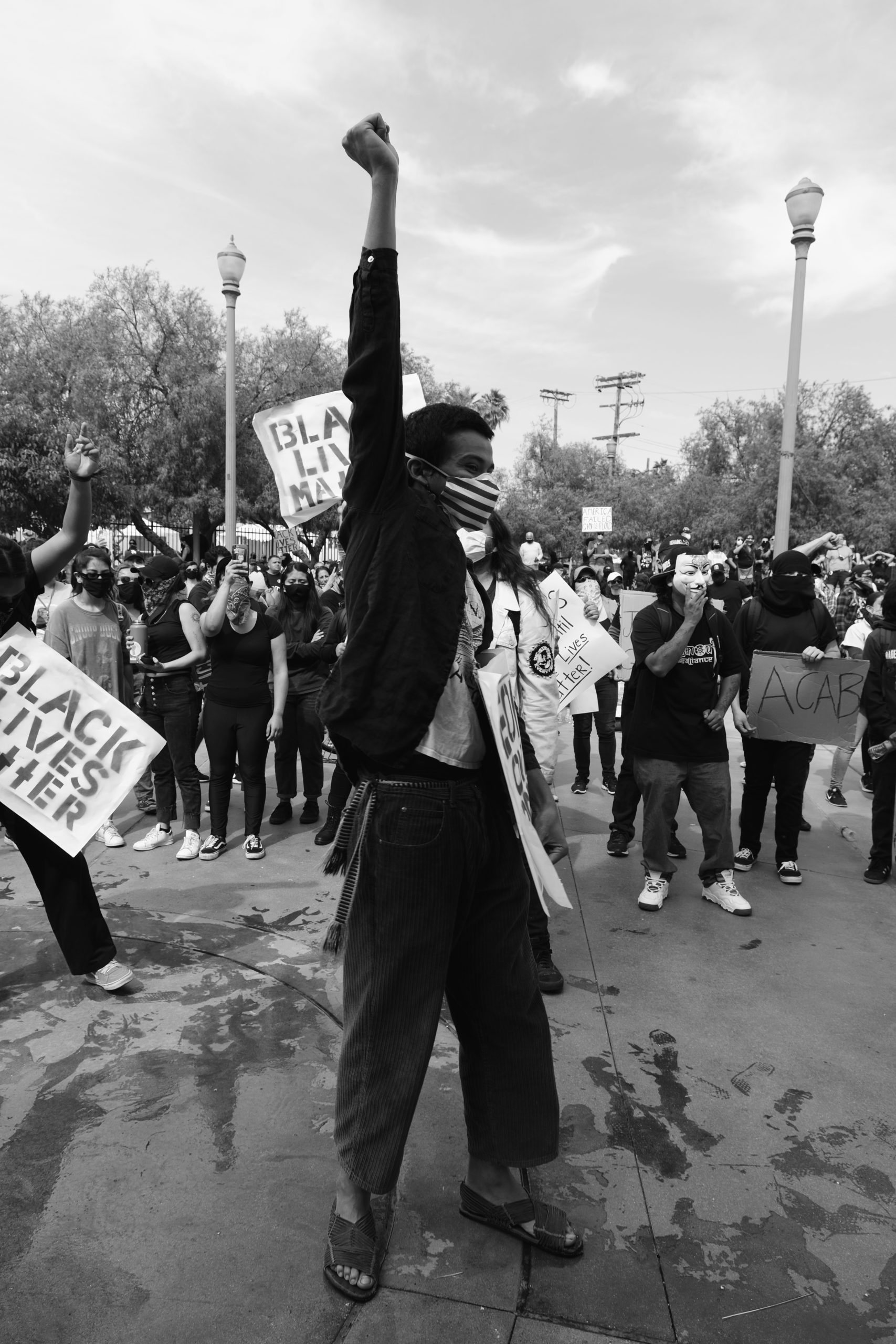
In many countries, critical voices have emerged in relation to the broad scope of restrictions on people’s right to assemble or the implementation of such restrictions, or other public concerns. Where physical protests were suspended or cancelled, protests were then transferred to online spaces. Environmental activists assembled around Fridays for Future moved their assemblies online. In Hungary, civil society put in place the first online protest on social media to oppose the Hungarian “corona law” and attracted nearly 40,000 viewers. The protest was shut down after half an hour. In Poland, human rights advocates protested virtually against the new abortion bills during Covid-19 lockdown by posting selfies with the #ProtestAtHome hashtag. In the United States, a Pew Research Center analysis of tweets found that the #BlackLivesMatter hashtag on Twitter had been used roughly 47.8 million times between May 26 and June 7, 2020, a hitherto unprecedented figure. According to another survey conducted by Pew Research in June 2020, 54 percent of social media users of ages 18 to 29 responded that they had used social media platforms in the last month to look for information about protests or rallies happening in their area. This indicative list of online protests depicts an inescapable trend of the future. An essential by-product of real life problems, law comes as the next natural step. This Article seeks to contribute to this discussion by delimiting and defining the status and contents of a right to protest online on a global scale.

I. International Legal Foundations of the Right to Peaceful Assembly

In 1948, the Universal Declaration of Human Rights (UDHR) recognized everyone’s right to freedom of peaceful assembly and association (art. 20, § 1). Article 21 of the International Covenant on Civil and Political Rights (ICCPR) reaffirmed and elaborated on this right, as well as set out exceptions to it:

“The right of peaceful assembly shall be recognized. No restrictions may be placed on the exercise of this right other than those imposed in conformity with the law and which are necessary in a democratic society in the interests of national security or public safety, public order (ordre public), the protection of public health or morals or the protection of the rights and freedoms of others.”

A number of regional human rights instruments complement this broader international framework, enabling direct enforceability in national jurisdictions, notably the European Convention on Human Rights (ECHR) (art. 11), American Convention on Human Rights (art. 15), American Declaration of the Rights and Duties of Man (art. XXI), African Charter on Human and Peoples’ Rights (art. 11), and Arab Charter on Human Rights (art. 24).

Given the interdependent nature of rights generally and the contents of the right to peaceful assembly specifically, this right is inextricably intertwined with other rights, primarily freedom of association and freedom of expression. Indeed, some of the international instruments such as the ECHR treat assembly and association as part of a singular legal right, secured in article 11, whereas others, such as the ICCPR, provides for two separate rights, codified in articles 21 and 22, respectively. Moreover, the very notion of assembly or protest would be meaningless if stripped of the conditioning cause, dissent, or displeasure which it seeks to express. As stated by the European Court of Human Rights (ECtHR), one of the aims of freedom of assembly is to secure a forum for public debate and the open expression of personal opinions (Ezelin v. France, ¶ 37). The link between the two rights is most apparent where the national authorities’ intervention against an assembly or protest is at least in part related to the “views held or statements made by participants.” (Stankov v. Bulgaria, ¶ 85).

The rights of assembly, association, and expression share a common element of necessary and tolerable critique for democracy and human beings to continue to progress:

“Freedom of expression constitutes one of the essential foundations of a [democratic] society, one of the basic conditions for its progress and for the development of every man. … [I]t is applicable not only to “information” or “ideas” that are favourably received or regarded as inoffensive or as a matter of indifference, but also to those that offend, shock or disturb the [s]tate or any sector of the population. Such are the demands of that pluralism, tolerance and broadmindedness without which there is no ‘democratic society’. This means … that every “formality”, “condition”, “restriction” or “penalty” imposed … must be proportionate to the legitimate aim pursued.” (Handyside v. United Kingdom, ¶ 49).

Likewise, freedom of assembly protects a demonstration that may “annoy or give offence to persons opposed to the ideas or claims that it is seeking to promote.” (Platform Arzte fur das leben v. Austria, ¶ 32).

II. The Case for the Right to Protest Online

To begin with, there is no express articulation in the existing binding corpus of international instruments of a right to protest online. At the same time, there is no prohibition of it. Indeed, the very phrasing of the relevant provisions in the international instruments referenced above is neutral as to the form of manifesting protest. These provisions do not limit the freedom of assembly or the corresponding freedom of association or expression only to physical presence, encounter, or expression. To recall article 21 of the ICCPR: “[t]he right of peaceful assembly shall be recognized;” and article 11 of the ECHR: “[e]veryone has the right to freedom of peaceful assembly and to freedom of association with others…” Given the growing magnitude of digital interaction, one might observe a higher degree of association happening online than offline.

In any event, the relevant judicial praxis, as evidenced by judgments of international courts, has set no bar to applying these rights to events occurring in, or disputes emerging from, the online sphere. For instance, ECtHR jurisprudence has routinely applied the rights and freedoms guaranteed in the ECHR to the internet and new technologies. While no case has been brought to the ECtHR on the specific right to protest online, there are numerous judgments on the right for private and family life, including right to respect for correspondence. Indeed, it would be truly incomprehensible to think of the right to privacy and correspondence as limited to classic, physical context only, which is overshadowed by online interaction. The same is true with regard to the freedom of expression. As observed by the ECtHR, “the [i]nternet has now become one of the principal means by which individuals exercise their right to freedom of expression and information, providing as it does essential tools for participation in activities and discussions concerning political issues and issues of general interest.” (Yildirim v. Turkey, ¶ 54). Any interference from national authorities will constitute a breach of the protected right unless it is prescribed by law, pursues a legitimate aim, and is required to achieve the aim in a democracy (¶ 56). This jurisprudential approach represents a naturally evolved application of the ECHR rights to online contexts. The same standard would be equally applicable to the right to protest online, such as in the scenario when internet service providers and intermediaries can potentially restrict online assemblies or the privacy of participants.

III. Existing Practice and Trends in U.N. Bodies

At a global context, on 6 July 2018, the U.N. Human Rights Council, a 47-member body, adopted by consensus a resolution on “the promotion and protection of human rights in the context of peaceful protests.” The resolution makes clear that, unlike the way it has been understood by some, an assembly does not require a physical gathering of people. Rather, “human rights protections, including for the rights to freedom of peaceful assembly, of expression and of association, may apply to analogous interactions taking place online.” The Human Rights Council expresses concern about undue restrictions that hinder internet users from gathering or sharing information at important political moments, thereby impairing their ability to organize and participate in assemblies. It recognizes that the safe and private usage of communications technology under the protection of international human rights law is essential for the realization of the freedom of expression and the right to peaceful assembly. Hence, the resolution calls on all states to stop or refrain from measures aimed at blocking internet users from obtaining or distributing information online. Although a soft law instrument by formal characterization, the resolution is a significant normative development because it is adopted by consensus under the umbrella of a U.N. organ.

The U.N. General Assembly has subsequently endorsed the Human Rights Council’s position. In a resolution adopted on 17 December 2018, the General Assembly called upon all states to ensure that “the same rights that individuals have offline, including the rights to freedom of expression, of peaceful assembly and of association, are also fully protected online,” in particular by holding back from internet shutdowns and content regulation in a manner that violates international human rights law. The resolution was adopted by a significant 154 votes in favor, none against, and 35 abstentions, yet it failed to pass without a vote.

The U.N. Special Rapporteur on the Rights to Freedom of Peaceful Assembly and of Association has also recognized that digital technology forms an integral part to the exercise of the rights of peaceful assembly and association. The Human Rights Committee, the treaty body that monitors implementation of the ICCPR, has affirmed that the right to peaceful assembly extends to online sphere. In its General Comment No. 37 on article 21 of the ICCPR, the Committee clarifies that this provision “protects peaceful assemblies wherever they take place: outdoors, indoors and online; in public and private spaces; or a combination thereof.”

Although all the instruments discussed above fall under the notion of “soft law” rather than representing legally binding obligations, they are nonetheless authoritative and unanimous in conceiving the application of relevant “hard law” framework to the rights to freedom of peaceful assembly and association online. Therefore, international law ought to protect the right to protest online.

IV. Process, Prospects, and Problems of the Realization of a Right to Protest Online in Real-Life Settings

Despite the existence of a clear and strong international legal protection of the right to peaceful assembly, this right is not absolute. In law and reality, it means that the right is subject to limitations. Such limitations, although clearly expressed in legal terms, provide space for potential contention and abuse. The general international human rights standard requires any restriction be (1) prescribed by law; (2) necessary in a democratic society; and (3) in the interests of national security or public safety, for the prevention of disorder or crime, for the protection of health or morals, or for the protection of rights or freedoms of others. Similarly in the digital context, the freedom to access and use digital technologies for purpose of exercising the right to freedom of peaceful assembly constitutes the default, with limitations being the exception. Whenever such exceptions are invoked, it is incumbent upon states to demonstrate the necessity of the restrictions and implement them only to an extent proportionate to the pursuance of legitimate aims. In no case can a restriction be applied or invoked in a manner that would result in the impairment of the essence of the right (Human Rights Committee, General Comment No. 31).

Being “one of the foundations” of a democratic society, the right to freedom of peaceful assembly should not be interpreted restrictively, unless in gatherings where the organizers and participants have violent intentions, actually incite violence, or otherwise reject the foundations of a democratic society. In order to avert the risk of a restrictive interpretation, the ECtHR has “refrained from formulating the notion of an assembly, which it regards as an autonomous concept, or exhaustively listing the criteria which would define it.” (Navalnyy v. Russia, ¶ 98). However, in its relevant jurisprudence, the ECtHR has clarified that the right to freedom of assembly covers “both private meetings and meetings in public places,” and can be exercised by “individual participants and by the persons organising the gathering.” (Kudrevičius v. Lithuania, ¶ 91). It is of distinct significance that a violation of, or interference with, the right to freedom of peaceful assembly does not need to amount to an outright ban of assembly, be it legal or de facto, but can consist in various other measures imposed by public authorities. The existing case law of the ECtHR has provided several examples (Kudrevičius v. Lithuania, ¶ 100), which could apply and be equally valid to an online context. A prior ban can create a chilling effect on those who may plan to participate in a protest and thus arise to the level of interference, even if the protest subsequently proceeds without obstruction from the authorities. A prior ban of an online platform intended to serve as a venue of protest can likewise have a chilling effect on those planning to participate in that protest. A refusal to permit individuals to travel with the goal of attending a meeting—which in the digital context could translate into blocking an individual’s access to the internet—amounts to an interference with the right to freedom of peaceful assembly. So do the measures taken during the protest, such as dispersal of the meeting, apprehension of participants, or other punishments inflicted upon protesters—the same measures can be equally applicable to participants and organizers of an online protest.

It has been increasingly common for states to shut down access to the internet and communication services during public protests, alternatively known as “blackouts” or “kill switches.” According to data collected by Access Now and the #KeepItOn coalition, one of the most commonly observed causes of internet shutdowns in 2019 was protests. Consequently, “when a government says it is cutting access to restore ‘public safety,’ in reality it could mean the government anticipates protests and may be attempting to disrupt people’s ability to organize and speak out, online or off.” When “a government claim that a shutdown is necessary to fight ‘fake news,’ hate speech, or incendiary content,” it “could be an attempt to hide its efforts to control the flow of information during periods of political instability or elections.” Indeed, internet shutdowns—the most frequent tool employed by governments to suppress online dissent and protest—is impermissible under international human rights law, even in times of conflict or other emergencies. As stated by four Special Rapporteurs on the field of freedom of expression respectively appointed by the U.N., the Organization for Security and Co-operation in Europe, the Organization of American States, and the African Commission on Human and Peoples’ Rights in a Joint Declaration on Freedom of Expression and responses to conflict situations, web content filtering and complete shutdown of communication systems “can never be justified under human rights law.” (¶ 4.c.). To substantiate this statement, it must be noted that whereas the rights to freedom of expression and freedom of assembly and association are not qualified as normatively absolute rights in the sense that they are subject of legally prescribed limitations, such limitations must be necessary and proportionate, and “must be narrowly interpreted.” (Kudrevičius v. Lithuania, ¶ 142). However, a complete internet shutdown is more analogous to a complete denial of the rights than a narrowly qualified limitation.

As the U.N. Special Rapporteur on the Rights to Freedom of Peaceful Assembly and of Association has explained, the right to freedom of peaceful assembly not only imposes a negative obligation on the state to not interfere with the enjoyment of the right; it also creates a positive obligations on public authorities to secure and facilitate the effective enjoyment of this right. States must therefore act in consonance with their international obligation to protect the right to freedom of peaceful assembly online by permitting protesters to peacefully gather online. In other words, states should ensure that access to the internet is not blocked, censored, restricted, or shut down entirely; that the privacy of those peacefully participating in an online assembly is respected; and that they face no actual or subsequent consequences for participation or organization of an online protest, such as arrest, detention, or imposition of penalties. The primary responsibility of states for the realization of the right of peaceful assembly also entails the responsibility to prevent non-state actors, including businesses, from unduly interfering with individuals’ freedom of peaceful assembly. According to Human Rights Council, states should “ensure effective remedies for human rights violations, including those related to the internet.”

Conclusion

Those who undertake to imagine the future of online protests or digital dissent on earth or in space can do so not only on the basis of their power of imagination but also knowing that the byproduct of that imagination is protected by law. As many tragic events in human history that have given rise to new legal and institutional inventions (to name a few, the United Nations, the Universal Declaration of Human Rights, and the Genocide Convention after Second World War), the Covid-19 pandemic and the subsequent governmental limitations on peaceful assembly have brought the right to protest into a new light. However, while the analysis here reveals the existence of legal foundations and safeguards of a right to protest online, including its composite principles, it nonetheless points to a demand for the development of a universally agreed framework and its enforcement. One out of many possible courses of action—at least as an initial step—could be the adoption by heads of state and government at the next U.N. General Assembly plenary of a joint declaration that affirms the right to protest online. In operational practice, courts are the obvious natural candidates to recognize and implement the right to protest online.


*       Qerim Qerimi is a professor of international law, international law of human rights, and international organizations at the University of Prishtina. He is also a visiting professor and member of the Law and Development Research Group at the University of Antwerp Faculty of Law. Additionally, he is a member of Council of Europe’s European Commission for Democracy through Law (Venice Commission) and chair of its sub-commission on the protection of national minorities, and serves as Rapporteur for Oxford International Organizations (OXIO). He has pursued postdoctoral research at Harvard Law School on a Fulbright scholarship.

       See generally, Cass R. Sunstein, Why Societies Need Dissent (2005); Josiah Ober, Political Dissent in Democratic Athens: Intellectual Critics of Popular Rule (2001).

Content, Forum, Online Scholarship

Fireside Chat with Prof. Alette Smeulers and Dr. Thijs Bouwknegt

Editorial note: This exchange is part of the ILJ Forum series “International Criminal Law and the Criminal Mind”.

International criminal jurisprudence, principally that of the International Criminal Tribunal for the former Yugoslavia (ICTY), notes that “under customary law, ‘purely personal motives’ do not acquire any relevance for establishing whether or not a crime against humanity has been perpetrated.”[1] Similarly, at the International Criminal Court (ICC), “the [Rome] Statute does not envisage any requirement of motive or purpose to prove that a policy to commit an attack against the civilian population exists.”[2] Against this background, we ask …


Alette Smeulers is professor at the University of Groningen, the Netherlands and works at the Law Faculty and the University College of Groningen. She studied political science and did her PhD in international criminal law. Her main expertise and research focus is on the psychology of perpetrators of mass atrocities. Her most important publications include an article on how ordinary people transform into perpetrators and a book chapter in which she presented a typology of perpetrators. She can furthermore be considered one of the founders of Supranational Criminology, the criminology which focuses on international crimes. In her research she also looks at concepts of individual criminal responsibility from a criminological perspective. She is a passionate scholar and teacher and has published widely in this field. See here for more about her research. She can be contacted [email protected].

Dr. Thijs B. Bouwknegt is historian of mass atrocity violence and transitional justice. He is a researcher at the NIOD Institute for War, Holocaust and Genocide Studies in Amsterdam (part of the Royal Netherlands Academy of Arts and Sciences, KNAW). Bouwknegt also directs the Master’s programme “Holocaust and Genocide Studies” at the University of Amsterdam. He has previously worked as researcher at Amnesty International, the ICTR and the ICC, and as international justice Correspondent for Radio Netherlands Worldwide and Editor of the International Justice Tribune. Since 2003, Bouwknegt has attended and monitored over 150 atrocity crime trials at the ICC, international tribunals (ICTY; ICTR; SCSL; ECCC; STL; KSC) and jurisdictions in Europe and Africa. Bouwknegt is currently finishing his book “Transitional History”, which deals with mass violence and transitional justice in Africa between 1884 and 2022, and is working on a project on atrocity and the illiberal use of transitional justice in settler colonies. He can be contacted at [email protected] and @thijsbouwknegt.

 

The mental element required to convict a person of international crimes, under the Rome Statute, varies from knowledge to specific intent.[3] Should these provisions have a more nuanced reference to the mental processes that take place when a person participates in these types of crimes?

A.S. Yes, I think they should. From a purely legal perspective these provisions might make perfect sense. But when we consider the psychology of perpetrators, some of the provisions could indeed be perceived as odd.

Let me explain: for the elements of a crime against humanity to be fulfilled the suspect needs to have the knowledge that his or her conduct is part of a widespread or systematic attack.[4] The point is that social-psychological research has consistently shown that human beings are social beings who look at others to see what appropriate behavior is and then tend to follow suit. In the famous Asch experiment, participants were placed in groups of six and were asked to indicate which line (out of three) was equal in length to another line. Not known to the actual participants, all other people in the group were confederates of the experimenter and had been instructed to deliberately give the wrong answer at times. When being alone almost no one erred; but when confronted with a unanimous wrong answer from all others in the group, many actual participants also gave the wrong answer. This experiment and social-psychological research in general show that people are likely to go along with the group and conform.

Interestingly they do so for different reasons. Some believe that the group must have it right and that hence their own perception is wrong (informational conformity). Others simply do not want to go against the group (normative conformity).  The first reason is especially intriguing and seems to be at odds with the knowledge requirement in international criminal law. To put it differently: the normal and ordinary human reaction to knowing that his or her act constitutes part of a widespread attack and thus knowing that many others participate, in itself can make the person believe that it must therefore be the right thing to do. I would say that those perpetrators seem less guilty than the ones who do not know this but still decide to participate. International criminal law as it stands today would, however, conclude the exact opposite.[5]

In my opinion, the law would indeed have much to gain if it takes a better look at the mental processes of the low-ranking perpetrators. Research on perpetrators has shown that many of them (albeit not all of them) are ordinary people acting within extraordinary circumstances. In other words, they commit their crimes in a very specific political, ideological, institutional, and social context. Roxin’s idea of organisationsherrschaft” gives room to explaining the power of organizational environment which to a large extent can shape the behavior of people working within it. Roxin’s analysis was strongly based on the lessons learned from the Holocaust, but it is confirmed by Milgram’s obedience to authority experiments. Milgram’s findings have often been misinterpreted: he did not show that people blindly obey just any order no matter what it is. What Milgram’s experiments show is that people are inclined to trust a person in a position of authority and conform to his or her request. Human beings are social beings and are heavily influenced by their surroundings, but they are not automatons: they do have a choice, although the choice is often much more confined than we can see from the outside. Roxin’s ideas seem to acknowledge that.

In that sense, it is good that the ICC took up these ideas by using the control theory as a liability theory because there is indeed a certain level of control. However, I have argued that the current requirements of almost absolute control in ICC’s case law are too high because human behavior can rarely be controlled to such a degree.[6] We need to acknowledge that people high up in the chain of command can stir and direct human behavior and thus indirectly incite international crimes. They are the ones who create the atrocity-producing situations which make others commit horrendous crimes, and therefore should be held responsible for that. International criminal law, however, is often too much focused on direct forms of incitement and ordering and — as in the case of the ICC — on absolute control. This narrow focus makes those higher up in the chain of command get off the hook too easily. By putting the focus and blame much more on higher-ranking commanders, international criminal law would become more just and therefore more effective.

T.B. I am not sure. I have come to realize that social scientists, even historians, expect way too much from what courts (international or national) could realistically contribute to empirical, judicially unbiased knowledge and understanding about how the processes and dynamics of mass violence work in the first place, and the role of individual perpetrators in that context. Also, as an observer and professional historian of legal and quasi-legal reckonings with mass violence through courts and truth commissions, I would feel uncomfortable to comment on what courts “should do” or what states ought to consider to include, or change, in the mandates of the institutions they set up. That is not my mandate.

However, when I gauge the modern development of international justice, it is quite clear to me that the orientation of the political, legal, and activist agents who set up the ICC in the 1990s was primarily towards the victims. The ICC was supposed to be forward-looking, not reflective: founders of the ICC were envisaging lofty extra-legal effects such as deterrence and contribution to peace, rather than unraveling root causes and discerning macro-, meso-, and micro motives. More importantly, inspired by positivistic human rights ideologies, the founders desired the ICC to be victim-centred instead of being perpetrator-centred: give the victims a voice, have them participate (distantly, phantom-like, through counsel, though), and compensate their suffering through reparations. Such a desire trumped over the need to hear the suspects. The goal was no longer to fathom the undercurrents of mass violence, nor to get to the bottom of why it happens and why individuals might get caught up, or choose to participate, in it (a false expectation raised in light of Israel’s “didactic” trial of Adolf Eichmann in the 1960s). As a result, at the ICC the trial-encounters with alleged perpetrators — the traditional sole focus of individual criminal proceedings — are shallowed, rendered less important: the goal has become to simply adversarially investigate, prosecute, convict, and sentence them, and have them pay reparations if convicted. Defendants — with exceptions like Bosco Ntaganda — have also become increasingly reluctant to testify or to address the ICC judges. We saw in the case of former Congolese militiaman Germain Katanga that there are risks in doing so. Controversially, after Katanga gave a statement, the judges changed the charges accordingly and convicted him.

Having said so — and having observed all trials at the ICC since 2006 — I find that there is another dynamic at play, which might provide an explanation as to why the ICC produces hardly any usable resources on perpetrators’ motives and circumstances. There is a trial record, but it is a problematic historical source. First, the records hardly ever provide any perpetrator testimony. Second, even while international judges are not psychologists and are not professionally trained to deal with those very complex matters, they “could” have chosen a different style in proceedings, a style that is more inquisitorial and more oriented towards “understanding” the accused’s reasons for doing what they did. For example, the International Crimes Chambers at The Hague’s District and Appeals Courts do things very differently, and often engage extensively in “conversations” with accused persons at trial, even if they do not always opt to provide answers. Coming from a civil law tradition, I am always quite surprised by the lack of engagement of individual international judges (or chambers as a whole) with the defendants: they never choose to question, examine, or enter into a dialogue with accused persons, but rather take a distanced approach as “arbiter” over the competing narratives and theories offered by the Prosecution, Victims’ Representatives and the Defense. So, to me, it is not so much the Rome Statute that poses an obstruction or a problem; it is the way in which judges actually operate and position themselves — opting to settle with adversarial custom — towards suspects of mass violence.


To what extent does the disregard of motives in international criminal trials come at the expense of not entirely understanding, in the international legal profession, how the human mind works in connection with the commission of atrocity crimes?

A.S. By not taking the underlying psycho-sociological processes and the mind of the perpetrator into account, international criminal law risks not only putting most of the blame on the wrong people but also failing to identify the true causes and true nature of such crimes. The power of top leaders to create atrocity-producing situations has been underestimated and needs to be better understood and addressed. Whereas there are legal provisions that prevent low-ranking soldiers from relying on the defense of superior orders,[7] the true nature of the pressure that results from explicit and implicit orders is still not completely understood.

Kelman and Hamilton have developed the term “crimes of obedience.” They did not mean to say that each individual is a passive automaton and blindly follows orders. Rather, they were saying that we trust people who have legitimate authority, such as heads of states, government officials, and military leaders. It is a natural human tendency to follow their lead. Low-ranking soldiers have often not only stated that they merely obeyed orders, but I also found in my own research that they thought they were doing the right thing — at least within the duty they perform. Such statement has often been brushed aside as a petty excuse, but I think it is important to look more into who made the soldiers believe that committing horrendous crimes was the right thing and how such person did this. Not making this inquiry works to the advantage of the top leaders who play a crucial role in generating atrocities and helps them escape the blame too easily. More importantly, not sufficiently listening to the foot soldiers prevents us from fully understanding the causes of atrocities. This is a missed opportunity, because merely locking up the perpetrators is not going to make the world a safer place. To make it safer we need to address the underlying causes. In order to do so we need to understand them first.

T.B. I would not say that all international(-ized) criminal trials disregard motive and/or personal circumstances, particularly in some civil law courts with universal jurisdiction, or even at some hybrid tribunals. At the first trial before the Extraordinary Chambers in the Courts of Cambodia, for instance, Kaing Guek Eav (alias “Duch”) – who confessed his crimes – was invited to attend and responded at large to many questions relating to why he did what he had done in the 1970s, and how he reflected on it 40 years later. At the Special Court for Sierra Leone, former President Charles Taylor — in his own defense — was allowed to testify for hundreds of hours.[8] In the Netherlands, I have attended many atrocity crime trials in which the judges inquired in-depth about what motivated the defendants to participate in certain acts. This month (April 2022), for example, the Dutch war crimes chamber spent three days in interrogating and talking with a Dutch-Ethiopian suspect, Eshetu Alemu. The chamber asked how the suspect got caught up in mass murder and torture in the late 1970s, and how he thinks and feels about that now – including towards victims. There are, thus, opportunities to gauge at least post-fact explanations and rationalizations of the historical mind. The ICC is different. In April also started the trial over the alleged atrocities in Sudan’s west-Darfur region. But from the outset, the judges did not even bother to ask the accused, Ali Muhammad Ali Abd-Al-Rahman — who is a Muslim in his 70s and was practicing Ramadan during the trial — whether he was able to concentrate on the proceedings.

Whether one comes out of such judicial experience with useful, let alone truthful, information is another massive question. Calculating potential life consequences (i.e., a long prison sentence), the perpetrator rationalizes the past in a trial setting and comes up with what the late anthropologist Bert Ingelaere called “pragmatic truth” — which oftentimes is not “the” (entire) truth. Could cosmopolitan legal professionals without (social) psychology training really comprehend how “the mind” of divergent actors works in the context of mass violence, which took place in foreign countries? I do not think so. I do not think it is possible for judges to come to a consensus about any generalizable feature of the mentality of atrocity, for three simple reasons. First, a courtroom is something completely different from a professional psychological “laboratory.” Second, international judges deal with too wide a range of different individuals from myriad societies with completely different cultures, practices, and norm-and-value systems. It would be empirically odd to draw generalities from these culturally, socially, and economically incomparable individuals about “the mind”. Third, not a single case of mass violence is similar with one another, even while political scientists want us to see it that way: a Rwandan farmer probably killed for completely different reasons than a Syrian member of the Shabiha. The legal umbrella label of “atrocity crimes” — which includes dozens of violent acts against both humans as well as historic, cultural, or military objects — does little justice in capturing the unique local dynamics and multiple layers of actual mass violence. Apart from those aspects, what can retrospectively and anachronistically asking oftentimes aged defendants about the crimes they committed many years — sometimes decades — ago, really tell us about their actual mental state in the past?

Trying to understand both the “agency” and “structure” of mass violence (in addition to rendering a legal opinion about it and meting out punishment) is thus a complex, perhaps impossible, challenge — that requires deep and long-term engagement, such as in some proceedings at the ICTY and International Criminal Tribunal for Rwanda (ICTR). This challenge is even more prominent at the ICC, which is essentially a broad collection of mini-tribunals dealing with widely diverging “situations” and “perpetrators”. What can a single judge — let’s say an aged white man from a modern western country that has not experienced any war, violence, or repression for nearly a century — really learn and understand about the “criminal atrocity mind,” when they — rather artificially and intermittently — deal with incomparable suspects (a former child soldier, a former President, a former teacher, a former nurse) who have committed incomparable crimes (enlisting child soldiers, smashing a mosque’s door, ordering a massacre, killing drug dealers) in completely different social-historical contexts (Myanmar, Venezuela, Afghanistan, Democratic Republic of the Congo, etc.)?

A.S. Thijs, you questioned whether “an aged white man from a modern western country that has not experienced any war, violence, or repression” can “really learn and understand about the criminal atrocity mind.” That is true, but the judge does not need to fully understand as this might indeed be an impossible task. The point, however, is that it is the job of an ICC judge to decide on the extent of blameworthiness in the context of atrocity crimes. This job can only be done by trying to understand the actual social context and the psychological reality in which the suspects committed their alleged crimes. The judge needs to make an effort and get a good grasp of what has happened and the mental state of the suspect. Otherwise, they should merely judge on the basis of actus reus and not mens rea. In the Ongwen case, for instance, the horrendous past and its devastating effect on Ongwen were in my view not sufficiently considered. How can it be that in the Lubanga case it is acknowledged that the children who were recruited to become child soldiers suffer a long term trauma and that their development was strongly affected,[9] and yet a former child soldier who then stands trial was merely told that there was no duress and that he could and should have escaped?[10] I am not saying it is easy — quite the contrary — but we need to take the social context in which the perpetrators operate and their state of mind into account. If that cannot be done sufficiently then we should maybe reconsider whether to try these cases, because international criminal law can only be effective if it is fair.

T.B. Thank you, dear Alette, for bringing Ongwen into our conversation. I have observed this trial extensively, and have written together with criminologist Barbora Holá on the problems you raise, and I fully agree with you. The judges there heavily leaned towards understanding the victims’ trauma and needs, while they basically disregarded Ongwen’s presence in the courtroom — including his unsworn statement, in which he narrated how he was victimized when he was 9 years old, and how his parents were murdered by his abductors. More fundamentally, the Ongwen trial was marred by contradictions as to who the ICC considers victims or perpetrators. There was no space to explore the grey zones.


If we accept one of the objectives of international criminal justice is deterrence and prevention of atrocity crimes, should personal motives to participate in the commission of these crimes play a more central role in international trials, so we can understand the motives of the crimes we aim to prevent?

T.B. I understand the symbolic tropes of “deterrence” and “prevention” as philosophical or utopian phrases that legitimize the existence of international criminal justice institutions socio-politically. The empirics are against the hypothesis that atrocity crime trials — whether national, hybrid, or international — contribute to immediate or future peace, or processes of reconciliation that may then lead to peace. Nuremberg did not stop nations — including those involved in running the military tribunals — to inflict mass atrocity violence themselves soon thereafter; over 5,000 trials for politicide through a national judicial system (1992-2010) did not deter new wars in Ethiopia; Srebrenica happened two years after the ICTY’s establishment in 1993; the Democratic Republic of the Congo has been in permanent war since 1994, despite ICTR and ICC’s “interventions”. Last but not least, did international justice deter Russia from attacking Ukraine, or did Russia weaponise the language of international law to legitimize its acts? The question at hand thus triggers more questions than there are scholarly answers. Could trying to understand Thomas Lubanga Dyilo’s (a former psychology student himself) motives to use child soldiers as bodyguards, help prevent Ahmad al-Faqi Al Mahdi (a former primary education student) from destroying the door of an ancient mosque with a pickaxe?

Moreover, atrocities are always driven by some political motives. If prevention is a goal, then trying to comprehend the political processes more generally, rather than asking the defendants why in the distant past they did an “alleged” crime — which they often deny — might provide more guidance? In addition, oftentimes we already know that defendants would rationalize and explain what they did by attributing it to particular political or social circumstances, external pressure, or — and it is a reason often forgotten — fear or opportunity. So, we are back to “Arendtism”: human beings are just susceptible to violence-producing situations when circumstances either direct or allow them. If prevention of mass violence is a purpose — even while genocide scholars, particularly historians who study the longue durée of mass violence, agree that mass violence is, sadly but simply, a cyclic continuum in the history of homo sapiens, and thus unpreventable — of individual criminal trials, then — perhaps at maximum — trying to understand an individual’s motive could only assist in preventing that individual from atrocity-crime recidivism.

Not many (would-be) perpetrators fear international justice, for they (ironically including some leaders of large democracies like the United States of America and India) resist to subscribe to it. In plain evidence today are Vladimir Putin, Bashar Assad, and the Tatmadaw. Perhaps what judges could at least apprehend about “the mind” of many perpetrators, is that those people hardly ever see themselves as perpetrators at all — but rather as liberators, peacemakers, or even victims. Yes, they were involved in violence, but they believe it was the right thing to do and thus not criminal. The only time international judges took this self-perception into consideration was in the trial of the Civil Defence Forces’ leadership in Sierra Leone. What is regularly at play, however, is a collision between different world views and appraisals of realities, including mentality, on the ground.

A.S. Thijs, I fully agree with your last statements on Putin and others but I strongly disagree with one of your other points, namely that: “trying to understand an individual’s motive could only assist in preventing that individual from atrocity-crime recidivism”. I totally understand that judges are not psychologists, but they can make more use of the work of social scientists to better understand the social-psychological reality in which perpetrators operate. It would lead to a fairer international criminal justice system and a better understanding of atrocities. In this regard, using typologies of perpetrators as a general and theoretical framework can help. You are right that perpetrators differ: they have different roles, ranks, and motives, and they operate in different political and cultural contexts. However, there are also many similarities even across cultures and time periods. It is important to understand both these differences as well as the similarities and to understand how all these different individual “cogs” (small, bigger, and biggest) play a role in a destructive or genocidal machine. That understanding is important in order to prevent such crimes from happening in the future. It is also important in the prosecution and sentencing of the perpetrators.

Let’s take the example of Ukraine. It matters whether a Russian foot soldier participates in the attack (i) because he genuinely believes that Ukraine is committing a genocide against the Russian people there (which he might believe because he is told so) and that he comes to their rescue; or (ii)  because participation will give him the opportunity to outlive his violent urges; or (iii) because he is forced to participate; or (iv) because he is just doing as he is told in order to enhance his chances to build a career in the military. It matters if we look at the aims, functions, and purposes of the international criminal justice system; it also matters because we can then better see how the Russian top leaders managed to create an atrocity-producing situation. It shows how the foot soldier who believes that he needs to come to the rescue of his former fellow countrymen has been affected by the propaganda of the state authorities. Uncovering his motive shows where the main (not sole) guilt lies. We need to understand the dynamics between the perpetrators: understand how someone like Putin, a head of state, affects the beliefs and hence behavior of his foot soldiers. The international criminal justice system can much better fulfill its role and task if it uncovers, blames, and subsequently deters a powerful head of state like Putin than it could ever do by blaming and deterring the foot soldier. The foot soldier is not innocent (unless he is coerced), but he committed his crimes in a context that was created by political top leaders and his close associates, who made him believe that committing horrendous crimes is the right thing to do as an act of self-defense. Uncovering these motives would show much better how dangerous propaganda (and fake news) can be and make us get closer to understanding the actual cause of such crimes. We absolutely need to more efficiently criminalize and prosecute creating such atrocity-producing situations and for that we need to understand motive.

[1]       See, e.g., Prosecutor v. Tadić, Case No. IT-94-1-A, Appeal Judgement, ¶ 270 (ICTY July 15, 1999);  Prosecutor v. Kvočka, Case No. IT-98-30/1-A, Appeals Judgment, ¶ 463 (ICTY Feb. 28 2005); see also Prosecutor v. Jelisić, Case No. IT-95-10-A, Appeals Judgement, ¶ 49 (ICTY July 5, 2001); Prosecutor v. Krnojelac, Case No. IT-97-25-A, Appeals Judgement, ¶ 102 (ICTY Sept. 17, 2003); Prosecutor v. Martić, Case No. IT-95-11-A, Appeals Judgement, ¶ 154 (ICTY Oct. 8, 2008).

[2]      Prosecutor v. Ruto, ICC-01/09-01/11, Decision on the Confirmation of Charges Pursuant to Article 61(7)(a) and (b) of the Rome Statute, ¶ 213 (Jan. 23, 2012).

[3]      Rome Statute of the International Criminal Court arts. 6, 25(3), 30, July 1, 2002, 2187 U.N.T.S. 90 [hereinafter “Rome Statute”].

[4]      Rome Statute art. 7(1).

[5]      See id.

[6]      See also Prosecutor v. Lubanga, ICC-01/04–01/06, Separate Opninion of Judge Adrian Fulford, ¶ 18 (Mar. 14, 2012); Prosecutor v. Ngudjolo Chui, ICC-01/04–02/12, Concurring Opinion of Judge Christine Van den Wyngaert, ¶ 42 (Dec. 18, 2012).

[7]      See, e.g., Rome Statute art. 33.

[8]      See also Thijs B. Bouwknegt, Unravelling Atrocity: Between Transitional Justice and History in Rwanda and Sierra Leone, in Genocide: New Perspectives on its Causes, Courses and Consequences 217 (Uğur Ümit Üngör ed., 2016).

[9]      Prosecutor v. Lubanga, ICC-01/04-01/06, Decision on Sentence pursuant to Article 76 of the Statute, ¶ 39 (July 10, 2012) (citing testimony of expert witness Ms. Schauer).

[10]     Prosecutor v. Ongwen, ICC-02/04-01/15, Trial Judgment, ¶ 2668 (Feb. 4, 2021).

Content, Essays, Online Scholarship

Executive Authority Under the U.S. Constitution to Enter a Pandemic Treaty or Other International Agreement

Sam F. Halabi*
[Click here for PDF]

Introduction

The devastating effects of the COVID-19 pandemic can be told in numbers. As of this writing, more than 4.5 million people worldwide have died, 219 million have been infected, and many face weeks, months, or years of “long COVID” recovery.[1] For children, long COVID occurs for approximately ten to thirteen percent of cases, imposing potentially life-long disability.[2] Economically, the productivity, job loss, and response costs exceed sixteen trillion dollars in the United States alone.[3] The International Monetary Fund estimates that, through October 2020, the global cost stood at twenty-eight trillion dollars.[4] Supply chain disruptions now vex every country in the world.

Nearly all governments agree that the numbers reflect a world that was poorly prepared when the new pathogen emerged and struggled to coordinate its response after the threat became clear. As a result, full recovery may be delayed by a decade or more.[5] While vaccination rates have climbed to herd immunity thresholds in the wealthiest countries, ninety-five percent of the world’s population in low-income countries does not have access to a first dose.[6] The World Health Organization (“WHO”) was disempowered from leading the global response and possessed few instruments to do so under the only existing international disease control agreement, the International Health Regulations (2005) (“IHR”), adopted after the global experience with SARS-CoV-1 in 2002–03.[7]

Governments further agree that better coordination and communication between governments is necessary, but disagree on the form that improved coordination and communication should take. On March 30, 2021, the leaders of twenty-six countries, the WHO and the President of the European Council called for the World Health Assembly to consider the adoption of a pandemic treaty, given the glaring gaps in the national and global responses to the COVID-19 pandemic.[8] In May 2021, the seventy-fourth session of the World Health Assembly took the extraordinary measure of calling a Special Session, scheduled for November 29–December 1, 2021, to consider precisely such a legal instrument.[9] The United States has remained circumspect with regard to a formal treaty, publicly articulating support for a revision of the IHR (2005) and some improvements to governance, for example, more transparent decision-making about the declaration of emergencies and recommended measures, at the WHO, while remaining open to the development of a new international agreement.[10] This Essay aims to clarify what the United States may and may not do under its domestic constitutional framework, both to inform its global partners and to shed light on how the U.S. Constitution structures international affairs during emergencies.

This analysis prioritizes what is possible. What the United States ultimately determines is in the interest of its citizens may differ. The United States, for example, may simply determine that a comprehensive and binding treaty is not in its interest. The issue of vaccine access has featured prominently in the global conversation leading to the declaration that a pandemic agreement may be necessary.[11] Any visibility as to vaccine access and equity would cast the United States in a poor light, to say nothing of the substantive provisions of a treaty addressing vaccine access, which could affect the profitability and flexibility of companies based in the United States. Over the course of the pandemic, U.S.-based companies developed three of the four most successful vaccines and, in its contracts for their procurement, the U.S. government prohibited the possibility that doses might be shipped elsewhere, even to those countries that may be in desperate need.[12] The United States may in fact favor the establishment of a new treaty, but insist on certain reforms at the WHO governance level before entrusting it with new and perhaps powerful authority to prevent, prepare for, and respond to, future pandemics.[13] The United States may also be staking out a preliminary position of neutrality, so that even its willingness to join may secure benefits from its participation in negotiation.[14]

Just as relevant is how the U.S. negotiating position will be shaped by its domestic constitutional framework. The U.S. Constitution charges the President with responsibility for serving as the voice of the country in international affairs, with an important role for Congress, and much less so the U.S. Supreme Court.[15] Article I vests Congress with authority over most matters that require the raising and expenditure of revenues, the regulation of the armed forces, the definition of the content and relevance of international law, and the regulation of foreign commerce.[16]

Article II vests authority with the President to negotiate treaties, although two-thirds of the Senate must concur with the treaty text in order for it to become law.[17] Separately, Article II authorizes the Executive to “receive Ambassadors,” which is generally interpreted to mean that the President is entrusted with the authority to recognize foreign governments and relatedly, conduct diplomacy.[18] The President is also the Commander-in-Chief, giving him independent authority with respect to national security.[19]

With respect to the judiciary, Article III dedicates to the U.S. Supreme Court original jurisdiction over certain matters affecting foreign relations, but the Court largely plays a peripheral role in the formation and execution of foreign policy and avoids adjudication of “political questions” about foreign policy dedicated to Congress and the President.[20] For example, the U.S. Supreme Court has determined that it is not competent to determine whether the U.S. Senate must concur with a President’s decision to exit a treaty, even though it is constitutionally clear they must do so in order to join the same treaty.[21]

Despite the availability of a specific constitutional mechanism to govern treaty relations, the presidentially negotiated, Senate-confirmed treaty has fallen into desuetude. Since the Franklin D. Roosevelt administration, only six percent of international agreements have gone through the Senate ratification process.[22] While the last Senate-confirmed treaty was the New START treaty with Russia, other agreements have been adopted through both chambers of Congress with the support of more than two-thirds of the Senate.[23] It is clear from the composition and statements from current U.S. Senators that a pandemic treaty has no chance of achieving two-thirds concurrence of the chamber as it is now comprised.[24]

Outside the treaty process, the President may nevertheless conclude agreements, including so-called congressional-legislative agreements accomplished with varying levels of assent by Congress, and sole executive agreements, concluded within the scope of the President’s Article II authority. These kinds of agreements have been used since the Founding and are the most likely routes to U.S. participation in an international pandemic agreement.

The United States has faced this situation before. It joined the Paris Climate Accords through negotiation by the President (through the Secretary of State) carefully crafting its legal position to fall within domestic authorities. The President enjoyed his widest authority for provisions governed by the U.N. Framework on Climate Change (which the Senate ratified in 1992) and the Clean Air Act (which Congress had adopted by large majorities in 1970).[25] The President’s position was similarly strong with respect to provisions that affected information-sharing, which has been interpreted as authorized by Article II since the adoption of the U.S. Constitution.

The purpose of this Essay is to identify how the United States may join an international pandemic agreement, especially when both congressional chambers are so evenly divided, and one party has so clearly expressed its pessimism about a pandemic treaty as well as international agreements in general, leaving the most likely constitutional pathways presidential action based in existing statutory authorizations or the exercise of sole presidential authority under the U.S. Constitution.[26]

I. The U.S. Constitutional Framework

This Part analyzes the constitutional framework for how the U.S. may enter into international agreements: the dedicated treaty process between the President and the Senate; explicit and implicit agreement between the President and both congressional chambers; and sole executive authority based on Article II powers.

A. Treaties

The U.S. Constitution authorizes the President to “make Treaties” provided that “two thirds of the Senators present concur.”[27] Once properly adopted, treaties become binding federal law, just like statutes adopted through bicameral deliberation and signature by the President.[28] While the importance of treaties as federal law is made clear in the constitutional text, especially the Supremacy Clause, the Founders never envisioned them as the exclusive means by which the United States would enter into international agreements. More importantly, the effect of treaties is legally divided between their internal effect, where they may impart individually enforceable rights, and their external effect, where they influence the relationship of the United States to international partners including both foreign governments and international organizations.[29]

Because the Founders never intended for the Presidential-Senatorial treaty-making process to serve as the only channel for formalizing international commitments that could bind the United States internationally, they also addressed different forms of international agreement, particularly in Article I.[30] The treaty process was intentionally arduous given the potential to create federal law without the House of Representatives.[31] Agreements made with the consent of the Senate are historically rare. Nearly ninety percent of international agreements (approximately 15,000 agreements) that the United States has entered since World War II have been approved outside the constitutional treaty process.[32]

B. Congressional-Executive Agreements

In addition to treaties, Article I, Section 10 of the U.S. Constitution speaks of “agreements,” “compacts,” “confederations,” and “alliances,” all of which the United States used from its earliest years as a constitutional republic. Fifty years from its founding, the United States concluded nearly thirty published executive agreements outside of the treaty process.[33]

These other forms of approving international agreements fall into two general categories: congressional-executive (or legislative-executive) agreements and sole executive agreements, created under the President’s own constitutional authority to “take care” that the United States’ laws be faithfully enforced[34] and pursuant to responsibilities collectively understood as the President’s foreign affairs power.[35] Constitutionally, the President may enter into an executive agreement, which may be defined as a “treaty” under international law, even if it could not be used to justify enforceable rights vis-à-vis states or individuals within U.S. territory or as understood within the meaning of Article VI’s Supremacy Clause.[36]

1.     Current Statutory Authority

When Congress adopts statutes, they may and often do shape the President’s authority to conduct diplomacy, for example authorizing sanctions, or encouraging support of international organizations. Congress has adopted a number of statutory provisions that authorize the President to undertake broad coordinating action to advance global health. Current statutory authorizations include language that the President, Secretary of State, and Secretary of Health and Human Services may consult when deliberating the content of an international pandemic agreement.

For example, when Congress authorized the United States to join the WHO, it recognized the “widespread prevalence, debilitating effects, and heavy toll in human life” of the “diseases of mankind,” and declared “it to be the policy of the United States to continue and strengthen mutual efforts among the nations for research against [such] diseases.”[37]

Moreover, the United States Leadership Against HIV/AIDS, Tuberculosis, and Malaria Act of 2003 directed the President to “establish[] a roadmap to link investments in specific disease programs to the broader goals of strengthening health systems and infrastructure and to integrate and coordinate HIV/AIDS, tuberculosis, or malaria programs with other health or development programs, as appropriate.”[38] Similarly, the Pandemic and All-Hazards Preparedness Act of 2006 and the Pandemic and All-Hazards and Advancing Innovation Act of 2019 provided broadly worded congressional authorizations for the United States to engage and support international organizations and partners with respect to national security threats posed by infectious and anti-microbial resistant diseases.[39] All of this language could be used to justify specific commitments under a pandemic treaty.

This is almost precisely how President Obama joined the Paris Climate Accords in in 2016 (and how President Biden anchored rejoining in 2021). In negotiating the Paris Agreement, the Executive Branch based its authority upon (1) the President’s plenary constitutional power in the foreign affairs field; (2) federal legislation, particularly the Clean Air Act; and (3) existing treaties, most importantly the 1992 Framework Convention on Climate Change, which the United States under President George H.W. Bush joined with relatively rapid Senate consent.[40] The text of the Paris Agreement distinguishes between the mandatory “shall”—indicating binding legal obligations—and the precatory “should”—indicating non-binding political statements.[41] The U.S. delegation succeeded in tailoring the text to the scope of the President’s constitutional exercise of his authority as it was then interpreted.[42]

2.     Advanced Congressional Authorization

Congress may also authorize the President’s conduct of diplomacy in advance. While current statutory authority provides one body of law through which the President may shape pandemic treaty provisions, an alternative route is to obtain advance authorization from Congress, by simple majorities, for broad authority leading to the pandemic negotiations.[43] This is how trade agreements have been concluded for over a century.[44] In 1890, Congress authorized the President to bargain over reciprocity in tariff reductions with foreign governments with no requirement of subsequent legislative implementation.[45] In 1934, Congress authorized the President to not only bargain freely over tariff reductions, but to address other barriers to international trade and accomplish reductions through proclamation.[46]

Congress could also adopt so-called fast-track authority used for more current international trade agreements. Fast-track authority is the delegation of authority by Congress ex ante so that the President may pick negotiating partners, set terms of accords, sign, and enter into them, draft implementing bills that advise the congressional process, limit debate, prohibit amendments, and abbreviate periods for up-or-down votes.[47] This was the approach for the original North American Free Trade Agreement in 1993 and its revision as the United States-Mexico-Canada Agreement in 2018.[48]

Such authority could be added to legislation currently circulating in Congress aimed at addressing pandemic preparedness and response. The Global Health Security Act of 2021 provides for activities to be conducted acting through the Director of the Centers for Disease Control and Prevention to combat SARS-CoV-2, COVID-19, and other emerging infectious disease threats globally, including efforts related to global health security, disease detection and response, health protection, immunization, and coordination on public health.[49]

C. Sole Executive Agreements

Finally, the President enjoys authority under Article II to conduct foreign relations without any congressional authorization. Since at least 1996, the U.S. President has issued executive orders tying his authority over national security determinations to the threat posed by infectious diseases. In 1996, President Bill Clinton identified new and emerging infectious diseases as a national security threat and ordered interagency cooperation led by the U.S. Centers for Disease Control and Prevention.[50] Most importantly, the order committed the United States to the revision of the IHR, at that time a relatively limited international instrument committed to the surveillance and quarantine of only six diseases.[51]

On his first day in office, President Biden issued an executive order requiring the Assistant to the President for National Security Affairs (“APNSA”) to: “coordinate the Federal Government’s efforts to address such threats and to advise the President on the global response to and recovery from COVID-19, including matters regarding: the intersection of the COVID-19 response and other national security equities; global health security; engaging with and strengthening the World Health Organization; public health, access to healthcare, and the secondary impacts of COVID-19; and emerging biological risks and threats, whether naturally occurring, deliberate, or accidental.”[52]

The United States joined the world’s most developed international infectious disease agreement, the IHR (2005), on the basis of its membership in the World Health Organization, and that body’s authority under Article 21 of its Constitution to adopt regulations in specific areas of international health delegated to it.[53] Arguably, U.S. participation in the IHR included tacit authorization from Congress as well, but because Congress authorized U.S. entry into the WHO, there was no subsequent need for the President to independently seek congressional authorization for the IHR’s adoption.

Even had Congress not played a background role, the United States joined the IHR out of national security interests articulated by the Executive Branch. Over the course of the late 1990s and early 2000s, infectious disease threats to global security proliferated, as did efforts to hide or obfuscate them.[54] The resurgence of cholera in South America, plague in India, and Ebola in Africa, as well as the emergence of HIV as a global pandemic, encouraged global unity in the belief that an international agreement was needed to address local infectious disease outbreaks that increasingly crossed international borders.[55] In 2000, the U.N. Security Council recognized for the first time an infectious disease, HIV/AIDS, as an international peace and security matter.[56] The precursor to the Security Council’s decision was the U.S. National Intelligence Council’s report emphasizing potential ramifications on international stability, which stated that “the persistent infectious disease burden is likely to aggravate and in some cases, may even provoke economic decay, social fragmentation and political destabilization in the hardest hit countries in the developing . . . world[].”[57]

The President therefore possesses significant independent authority under the U.S. Constitution to address global disease threats to international security, although, as outlined above, he is limited with respect to his ability to dedicate financial resources. Indeed, the IHR itself does require commitments to strengthening the health system, advancing disease surveillance, and regulating of ports of entry, but the United States already had such systems in place when it joined.[58] Outside of core disease detection and response capacities, the IHR largely committed the United States to information sharing, which has long been a proper source for sole executive action.[59] The content and process of pandemic treaty negotiations will be shaped by current international agreements, including the IHR (2005), which the United States joined as a sole executive agreement through its accession to WHO authority.

II. The Content of the Pandemic Treaty and the Legal Pathways for U.S. Participation

The components of a pandemic treaty are still under intense negotiation. At the very least, such a treaty would include provisions related to surveillance for new and reemerging pathogens, access to vaccines, international biosafety, an international system for monitoring and compliance, and information sharing with respect to a number of classes of data including research on diagnostics, therapeutics and vaccines.[60] Each of these aspects of the pandemic treaty will implicate a variety of sources of legal authority for the President to consult, if, as is likely, there is not sufficient support in the U.S. Senate for a binding treaty under Article II of the U.S. Constitution. The following issues have been frequently raised and, while not exhaustive, provide a representative list of issues the Executive will need to consider using the constitutional framework articulated above. The constitutional authorities described above will shape components of an agreement in the following ways.

A. Biosafety

The two leading theories regarding COVID-19’s origin are that the virus was transmitted from mammalian species to humans or through a leak from a biomedical research facility. Without engaging in the protracted debate as to origin of SARS-CoV-2 and prevention of future pandemics, an international agreement, even a non-binding one, may better prepare the world for the possibility of breaches in biosafety research with international ramifications. There are a finite number of research facilities worldwide that manage dangerous pathogens generally characterized as BSL-3 or BSL-4 in the laboratory context.[61] Published international guidance documents governing biosafety practices, such as inspection and early warning technologies,[62] could be codified in an international agreement.

With respect to U.S. participation, biosafety is an area where the President enjoys significant treaty and statutory authority. For example, the United States is already a party to the 1972 Convention on the Prohibition of the Development, Production and Stockpiling of Bacteriological (Biological) and Toxin Weapons and on their Destruction, so any aspect of a pandemic treaty that implicated a dedicated corps of inspectors for so-called “dual-use” research would provide an independent source of authority for the United States to join.[63] The Public Health Security and Bioterrorism Preparedness and Response Act of 2002 similarly authorizes a number of measures the President, the Secretary of Health and Human Services, and the Secretary of Agriculture may take with international partners and organizations on biosafety matters.[64]

B. Vaccine Access

The inequitable access to and distribution of COVID-19 vaccines constitutes the most important challenge facing the global COVID-19 response. Low- and middle-income countries asked to coordinate with wealthier countries and international organizations have lost nearly all trust in international legal instruments and actors as the investments they made in the IHR (2005) core capacities did not result in access to the most important medical intervention. Although both governments and public health professionals have confirmed that the world cannot fully reopen until the global population reaches herd immunity, wealthy countries continue to hoard vaccines and related technology.

The President’s authority over sharing finished vaccine doses, as opposed to the technology that makes them possible, is shaped by international agreements (although not Article II treaties) and existing statutory frameworks. The Defense Production Act authorizes the President, largely through executive orders, to direct private companies to prioritize orders from the federal government.[65] The President is also empowered to “allocate materials, services, and facilities” for national defense purposes, and take actions to restrict hoarding of needed supplies.[66] To bolster domestic production, the President may also offer loans or loan guarantees to companies, subject to an appropriation by Congress; make purchases or purchase commitments; and install equipment in government or private factories.[67] As Rizvi and Kapczynski write, the scope of the DPA has expanded since its World War II origins to include “‘military or critical infrastructure assistance to any foreign nation,’ and ‘critical infrastructure assistance and protection’ (which includes systems and assets, the degradation of which would have a debilitating impact on ‘national public health’), as well as ‘emergency preparedness activities.’”[68]

In 2011, the United States acceded to the Pandemic Influenza Preparedness Framework, which authorized the WHO to enter into agreements with academic institutions and pharmaceutical companies.[69] In exchange for access to influenza samples submitted to the WHO’s Global Influenza Surveillance and Response System, companies agree to donate real-time production of vaccines.[70] Currently, the agreement is limited to “pandemic influenza,” but part of the treaty negotiations may expand the agreement to include all pathogens with pandemic potential.[71] As of 2021, seventy-one “standard material transfer agreements” (“SMTAs”) had been entered into by the WHO, twenty-nine of which promised benefits like real-time vaccine production.[72] The United States could join other Member States to expand the PIP Framework to cover all pathogens with pandemic potential.

Not only could the United States join an Article 23 consensus expansion of the PIP Framework to all pathogens, as it did with the initial agreement, but it could use its statutory authority over technologies developed with its support to require that U.S.-funded biomedical companies share products or know-how with a global system. Pursuant to the U.S. Bayh-Dole Act of 1980, for example, inventions that receive federal funding belong to the U.S. government unless the recipients commit to commercialize the invention and agree to the government’s reservation of certain rights.[73] These include rights to protect the public against non-use or unreasonable use of publicly funded inventions.[74] One right is the government’s non-transferable right to royalty-free use of publicly funded inventions for or on behalf of the United States.[75]

Under the Bayh-Dole Act, march-in rights are only to be used when (1) the contractor fails to take effective steps to achieve practical application of the invention or (2) they are necessary to alleviate health or safety needs which are “not reasonably satisfied.”[76] No administration or executive agency has ever used these march-in rights and there has never been a successful petition for the use of march-in rights in the four decades of their existence.[77] However, they may serve as a basis for U.S. support of such provisions in a new international agreement.[78]

C. Intellectual Property

COVID-19 vaccines, especially the most efficacious of them produced in Europe and North America, are protected by a range of intellectual property protections: patents, trade secrets, and proprietary know-how essential to low-cost manufacturing elsewhere. The President enjoys wide authority, however, over the intellectual property protections that cover the ability to develop downstream diagnostics, therapeutics, and vaccines now concentrated in the wealthier countries in Europe, North America, and East Asia. One of the obvious ways to address intellectual property barriers to COVID-19 vaccine access is to, temporarily or permanently, do away with intellectual property protections for the technologies used to produce them. Agreement on Trade-Related Aspects of Intellectual Property Rights (“TRIPS”), the international agreement establishing high floors for intellectual property protection, for example twenty-year protections for patents, is one of the most important of these barriers.[79]

When Congress authorized the United States to join TRIPS, it also allowed the President to waive provisions of the agreement without expressly requiring congressional action or approval before the U.S. Trade Representative (“USTR”) agreed to such waivers. If a proposed waiver “would substantially affect the rights or obligations of the United States under the WTO Agreement . . . or potentially entails a change in Federal or State law,” then the USTR must first seek advice from “appropriate congressional committees” before it votes on the waiver in the WTO.[80] When the WTO approves a proposed waiver, the USTR submits a report describing the waiver to those congressional committees and consult with them regarding the report.[81]

As such, the President is authorized under the current governing statute to issue broad waivers with respect to intellectual property protections for vaccine technologies. While there may be additional, complicating political factors, especially from domestic constituencies (for example, pharmaceutical companies), this aspect of U.S. engagement is already codified presidential authority.

D. Information Sharing

In order to even assess likely threats to national security and to perform functions envisioned by Article II, the President must have authority to gather, receive, and transmit information. The President has virtual plenary authority with respect to information necessary to inform national security decisions.[82] Presidents also rely on other clauses to support their foreign policy actions, particularly those that bestow “executive power” and the role of “commander in chief of the army and navy” on the office. From this language springs a wide array of associated or “implied” powers. For instance, from the explicit power to appoint and receive ambassadors flows the implicit authority to recognize foreign governments and conduct diplomacy with other countries generally.[83] From the commander-in-chief clause flows the power to use military force and collect foreign intelligence.[84]

In United States v. Curtiss-Wright Corp., the U.S. Supreme Court held that President Franklin D. Roosevelt acted within his constitutional authority when he brought charges against the Curtiss-Wright Export Corporation for selling arms to Paraguay and Bolivia in violation of federal law.[85] The President is “the sole organ of the federal government in the field of international relations,” Justice Sutherland wrote, on behalf of the Court.[86] “[H]e, not Congress, has the better opportunity of knowing the conditions which prevail in foreign countries, and especially is this true in time of [national emergencies].”[87] Thus, under Curtiss-Wright, the President’s authority under the Constitution during emergencies is plenary.

Under this and related precedents, the United States operated within maximum Article II authority in the context of information sharing under the Paris Climate Accords. Many of the binding obligations in the Paris Agreement involve reporting of emissions, progress in implementation, and accounting for emissions.[88] As explained above, exchanging information with other states is a Constitutional power of the President as Chief Executive and the United States’ top diplomat, or the “sole organ” of the Nation in dealing with foreign governments. Therefore, even in the absence of express statutory or treaty authority, the President may engage in information exchange and cooperation with foreign governments.[89]

Conclusion

The outcome of the World Health Assembly for the United States will depend not only on the priorities given to certain weaknesses in the global legal framework leading to the COVID-19 pandemic, but the constitutional framework that shapes the legal possibilities for what the President is authorized to include. As this Essay has shown, a pandemic treaty, at least one achieved through presidential signature and two-thirds concurrence by the Senate, is not likely. However, a significant body of law dating back to the U.S. entry into the WHO and independent executive authority open up possibilities for the United States to contribute to, and one day join, a legally binding international agreement on pandemic prevention and response. The President may carefully analyze existing statutory authorities to shape the U.S. position on biosafety, intellectual property, and access to vaccines. With respect to the sharing of information, the President enjoys significant Article II authority to negotiate provisions without congressional authorizations. Together, these constitutional constraints will guide the U.S. position on one or more international agreements governing pandemics as well as the specific provisions within each of them.

[1] Daniel E. Slotnik, The World’s Known Covid Death Toll Passes Four Million., N.Y. Times (July 8, 2021), https://www.nytimes.com/2021/07/08/world/covid-death-toll-four-million.html; Total number of global cases of coronavirus surpasses 219 million, Inter Press News (Sep. 2, 2021, 10:17 AM), https://www.interpressnews.ge/en/article/115416-total-number-of-global-cases-of-coronavirus-surpasses-219-million.

[2] Dyani Lewis, Long COVID and Kids: Scientists Race to Find Answers, Nature (July 14, 2021), https://www.nature.com/articles/d41586-021-01935-7.

[3] David M. Cutler & Lawrence H. Summers, The COVID-19 Pandemic and the $16 Trillion Virus, JAMA (Oct. 12, 2020), https://jamanetwork.com/journals/jama/fullarticle/2771764.

[4] Larry Elliott, IMF Estimates Global Covid Cost at $28tn in Lost Output, The Guardian (Oct. 13, 2020), https://www.theguardian.com/business/2020/oct/13/imf-covid-cost-world-economic-outlook.

[5] Org. for Econ. Co-op. & Dev., Coronavirus (COVID-19) Vaccines for Developing Countries: An Equal Shot at Recovery 5, 10–11 (2021), https://read.oecd-ilibrary.org/view/?ref=1060_1060300-enj5o5xnwj&title=Coronavirus-COVID-19-vaccines-for-developing-countries-An-equal-shot-at-recovery.

[6] Anna Rouw et al., Tracking Global COVID-19 Vaccine Equity, Kaiser Fam. Found. (Jul. 21, 2021), https://www.kff.org/coronavirus-covid-19/issue-brief/tracking-global-covid-19-vaccine-equity/.

[7] Stephen T. Green & Lorenzo Cladi, Rapid Response: Should the WHO’s Chronic Disempowerment and Impecuniousness Concern Us?, BMJ (Apr. 27, 2020), https://www.bmj.com/content/369/bmj.m1502/rr-1.

[8] Lawrence O. Gostin, Sam F. Halabi & Kevin A. Klock, An International Agreement on Pandemic Prevention and Preparedness, JAMA (Sept. 15, 2021), https://jamanetwork.com/journals/jama/fullarticle/2784418.

[9] World Health Org. [WHO], Special Session of the World Health Assembly to Consider Developing a WHO Convention, Agreement or Other International Instrument on Pandemic Preparedness and Response, ¶ 3, A74/A/CONF./7 (May 25, 2021), https://apps.who.int/gb/ebwha/pdf_files/WHA74/A74_ACONF7-en.pdf.

[10] Anthony J. Blinken & Xavier Becerra, Strengthening Global Health Security and Reforming the International Health Regulations, JAMA (Aug. 31, 2021), https://jamanetwork.com/journals/jama/fullarticle/2783866.

[11] WHO, supra note 9, ¶ 1; The World Must Learn from COVID before diving into a Pandemic Treaty, 592 Nature 165, 65–66 (noting the prominence of vaccine access as one of four key areas the pandemic treaty must address).

[12] Katherine Eban, “We Are Hoarding”: Why the U.S. Still Can’t Donate COVID-19 Vaccines to Countries in Need, Vanity Fair (Apr. 6, 2021), https://www.vanityfair.com/news/2021/04/why-the-us-still-cant-donate-covid-19-vaccines-to-countries-in-need.

[13] U.S. Proposal on Targeted Amendments to the International Health Regulations, 2021 (policy position on file with author).

[14] It has been a long-held tactic of the United States to participate in treaty negotiations, even if it ultimately never joins the treaty it helped draft. See Antonia Chayes, How American Treaty Behavior Threatens National Security, 33 Int’l Sec. 45 (2008). The U.N. Convention on the Law of the Sea is an archetypal case of such behavior. Id. See also U.S. Signature to the 1998 Rome Statute of the International Criminal Court (Dec. 31, 2000) (noting that the United States was signing with the intention to further influence the drafting of the final text).

[15] See, e.g., United States v. Curtiss-Wright Exp. Corp., 299 U.S. 304 (1936); Youngstown Sheet & Tube Co. v. Sawyer, 343 U.S. 579, 634–55 (1952) (Jackson, J., concurring).

[16] U.S. Const. art. I, § 8.

[17] Id. art. II, § 2.

[18] Id. § 3.

[19] Id. § 2.

[20] Louis Henkin, Foreign Affairs and the Constitution 26–27 (1972); Atlee v. Richardson, 411 U.S. 911 (1973), aff’g Atlee v. Laird, 347 F. Supp. 689 (E.D. Pa. 1972).

[21] Goldwater v. Carter, 444 U.S. 996 (1979). While the Court considered the case non-justiciable under the posture presented to it, Justice Powell suggested that a valid Senate resolution contesting the President’s action may be justiciable. See id. at 998–1001 (Powell, J., concurring). Under current law, there is no official ruling on whether the President has the power to break a treaty without the approval of Congress, but, relatedly, it is likely that any subsequent Court would find the matter dedicated to the political branches.

[22] Cong. Rsch. Serv., Treaties and Other International Agreements: The Role of the United States Senate 39 (2001), https://www.govinfo.gov/content/pkg/CPRT-106SPRT66922/pdf/CPRT-106SPRT66922.pdf.

[23] See, e.g., Free Trade Agreement, S. Kor.-U.S., Jun. 30, 2007, https://ustr.gov/trade-agreements/free-trade-agreements/korus-fta.

[24] Elaine Ruth Fletcher, United States Holds Back on Bold Move Toward Pandemic Treaty, Health Pol’y Watch (May 21, 2021), https://healthpolicy-watch.news/exclusive-us-still-holding-back-on-bold-move-toward-pandemic-treaty/.

[25] 42 U.S.C. §§ 7401–7671.

[26] 22 U.S.C. § 290e (“The Congress of the United States, recognizing that the diseases of mankind, because of their widespread prevalence, debilitating effects, and heavy toll in human life, constitute a major deterrent to the efforts of many peoples to develop their economic resources and productive capacities, and to improve their living conditions, declares it to be the policy of the United States to continue and strengthen mutual efforts among the nations for research against diseases such as heart disease and cancer. In furtherance of this policy, the Congress invites the World Health Organization to initiate studies looking toward the strengthening of research and related programs against these and other diseases common to mankind or unique to individual regions of the globe.”).

[27] U.S. Const. art. II, § 2.

[28] Id. art. VI.

[29] See Asakura v. City of Seattle, 265 U.S. 332, 342–43 (1924).

[30] Suzanna Sherry, The Founders’ Unwritten Constitution, 54 U. Chi. L. Rev. 1127, 1137 (1987).

[31] In Missouri v. Holland, the U.S. Supreme Court validated the use of the treaty process to regulate state authority over migratory birds which had been determined to be impermissible as an overreach of federal authority when adopted pursuant to statute. Missouri v. Holland, 252 U.S. 416 (1920). That decision was left undisturbed by Bond vs. United States, although in that decision the Supreme Court concluded that there must be a clear statement from Congress if the intent is to disturb the otherwise settled boundary between state and federal authority. Bond v. United States, 572 U.S. 844, 858–61 (2014).

[32] Nigel Purvis, The Case for Climate Protection Authority, 49 Va. J. Int’l L. 1007, 1018 (2009).

[33] Peter L. Fitzgerald, Executive Agreements and the Intent Behind the Treaty Power, 2 Hastings Const. L.Q. 757, 758 (1975).

[34] U.S. Const. art II, § 3.

[35] See id. §§ 1–3; U.S. Dep’t of State, 11 Foreign Affairs Manual § 723.2-2(C) (2006).

[36] See Annotation 12 – Article II, FindLaw, https://constitution.findlaw.com/article2/annotation12.html (last visited Mar. 23, 2022).

[37] 22 U.S.C. § 290e.

[38] United States Leadership Against HIV/AIDS, Tuberculosis, and Malaria Act of 2003, 22 U.S.C. 7604, § 101(a)(3).

[39] Pandemic and All-Hazards Preparedness Act, Pub. L. No. 109-417, 120 Stat. 2831 (2006); Pandemic and All-Hazards Preparedness and Advancing Innovation Act of 2019, Pub. L. No. 116-22, 133 Stat. 905 (2019).

[40] David A. Wirth, Is the Paris Agreement on Climate Change a Legitimate Exercise of the Executive Agreement Power?, Lawfare (Aug. 29, 2016), https://www.lawfareblog.com/paris-agreement-climate-change-legitimate-exercise-executive-agreement-power.

[41] Id.

[42] Id.

[43] Jean Galbraith, Prospective Advice and Consent, 37 Yale J. Int’l. L. 247, 283 (2012).

[44] Wallace McClure, International Executive Agreements 41, 83–92, 173–89 (1941).

[45] Tariff Act of 1890, § 3, 26 Stat. 567, 612.

[46] See Trade Expansion Act of 1962, 19 U.S.C. § 1821; Trade Act of 1974, as amended, 19 U.S.C. §§ 2111, 2115, 2131(b), 2435.

[47] 19 U.S.C. §§ 2191–2194.

[48] Laura Wright, Trade Promotion Authority; Fast Track for the Twenty-First Century, 12(3) Wm. & Mary Bill Rts. J. 979, 987 (2004) (analyzing this authority for NAFTA); Lisa M. Richman, The Investment Treaty Arbitration Review: NAFTA and USMCA: The Next Stage of the Saga, The L. Revs. (June 18, 2021), https://thelawreviews.co.uk/title/the-investment-treaty-arbitration-review/nafta-and-usmca-the-next-stage-of-the-saga (analyzing the authority for USMCA).

[49] Global Health Security Act of 2021, H.R. 391, 117th Cong. (2021).

[50] Presidential Decision Directive on Emerging Diseases 2, 4, PDD/NSTC-7 (June 12, 1996), https://irp.fas.org/offdocs/pdd/pdd-nstc-7.pdf.

[51] Id. at 5.

[52] Exec. Order No. 13987, 86 Fed. Reg. 7019 (Jan. 20, 2021).

[53] Constitution of the World Health Organization art. 21, July 22, 1946, 62 Stat. 2679, 14 U.N.T.S. 185.

[54] Don Noah & George Fidas, The Global Infectious Disease Threat and its Implications for the United States, 99 Nat’l Intel. Estimate 1, 5 (2000), https://www.dni.gov/files/documents/infectiousdiseases_2000.pdf (“New and reemerging infectious diseases will pose a rising global health threat and will complicate US and global security over the next 20 years.”); David E. Bloom & Daniel Cadarette, Infectious Disease Threats in the Twenty-First Century: Strengthening the Global Response, 10 Frontiers in Immunology (Mar. 28, 2019), https://www.frontiersin.org/articles/10.3389/fimmu.2019.00549/full (“While rapid transmission of resistant pathogens is unlikely to occur in the same way it may with pandemic threats, the proliferation of superbugs is making the world an increasingly risky place.”).

[55] Sam Halabi, Rebecca Katz & Amanda McClelland, International Institutions and Ebola Response: Learning from the 2017 Outbreak in the Democratic Republic of Congo, 64 St. Louis U. L.J. 91, 94 (2019).

[56] U.N. GAOR, 55th Sess., 4087 mtg., U.N. Doc. S/PV.4087 (Jan. 10, 2000); S.C. Res. 1308, preamble (July 17, 2000).

[57] Nat’l Intelligence Council, NIE 99-17D, The Global Infectious Disease Threat and Its Implications for the United States 9 (2000), https://www.dni.gov/files/documents/infectiousdiseases_2000.pdf; see also Alex de Waal, The Art of Medicine: HIV/AIDS and the Challenges of Security and Conflict, 375 Lancet 22, 22 (2010).

[58] International Health Regulations, art. 5 (surveillance), art. 28 (points of entry), Annex I (core capacities encompassing health systems), May 23, 2005, 2509 U.N.T.S. 79.

[59] Id. arts. 6–7 (notification and information sharing).

[60] Gostin, Halabi & Klock, supra note 8.

[61] See generally World Health Org., Laboratory Biosafety Manual (3d ed. 2004), https://www.who.int/csr/resources/publications/biosafety/Biosafety7.pdf.

[62] Id.

[63] The Laws of Armed Conflicts: A Collection of Conventions, Resolutions, and Other Documents 137–42 (Dietrich Schindler & Jirí Toman eds., 3d ed. 1988).

[64] See, e.g., Public Health Security and Bioterrorism Preparedness and Response Act of 2002, Pub. L. No. 107-188, § 335(a)(4), 116 Stat. 594, 680 (2002).

[65] Defense Production Act of 1950, as Amended, 50 U.S.C. §§ 4501–4568.

[66] 50 U.S.C. §§ 4511–4512.

[67] Anshu Siripurapu, What Is the Defense Production Act?, Council on Foreign Rels. (last updated Dec. 22, 2021), https://www.cfr.org/in-brief/what-defense-production-act.

[68] Zain Rizvi, Jishian Ravinthiran & Amy Kapczynski, Sharing The Knowledge: How President Joe Biden Can Use the Defense Production Act to End the Pandemic Worldwide, Health Affs. (Aug. 6, 2021), https://www.healthaffairs.org/do/10.1377/forefront.20210804.101816/full/.

[69] The PIP Framework was enacted through an Article 23 WHA Recommendation. Those are generally achieved through consensus. The U.S. joined this consensus. Nat’l Acads. of Scis., Eng’g, & Med., The Development of the PIP Framework: Global Lessons on Equity and Fairness for Pandemic Preparedness, in Exploring Lessons Learned from a Century of Outbreaks: Readiness for 2030 (A. Nicholson et al. eds., 2019), https://www.ncbi.nlm.nih.gov/books/NBK544063/.

[70] World Health Org., Pandemic influenza preparedness framework for the sharing of influenza viruses and access to vaccines and other benefits 34 (2nd ed. 2022); see also Sam F. Halabi, Viral Sovereignty, Intellectual Property, and the Changing Global System for Sharing Pathogens for Infectious Disease Research, 28(1) Annals Health L. 101, 124 (2019)

[71] See World Health Assembly, Pandemic Influenza Preparedness: Sharing of Influenza Viruses and Access to Vaccines and Other Benefits, Res. WHA60.28 (May 23, 2007), https://www.who.int/csr/don/archive/disease/influenza/A60_R28-en.pdf.

[72] Standard Material Transfer Agreements 2 (SMTA2), World Health Org., https://www.who.int/initiatives/pandemic-influenza-preparedness-framework/standard-material-transfer-agreement-2-(smta2) (last visited Mar. 23, 2022).

[73] Bd. of Trs. of the Leland Stanford Junior Univ. v. Roche Molecular Sys., Inc., 563 U.S. 776 (2011); Jordan Paradise, COVID-IP: Staring down the Bayh–Dole Act with 2020 Vision, 7 J. L. & Biosciences 1, 6 (2020).

[74] See Stephanie Nolen & Gay Stolberg, Pressure Grows on U.S. Companies to Share Covid Vaccine Technology, N.Y. Times (Sept. 22, 2021), https://www.nytimes.com/2021/09/22/us/politics/covid-vaccine-moderna-global.html.

[75] William O’Brien, March-in Rights Under the Bayh-Dole Act: The NIH’s Paper Tiger?, 43 Seton Hall L. Rev. 1403, 1404 (2013).

[76] Id.

[77] Id. at 1404–05.

[78] See Roger Kuan, Lyric Stephenson & Joan Wang, Life Sciences Considerations Regarding Compulsory Licensing, March-In Rights, and the Defense Production Act During COVID-19, 33 Intell. Prop. & Tech. L.J. 11 (2021).

[79] See generally, Agreement on Trade-Related Aspects of Intellectual Property Rights, Apr. 15, 1994, Marrakesh Agreement Establishing the World Trade Organization, Annex 1C, 1869 U.N.T.S. 299 (1994).

[80] 19 U.S.C. §3532(b) (1994).

[81] 19 U.S.C. §3532(c), (d) (1994).

[82] Dep’t of the Navy v. Egan, 484 U.S. 518, 527 (1988); see also James A. Baker, Intelligence Oversight, 45 Harv. J. on Legis. 199, 202–03 (2008); James E. Baker, In the Common Defense: National Security Law for Perilous Times 146 (2007). But see Louis Fisher, Congressional Access to National Security Information, 45 Harv. J. on Legis. 219, 230–32 (2008).

[83] Jennifer Trejo, Note, In the Eyes of the President: Supreme Court Holds Executive Branch Has Exclusive Power to Recognize Foreign Sovereigns, 69 SMU L. Rev. 291, 291 (2016).

[84] Michael D. Ramsey & Steve I. Vladeck, Common Interpretation: Commander in Chief Clause, Nat’l Const. Ctr., https://constitutioncenter.org/interactive-constitution/interpretation/article-ii/clauses/345 (last visited Mar. 23, 2022).

[85] United States v. Curtiss-Wright Exp. Corp., 299 U.S. 304 (1936).

[86] Id. at 320.

[87] Id.

[88] See, e.g., Paris Agreement to the United Nations Framework Convention on Climate Change, art. 4(8), Dec. 12, 2015, T.I.A.S. No. 16-1104 (“In communicating their nationally determined contributions, all Parties shall provide the information necessary for clarity, transparency and understanding in accordance with decision 1/CP.21 and any relevant decisions of the Conference of the Parties serving as the meeting of the Parties to this Agreement.”).

[89] See, e.g., Memorandum of Intent Concerning Transboundary Air Pollution, Can.-U.S., Aug. 5, 1980, T.I.A.S. No. 9856.

[hr gap=”30″]

*    Senior Scholar and Visiting Professor, O’Neill Institute for National and Global Health Law, Georgetown University Law Center; Senior Associate Vice-President for Health Policy and Ethics, Colorado State University; Professor, Colorado School of Public Health, J.D. Harvard, MPhil Oxford (St. Antony’s College), B.A., B.S. Kansas State University.

Content, Online Scholarship, She Leads

Conversation with Tracy Robinson

Tracy Robinson is the 2019 recipient of the Prominent Women in International Law Award by ASIL. Ms. Robinson is an expert on law and policies related to gender, sexuality, and human rights, especially in the Caribbean region. She is a senior lecturer and Deputy Dean of the University of the West Indies Faculty of Law at Mona, Jamaica, where she co-founded and co-directs the university’s Faculty of Law UWI Rights Advocacy Project (U-RAP). In 2020, she was appointed a member on the Independent Fact-Finding Mission on Libya newly established by the UN Human Rights Council. Ms. Robinson served as a Commissioner on the Inter-American Commission on Human Rights (IACHR) from 2012 to 2015, and the body’s president between 2014 and 2015. There, she also served as the Rapporteur on the Rights of Women and the first Rapporteur on the Rights of LGBTI persons. In 2016, she was appointed a Commissioner on the WHO/PAHO-led Independent Review of Equity and Health Inequalities in the Americas.

* This transcript was edited and condensed for a better reading experience. Scroll down to watch the thoughtful discussion between Ms. Robinson and ILJ’s board member Beier Lin.

I. Career as a Caribbean Human Rights Lawyer

“My work at home is the most valuable.”

You are a highly achieved human rights lawyer and you also call yourself a legal feminist. What brought you to a career in international human rights, and how did you become a legal feminist?

Maybe we can start by talking about my understanding of myself as a legal feminist. I wouldn’t describe it as a process of conversion. For me, feminism, the relationship between it and myself—is how I became who I am. It is very much a part of how I understand myself and have for all of my adult life.

Although there is not a single moment in which I became feminist, my year at Yale Law School was foundational. There I did courses with Vicki Schultz and Reva Siegel. Those courses were transformational and gave me an anchoring which helped me think about not only myself, but the work I wanted to do.

To turn to your question about human rights law, I wouldn’t think of myself as someone who has had a career in human rights law but more as someone who has had important opportunities in it. I exist in many spaces professionally including those in international human rights law, and that has always been valuable to me. But I am more outside of the space than I am in it, and I think that is true for an increasing number of international human rights actors.

What do you mean by being “more outside of it,” considering that you have spent such a successful and long career practicing in it?

My everyday work is teaching domestic law to Caribbean students. I primarily teach public law—in U.S. terms, constitutional law—and family law as well. I teach some international human rights principles, but often in the context of domestic courts. In that sense, I am not the primary teacher in that area. Beyond the classroom, a lot of my work is within the Caribbean region where we rely heavily on international human rights principles. But still, we are functioning and operating in domestic spaces and domestic courts, working with domestic judges and lawyers. That is what I mean that more of my work is in the domestic space than in the international human rights space.

You’ve taken a wide range of roles throughout your career: teacher, writer, litigator, partner with international organizations… Is there any particular role that is your favorite, or is there a particular project that you’re extremely proud of?

Working “at home” is the most valuable for me. Despite my work on issues related to the Americas and also Libya, the work within the Caribbean, and when I think of home I think of the entire Caribbean region—and working with colleagues who also teach public law and human rights in the Faculty of Law UWI Rights Advocacy Project—has been the most rewarding.

It is the most rewarding not simply because of what we end up doing. It is very much because of the process of working with colleagues and students who care equally about our shared goals. The work has been humbling and instructive. I have been guided slowly on how to work better with others and with communities.

Is my understanding correct that, it is the work that you’re currently doing, which is deeply rooted in the region with your colleagues and within your community, that values the most to you at this moment?

It is a good way of thinking about it. From another perspective, it is the work I have spent the longest time doing consistently. It is not necessarily that my work outside of the Caribbean is not equally important and valuable; but it is at home where I have been inhabiting with a community of others and serving the same communities for the longest period of time.

You have worked extensively both within the Caribbean region and also outside of it. Are there any differences in the type of work that you do? Do you tend to operate with different types of strategies, set different priorities, or adopt different style of advocacy when working in different spaces?

My roles have been different. At some point I was a consultant to international organizations. More recently I have been a part of independent mechanisms functioning within organizational spaces, for example, the new fact-finding mission in Libya or my time on the IACHR. When I am in the Caribbean, I often take a much more direct advocacy role, acting on behalf of or working very closely with NGOs and communities facing human rights violations.

The first thing I always try to do is to figure out what my role is, because that role changes. The role may be clearly defined somewhere in a constitutive instrument, including about what I am expected to do. But invariably, there is more to what is expected that you have to carefully discern, from your environment, from the dialogue you have with others about why you are there and the importance of it. The thing I have taken to every part of my work is the business of listening very keenly and early: this idea of making sense of who you are in a particular place, what you are meant to do, what really matters in the very finite time, and what are the interests at stake, you have to listen.

It is very difficult to listen when you are talking. Often it does require some discipline to engage in the practice of quiet learning through listening. I found it helpful, even when I am expected to hit the ground running right away. I have often stopped and paused to learn enough to be able to contribute meaningfully. Because, you are always being asked to function in new environments and there is a humility you have to bring to the work because, despite there always being a skill which you have and some knowledge which you will bring, there is always a gap—and a big part of your role is discerning and responding to the gap. That takes some quiet time and some careful understanding of the new space first.

To listen, to fully observe, and to understand what is really going on, is this something that you would recommend every junior professional or every student to acquire as an important skill?

Listening is the key. I think of my former role in the IACHR often as listening to the victims. I have a deep responsibility to faithfully listen to—not only hear but represent through some process in the Inter-American system—what happened to them and what it required to repair the violation. It is an integral part of many parts of human rights work.

I would say listening is more suited to my personality –– I am truly an introspective person. I have met and worked with a range of persons who are ready to offer their thoughts early. But I have benefited from the quietness. It is disarming, including for you, as well as others who are waiting to hear from you. Therefore, you may want to spend a moment to make sense, though it cannot be a long moment.

Do you think the ability to listen is something that female lawyers tend to do relatively well?

I don’t know and don’t want to suggest whether women have a natural instinct for this. However, I might suggest the reason for such perception, which is not an entirely happy one: many of us as women have to find our way. We have to clear space to be able to function and work, and some of that space-clearing work is quiet work. At other times it cannot be quiet work because we don’t always meet spaces which intend to, or wish to, treat women as equals. Thus, learning your environment is a responsiveness to environments which have not always happily included women or many other minorities as equals.

II. Working as a Woman in International Law

“You choose the community.”

Do you think there are any distinct opportunities or challenges offered by the field of international human rights for women lawyers? Do you think there is anything that is distinct about this field that you would want to flag or highlight as a female lawyer?

There is a lot that is not distinct, which comes as a surprise to many women and minority lawyers. By that I mean that institutions that work on human rights issues, that are committed to addressing these issues, may not themselves be either just or egalitarian spaces. The expectation is that, since you work in a place committed to human rights, therefore it must also be one that embodies these norms in the sets of human rights policies and rules which apply at the workplace. Sadly, many encounter a workplace that is not just or equal. As a result, women and persons of color spend their time not only working to advance human rights externally and on behalf of others in the region. They are also pressing for policies aimed at promoting equality and accountability within the work space, which was certainly the case during my time at the Inter-American Commission.

The structure of many human rights institutions does not lend themselves to equality. There is often a strong professional class and staff working full time within the organization. And there is another class, the “commissioner class,” composed by members of treaty bodies—special rapporteurs, commissioners, experts—who operate in a slightly different space within the same organization. This structure produces hierarchies which can lead to double standards or the absence of robust standards for everybody working in the organization. It also produces elitism, in respect of which there is a real need to push back in order to promote the overall goals of human rights. This idea that one has to also engender equality inside of human rights spaces sometimes takes others by surprise.

How do you think we should tackle these challenges that are baked into the institutions within this field?

Not with silence. There is a temptation to not speak about the problems aloud publicly, and to see if we can ultimately resolve them quietly, so that the institution maintains its “strong” image. But I think openness, forthrightness, and the addressing by many of us who hold privileges in some spaces, even if we face discrimination in others, are all important. The expert group has the responsibility to call for accountability and to be accountable ourselves.

Moreover, thinking only about one aspect of lack of diversity and inequality and not others is deeply disruptive and damaging to the organizations themselves. For example, having spent four years in the Inter-American system, I was very much struck by the absence of indigenous people and people of color—in a region strongly populated by both communities. I certainly noted that the institution had to work through machismo, an environment in which women were not always respected or treated as equals, and the struggles around women’s leadership. Still, an organization cannot have credibility when working on the issues of others while the organization has not yet come to terms with them itself. And the questions of racism and colonialism are certainly big ones for international human rights law to still come to terms with.

Are there any opportunities unique for us in the human rights field to try to change that?

Yes, and I saw the example of that with women in the Inter-American Commission who, in the face of a crisis around allegations of sexual violence within the institution, rallied around the creation of policies to address all of the issues we just discussed in the context of work. Many of us see through our work, either at the activist level or institutionally, the value of working together. And I certainly saw the value of the community of women and men who said it was time for change, it was time to strengthen the institutional policies, and have insisted that the credibility of the institution requires both inward looking and outward looking.

I talk about the Inter-American system because I spent most time there, but this is true throughout international organizations with the human rights mechanisms. Therefore, I see opportunities, particularly for professional lawyers working within these organizations, to say it is time to end the dissonance between who we are to the outside and who we are internally.

Are there any important role models who have helped you navigate through all of this? Are there any lessons that you learned from the people who are pushing for changes, or from the women who were there before you?

I have been well mentored, guided, and cared for by communities of women, and that has been foundational. But those women, even the older ones, are my friends. For me, one of the foundational lessons is the lifelong partnerships I have developed with others who are like minded, who share my goals, who support and who guide, and who will sometimes agree with me and sometimes not, but who share a closely-knit and supportive space throughout. That notion of family extends in multiple directions, even to some who are younger than me. The community of similarly committed persons who are willing to work together is the most productive and transformative in providing the mentorship, which in turn has allowed me to do the things I have managed to.

Do you think that mentorship and community is important for other women and other marginalized groups?

Yes. When you are doing human rights work, look for decent, generous, committed persons who you want to work with, not who you want to work for. Many of us, regardless of who our nominal “boss” is, have had a community of persons over decades who have walked—not in front of, not behind, but often together with ourselves. You may not always be in the same place working on the same project; but you may connect on other things at various points. I think of human rights work as involving lifelong partnerships with others. Those communities are especially important for women and others who find themselves in places where they do not always belong, but have important work to do.

And you choose the community. It is not a community picked for you, but one you pick for yourself and slowly develop and acquire.

III. International Law to Promote Women’s Voices

“Empowerment is even more important than litigation.”

If you have to pick one most important issue faced by women at this moment, what would that issue be? How does your current work attempt to address or intersect with this issue?

When I heard that question, I thought about, where are the gaps, where are there serious violations? But at the same time, I think of one of the things I have said often to myself, that I want to know what are our, women’s, imagined lives? I recognize that the harms we face are debilitating, and I have worked around many of those harms. The combined impact of violence, poverty, and conflict have damaged women’s ability to choose and to have, as we would say in the Inter-American system, “their own life project.” But increasingly for me it is less about the issue and more about empowerment or elevation of voice. In the end, what has been the most valuable for me as a Caribbean feminist is the possibility that the work I do, regardless of the topic, can contribute to women’s empowerment and women’s increased ability to decide for themselves and to have more of what they wish for their lives possible.

I think of the work which we did over a decade with trans women in Guyana, who faced criminalization in the Georgetown area and were discriminated in the health, educational, and housing sectors, and in simply walking on the streets. I think about not simply our work but how those women created alongside us their own movement and community of activists, which sometimes coalesced with ours but certainly developed its own agenda. To me, that empowerment is even more important than the successful and important litigation we pursued, which ended up before the highest court of appeal for Guyana, the regional Caribbean Court of Justice. I hope the process of our work can create more space for different groups of women who face hardships and vulnerabilities in our societies to determine who they are and who they want to be in our societies.

Creating more space for local women to empower themselves.

Absolutely. Movements will determine what communities are valuable to them. The trans community, for example, are working cross borders in the Caribbean, in Latin America, and globally. But for so many of us, we have become who we are in community. Sometimes we need to engender a space of stepping back, not forward, so that others can have space to build the communities which are valuable to their own transformation. That is a critical part of the work that I care about.

Do you think the current domestic, regional, and international human rights is sufficient in offering and protecting this space of empowerment?

There are limitations. Like Kenji Yoshino says, “law will never fully apprehend us.” We cannot expect or hope that legal structures are going to make sense of our entire humanity. Nevertheless, law still has its value. Those structures in the name of human rights institutions and domestic courts have had value in giving voice to some and creating more space for dialogue for some. However, it is important to appreciate that the overall work that we must engage in has to go beyond legal structures and human rights institutions.

Are there any particular trends and challenges in the human rights field that you are seeing right now, especially in light of recent events and global situations? How have you seen activists responding to those trends and challenges, especially when the tools we have are often not very sufficient?

In the wake of the Black Lives Matter movement, if you are in the United States or Brazil or the Caribbean, you may ask questions, as many feminists have, about the use of criminalization to address gender inequalities. One of the major questions raised by contemporary feminism is: has criminalization served the ends of gender justice well? That is an important question as we are attempting to advance gender justice and often working with templates with strong criminalization elements.

However, there are distinctions between places in which criminalization is not working well because of the over incarceration of, for example, Black men in the United States, and places in which it is not working well because there is no accountability—no one is being criminalized. There is a need to think more about how the debates take shape in some places where criminalization has materialized in the form of incarceration that are deeply unequal and racialized, and other places in which the State does little or nothing. I am not suggesting that these are entirely different spaces; but the criminalization debate forces us to ask how is law working in diverse spaces. I don’t know the answer to that. It is an ongoing question that many more of us in the Global South need to be a part of.

If you have a young woman lawyer who is very passionate about using their skill sets to do something, for example, to fight against incarceration based on a person’s race, color, or ethnicity, what advice would you give to that person starting out in this field?

It might be to say that you are likely to meet a surprisingly hierarchical field. If you are a junior, you are going to walk into spaces where seniority means something. In some cases, one has to contest them and challenge the ways in which those hierarchies are detrimental to you as a young professional. But my advice is what I gave earlier: to focus not only on who you work for but who you work with; to build vibrant, long-lasting, diverse communities of persons who share your goals but don’t have the exact same ideas as you do. Communities that through your joint and collective initiatives and efforts, you can see your way from one challenging moment to another, from one opportunity to another. I am thinking of folks who will be supportive of you, guide you and will be with you in what for many will be a lifelong project of work.

And to listen and to observe, but also to take space when necessary.

Absolutely. Sometimes when you are listening and observing you might be talking separately to your community and receiving guidance and wisdom, so the space of listening is a dynamic one. It is not a static space of absolute silence and no movement. It is one in which one takes care and learns from others in one moment and in one place, where one speaks in another space and makes noise as needed, and where one carefully works through and determines what strategy and action to take. Strategic work often requires thoughtful quiet moments.

Thank you so much, Ms. Robinson. I am sure our broad readership will find your experience, your insights, and your advice extremely helpful.


Content, Online Scholarship, Perspectives

Begging the Question: Lăcătuş v. Switzerland and the European Court of Human Rights’ Recognition of Begging as a Human Rights Issue

DANIEL RIETIKER & MARY LEVINE*

INTRODUCTION

On January 19, 2021, the European Court of Human Rights (ECtHR) held in Lăcătuş v. Switzerland,[1] that an outright ban on begging in public places violated Article 8 of the European Convention on Human Rights (“the Convention”), suggesting that certain means of survival are encompassed under the Article’s protection of “private life.”[2] Furthermore, the court concluded that Switzerland’s interference with that protection was not “necessary in a democratic society.”[3] This Article reviews the novelty of the ECtHR’s approach in this new field and analyzes some of the judgment’s shortcomings. In Part I, we present the facts of the case along with the reasoning and main conclusions of the court; in Part II, we critically assess the judgment and its implications.

I. Lăcătuş v. Switzerland

A. Factual Summary

The applicant, Violeta-Sibianca Lăcătuş, is a Romanian national born in 1992, and living in Romania.[4] After failing to find work in 2011, she resorted to begging for change on the streets of Geneva.[5] Despite Lăcătuş using begging as a means of survival, the Geneva Criminal Law Act (“Geneva Act”), section 11A, made it a criminal offense to beg in public places.[6] The law mandated that,

“1. Anyone who begs will be punished by a fine;

2. If the perpetrator organizes the begging of others or if he is accompanied by one or more minors or dependents, the fine will be at least CHF 2,000.”[7]

Accordingly, on July 22, 2011, while Lăcătuş was begging on the streets of Geneva, the local police confiscated 16.75 Swiss francs (CHF), equivalent to 18.35 U.S. dollars, from her, conducted a full body search, and ordered her to pay a fine of CHF 100 (USD 109.54).[8] Over the next two years, she was placed in police custody twice for over three hours, and she was additionally fined CHF 100 eight times.[9] In an attempt to provide an alternative to the monetary punishments, the authority offered Lăcătuş one-day custodial detention for each fine she was unable to pay.[10]

B. Procedural History

Consequently, Lăcătuş appealed her penal orders.[11] On January 14, 2014, the Police Court of the Canton of Geneva denied her appeal and found her guilty of begging under the Geneva Act, thereby confirming the police’s confiscation and full-body search.[12] The court further ordered her to pay a fine of CHF 500 (USD 547.71) or face a five-day custodial sentence.[13] Lăcătuş then appealed the court’s order to the Criminal Appeals and Review Division of the Court of Justice of the Canton of Geneva.[14] On April 2, 2014, the appeals court dismissed her appeal, and on September 10, 2014, the federal court likewise dismissed her appeal.[15]

Because her federal appeal was dismissed and she remained unemployed, she was thereafter detained from March 24–28, 2015, at the Champ-Dollon Remand Prison for failure to pay her fines.[16]

With no domestic remedy, on March 17, 2015, Lăcătuş — now the applicant — lodged a complaint with the ECtHR, insisting that the Swiss ban on begging violated Article 8 of the Convention (right to respect for private and family life), Article 10 (freedom of expression), and Article 14 (prohibition on discrimination).[17] The applicant argued that the Geneva statute banning begging constituted an interference with her private life, as it deprived her of a means to survive.[18] Moreover, she argued that the prohibition on begging prevented her from asking for charity, and further, that the Act discriminated on the basis of financial status and Roma descent.[19]

C. The Court’s Judgment

On January 19, 2021, the ECtHR issued a chamber judgment, unanimously holding that the Geneva Criminal Law Act violated Article 8 of the Convention.[20] Consequently, the chamber declined to consider Lăcătuş’s Article 10 and 14 claims.[21]

The court noted that the Swiss government did not dispute its interference with the right to respect for private life under Article 8; rather, the government argued that it had a legal basis for this interference under the Geneva Act.[22] The Swiss government asserted that the Geneva Act had a legitimate aim because it provided public order and safety, promoted the economic well-being of the country through tourism, and further protected the rights and freedom of others, such as patrons at restaurants, shoppers, and so on.[23] The court recognized these as legitimate government aims; however, the court ultimately found that because the Geneva Act was a blanket prohibition on begging — in other words, an outright ban on a certain type of conduct — the state required a strong justification, and the court needed to apply rigorous scrutiny considering the interests at stake.[24]

Using this framework, the court first assessed the applicant’s demographics and characteristics as a person of manifest vulnerability.[25] The court noted that the applicant came from an extremely poor family, was illiterate, unemployed, and received no social benefits from the Swiss government.[26] Therefore, since begging was her exclusive means of survival, the court determined that Lăcătuş “had the right, inherent in human dignity, to be able to express her distress and to try and satisfy her needs by begging.”[27]

The court then reviewed the nature and severity of the penalty.[28] First, the court acknowledged that the five-day sentence was a severe sanction, particularly given that the sanction was not justified by a sound public-interest rationale.[29] Moreover, the court reasoned that this deprivation of liberty would likely aggravate the applicant’s distress and vulnerability.[30] The court rejected the Swiss government’s assertion that it lacked less restrictive means, relying upon an assessment of similar international legislation.[31] The court reviewed begging legislation in the Council of Europe’s forty-seven member states and found that the Swiss ban on begging was more restrictive and harsher than many other countries’ criminal begging statutes.[32]

As a result, in balancing the interests of the parties, the court determined that a five-day sentence for Lăcătuş was not proportionate to the aim of combatting organized crime and protecting the rights of passersby.[33] Accordingly, the Geneva Act infringed on Lăcătuş’s human dignity, and thus “impaired the very essence of the rights protected under article 8.”[34] She was therefore awarded just satisfaction of nonpecuniary damages under Article 41 in the amount of 922 euros.[35]

II. ASSESSMENT OF THE JUDGMENT

This Part is divided into three sections: Section II.A discusses the novelty of the ECtHR’s approach toward begging. Section II.B evaluates the judgment’s resulting diminished margin of appreciation, both through its use of international materials and given its heightened proof requirements for legitimate government interests. And section II.C examines the court’s failure to analyze Lăcătuş’s Article 10 and Article 14 claims.

A.  Scope and Novelty of the Court’s Approach Toward Begging

The novelty of Lăcătuş stems primarily from the court’s recognition that begging might be a human rights issue. By holding that begging falls within Article 8, the court created a quite expansive definition of “private life.” The court explicitly reasoned in its admissibility assessment that “private life” under Article 8 is a “broad concept, not susceptible of an exhaustive definition.”[36] It can sometimes embrace aspects of the physical and social identity of an individual.”[37] Moreover, the court noted that human dignity is encompassed under the protections of Article 8, further deeming a person’s means of subsistence as a foundational component in her own human dignity.[38]

Some judges critiqued this expansion, suggesting that the facts of Lăcătuş do not clearly establish that the applicant was obliged to beg in order to survive and escape poverty. Judge Ravarani noted that the scope of “human dignity” must be fleshed out even more, indicating that an applicant must do everything possible to avoid the criminalized act in order for human dignity to be invoked.[39]

B. Switzerland’s Diminished Margin of Appreciation

1.    Application of International and Comparative Interpretations

While Lăcătuş focused mainly on expanding the scope of Article 8 protections, the court also applied a comparative law analysis of legislation adopted by member states and considered the relevance of international treaties and sources.[40] This was necessary due to the Swiss government’s argument that bans and restrictions of begging existed in other Council of Europe member states and that, as a result, they enjoyed a considerable margin of appreciation in this domain.[41] The margin of appreciation is the leeway given to a state in determining the necessity of an interference into the right at stake in a given situation, including the proportionality of the impugned measure.[42] It is the expression of the principle of subsidiarity that imposes on the court the duty to apply a certain restraint in assessing the domestic tribunals’ decisions and to limit its own control (the so-called “European control”) to the question of whether a fair balance has been struck between the private interests of the applicant, on the one hand, and the public interests of society, on the other.[43] In other words, as long as the conclusions of the domestic tribunals do not appear arbitrary or manifestly unreasonable, it is not up to the court to replace the considerations by the domestic tribunals by its own assessment.[44]

In coming to its conclusions, the court reviewed various member states’ criminal acts related to begging and the judicial interpretations of this legislation, including opinions by the Constitutional Court of Austria, the Belgian Council of State, the Hungarian Constitutional Court, the High Court of Ireland, and the Italian Constitutional Court. After its review of member states’ judicial interpretations, the court thereafter found that the Swiss ban was comparatively too far reaching.

In particular, the court found that nine of the thirty-eight member states[45] the legislation of which the court examined, did not consider it necessary to ban begging at all.[46] In the eighteen member states that provided rules on the national level, six have banned only aggressive or intrusive forms of begging,[47] seven have otherwise restricted the scope of such legislation,[48] and only five have less nuanced laws in place, prohibiting begging more generally.[49] Finally, in the eleven states where begging laws existed only on the local (regional) level, such as in Switzerland, the scope of the legislation was generally limited too, in particular to aggressive or intrusive forms of begging.[50] In other words, whereas no consensus existed among the member states on the question of banning or restricting begging, it nevertheless turned out that most other member states had only limited restrictions on begging, whereas the Swiss ban on begging was comprehensive. This outright ban on begging, paired with Lăcătuş’s dire need to beg, informed the court’s decision to conclude that Switzerland’s margin of appreciation was limited.[51]

Furthermore, the court assessed relevant international treaty provisions. For example, the court invoked Article 26 of the Council of Europe Convention on Action against Trafficking in Human Beings (“EU Human Trafficking Convention”), suggesting that Swiss authorities inappropriately punished individuals for engaging in unavoidable conduct. In particular, the EU Human Trafficking Convention’s monitoring group has noted that begging is one of the unavoidable behaviors that states should not punish.[52]

2.    Rejecting Switzerland’s “Legitimate” Government Interest

Not only did the court inform itself by relying on international materials, but the court also expressly limited the margin of appreciation in its assessment of the Swiss government’s interests. As mentioned previously, one of the most decisive points to the court was the disproportionate balancing of interests between the applicant and the state. The court found that the Swiss ban on begging was too absolute, and that the sanction was too harsh given the circumstances. Instead of providing Switzerland with a (broad) margin of appreciation to criminalize begging in absolute terms, the court indicated that disproportionate interests would implicate a violation under the Convention. In their discussion, the court cited Parrillo v. Italy,[53] which held that a margin of appreciation may be restricted when a particularly important aspect of an individual’s existence or identity is at stake.[54] As such, the court again diminished state sovereignty in the name of protecting minorities historically targeted by the state.

Thus, even though Article 8 is not an absolute right under the Convention, the court’s high standard for Article 8 assessments suggests that state-imposed restrictions will have limitations under the Convention. The court cited the United Nations Special Rapporteur on Extreme Poverty and Human Rights, who argued that the state interest in keeping the town clean and attractive for tourists cannot result in an absolute ban on conduct, particularly conduct that relates to the applicant’s identity and means of survival.[55] This reliance on the Special Rapporteur’s critique of a state regulation limits state sovereignty and reinforces the court’s commitment to ensuring that impoverished people receive appropriate protection.

C. The Court’s Failure to Assess Articles 10 and 14

In Lăcătuş, the European Roma Rights Center (ERRC) filed a third-party intervention outlining historical and modern “antigypsyism” and its resulting statistical increase on poverty for Roma citizens.[56] The ERRC explained that this increased occurrence of poverty has led to a false narrative of Roma as inherent “criminals.”[57] The ERRC report also analyzed various Council of Europe jurisdictions and demonstrated that the criminalization of begging exacts a disproportionate impact on Roma.[58] Particularly, the report showed that in the development of the Geneva Act on begging, the legislators showed clear discriminatory intent, including one legislator saying “there is begging tourism, which is practiced by travellers — all those gypsies who settle in camps just outside our borders, who hold out their hands by day and, by night, brandish the screwdrivers and crowbars they use to rob our homes.”[59]

From our point of view, it is rather surprising that, in spite of these very precise and explicit submissions by a well-recognized NGO, the court did not want to engage in an analysis of the alleged breach of Article 14.[60] This is particularly surprising considering that the court has identified in the past many situations in which Roma suffered serious violations of their human rights, including instances of discrimination.[61] Moreover, the court, within its examination of the applicant’s Article 8 complaint, clearly and rightly acknowledged her particular vulnerability due to her Roma origin.

While the Geneva Act did not specifically target the Roma community, Roma citizens were disproportionately impacted by the criminalization of begging due to their disproportionate degree of vulnerability and poverty. It is worth mentioning that the court shaped its “indirect” discrimination doctrine in a different case involving alleged discrimination against Roma. In D.H. and Others v. The Czech Republic,[62] Roma children were disproportionately allocated to “special schools” delivering inferior education. While a chamber of the court held that the same educational test was applied to all Czech pupils, the grand chamber reversed, finding that the statistical data gave rise to a strong presumption of “indirect” discrimination, which meant that it was up to the government to prove that the differential impact was the result of objective factors not connected to the racial origins of the applicants. In D.H., the government was unable to provide satisfactory evidence, and the grand chamber found a violation of Article 14 taken in conjunction with the right to education within the meaning of Article 2 of Protocol 1 to the Convention.[63] It would be interesting to know if, in Lăcătuş, the court had used the theory of “indirect” discrimination, whether there would have existed enough evidence, including statistical data, for a sufficiently strong presumption of discriminatory treatment of Roma citizens by the Geneva police and, as a result, whether the court would have reached, mutatis mutandis, the same conclusion as the grand chamber in the case against the Czech Republic.

Finally, the court did not address the question of whether the applicant’s situation also falls under freedom of expression within the meaning of Article 10 and whether there was a violation of this guarantee. In its judgment, the court referred to a June 2012 decision of the Austrian Constitutional Court, in which a Salzburg public security law prohibiting begging on public grounds was considered contrary to freedom of expression.[64] It would have been interesting to know whether the court considers begging an “expression” within the meaning of Article 10 and whether this provision was infringed in the case of Lăcătuş. Having however already found a violation of Article 8, the court did not feel compelled to pronounce an additional ruling under Article 10. Judge Keller, in her separate opinion, expressed the view that begging is a form of expression falling under the scope of Article 10 and that the court should have declared this complaint admissible.[65] She shared, however, the opinion of the majority that it was not necessary, after having found a violation of Article 8, to examine the question of whether there had been a violation of that provision in the present case.[66] It is our understanding that, even if such an approach would not have changed the outcome of Lăcătuş, the finding that begging can be considered an “expression” under Article 10 could have been significant for potential future cases.

CONCLUSION

Lăcătuş v. Switzerland is a leading case for the protection of vulnerable people, and there is no doubt that, judging by the detailed and balanced reasoning, the court wanted to adopt several principles in this new area.

The court wanted to demonstrate that it does not act in a vacuum. To that end, it used many diverse external resources, such as the case law of the Inter-American Court of Human Rights and the African Commission of Human Rights, legal opinions of United Nations experts, and domestic laws and practice. This wide range of external sources indicates that the court considers it important to ground its opinions in international consensus or trends. In Lăcătuş, the comparative analysis allowed the court to show that the canton of Geneva’s solution went further than what was the trend in the majority of member states of the Council of Europe.

We are of the opinion that the judgment expresses considerations of humanity that meet the expectations in a regional human rights court. One of the most remarkable aspects is the use of the notion of human dignity in order to bring into play the right to respect for private life under Article 8, rather than relying upon Article 3 (prohibition of torture and other ill treatment).

A criticism that can be made against the judgment is the court’s choice not to engage in the examination of Articles 10 and 14 once it found a violation of Article 8. Despite the fact that this approach reflects the normal practice of the court and can be justified by the principle of procedural economy, these complaints would have been worth pursuing, in particular the discrimination allegation. In this regard, it must be recalled that the applicant, of Roma origin, belongs to one of the most vulnerable groups in Europe, a group that has suffered and continues to suffer discrimination and ill treatment on a daily basis, as recognized by the Court in its examination of the Article 8 complaint.

In light of what precedes, and in spite of the fact that the judgment does not resolve the fundamental issues underlying the case — namely poverty, marginalization, and discrimination — it nevertheless constitutes a significant step forward in the recognition of human rights.


[1] App. No. 14065/15 (Jan. 19, 2021), https://hudoc.echr.coe.int/eng?i=001-207377. The judgment is available only in French.

[2] Id. ¶ 92.

[3] Id. ¶ 116.

[4] Id. ¶ 2.

[5] Id. ¶ 4.

[6] Id. ¶ 5.

[7] Id. ¶ 16 (unofficial translation).

[8] Id. ¶ 5.

[9] Id.

[10] Id.

[11] Id. ¶ 6.

[12] Id. ¶ 7.

[13] Id.

[14] Id. ¶ 8.

[15] Id. ¶¶ 9–11.

[16] Id. ¶ 14.

[17] Id. ¶¶ 50, 118, 121.

[18] Id. ¶ 50.

[19] Id. ¶¶ 118, 121.

[20] Id. ¶ 116.

[21] Id. ¶¶ 118–23.

[22] Id. ¶¶ 76–79, 94–95.

[23] Id. ¶¶ 76–79.

[24] Id. ¶¶ 96–97, 101–02.

[25] Id. ¶ 107.

[26] Id.

[27] Id.

[28] Id. ¶ 108.

[29] Id. ¶¶ 108–10.

[30] Id. ¶ 109.

[31] Id. ¶ 114.

[32] Id.

[33] Id. ¶ 115.

[34] Id.

[35] Id. ¶¶ 124–27.

[36] Id. ¶ 54.

[37] Id.

[38] Id. ¶ 56.

[39] Id. (Ravarani, J., concurring and dissenting), ¶ 7.

[40] Id. ¶ 19.

[41] Id. ¶ 103.

[42] Id. ¶ 99.

[43] Id.

[44] Id. ¶ 100.

[45] The Council of Europe has forty-seven member states, but it is rather rare that comparative studies, which are conducted by the research division of the court, cover all the members.

[46] Id. ¶ 20 (Albania, Andorra, Finland, Georgia, Greece, Moldova, Portugal, Slovakia, and Ukraine).

[47] Id. ¶ 22 (Estonia, France, Ireland, Italy, Serbia, and Slovenia).

[48] Id. (Azerbaijan, Croatia, Liechtenstein, Luxembourg, Poland, Romania, and San Marino).

[49] Id. (Cyprus, Hungary, Montenegro, United Kingdom, and Turkey).

[50] Id. ¶ 23 (Germany, Austria, Belgium, Bosnia and Herzegovina, Spain, Russia, Latvia, Lithuania, Netherlands, Czech Republic, and Sweden).

[51] Id. ¶ 105.

[52] Id. ¶¶ 39, 112.

[53] App No. 46470/11, ¶ 109 (Aug. 27, 2015), https://hudoc.echr.coe.int/eng?i=001-157263.

[54] Id. ¶ 103.

[55] Id. ¶ 113.

[56] Third-Party Intervention, ¶¶ 8–12, Lăcătuş, App. No. 14065/15.

[57] Id. ¶¶ 13­–17.

[58] Id. ¶¶ 18–24.

[59] Id. ¶ 25.

[60] Judge Lemmens’s concurrence in Lăcătuş touches on these issues. See id. (Lemmens, J., concurring and dissenting), ¶ 2.

[61]  See, e.g., Moldovan v. Romania (No. 2), App. Nos. 41138/98 and 64320/01, 2005-VII Eur. Ct. H. R. 167 (extracts) (concerning destruction of houses and possessions); Hirtu v. France, App. No. 24720/13 (May 14, 2020), https://hudoc.echr.coe.int/eng?i=001-202442 (concerning forced evictions); Nachova v. Bulgaria, App. Nos. 43577/98 and 43579/98, 2005-VII Eur. Ct. H. R. 1 (concerning police brutality); V.C. v. Slovakia, App. No 18968/07, 2011-V Eur. Ct. H. R. 381 (extracts) (concerning forced sterilisation); Lakatošová v. Slovakia, App. No. 655/16 (Dec. 11, 2018), https://hudoc.echr.coe.int/eng?i=001-188265 (concerning shooting spree at Roma family’s home); Ctr. for Legal Res. v. Romania, App. No. 47848/08, 2014-V Eur. Ct. H. R. 1 (concerning death in a medico-social institution); R.B. v. Hungary, App. No. 64602/12 (Apr. 12, 2016), https://hudoc.echr.coe.int/eng?i=001-161983 (concerning verbal abuse and threats).

[62] App. No. 57325/00, 2007-IV Eur. Ct. H. R. 241; see also Oršuš v. Croatia, App. No. 15766/03, 2010-II Eur. Ct. H. R. 247.

[63] G.A. Serghides, The Prohibition of Discrimination Under the European Convention on Human Rights: Interpretation, Application and Mechanism, 31 Hague Y.B. Int’l L. 117, 133–34 (2018).

[64] Lăcătuş, App. No. 14065/15, ¶ 27.

[65] Id. (Keller, J., concurring), ¶¶ 3–13.

[66] Id. ¶¶ 14–17.

[hr gap=”30″]

*       Daniel Rietiker, PhD, is a Senior Lawyer at the ECtHR (Strasbourg), an international law lecturer at Lausanne University, and a member of the adjunct faculty of Suffolk University Law School (Boston). He was a visiting fellow at Harvard Law School in 2014. The views expressed in this piece are strictly personal. Mary Levine is a Law Student at Suffolk University Law School.

Scroll to Top